Key takeaways
Fall opens the main growing season in Northeast Florida's Zone 9B, so the real work begins in late summer and early fall. Clearing spent beds and rebuilding soil with compost and mulch gives new plants healthy roots before winter. Cool-season vegetables, native plants, and pollinator flowers all establish well during fall planting.
Fall planting in Northeast Florida marks the start of the most productive stretch of the gardening year, not the end of it. In Zone 9B, summer heat fades through September and October, and the cooler, drier weather that follows gives new roots a gentle window to settle in. Northeast Florida falls in USDA Zone 9B, where winters stay mild and the growing window runs long.
Gardeners who prepare now set themselves up for months of steady growth and fresh harvests. The work is simple and rewarding: clear out tired summer beds, rebuild the soil, and choose plants suited to mild Florida winters. A little planning in late summer pays off all season long.
When to start fall planting in Northeast Florida
Timing matters more than anything else in a fall garden. Northeast Florida sits in USDA Zone 9B, and the USDA Plant Hardiness Zone Map ranks plants by average annual extreme minimum winter temperature, which guides what survives the cool season. Because Zone 9B winters stay mild, the planting window opens as the worst of the summer heat breaks in late August and September.
The cooler, drier air of early fall gives transplants and seeds a calmer start than the harsh heat of midsummer. Soil temperature is a helpful cue, since many cool-season crops settle in best once the ground eases out of its summer peak. Watching the local forecast beats following a fixed calendar date, because the first cool fronts shift a little each year.
Preparing garden beds and soil for the season
Healthy soil does most of the work in a fall garden, and a little planning makes the prep easier. For raised beds, a soil calculator makes it simple to figure out how much soil and compost each bed needs before planting.
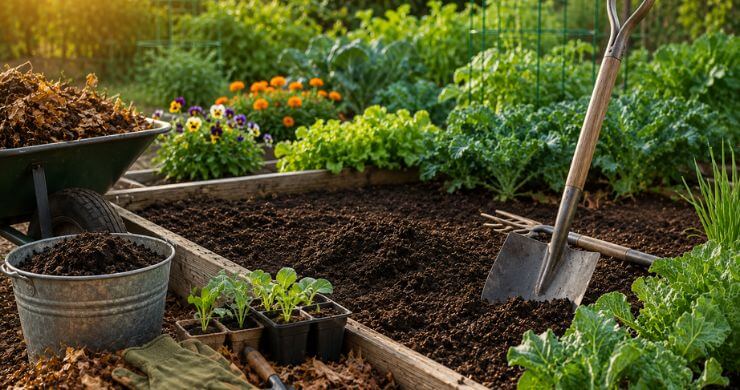
The first hands-on task is clearing out spent summer crops and removing any dead or diseased plant matter, including the roots. Old debris can carry pests into the new season, so a clean bed gives plants a fair start.
Feeding the soil comes next. Mixing in compost and other organic matter builds structure, holds moisture, and supports strong roots through the cool months. A layer of mulch on top steadies soil temperature as the weather shifts.
Late summer also offers a natural reset for the soil itself. UF/IFAS suggests gardeners can use summer heat to solarize garden soil for about four to six weeks, which clears weeds and disease before fall planting begins.
What to plant in a Northeast Florida fall garden
The plant options for a fall garden here are wide and beginner-friendly. Cool-season vegetables lead the way in fall.
UF/IFAS reports that cool-season vegetables to plant in October include broccoli, lettuce, carrots, Brussels sprouts, and radishes. Leafy greens, cabbage, and collards also thrive as the weather cools and reward gardeners through winter.
Fall is a strong season for native plants in Northeast Florida as well. UF/IFAS points to popular Florida natives such as beautyberry, muhly grass, coontie, and Southern magnolia, which settle in while the soil is still warm.
This is also a fine time to start a pollinator garden in Northeast Florida. UF/IFAS notes that October and November are good months to sow wildflower seed, which feeds pollinators in later seasons. Wildflower gardening in Florida pairs nicely with vegetables and herbs, drawing in bees and butterflies that support the whole garden. Many of these plants grow well in raised beds, and durable choices like Vego raised beds give roots room to spread.
Watering, mulching, and protecting fall plantings
A young fall garden needs steady care for the first few weeks. As summer rain tapers off, new plants need regular watering until their roots take hold. A fresh layer of mulch helps the soil hold moisture and keeps roots cool during warm early-fall afternoons.
Cold protection matters later in the season. UF/IFAS warns that cold-tender plants can be damaged by frosts or freezes unless they are covered, so light row covers are worth keeping on hand for the occasional Zone 9B cold snap. Organic pest control rounds out the routine, with companion planting, row covers, and beneficial insects doing much of the work.
A quick walk through the garden after the first cool nights helps catch any plants that need extra mulch or a light cover. A few of the product links here may earn Michelle in the Meadow a small commission, and full details appear in the disclosure policy.
Frequently asked questions
These are the questions Northeast Florida gardeners ask most about getting a fall garden started. The short answers below cover timing, plants, and bed prep.
When should you start a fall garden in Northeast Florida?
Most gardeners begin in late August through October, once the worst summer heat fades. Cooler soil and milder days give new transplants and seeds a gentler start.
What vegetables grow best in a Northeast Florida fall garden?
Cool-season crops shine in fall, including broccoli, lettuce, carrots, cabbage, collards, and radishes. Leafy greens are especially reliable and keep producing through the mild winter.
Can you plant native plants in the fall in Florida?
Yes, fall is a good time to add natives, since warm soil helps roots establish before winter. Beautyberry, muhly grass, and coontie are popular choices.
How do you prepare a garden bed for fall planting?
Clear out spent summer crops, then mix compost and organic matter into the soil. Add a layer of mulch to hold moisture and steady soil temperature.
Let's get your fall garden growing
I love this time of year, because fall planting in Northeast Florida is where the garden really comes alive. If you clear your beds, feed your soil, and pick the right plants now, you will thank yourself all winter.
Want more Zone 9 gardening ideas? Visit Michelle in the Meadow for more posts whenever you are planning your next project. I would love to hear what you are planting this fall in the comments.