
Key takeaways
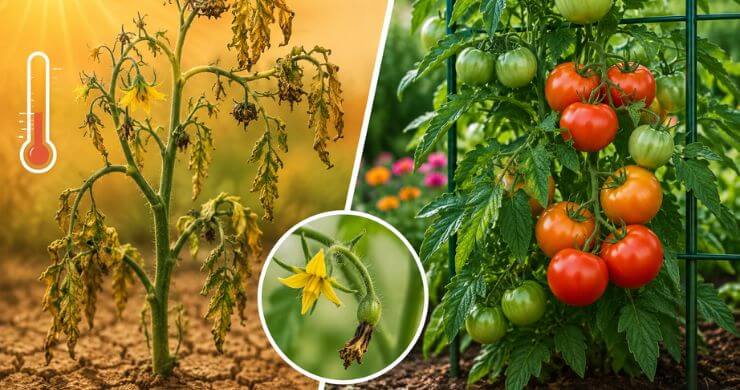
Many gardeners want to know why tomatoes stop producing in heat. High summer temperatures cause tomato flowers to drop before they set fruit. The damage often begins weeks before the vines look bare. A few organic changes next season can restore a healthy harvest.
A tomato plant can look healthy and still refuse to fruit. The leaves stay green, new flowers open each morning, and yet the vines stay bare. In a Florida summer, heat is almost always the cause.
Tomato flowers are sensitive, and high temperatures interrupt the pollination that fruit depends on. This problem, often called tomato blossom drop, frustrates gardeners across Zone 9B and 9B every year. The good news is that it is normal, predictable, and manageable.
Understanding the cause makes it easier to plan a stronger crop. The sections below explain the science and the organic fixes for next season.
Why tomatoes stop producing in heat
Tomatoes set fruit best in a fairly narrow temperature range. Clemson Cooperative Extension puts the ideal daytime range for fruit set at about 70 to 85 degrees Fahrenheit.
Heat affects the flowers more than the leaves. Tomato flowers self-pollinate, and movement such as wind shakes the pollen into place. When temperatures climb too high, the pollen loses viability, and the flowers dry up and drop. Leaves can handle heat that flowers cannot, which is why a lush, green plant may still produce nothing.
In Florida, the nighttime low matters as much as the daytime high. UF/IFAS Extension notes that once average nighttime temperatures rise above roughly 80 degrees, large-fruited tomatoes keep flowering but stop setting fruit. Cherry and grape types often keep going through the heat. Once temperatures ease, the same plant usually flowers and fruits again.
Humidity adds to the trouble. The University of Arkansas Cooperative Extension explains that humidity above about 70 percent can make pollen too sticky to move and pollinate. Extreme heat can also stall ripening, leaving fruit green or only partly colored. The reproductive damage often happens weeks before the bare vines reveal it.
Other summer stresses that hurt fruit set
Heat is the main driver, but other stresses add to the problem. Watering matters most. Tomatoes need steady moisture, and uneven watering stresses the plant and worsens flower and fruit drop.
Inconsistent watering also leads to blossom-end rot, the dark sunken patch on the bottom of the fruit. This traces back to calcium moving poorly through a dry plant.
Feeding can backfire too. Oklahoma State University Extension notes that heavy nitrogen feeding pushes a plant toward leafy growth instead of flowers and fruit. Rich compost and aged manure help, but too much nitrogen at the wrong time means big green plants with little to harvest.
Intense afternoon sun adds another layer of stress. Leaves may curl upward to conserve moisture, which is a heat response rather than a disease. The plant is protecting itself, not failing.
Drought stress compounds the problem, since a thirsty plant drops flowers to survive. Balancing water and feeding keeps the plant focused on tomato fruit set.
How to protect tomatoes through the next Florida summer
Several organic adjustments keep tomato plants productive deeper into the season. Shade is one of the simplest. UC ANR reports that shade cloth can lower the ambient temperature by as much as 10 degrees, often enough to keep plants in their productive range.
A length of shade cloth over the canopy during the hottest afternoon hours protects flowers while still allowing morning sun. Position plants so they catch morning light and gain afternoon shade in peak summer.
Steady moisture is just as important. A generous layer of organic mulch, such as pine straw, holds water in the soil and keeps roots cooler. Deep, consistent watering beats frequent light sprinkling, since even moisture supports both flowering and fruit. Watering early in the day lets the soil soak in before the heat peaks.
Raised beds make this easier, because they drain well and warm evenly. For anyone planning beds, a soil calculator takes the guesswork out of how much soil to order.
Set up for a stronger tomato season
A little planning before next summer changes the outcome. Variety choice comes first. UF/IFAS recommends heat-tolerant tomato varieties such as ‘Heat Wave II’, along with cherry types like ‘Sweet 100’ that keep setting fruit in hot weather.
These hold up far better than standard beefsteak types once the heat arrives. Cherry and grape tomatoes make reliable backups, since they shrug off heat that stops larger fruit. Timing matters just as much.
UF/IFAS advises planting early enough that fruit sets before peak summer heat, which in Zone 9 means setting out transplants in late winter or early spring. Healthy soil supports the whole effort, so working compost or aged manure into the bed ahead of the season pays off. A quick soil test through a local Extension office shows what to add.
Raised beds give roots a cooler, better-drained home, and a sturdy option like Vego raised beds holds up well through Florida summers. Vego is a product I use, and yes, the link above is an affiliate link. Knowing why tomatoes stop producing in heat turns a frustrating season into a plan a gardener can act on.
Frequently asked questions
Here are the questions Florida gardeners ask most about heat and tomato production.
At what temperature do tomatoes stop producing?
Tomatoes set fruit best between about 70 and 85 degrees during the day. Once daytime highs reach the 90s, or nighttime lows stay above roughly 75 to 80 degrees, flowers tend to drop instead of setting fruit. The Extension sources linked above detail these thresholds.
Will tomato plants start producing again after a heat wave?
Usually, yes. A healthy plant pauses fruit set during extreme heat and resumes once temperatures fall back into its comfortable range. Keep the plant watered and mulched through the heat so it is ready to flower again.
Should I pick tomatoes before a heat wave?
It helps. Fruit that already shows color can finish ripening indoors, away from heat that stalls coloring on the vine. Picking early also takes weight off a stressed plant.
Does shade cloth help tomatoes in hot weather?
Yes. Shade cloth lowers the temperature around the plant and shields flowers during the hottest part of the day. Light afternoon shade can keep a plant setting fruit when full sun would shut it down.
Keep your garden growing
A tough tomato summer is not the end of the story. With the right timing, organic soil, and a bit of shade, next season can be a strong one. The Michelle in the Meadow blog has more gardening tips to help every Florida garden thrive.
