

Summary
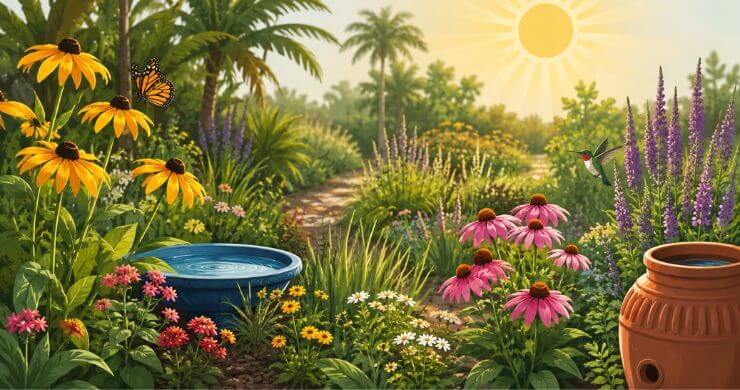
A meadow garden Northeast Florida stays beautiful through hot weather with three practices: choosing heat-tolerant native plants, watering deeply and rarely instead of often, and adding design cues that signal intention. These approaches align with UF/IFAS Extension research for Zone 9A/9B home landscapes.
Meadow gardens offer a wild, informal beauty that traditional lawns cannot match. Native grasses sway in the breeze, wildflowers bloom in shifting waves, and pollinators arrive from spring through fall. A meadow garden Northeast Florida in USDA Zone 9A/9B faces one significant test each year, though: the summer heat.
When afternoon temperatures climb into the 90s and humidity settles in for weeks, even hardy native plantings can show stress. The good news is that a well-planned meadow does not need to lose its charm during hot weather. With the right plants, watering habits, and design choices, gardeners can keep their meadow gardens looking intentional and alive through the toughest weeks of a Florida summer.
Why Hot Weather Stresses a Meadow Garden in Northeast Florida
Northeast Florida sits in USDA Hardiness Zone 9A and 9B, a range shaped by mild winters and long, humid summers. In November 2023, the USDA updated its hardiness zone map for the first time since 2012, and part of Duval County shifted from Zone 9A to Zone 9B. The change reflects gradually warming winter lows, but summer highs remain the greater challenge for home gardens.
Heat stress shows up in meadow plants as afternoon wilting that recovers by morning, scorched leaf edges, and premature seed set on flowers that would normally bloom for weeks. Plants rushed into the ground during spring often struggle most because their root systems have not reached deeper, cooler soil layers. Native Florida wildflowers have a documented history of surviving the state's extreme summer conditions when given time to establish.
A meadow garden also differs from a lawn in how it responds to heat. Meadows depend on a mix of grasses and flowering species that peak at different times, so a slump in one species does not have to mean the whole planting looks tired. Pollinators such as bees and butterflies also depend on the meadow staying productive through summer, when nectar sources in the wider landscape often thin out. Keeping the planting healthy during peak heat supports the local pollinator populations that make meadow gardens valuable in the first place.
Watering Strategies that Keep a Florida Meadow Garden Thriving
The strongest lever for keeping a meadow garden looking good in hot weather is how, not how much, gardeners water. UF/IFAS Extension recommends deep and infrequent irrigation, applying about half an inch to three-quarters of an inch of water only when plants show signs of drought stress. This approach encourages roots to grow deeper, where soil stays cooler and moister than the surface.
Timing matters just as much as amount. UF/IFAS Extension advises watering between 2 a.m. and 8 a.m., when cooler temperatures and lighter winds reduce evaporation and drift. Watering during the afternoon wastes moisture and can raise disease pressure on wet foliage overnight. Morning irrigation also gives foliage time to dry before evening, reducing the chance of fungal problems in Northeast Florida's humid air.
Established meadows need very little supplemental water. UF/IFAS Extension notes that once a meadow is set up, it needs very little, if any, irrigation, though first-year plantings still benefit from steady moisture during dry stretches. A layer of pine straw, oak leaves, or other organic mulch, applied at three to four inches after settling, holds soil moisture and moderates soil temperature during hot spells. This low-input approach matches how the Michelle in the Meadow garden handles Northeast Florida summers.
Native Plants and Design Choices for Heat-tolerant Florida Meadow Landscaping
Plant selection sets the ceiling on how a meadow looks in July. Native plants Northeast Florida gardeners choose for meadow gardens must handle heat, humidity, and sandy soil. UF/IFAS Gardening Solutions lists several summer bloomers well-suited to Zone 9 meadows. These include beach sunflower (Helianthus debilis), blanket flower (Gaillardia pulchella), black-eyed Susan (Rudbeckia hirta), scarlet salvia (Salvia coccinea), and butterfly weed (Asclepias tuberosa).
Native grasses give the meadow its structure. The Florida Wildlife Federation highlights muhly grass (Muhlenbergia capillaris) as a heat-tolerant native that offers cover for wildlife, seeds for small birds, and roots that stabilize soil. Leavenworth's tickseed (Coreopsis leavenworthii), Florida's state wildflower, spreads easily by reseeding and adds long-season yellow blooms alongside grasses. These species work well for wildflower gardening Florida meadows and are stocked at most native plant nurseries.
Design choices carry as much weight as plant choices during hot months. UF/IFAS Extension research on cues to care shows that a wildflower meadow can read as messy in a suburban setting unless a gardener adds elements that signal intent. Edging the meadow with clean borders is one of the most effective cues.
Adding a mowed turf strip in the foreground or placing seating as a focal point also signals ongoing care. A fresh layer of mulch helps the whole planting look tidy even when individual plants show stress. A pollinator garden Northeast Florida gardeners tend through summer benefits from grouping the same species in drifts, which reads as more intentional and gives bees and butterflies reliable food sources.
Frequently Asked Questions
Northeast Florida gardeners tend to ask a similar set of practical questions about summer meadow care. Answers below draw on UF/IFAS Extension and Florida Wildflower Foundation guidance.
How often should a meadow garden be watered during Florida summer?
Established meadow plantings need very little supplemental irrigation. UF/IFAS Extension recommends watering only when plants show signs of drought stress, applying half an inch to three-quarters of an inch of water each time. First-year plantings still need consistent moisture until roots are established.
Do meadow gardens need to be mowed in summer?
Most meadow plantings are best mowed only once per year, and summer is not the right time. Florida DOT manages its roadside wildflower areas by cutting the full clear zone only once, in the fall, and has shown that reduced mowing sustains wildflower density without safety or aesthetic problems. Summer mowing removes blooms, disturbs pollinators, and stresses plants during peak heat.
What native plants stay beautiful in Northeast Florida heat?
The Florida Wildlife Federation identifies Leavenworth's tickseed, black-eyed Susan, butterfly weed, dotted horsemint, sunshine mimosa, and muhly grass as reliable heat-tolerant natives. UF/IFAS Gardening Solutions adds beach sunflower and blanket flower to the summer bloomer list for Zone 9.
How do you keep a meadow garden from looking messy in summer?
UF/IFAS Extension guidance on cues to care suggests edging beds cleanly, keeping a mowed turf strip in the foreground, adding a focal element like seating, and refreshing mulch. These signals communicate intention even when individual plants are heat-stressed.
Keep Exploring the Meadow
I love hearing how other gardeners are working with their own meadow garden Northeast Florida projects through summer. If you want more gardening tips on native plants, watering strategies, and warm-climate design, take a look around the blog and let me know what has worked in your own space.
Leave a Reply