

Summary
Slow gardening is a gentle approach that values presence, observation, and enjoyment over speed and output. This philosophy invites gardeners to notice the small moments, work with the seasons, and turn everyday backyard time into a calm, rewarding practice.
Life often moves faster than the plants that people try to grow. Between work, family, and the constant pull of screens, gardening can quietly turn into another rushed task on a long weekend list. Slow gardening offers a different path.
It treats the garden as a place to unwind, notice, and take part in the rhythm of the seasons instead of racing through chores. This philosophy has grown alongside broader slow movements that value the quality of an experience over speed.
For a backyard gardener, the shift can be small but meaningful. A few extra minutes with a bee, warm soil, or a seed catalog can turn ordinary garden time into something restorative.
What slow gardening actually means
Slow gardening is a mindset that treats the garden as an experience to savor, not a task to check off. The idea borrows from the wider slow movement, which took shape in the late 1980s when Slow Food began in Italy as a response to the arrival of fast food culture. The manifesto that followed argued for a slower pace as a form of care for people and for the land. That same spirit now shapes how many gardeners approach their own patch of ground.
The core principle is straightforward. A gardener slows down enough to notice what the garden is actually doing. Instead of a Saturday sprint to plant, prune, and water, slow gardening spreads small acts of care across the week. A short session in the morning might mean checking soil moisture, watching bees on a flowering herb, or clearing a single overgrown bed.
Slow gardening does not mean neglect. Plants still need water, weeds still need attention, and beds still get planted on time. What changes is the pace and the intention.
The garden becomes a place to think, breathe, and observe rather than a project to finish. Results still come, only they arrive more gradually, with fewer impulse buys and less burnout at season's end.
Benefits of a slower pace in the garden
A slower pace changes how the garden feels to work in. The Virginia Cooperative Extension Master Gardener program notes that even short gardening sessions of ten to thirty minutes have been linked to lower stress and a calmer mood. Time spent with plants has been associated with reduced cortisol, the hormone the body releases under stress. Gardeners often describe their beds as a form of quiet refuge as a result.
The plants themselves also do better under slow, attentive care. A gardener who moves slowly notices leaf color changes, early pest activity, and shifts in soil moisture that a rushed weekend visit would miss. Small adjustments made early can prevent bigger problems later.
The wider ecosystem gains as well. Time spent sitting with the garden means more chances to see pollinators, birds, and beneficial insects at work. That awareness often leads gardeners toward wildlife-friendly choices, such as adding native plants or leaving small wild corners.
Slow gardening also reduces waste. When people plan across seasons instead of buying on impulse, seed packets get used, seedlings find homes, and fewer plants die on a hot patio. The slower rhythm supports both the gardener and the garden.
Simple ways to practice slow gardening
Slow gardening starts with small, deliberate habits rather than a big overhaul. A new practitioner does not need to redesign the whole yard. One bed, one corner, or a group of containers is enough to begin.
The most useful habit is quiet observation. Before pulling a weed or moving a plant, a gardener can sit and watch the space for a few minutes. Many creatures that look like problems turn out to be harmless or even helpful, and many plant issues resolve themselves once conditions shift.
Regional guidance turns observation into action. Warm-climate gardeners benefit most from advice grounded in their own conditions, where local soil, heat, and rainfall shape every planting decision. Working with a trusted regional source shortens the trial-and-error learning curve.
The next habit is working with the seasons. Instead of forcing tomatoes into a Florida summer, a slow gardener plants when the timing suits the region. Cool-season crops go in when nights turn mild, and heat-loving plants wait for warm soil. A simple garden notebook holds these habits together over time.
Building a peaceful backyard space
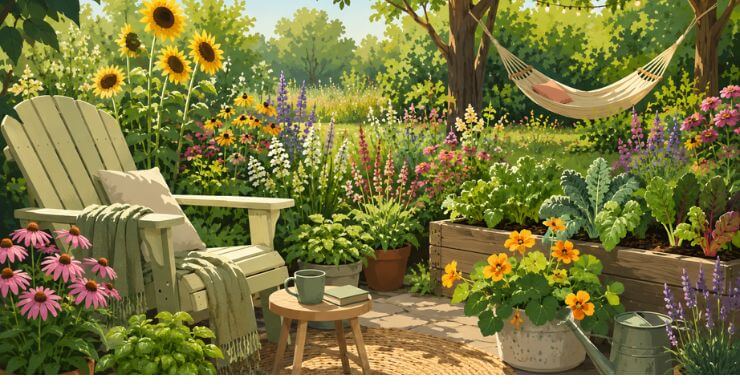
A peaceful garden grows over time, not in a single afternoon. Slow gardening welcomes design choices that invite pause. A bench under shade, a scented herb along a walking path, or a small dish of fresh water for birds all encourage the gardener to slow down and use the senses.
Plant selection shapes how much peace or effort the backyard brings each week. The University of Florida IFAS Extension teaches a principle called right plant, right place, which means matching each plant to the soil, light, water, and climate of its spot. Plants placed in the right conditions grow stronger, need less supplemental watering once established, and hold up better against local challenges.
Native and climate-adapted plants form the backbone of a low-maintenance space. Layering flowers, herbs, and shrubs across the seasons keeps something to notice year-round. Even a small bed can hold a spring bloomer, a summer nectar plant, and a fall seed head for birds. Quiet, wilder edges of the yard become habitat for the pollinators the garden depends on.
Frequently asked questions about slow gardening
Readers exploring slow gardening often have a few common questions before they begin.
What is slow gardening?
Slow gardening is a mindful approach that values observation, seasonal awareness, and enjoyment of the garden over rushed productivity. It works in any size garden, from a few pots to a large yard.
Is slow gardening the same as sustainable gardening?
The two overlap since both favor long-term thinking and lower inputs. Slow gardening focuses on pace and mindset, while sustainable gardening refers to specific practices. A slow gardener often ends up gardening sustainably by default.
How does someone start slow gardening?
The simplest starting points are picking one small area of the garden, sitting with it before making changes, and choosing plants that suit the local climate. Adding a garden notebook helps track observations over time.
Can slow gardening work in a small backyard?
Yes. Slow gardening scales down easily since the practice does not depend on space. A few well-placed containers or a single raised bed can support the same mindful pace as a larger yard.
Keep learning at your own pace
I love hearing how other gardeners find their own rhythm. If slow gardening has changed how you spend time outside, share your story in the comments.
Leave a Reply