
Key takeaways
Gardeners can improve garden soil naturally before winter by adding finished compost, shredded leaves, organic mulch, cover crops, and aged manure to garden beds. Fall is the ideal season for these natural soil amendments because cooler temperatures and seasonal moisture give organic materials months to break down. These five methods build soil structure, add nutrients, and support beneficial microorganisms that keep the ground healthy. The result is stronger, more productive garden beds ready for spring planting.
Healthy soil is the foundation of every productive garden. The weeks before winter arrive offer a valuable window to improve garden soil naturally, setting the stage for stronger plants and better harvests next season. Organic amendments added in fall have months to break down, integrate, and enrich the soil before spring planting begins.
The five methods below are simple, affordable, and effective for gardeners of all experience levels. Whether the garden grows in raised beds or directly in the ground, these practices build long-term soil health using only natural materials.
Why fall is the right time to improve garden soil naturally
Fall gives organic materials the time they need to fully break down before the next growing season. According to Utah State University Extension, applying organic matter in late fall allows soil microorganisms many months to process compost and other amendments before spring planting. Cooler temperatures and seasonal rainfall create steady conditions for decomposition. Soil microbes remain active during this period, quietly converting raw organic matter into plant-available nutrients.
Another advantage of fall application is practical. Any excess salts from fresh compost can leach out naturally over the winter months. This means the soil is balanced, settled, and ready to support new growth as soon as warm weather returns.
Spread a layer of finished compost
Compost is one of the most effective natural soil amendments available. It adds nutrients, improves soil structure, and feeds the beneficial microorganisms that keep soil alive and productive. A 2 to 3 inch layer of finished compost spread over garden beds in the fall gives the material plenty of time to integrate before spring.
The UF/IFAS Florida Vegetable Gardening Guide notes that most Florida soils are low in organic matter and benefit from additions such as compost, rotted leaves, and animal manure. Compost improves both sandy soils and heavy clay by increasing water retention and aeration. For gardeners building or refilling raised beds, a raised bed soil calculator can help determine the right volume of soil and compost needed.
Use shredded leaves as a natural soil amendment
Fall leaves are one of the most overlooked and abundant natural soil amendments available to home gardeners. According to University of Illinois Extension, fallen leaves are one of the most readily available forms of organic matter. They aid plant growth, reduce the need for fertilizer, and help soil retain water.
Shredding leaves before adding them to the garden speeds up decomposition and prevents matting. Over 6 to 12 months, shredded leaves break down into leaf mold, a valuable soil conditioner. The University of Georgia Extension explains that leaf mold improves soil structure, increases water-holding capacity, and supports beneficial organisms. Spread a layer of shredded leaves directly over garden beds in the fall and let nature do the work.
Apply organic mulch to protect and feed the soil
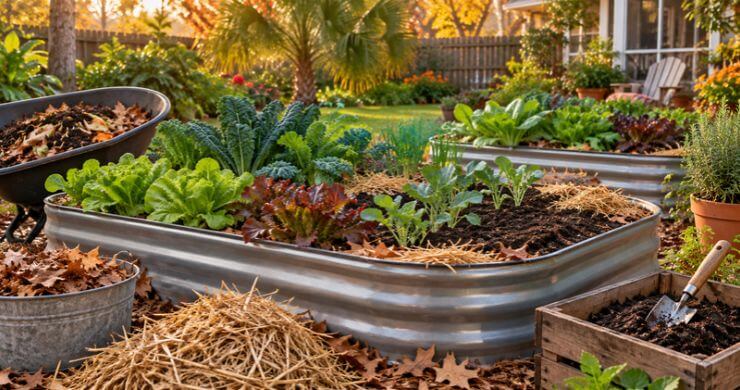
Organic mulch serves double duty in the garden. It protects soil from erosion, temperature swings, and weed growth while slowly breaking down and adding nutrients over time. Straw, wood chips, and pine needles are all effective organic mulch options for winter garden beds.
A 3 to 4 inch layer of mulch insulates the soil and helps it retain moisture through the cooler months. As the mulch decomposes, it adds organic matter to the top layer of soil, feeding earthworms and microorganisms below the surface. Hauling compost, mulch, and soil around the garden is one of the heavier tasks of fall garden prep. I use my garden cart to move everything from the driveway to the beds, and it saves a lot of trips and effort.
Plant a cover crop or add aged manure
Cover crops and aged manure are two more ways to prepare garden soil for winter naturally. Cover crops, planted in early fall, protect bare soil from erosion and suppress weeds during the off-season. The University of Georgia Extension recommends planting a combination of a cereal grain like rye or oats with a legume such as clover or winter peas. Legume crops fix atmospheric nitrogen, which becomes available to the plants that follow when the cover crop is turned into the soil.
Aged manure is another strong option for building soil fertility over winter. It adds organic matter and nutrients that break down slowly in cooler weather. The key is to use only well-aged manure, not fresh, as fresh manure can burn plant roots and introduce unwanted pathogens.
Frequently asked questions
Gardeners often have questions about how and when to prepare garden soil for winter. Here are answers to some of the most common ones.
What is the best thing to add to garden soil before winter?
Finished compost is widely regarded as the single most effective amendment for garden soil. It improves structure, adds a broad range of nutrients, and supports microbial life. Compost benefits sandy soil by increasing water retention and benefits clay soil by improving drainage and aeration.
How long does it take for compost to improve soil?
Compost begins improving soil texture and moisture retention as soon as it is applied. Full nutrient integration takes several months, which is why fall application works so well. The winter months give soil organisms time to process the compost before spring planting.
Should you till your garden before winter?
Light incorporation of amendments into the top few inches of soil is acceptable and can speed decomposition. Heavy tilling, however, can disrupt soil structure and harm beneficial organisms. Many gardeners prefer a low-till or no-till approach, spreading amendments on the surface and allowing earthworms and weather to do the mixing naturally.
Can you improve clay soil naturally over the winter?
Adding compost, shredded leaves, and organic mulch over winter gradually improves clay soil. Organic matter coats fine clay particles, creating more air space and better drainage over time. Repeated annual applications produce the most significant long-term results.
Get your garden ready for a great spring
Taking even one or two of these steps before winter can make a noticeable difference in the garden next season. The goal is to keep improving garden soil naturally, a little at a time, year after year. I encourage you to start with whatever materials are most available, whether that is a bag of compost, a pile of fallen leaves, or a handful of cover crop seed. Your spring garden will thank you.
For more gardening tips and seasonal guides, visit Michelle in the Meadow. There is always something new to learn and try in the garden.