
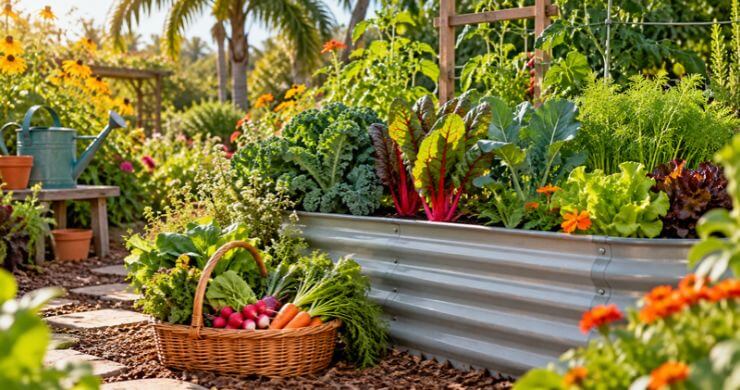
Key takeaways
Fall is the prime growing season for a Florida raised bed garden. Cooler temperatures, lower humidity, and reduced pest pressure create ideal conditions for vegetables like lettuce, carrots, tomatoes, and herbs in Zone 9A/9B. With the right soil prep, smart crop selection, and efficient spacing, even a single raised bed can deliver a generous harvest from October through early spring.
While much of the country puts away garden tools in October, Florida gardeners are just getting started. Fall marks the beginning of the most productive growing season in the state, especially for raised bed growers in Zone 9. A Florida raised bed garden in fall offers better drainage, improved soil quality, and easier maintenance than in-ground planting. These advantages matter in Florida’s sandy, nutrient-poor native soils. Even a single raised bed in a small suburban yard can produce fresh vegetables for months. The right combination of timing, crops, and smart layout turns a compact space into a reliable source of homegrown food.
Why fall is the best season for a Florida raised bed garden
Fall and winter offer the widest range of planting options for Florida gardeners in Zone 9A/9B. The UF/IFAS Florida Vegetable Gardening Guide lists planting windows for dozens of fall crops in the northern region, with dates stretching from August through March depending on the vegetable. September and October are the busiest planting months for the area.
Cooler temperatures between October and February reduce heat stress on vegetable plants. Pest and disease pressure also drops compared to the hot, humid summer months. Many crops that struggle through Florida’s summer heat thrive once nighttime temperatures settle into the 50s and 60s. This shift makes fall the most rewarding time to grow food in the state.
Raised beds add another layer of benefit during this season. Florida soils typically contain less than 1.5% organic matter, which limits how well plants can retain water and access nutrients. A raised bed filled with quality growing medium solves both problems at once, delivering the drainage, moisture retention, and nutrition that Florida’s native soil lacks.
Best vegetables for a small fall raised bed in Florida
The strongest fall raised bed crops fall into three categories: leafy greens, root vegetables, and warm-season holdovers for early fall planting.
Leafy greens are the easiest starting point. Lettuce, kale, collards, and mustard greens all perform well from October through early spring in Zone 9. Loose-leaf lettuce varieties are especially productive because gardeners can harvest outer leaves repeatedly throughout the season. Kale and collards tolerate light frost, making them reliable producers well into winter.
Root vegetables thrive in the loose, well-drained soil of a raised bed. Carrots, radishes, beets, and turnips all grow quickly during the cool months. Radishes can be ready to harvest in as few as 30 days, making them an encouraging first crop for new gardeners.
Warm-season crops like tomatoes and peppers can still be transplanted in early September for a late fall harvest. Bush beans are another option for the early fall window. These crops should go in as transplants rather than seeds to make the most of the remaining warm days.
Herbs round out the fall raised bed nicely. Cilantro, dill, and parsley all prefer cooler weather and fit well alongside vegetables in a compact layout.
How to prepare raised bed soil for fall planting
Soil preparation starts with clearing the raised bed of any spent summer crops, weeds, and debris. Once the bed is clean, the next step is refreshing the growing medium with organic amendments.
A simple and effective raised bed mix combines compost, composted pine bark or peat moss, and a small amount of topsoil. Worm castings add an extra nutrient boost. The goal is a mix that provides nutrients, holds moisture, and still allows water to drain freely. Adding two to three inches of compost before each planting season keeps the bed productive over time.
Drainage matters in Florida, where fall weather can still bring heavy rain. A bed with at least 10 to 12 inches of depth handles this naturally. For gardeners building a new bed or refilling an existing one, a raised bed soil calculator helps determine exactly how much growing medium to buy so nothing goes to waste.
Spacing and layout tips to maximize a small raised bed
Getting the most from a small raised bed means planting in blocks instead of rows. The square foot gardening method divides the bed into one-foot sections and assigns each square a different crop. UF/IFAS Gardening Solutions notes that gardeners can fit one, four, nine, or sixteen plants per square foot depending on the crop’s size. This approach increases yield without wasting any space.
Vertical growing stretches the bed even further. A simple trellis along the north side of the bed supports cucumbers, pole beans, or vining crops without shading shorter plants below. Placing taller crops on the north end and shorter ones to the south keeps sunlight reaching every part of the bed.
Succession planting adds another boost. By planting a new round of fast-growing crops like lettuce or radishes every two to three weeks, the bed stays full and productive throughout the fall and winter months.
I use Vego raised beds in my own garden, and their depth and durability make them a solid choice for this kind of intensive fall planting.
Frequently asked questions
Fall raised bed gardening brings up a few common questions, especially for gardeners new to Florida’s unique growing calendar.
When should you start a fall garden in Florida?
In Zone 9A/9B, September and October are the primary fall planting months. Warm-season crops like tomatoes and peppers go in during September, while cool-season vegetables like lettuce, kale, and root crops can be planted from October through early winter. The exact window depends on the crop.
What vegetables grow best in a Florida raised bed in the fall?
Lettuce, kale, collards, carrots, radishes, and herbs like cilantro and dill are top performers. The loose, well-drained soil of a raised bed gives root crops like carrots and beets a clear advantage over in-ground planting. Tomatoes and peppers can also produce well if transplanted early in the season.
How deep should a raised bed be for fall vegetables in Florida?
Most fall vegetables grow well in a bed that is 10 to 12 inches deep. Root crops like carrots benefit from the deeper end of that range. Deeper beds also hold moisture better and give roots more room to develop.
Can you grow tomatoes in a raised bed in Florida in the fall?
Yes. Tomatoes can be transplanted into a raised bed in early September in Zone 9 for a fall harvest. Transplants are the better option over seeds because fall’s warm window is shorter. Determinate varieties work well in a small raised bed.
Happy gardening!
Fall is the season to make a small Florida raised bed garden work hard. Whether the plan includes one bed of lettuce and herbs or a full layout of greens, root crops, and tomatoes, the cool months ahead offer some of the finest growing conditions of the year. I would love to hear what you are planting this fall. Drop a comment and share your raised bed plans. For more gardening tips, explore the growing collection of seasonal guides and garden ideas here on Michelle in the Meadow.
