
Summary
Composting in Florida summer moves faster than composting in cooler climates because sustained heat, humidity, and afternoon rain accelerate microbial activity. Most Northeast Florida households already have the two categories every pile needs: nitrogen-rich greens from the kitchen and carbon-rich browns from the yard. Turning these everyday materials into finished compost costs nothing and produces a soil amendment that improves Florida's sandy native soils.
By mid-July in Northeast Florida, the grass grows faster than a mower can keep up, and kitchen scraps pile up as fast as they can be trimmed. Every one of those green trimmings, along with fallen leaves and cardboard piling up in the garage, can become finished compost.
Composting in Florida summer works differently than composting in cooler regions because the same heat that pushes plants into overdrive also fuels the microbes that break down organic waste. Gardeners in Zone 9B/9B do not need specialty products or expensive equipment to start, since the materials that produce rich, dark compost usually already sit in kitchen bowls, mower catchers, and backyard leaf piles.
Why Composting in Florida Summer Works Differently
Composting in Florida summer relies on the same biological principles as composting anywhere else, but the pace is different. Warm temperatures speed up the microorganisms that break down organic matter, and the state's humid, subtropical climate keeps those microbes active nearly all day. UF/IFAS county extension agents note that even loose piles left directly on the ground produce usable compost because of Florida's sustained heat and humidity.
The tradeoff is management. Piles can dry out on their surface between afternoon rain events, and a poorly balanced pile can turn slimy after a thunderstorm. Extension guidance recommends placing bins in partial shade during Florida summer months, layering materials evenly, and keeping the pile moist without waterlogging it.
The reward is speed. Standard extension estimates put finished compost timelines at two to twelve months depending on management intensity. Florida's warm months typically fall on the faster end of that range because higher ambient temperatures push internal pile temperatures upward. Home gardeners who turn their piles regularly and maintain the right ingredient balance can often harvest usable compost within a few months.
Summer becomes one of the most productive seasons for building soil. The University of Florida vegetable gardening guide describes finished compost as garden gold for the state's sandy native soils.
Kitchen Scraps that Fuel Summer Compost
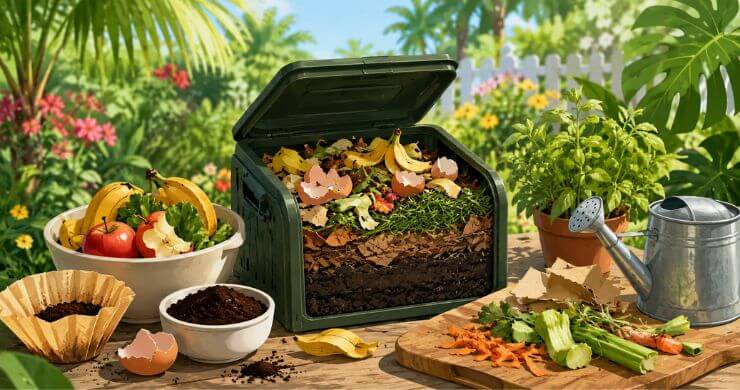
Kitchen scraps make up most of what home composters add during summer, when fresh produce moves quickly through the refrigerator. According to the U.S. Environmental Protection Agency (EPA), nitrogen-rich food scraps count as greens and provide the fuel that heats up a compost pile.
The most reliable summer kitchen ingredients include fruit and vegetable trimmings, peels, cores, and stems. Melon rinds, tomato tops, corn husks, onion skins, and leafy scraps from salads all break down readily in warm conditions. Coffee grounds and unbleached paper filters add nitrogen and hold moisture, while used tea leaves and paper tea bags without staples work the same way. Crushed eggshells contribute calcium and improve compost texture as they slowly decompose.
Some kitchen materials should stay out of a summer pile. The EPA specifically excludes meat, fish, bones, dairy products, oils, and greasy leftovers because they attract pests and generate strong odors as they decompose. In Florida's heat and humidity, these problems compound faster than in cooler regions. Rodents, raccoons, and flies find warm piles quickly, and animal fats can turn a pile anaerobic within days.
Cutting scraps into smaller pieces before adding them speeds breakdown further. A quick chop with a kitchen knife or a run through a garden shredder gives microbes more surface area to work with.
Yard Materials most Florida Gardeners Already have
Every Florida yard produces raw compost material through the summer. Grass clippings from weekly mowing supply high-nitrogen greens, while fallen leaves, small twigs, and dry stems provide the carbon-rich browns that balance the pile. Hauling this volume of material across the yard becomes easier with a utility pull wagon, which spares a Florida gardener's back during the hottest months. Loading grass clippings, leaves, and finished compost in one trip cuts mowing-day work significantly.
Cornell Waste Management Institute research shows that a starting carbon-to-nitrogen ratio near 30 to 1 supports the fastest microbial activity. Reaching that balance does not require lab measurement in a home setting. General extension guidance recommends roughly two to three parts browns to one part greens by volume, layered evenly in the bin.
Common summer yard ingredients include grass clippings, deadheaded flowers, spent vegetable plants, pulled weeds without seed heads, and chopped palm fronds. Cardboard, brown paper bags, and shredded newspaper add carbon and help absorb excess moisture from summer storms. Small branches and wood chips create air pockets that improve airflow inside the pile.
Once the compost finishes, it becomes a soil amendment that Florida's sandy native soils badly need. Gardeners planning new raised beds can use a raised bed soil calculator to estimate how much finished compost to blend into a new mix.
Frequently Asked Questions
Florida gardeners often have questions when starting a compost pile in the hottest months of the year. The following answers draw on extension research to cover the basics.
What are the basic ingredients of compost?
Every compost pile needs four inputs: nitrogen-rich greens, carbon-rich browns, water, and air. The EPA describes greens as fresh materials like grass clippings, fruit scraps, and coffee grounds, and browns as dry materials like leaves, twigs, and shredded paper. Microorganisms use the carbon and nitrogen to grow, water to digest, and air to breathe.
How to compost in the summer?
Summer composting in Florida requires attention to moisture and heat. UF/IFAS Extension guidance recommends placing the bin in partial shade, layering materials evenly, and watering the pile as it goes together. Turning the pile more often than in cooler months prevents anaerobic conditions that form quickly in Florida's humidity. A quick soak during dry stretches keeps microbes active between afternoon rain events.
How long does compost take to finish in Florida summer?
UF/IFAS Extension publications estimate that home compost typically finishes within two to twelve months, depending on how intensively the pile is managed. Florida summer conditions push most well-managed piles toward the faster end of that range. A pile turned regularly, kept moist, and balanced for greens and browns can often produce usable compost within a few months during the state's hottest season.
Bring these Composting Ideas into a Summer Garden
Composting in Florida summer has shown me that the simplest compost ingredients cost nothing and already sit around the kitchen and yard. Every summer I share seasonal updates from my own Zone 9B garden, including which scraps I toss in the pile each week and which ones I leave out. Come explore more gardening tips whenever you have a spare few minutes, and let me know in the comments which summer ingredient you plan to try first.