Summary
An organic garden ecosystem in Northeast Florida combines healthy living soil, native plant diversity, and beneficial wildlife to create a self-sustaining landscape. The warm, humid Zone 9B/9B climate supports year-round ecosystem gardening when gardeners focus on building organic matter, choosing regionally adapted plants, and inviting pollinators and predator insects. This integrated approach produces resilient gardens that require less irrigation, fewer inputs, and steadily improve over time.
Every teaspoon of productive garden soil can hold over four billion microbial organisms, according to UF/IFAS Extension. That hidden world is the starting point for an organic garden ecosystem in Northeast Florida, where soil, plants, and wildlife function as one connected system.
This approach shifts the focus from treating individual plants to nurturing the whole garden as a living community. Warm, humid Zone 9B/9B conditions support year-round activity, and sandy Florida soils reward gardeners who invest in building organic matter. Three foundations support the method: living soil, diverse native plants, and beneficial insects that keep the ecosystem in balance.
What Makes an Organic Garden Ecosystem Thrive in Northeast Florida
An organic garden ecosystem functions as a connected community where soil, plants, insects, and climate work together. Traditional gardening often treats each plant separately, but ecosystem thinking looks at how everything interacts. Florida ranks among the most biologically diverse states in the country. UF/IFAS Extension reports Florida is home to more than 700 terrestrial wildlife species and the third-largest wild bird population nationwide.
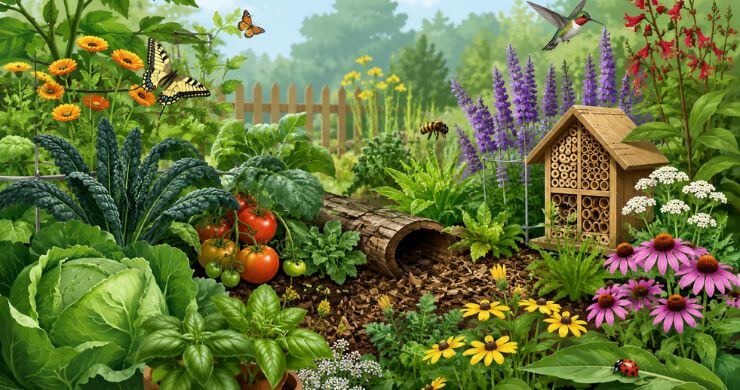
Three foundations support this method. Living soil feeds plants through underground microorganisms. Plant diversity, especially native species, provides food and shelter for wildlife. Beneficial insects, from pollinators to predators, keep the system in balance without outside inputs.
The Zone 9B/9B climate supports year-round ecosystem activity in Northeast Florida. Warm winters allow soil biology to stay active, and long summers extend the growing season for pollinator-friendly plants. Sandy soils present a challenge because they hold less water and fewer nutrients than heavier soil types. Gardeners who understand this can plan systems that steadily improve rather than fight local conditions.
Building Living Soil for a Resilient Garden
Living soil forms the foundation of every organic garden ecosystem. Sandy soils across Northeast Florida often hold organic matter levels below 1.5 percent, according to UF/IFAS Extension guidance on Florida-friendly edible landscapes. Building this number up steadily transforms garden performance over time.
Compost delivers the fastest improvement. Regular compost, well-rotted manure, and organic mulch feed soil microorganisms while improving water retention. UF/IFAS research shows that soil microbiomes of bacteria, archaea, and fungi help plants adapt to drought, heat, and other stress.
Mulch adds another protective layer. A 2-to-3-inch layer of pine straw, leaves, or wood chips shields soil from Florida's intense sun, reduces water loss, and slowly breaks down into more organic matter. Gardeners planning raised beds can estimate volume needs with a soil calculator before ordering materials.
Minimal soil disturbance also matters. UF/IFAS research shows that mycorrhizal fungi are highly sensitive to tillage. A no-dig or reduced-till approach protects the fungal networks that help plants absorb nutrients and water efficiently.
Native Plants Northeast Florida Gardeners Choose for a Resilient Ecosystem
Native plants Northeast Florida gardeners select for their landscapes carry a built-in advantage. These species evolved with local soil, rainfall, and wildlife, so they need less water and less overall care than non-native alternatives. The Florida Native Plant Society describes native plants as the foundation of Florida's ecosystems. Pollinators like butterflies and bees rely on them, and birds depend on insects that native plants support.
UF/IFAS Gardening Solutions highlights several popular native options. Beautyberry produces purple berries that feed songbirds, while muhly grass delivers pink autumn plumes and shelters small wildlife. Coontie serves as an evergreen groundcover and larval host plant for native butterflies. Southern magnolia anchors larger landscapes with year-round structure.
A layered planting approach mimics natural Florida ecosystems. Canopy trees create shade and habitat above, understory shrubs fill the middle layer, and wildflowers and native grasses complete the ground level. Each layer feeds different pollinators, birds, and beneficial insects across the seasons. Grouping plants with different bloom times keeps nectar and pollen available year-round.
Attracting Pollinators and Beneficial Insects to Sustain Balance
A pollinator garden Northeast Florida gardeners plan around beneficial insects protects itself over time. Three-fourths of the world's flowering plants and about 35 percent of food crops depend on animal pollinators to reproduce, according to the USDA. One in three bites of food traces back to bees, butterflies, moths, birds, and other pollinators.
Beneficial insects fall into three groups. Pollinators like native bees, butterflies, and hoverflies carry pollen between flowers, while predators such as ladybugs and ground beetles hunt garden pests. Parasitoid wasps lay eggs on pest insects, reducing populations naturally. The Xerces Society notes that beneficial insect habitat depends on native vegetation providing nectar and shelter.
Simple features invite these workers in. A shallow water source with landing spots offers safe drinking for bees. Leaf litter and brush piles provide overwintering sites for beetles and native bees. Milkweed sustains monarch caterpillars, since these larvae eat nothing else, according to the U.S. Fish and Wildlife Service.
A mature organic garden ecosystem in Northeast Florida rewards patience. Soil life deepens, native plants spread, and beneficial insect populations grow each year. Gardeners can find more gardening tips on maintaining an ecosystem through each season.
Frequently Asked Questions
Northeast Florida gardeners often share similar questions when starting an organic garden ecosystem. Answers to four common ones follow.
How long does it take to establish an organic garden ecosystem in Northeast Florida?
Most Northeast Florida gardens reach a noticeable ecosystem balance within one to three growing seasons. Soil biology develops steadily as compost and mulch feed microorganisms. Native plants need a full year to establish roots, and beneficial insects arrive once flowering plants and shelter become reliable.
When is the best time of year to start an organic garden ecosystem in Northeast Florida?
Fall and early spring are the strongest windows for starting a Northeast Florida garden. UF/IFAS Extension notes that Florida gardeners can grow vegetables year-round, with planting dates varying by region. Cooler months allow soil to develop and plants to establish before summer heat peaks.
Do organic garden ecosystems really support more wildlife than conventional gardens?
Research suggests they do. A meta-analysis of 94 studies in the Journal of Applied Ecology found that organic management increases species richness by roughly 30 percent compared with conventional management. Home gardens applying similar principles can expect meaningful gains in insect and bird diversity.
Are organic garden ecosystems more work than conventional gardens?
The workload shifts rather than increases. Early effort focuses on soil, plant selection, and habitat features. Once the ecosystem matures, maintenance drops because native plants use less water, beneficial insects handle most pest pressure, and healthy soil retains moisture longer.
Grow with Me
Building an organic garden ecosystem takes time, but every season adds another layer of life to a Northeast Florida landscape. I've spent years learning to work with our local climate rather than against it, and I love sharing the wins and lessons along the way. To see how my meadow came together season by season, learn more about my gardening journey.