
Key takeaways:
- Florida garden water conservation is achievable without harming plant health.
- Deep, infrequent watering builds stronger, more drought-resilient roots than frequent shallow watering.
- A 2-to-3-inch organic mulch layer reduces evaporation and moderates soil temperature.
- Compost, better soil, and drought-adapted plants dramatically reduce a garden's water demand.
Most Florida gardeners water their plants more than they need to, and the effects are often the opposite of what they expect. Research from UF/IFAS found that the average home with an irrigation system uses at least 991 gallons of water per single irrigation event. That equals about eight hours of showering or 37 loads of laundry.
Florida garden water conservation, done correctly, does not mean sacrificing plants. Cutting back produces stronger roots, healthier soil, and plants that better survive Florida's dry season. The good news is that small changes add up quickly. The following four techniques reduce water use while keeping a garden thriving.
Why Less Watering can Actually Strengthen a Garden
Watering too often creates weak plants. UF/IFAS Extension research shows that frequent, shallow watering keeps roots near the soil surface, where they dry out quickly during hot weather. Deep, infrequent watering pushes roots downward, where they can access moisture even when the top layer of soil dries.
The Florida climate makes this worse. Constant surface moisture on foliage, stems, and trunks creates ideal conditions for fungal disease. UF/IFAS agents recommend watering only when plants show clear signs of wilt, not on a fixed daily schedule.
The Florida-Friendly Landscaping program, developed by UF/IFAS and the Florida Department of Environmental Protection, is built on a simple idea. The right plant in the right place needs little supplemental irrigation once established. Gardeners who follow this framework often find that reducing water use improves plant health rather than harming it.
Florida Garden Water Conservation Starts with Mulch
Mulch is one of the simplest tools for Florida garden water conservation. According to UF/IFAS Gardening Solutions, a proper mulch layer keeps soil moist longer after irrigation, giving plant roots more time to absorb water. Mulch also blocks weeds that would otherwise compete for moisture and shades the soil to prevent extreme temperature swings.
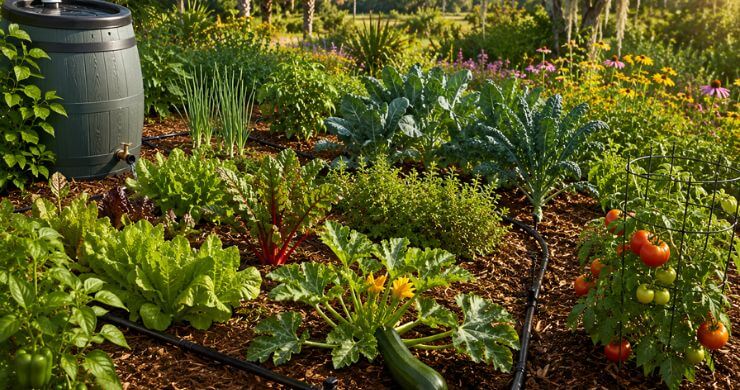
The recommended application is a 2-to-3-inch layer around established trees, shrubs, and bedding plants. Anything deeper diverts rain and irrigation away from root systems. Organic mulches such as pine straw, pine bark, and fallen leaves are Florida-Friendly choices that improve soil as they break down.
Placement matters as much as depth. UF/IFAS advises keeping mulch about a foot away from the base of large plants and trees. Piling mulch against the trunk, called volcano mulching, traps moisture against the bark and encourages rot. A thin buffer of bare soil at the base allows the trunk to breathe.
Gardeners in Zone 9B/9B often overlook mulch because the effect is invisible from above the surface. Below the surface, though, mulched beds retain measurable soil moisture between rain events and hold up better through the Florida dry season. Readers curious about companion techniques can browse gardening articles on the blog for related seasonal tips.
Deep, Infrequent Watering Builds Drought Resilience
Timing changes everything. EPA WaterSense recommends watering lawns and gardens in the early morning or evening, when the sun is low and temperatures are cool. Significant amounts of water evaporate during the heat of the day, so midday watering wastes both water and money. Homes with automatic sprinkler systems can use about 50 percent more outdoor water than homes without them, largely because timers deliver water on autopilot regardless of soil moisture.
Volume matters as much as timing. A single deep watering per week generally produces healthier plants than several light waterings. UF/IFAS Extension recommends increasing frequency when plants need more water, not the amount applied each time.
A simple test helps. Press a finger into the soil about 2 inches deep. If the soil feels dry, watering is needed. If it feels moist, the garden can wait another day.
Healthy Soil and Smart Plant Choices Reduce Water Demand
Water leaves sandy Florida soil quickly. Compost and organic matter change that. UF/IFAS research cites USDA-NRCS estimates that every 1 percent increase in soil organic matter helps soils hold up to 20,000 additional gallons of water per acre. That is a substantial return for something as accessible as compost, aged manure, or shredded leaves.
Florida's native sandy soil is naturally low in organic matter. Topdressing beds and lawns with compost is one of the most effective water-saving moves a gardener can make. Raised beds filled with a quality soil blend retain moisture longer than native ground and give roots a deeper, cooler zone to explore. Anyone planning raised beds can use a soil calculator to estimate how much soil mix to buy.
Plant selection also matters. Native and drought-adapted species such as muhly grass, beach dune sunflower, saw palmetto, and firebush thrive in Zone 9B/9B with far less supplemental water once established. Grouping plants with similar water needs together, a practice called hydrozoning, keeps thirsty plants from forcing the whole bed onto a heavy watering schedule. Match the plant to the site, and Florida garden water conservation happens by default.
Frequently Asked Questions
Florida gardeners commonly raise the following questions when planning to cut back on watering.
How much water can mulching save in a Florida garden?
A 2-to-3-inch layer of organic mulch slows evaporation and holds soil moisture between rain and irrigation events. UF/IFAS reports that mulched beds keep soil moist longer, which reduces how often supplemental watering is needed. Exact savings depend on climate, soil, and plant type, but every properly mulched bed lowers overall irrigation demand.
What time of day is best for watering in Florida?
Early morning is the recommended window. EPA WaterSense and UF/IFAS Extension both point to cool morning hours because evaporation is at its lowest then. Watering during the day wastes significant amounts of water, and evening watering keeps foliage wet overnight, which can lead to fungal problems in Florida's humid climate.
Do drought-tolerant plants still need regular watering?
Yes, during the establishment period. UF/IFAS Extension notes that even drought-adapted natives require consistent watering for the first several weeks to months after planting. Once established, plants such as muhly grass, saw palmetto, and firebush thrive on rainfall alone in most Zone 9B/9B conditions, needing supplemental water only during extended dry spells.
Can raised beds help save water in a Florida garden?
Raised beds filled with compost-rich soil hold moisture much longer than typical Florida sand. UF/IFAS research shows that raising soil organic matter by just 1 percent can help soils store up to 20,000 more gallons of water per acre. Raised beds also give roots a deeper, cooler root zone, which reduces surface evaporation and irrigation frequency.
Share What Works in Your Garden
Florida garden water conservation looks different in every yard. What saves water in one garden may not work in another, and that variation is what makes gardening interesting. I'd love to hear the water-saving techniques that have worked in your own garden, whether it's a specific mulch, a favorite drought-tolerant plant, or a watering schedule you've dialed in. Share your experience in the comments so other Zone 9 gardeners can learn from what you've tried.