
Key Takeaways
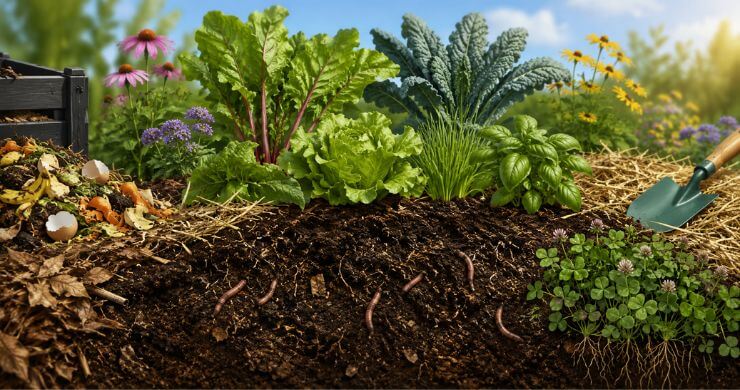
Healthy soil is the foundation of a productive garden, and building it works best as a seasonal practice rather than a single project. Each season offers a specific opportunity: spring for testing and refreshing, summer for protecting, fall for feeding, and winter for resting the soil. Research-backed techniques help home gardeners strengthen the underground ecosystem season by season.
Underneath a productive garden lies an invisible workforce. A single teaspoon of healthy soil contains more microbes than there are people on Earth, according to the USDA Natural Resources Conservation Service. Bacteria, fungi, protozoa, and earthworms do the real work of feeding plants.
Understanding how to build healthy soil starts with a shift in thinking: gardeners feed the soil, and the soil feeds the plants. Living inputs like compost, mulch, cover crops, and fallen leaves strengthen that underground ecosystem. The reward is better structure, deeper roots, and more resilient plants year after year.
How to Build Healthy Soil Starting in Spring
Spring is the ideal starting point for assessing a garden's soil. Before adding amendments, gardeners benefit from knowing what they already have. According to the University of Minnesota Extension, a basic soil test measures texture, pH, and nutrient levels, with recommended testing every three to five years.
At-home methods offer a good starting point. The ribbon test reveals soil texture: a long ribbon means clay-heavy soil, a short one means loam, and crumbling means sandy soil. A simple pH test kit shows whether the soil sits within the range most vegetables prefer, typically 6.0 to 6.8.
Spring is also the time to refresh soil after winter. A one-inch layer of compost worked into the top few inches replenishes organic matter lost through the previous growing season. This annual top-up feeds soil microbes, improves structure in both clay and sandy soils, and slowly releases nutrients as plants need them.
Summer: Protecting Soil Under Heat and Stress
Summer heat and heavy rains take a toll on exposed soil. Bare ground loses moisture rapidly, compacts under foot traffic, and can crust over after storms, making water absorption harder.
Mulch is the most effective protection during this stretch. Research from the University of Minnesota shows that mulch moderates soil temperature, reduces evaporation, and builds organic matter as it breaks down. A two- to four-inch layer of straw, shredded leaves, or wood chips cools the root zone and supports the microbes that plants depend on.
Fast-growing summer cover crops like buckwheat or cowpeas keep living roots in beds that sit empty during the hottest months. The USDA Sustainable Agriculture Research and Education program identifies living roots as one of the most direct ways to feed soil bacteria and fungi. These plants also loosen compacted layers and add organic material when cut down.
Watering habits matter too. Deep, less frequent watering encourages deeper roots and keeps soil biology active without saturating the surface.
Fall: Feeding the Soil with Organic Matter
Fall is when the most productive soil-building work happens. Cooling temperatures slow microbial activity but not decomposition, giving added inputs months to integrate before spring.
The University of Maryland Extension recommends adding one inch of compost annually to maintain garden productivity. Compost improves clay soils by loosening structure and helps sandy soils retain moisture. It also delivers a slow-release supply of nutrients for the following season.
Fallen leaves offer a free amendment many gardeners overlook. Penn State Extension describes leaf mold as an excellent soil conditioner that improves structure, increases water retention, and feeds the organisms that decompose organic matter. Shredded leaves can be worked into beds or piled in a corner to break down into leaf mold over one to two years.
Cool-season cover crops like winter rye or crimson clover add another layer of protection. Their roots hold soil in place, capture leftover nutrients, and add organic material when terminated in spring.
Winter: Letting Soil Rest and Rebuild
Winter transforms the garden into a quiet workshop. Beneath mulch or cover crop residue, microbes continue to break down organic matter, earthworms move it deeper into the profile, and soil structure slowly rebuilds.
Oregon State University Extension research shows tilling compacts soil, destroys pore spaces, disrupts microorganisms, and brings buried weed seeds to the surface. A no-dig approach preserves soil structure over time. Home gardeners can protect winter beds with a thick layer of straw, chopped leaves, or aged compost that suppresses weeds and shields the soil surface until spring.
Winter also creates space for planning. This is a good time to review the previous season, note which beds struggled, and decide where compost, cover crops, or rotation will help most next year. Soil biology responds slowly to change, so realistic year-over-year goals matter more than trying to fix everything at once.
Frequently Asked Questions
Home gardeners starting a soil-building practice often ask a few common questions. The answers below draw from research-based extension sources.
How to make soil healthy again naturally?
Natural soil restoration begins with adding organic matter. Compost, mulch, cover crops, and worm castings all feed the soil biology that transforms raw inputs into plant-available nutrients. The USDA NRCS recommends four core practices: minimizing soil disturbance, keeping the soil covered, maintaining living roots year-round, and increasing plant diversity. Applied consistently, these habits rebuild damaged soil over time using only natural amendments.
How to prepare soil for next season?
End-of-season soil prep sets the stage for next year's garden. Clear spent crops, add two to three inches of compost or shredded leaves, and plant cool-season cover crops where beds will sit empty. Cover crops protect soil through dormant months and add organic matter when terminated in spring. Leaving root systems in place gives soil organisms food to work with through winter.
What is the fastest way to add nutrients to soil?
Well-aged compost and worm castings deliver the quickest nutrient boost among organic options. According to New Mexico State University Extension, earthworm castings contain 5 to 11 times more nitrogen, phosphorus, and potassium than the surrounding soil, in plant-available forms. A light top-dressing around actively growing plants can produce visible results within weeks. Fast approaches work best when paired with long-term practices like mulching and cover cropping.
How to improve soil quality over time?
Consistent organic matter additions produce the most durable soil improvements. Michigan State University Extension notes that increasing soil organic matter by a detectable amount can take five or more years, depending on soil type and climate. Sandy soils typically cap around two percent organic matter, while clay-rich soils can reach four percent or higher through annual compost applications, cover cropping, mulching, and minimum-till practices. Visible results like darker color, better structure, and more earthworms often appear within the first few seasons.
Ready to Build Healthier Soil?
Learning how to build healthy soil takes time, but every small habit compounds. A steady seasonal rhythm works best. Gardeners test soil in spring, mulch heavily in summer, feed beds in fall, and rest the ground through winter. If you're planning raised beds or refreshing existing ones, my soil calculator will show exactly how much soil mix you need. Choose one seasonal habit this year and watch your garden change.
