
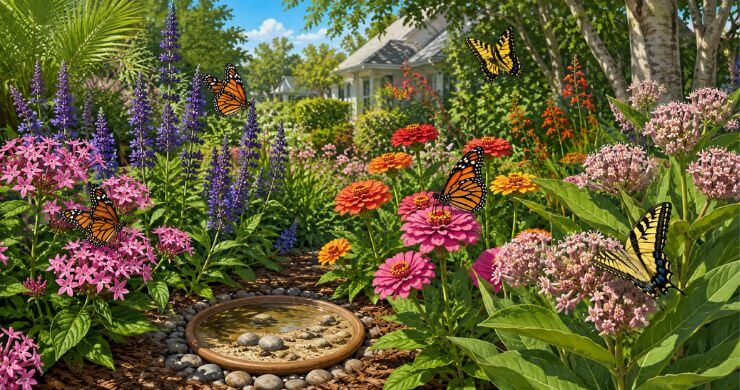
Summary
A Florida butterfly garden needs steady flowers, suitable host plants, moisture, shade, and shelter during the hottest months. Heat-tolerant plants can provide nectar when spring blooms fade. Damp sand offers a safer drinking place than open water. Layered planting creates cooler resting spaces, while mulch and thoughtful watering help flowers stay productive through summer.
Florida summers can test even well-established gardens. Strong sunlight, humid afternoons, and dry periods can shorten bloom cycles and leave butterflies with fewer dependable places to feed and rest. A Florida butterfly garden that looked busy in May may feel much quieter by late July if summer flowers slow down or dry out.
A few focused changes can keep a garden active without making summer care feel overwhelming. The goal is to support the full butterfly life cycle while keeping the space practical for a suburban yard in Zone 9B or 9B. Gardeners can watch for simple signs before making adjustments. Wilting flowers, dry soil, fewer open blooms, and butterflies resting in shaded areas may show that the space needs more support.
Why Summer Heat can be Hard on Butterflies
Butterflies depend on outside conditions to regulate their body temperature. During very hot weather, they may rest in shade and fold their wings to reduce heat absorption, according to the Florida Museum of Natural History.
The garden can also lose valuable food sources during long hot spells. Some spring flowers slow down, dry out, or stop blooming, which reduces the nectar available to adult butterflies.
A well-planned pollinator garden in Northeast Florida should offer food, water, shelter, and varied planting heights. UF/IFAS recommends combining nectar plants with larval host plants and choosing different bloom periods to provide steady resources throughout the growing season.
Choose Plants that Keep a Florida Butterfly Garden Blooming
A successful butterfly habitat includes two main plant groups. Nectar plants feed adult butterflies, while host plants feed caterpillars and give female butterflies places to lay eggs. A complete butterfly-friendly garden needs both types.
Gardeners should select summer nectar plants that can handle heat and continue flowering. UF/IFAS identifies pentas as a reliable summer performer that provides food for butterflies. Scarlet salvia also attracts butterflies, while zinnias can bloom through the hot season with suitable sunlight, airflow, and care.
Native milkweeds can support monarch caterpillars, but each species has different growing needs. UF/IFAS native milkweed guidance notes that pinewoods milkweed prefers sunny, sandy, well-drained soil. Aquatic milkweed needs wetter conditions, while native butterflyweed handles full sun or partial shade and blooms from July through September.
A garden should include more than one flower variety. A mix of bloom shapes, colors, and heights can serve different butterfly species and create more feeding opportunities.
Gardeners should also plan for continuous bloom from spring into fall. The Florida Wildflower Foundation recommends native wildflowers and host plants that help connect small home gardens with larger habitat areas. Even a compact planting bed can become a useful stop for passing butterflies.
Add Water, Shade, and Shelter for Daily Support
Butterflies need moisture, but a deep bowl of water does not meet their drinking needs. UF/IFAS explains that butterflies often gather at damp sand or mud and draw moisture through their proboscis.
A simple puddling station can include a shallow container, clean sand, and several flat stones. The sand should remain damp rather than flooded, and the water should be refreshed regularly. The stones provide safe landing areas and make the station easier for butterflies to use.
Shade also matters during peak afternoon heat. Taller flowers, native shrubs, and layered plantings can create cooler resting spaces near sunny feeding areas. Butterflies can move between warmth, food, and protection without leaving the garden.
Sheltered areas also give butterflies protection from wind and heavy rain. Dense plants, shrubs, and varied plant heights can create small microclimates throughout the yard.
Gardeners should consider leaving some healthy garden areas less tidy. Standing stems, leaves, and plant material may protect eggs, caterpillars, or chrysalises. The Florida Wildflower Foundation notes that careful cleanup can protect developing butterflies that may be hidden on garden plants.
Keep the Garden Healthy with Organic Summer Care
Healthy flowers provide a more dependable nectar supply. Gardeners should check the soil before watering and provide deep watering when plants need moisture. Water should reach the root zone, and extra watering may not be needed after sufficient summer rainfall.
Mulch helps the soil retain moisture and protects roots from extreme temperatures. UF/IFAS mulch guidance recommends a two-inch to three-inch layer around established bedding plants. Mulch should remain several inches away from smaller stems so moisture does not collect against them.
Compost can support soil structure and improve moisture retention when preparing or refreshing planting beds. Healthy soil helps flowering plants maintain stronger growth and continue producing nectar during stressful summer conditions.
Removing spent flowers can also encourage additional blooms on certain plants. UF/IFAS notes that some summer annuals produce more flowers when old blooms are removed. Gardeners should confirm that each plant benefits from deadheading before trimming.
Caterpillar damage does not always mean that a plant has failed. Chewed milkweed or passionflower leaves may show that a host plant is supporting the butterfly life cycle. Gardeners can observe the plant, protect healthy growth, and leave enough foliage for caterpillars to feed.
These habits keep summer care manageable. Small adjustments involving water, mulch, planting diversity, and gentle cleanup can provide steady butterfly support through Florida's hottest weeks.
Frequently Asked Questions
Florida homeowners often have practical questions about keeping butterfly habitat useful during long periods of heat.
What do butterflies need most during hot Florida weather?
Butterflies need nectar, host plants, moisture, shade, shelter, and safe places to rest. Gardeners should keep several flowers blooming and provide damp sand and layered plants nearby.
What plants are best for a Florida butterfly garden in summer?
Pentas, scarlet salvia, and zinnias can provide summer nectar. Native milkweeds support monarch caterpillars, but gardeners should match each milkweed species with the yard's sunlight, drainage, and soil moisture.
How can gardeners provide water for butterflies?
Gardeners can use a shallow container filled with clean sand or soil. Flat rocks can provide landing areas, while regular water changes keep the material moist and clean. Deep pools of open water should be avoided.
Can mulch and healthy soil help butterflies?
Mulch and compost support the flowering plants that butterflies depend on. Mulch reduces moisture loss and moderates soil temperature, while healthy soil helps plants maintain stronger growth and longer bloom periods.
Grow a more welcoming garden with Michelle in the Meadow
A Florida butterfly garden does not need to be large or perfect. Homeowners can begin with one sunny bed, several dependable flowers, one suitable host plant, and a small puddling area.
Michelle in the Meadow shares more seasonal ideas and practical guidance for warm-climate home gardens. Each thoughtful change can make a yard more welcoming to butterflies throughout the summer.