
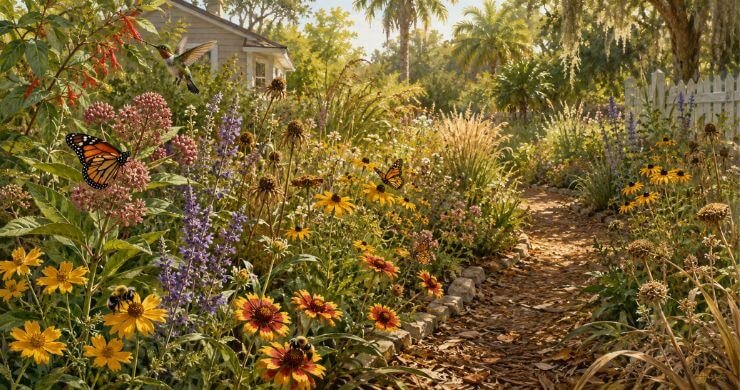
Key takeaways
A pollinator garden in Northeast Florida performs best with selective, not blanket, cleanup. Zone 9B/9B's mild winters mean many native bees, butterflies, and moths overwinter in leaf litter and hollow stems. Leaving most debris until spring temperatures stay above 50°F protects habitat, while targeted removal of diseased material keeps plants healthy.
The "messy garden" movement has flipped decades of tidy-yard advice on its head. Ecological research now suggests that fallen leaves, standing seed heads, and hollow stems are habitat, not clutter, for the wild pollinators most gardens depend on. But how much of that national advice actually applies to a pollinator garden Northeast Florida gardeners maintain through mild winters and long growing seasons? The answer sits somewhere between the old rake-everything default and the newer leave-it-all approach. Research, Zone 9B/9B climate context, and a few practical exceptions together shape a smarter cleanup routine. The goal is a garden that reads intentional, not neglected, and that keeps native pollinators fed and sheltered year-round.
Why a Less-tidy Pollinator Garden Works Ecologically
The wild pollinators that support home gardens do not disappear over winter. Most stay put, hidden inside plant debris, waiting out cool weather in the same beds where they fed all summer. According to the Xerces Society, 70% of native bees are ground-nesting. The remaining 30% depend on cavities in dead wood, hollow stems, or brush piles. Removing every leaf and cutting every stem to the soil erases both types of habitat.
Fallen leaves matter even more than most gardeners realize. The National Wildlife Federation reports that 94 percent of moth species rely on the leaf layer to complete their lifecycle. Roughly 96 percent of backyard birds feed those caterpillars to their young. A raked, bagged yard is a yard with fewer moths, fewer butterflies, and fewer songbirds next spring.
The soil benefits too. University of Florida entomologists note that leaf litter functions as a slow-release fertilizer while providing insulation for overwintering bumble bee queens and butterfly larvae. Leaving debris in place reduces yard waste, cuts fertilizer costs, and shelters the insects a pollinator garden aims to attract. Less intervention often produces more habitat, and more habitat produces more pollinators.
How Zone 9B/9B Changes Cleanup for a Pollinator Garden in Northeast Florida
Cleanup advice from national sources often assumes a hard winter that shuts down pollinator activity. Northeast Florida rarely gets one.
In Zone 9B/9B, mild winters allow many native bees, butterflies, and moths to remain semi-active or overwinter locally rather than migrate. UF/IFAS Extension confirms that Florida's native pollinators nest underground, in hollow cavities, or enter dormancy right in the garden. Every stem cut short and every leaf raked away removes a shelter that is likely still in use.
Fall bloomers matter more here than farther north. Native plants including orange coneflower, cardinal flower, and blazing star keep blooming into November across North Florida, feeding pollinators when other nectar sources fade. Cutting these plants back too early strips food from the garden precisely when it is scarce elsewhere.
Timing changes for spring cleanup too. The Xerces Society recommends waiting until daytime temperatures stay consistently above 50°F before major cutback or leaf removal. In Zone 9B/9B, that threshold often arrives weeks earlier than in northern climates, but the principle holds: patience protects the overwintering insects still emerging from stems and leaf litter.
Practical guidance is to leave standing stems and leaf cover through winter, then wait to prune hollow-stemmed perennials like milkweed and goldenrod until late winter or early spring, just before active growth resumes. More region-specific gardening articles cover related Zone 9 planting and timing questions in depth.
When Some Cleanup Still Matters
Selective cleanup is not the same as no cleanup. A few situations call for targeted removal even in a habitat-focused garden.
Diseased plant material should be cut and bagged, not composted. Powdery mildew, black spot, and rust can overwinter on infected leaves and reinfect plants the following season. Removing this material protects the beds without sacrificing pollinator habitat elsewhere.
Non-native invasive volunteers deserve prompt removal. Species that spread aggressively from seed can crowd out the natives that pollinators depend on. Pulling them before seed set prevents a bigger problem next year.
Turfgrass borders and pathways need attention too. A thick, matted layer of leaves will smother lawn. Raking leaves off lawn and into planting beds solves both problems at once, protecting the grass and adding insulation where pollinators actually need it. Near entrances and walkways, light tidying keeps the garden legible as intentional rather than abandoned.
Frequently Ask Questions
The same questions come up whenever a habitat-focused cleanup approach is on the table.
When should a pollinator garden in Northeast Florida be cleaned up?
Most fall cleanup can safely wait until spring, and even spring cleanup should be delayed until daytime temperatures stay reliably above 50°F. In Zone 9B/9B, that benchmark generally arrives in February or early March, but exact timing varies by year and location.
Is it safe to leave fallen leaves in a Florida garden year-round?
In most planting beds, yes. Research supports leaving leaf layers roughly two inches thick to shelter overwintering insects without smothering plants. Thick or matted layers should be raked from lawns into planting beds, where they insulate soil and reduce yard waste at the same time.
How tall should perennial stems be left standing for native pollinators?
Cutting stems short but not flush to the soil protects cavity-nesting bees that use hollow stems as overwintering nurseries. Leaving several inches of stem intact through spring allows those insects to emerge on their own timing. Cut tops can be bundled and set at the garden's edge if a tidier look is preferred.
Does a messy pollinator garden attract more pests?
Not typically. The insects most often sheltering in leaf litter and hollow stems are pollinators, beneficial predators, and their food-web partners, not garden pests. Most true pest problems, when they do occur, come from diseased plant material left in place or from monocultures with poor plant diversity.
Keep Growing with Me
Every garden is different, and every gardener finds a rhythm that works for their space. I'd love to hear what your cleanup routine looks like in the comments. If you want more Zone 9 gardening ideas, my story and the other posts on the blog cover the trial-and-error behind a healthier pollinator garden Northeast Florida gardeners can grow all year.