
Summary
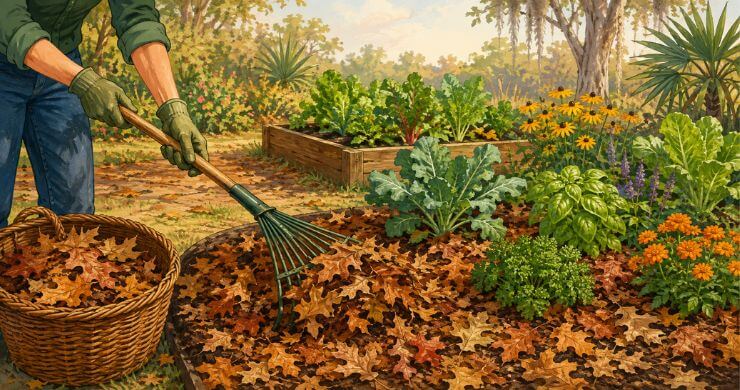
Fallen leaves are a free, high-value garden resource that improves soil structure, feeds soil biology, and reduces yard waste sent to landfills. Three main methods put them to work: whole-leaf mulching, shredded leaves for faster breakdown, and slow-composted leaf mold as a soil conditioner.
Every autumn, American households bag up millions of tons of fallen leaves and send them to the curb. According to the EPA, US yard trimmings including leaves totaled 35.4 million tons in 2018, with 10.5 million tons still landfilled. That represents a large volume of free soil-building material heading to disposal instead of the garden.
Turning that pile of leaves into leaf mulch for gardens takes almost no effort and rewards the soil for months. Whether the goal is smothering weeds, insulating a bed against winter, or building richer soil, fallen leaves handle the job well. A rake and a lawn mower are the only tools required.
Why Fallen Leaves are Garden Gold
Trees pull nutrients from deep in the soil and store them in their leaves throughout the growing season. Texas A&M AgriLife Extension estimates that leaves contain 50 to 80 percent of the nutrients a plant extracts during that time. When leaves fall and break down, those nutrients return to the topsoil where garden plants can use them again.
Beyond the nutrient bank, decaying leaves feed the soil microbiome. According to the Morton Arboretum, fungi, bacteria, and other soil organisms consume fallen leaves and release plant-usable minerals while improving soil structure. The result is looser, spongier soil that holds water better and drains without compacting.
Leaves are also free, renewable, and locally abundant. Bagging them for curbside pickup sends valuable organic matter away from the garden that produced it. Keeping leaves on-site puts them to work for free.
For the home gardener, this makes leaf mulch for gardens one of the most efficient soil-building tools available. A single autumn's leaf drop can replace purchased mulch, soil conditioner, and organic amendments all in one step.
Three Ways to Turn Fall Leaves into the Garden's Best Mulch
Fallen leaves can serve the garden in three main forms, each with different timing and effort. The best choice depends on the season and how quickly the material needs to break down.
The simplest method is whole-leaf mulching. Rake or blow leaves directly into perennial beds, vegetable garden pathways, or around trees and shrubs, then leave them to break down over winter. Morton Arboretum guidance notes that soil microbes will consume most of the layer by spring. This method takes almost no effort but works slowly, and thick mats of unshredded leaves can blow around or smother tender plants.
Shredded leaves work faster and stay in place better. Running a lawn mower over a pile a few times reduces leaves to small flakes that decompose in months rather than seasons. This smaller particle size also mats less and packs down evenly, giving cleaner coverage in vegetable beds and around shrubs. Shredded leaves take up less storage space too, letting a gardener stockpile them for use throughout the year.
Leaf mold is the slowest option and the highest-value soil conditioner of the three. Piling leaves in a wire bin or bag and letting them decompose over six to twelve months produces a soft, crumbly humus. NC State Cooperative Extension notes that adding leaf mold to soil can increase that soil's water retention by more than 50 percent.
Where Leaf Mulch for Gardens Works Best
Leaf mulch fits almost anywhere in the garden, but a few placements deliver the biggest benefit for the effort involved.
Around vegetable beds, a 2 to 3 inch layer of shredded leaves holds soil moisture, blocks weeds, and moderates soil temperature during hot spells. Texas A&M AgriLife Extension guidance suggests this same depth in annual and perennial flower beds. For trees and shrubs, a thicker 3 to 6 inch layer feeds the root zone as the leaves break down.
Raised beds benefit especially well from leaves at the base of the fill. A layer of whole or shredded leaves at the bottom acts as a moisture reservoir and adds organic matter as it decomposes, reducing the total volume of purchased soil needed to fill the bed. Anyone planning fall bed builds can estimate the mix using my soil calculator before hauling material.
Garden paths handle heavy foot traffic better with a thick leaf layer underfoot. The leaves compress, decompose slowly, and eventually mix into the surrounding soil while keeping walkways clean during wet weather. This use turns fall leaves in the garden into functional infrastructure that costs nothing and improves the soil under the path at the same time.
Common Mistakes to Avoid When Using Leaves as Mulch
A few mistakes can turn helpful leaf mulch into a garden problem. Knowing them in advance keeps the pile working for the plants instead of against them.
Piling leaves directly against plant stems or tree trunks invites rot, pests, and vole damage during winter. Extension services recommend keeping mulch a few inches back from any woody stem.
Skipping the shred step is another common issue. Whole leaves left in a thick, undisturbed layer can form a dense mat that blocks water and air from reaching the soil. Morton Arboretum research warns that a mat of unshredded leaves on turf can also encourage disease. A pass or two with a lawn mower usually fixes both problems.
Some tree leaves need extra caution. Black walnut leaves contain juglone, a chemical that inhibits the growth of sensitive garden plants including tomatoes, peppers, and eggplants, according to Illinois Extension. Walnut leaves should not be used as mulch around those crops and instead should be composted separately for at least six months. Anyone new to composting leaves can find more gardening articles covering related techniques.
Frequently Asked Questions
Gardeners considering leaf mulch commonly ask the following questions.
Can I use fallen leaves as fertilizer?
Fallen leaves work more as a slow-release soil amendment than a fast-acting fertilizer. As they decompose, they release calcium, magnesium, potassium, and trace minerals while feeding the soil microbes that make those nutrients plant-available.
How long does it take for fallen leaves to decompose?
Shredded leaves usually break down within 6 to 12 months. Whole leaves and tougher species like oak can take longer. NC State Cooperative Extension notes that warmth, moisture, and small particle size all speed the process.
Are all fallen leaves good for the garden?
Most tree leaves work well as garden mulch. Black walnut leaves contain juglone and can harm sensitive plants including tomatoes, peppers, and eggplants. Leaves from any diseased tree should go to municipal composting rather than the home garden.
Want More Zone 9 Gardening Tips?
Turning fallen leaves into leaf mulch for gardens is one of my favorite ways to save money and build better soil at the same time. What do you usually do with the fallen leaves in your garden? Drop a comment and share whether you mulch them, compost them, or send them to the curb, and any tricks that have worked for you. There's always more to learn from another gardener's routine, and readers can find more seasonal ideas here on the blog.