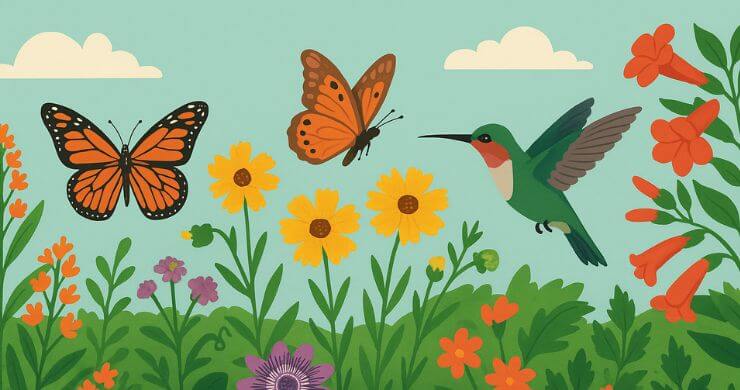
Creating a garden that attracts butterflies and hummingbirds adds color, sound, and movement to your outdoor space. These helpful pollinators also support healthy plant growth. In Northeast Florida, you can build a pollinator-friendly garden using native plants and simple, organic methods. Whether you're planting a small bed or expanding into full meadow garden landscaping, this guide will help you get started.
Why Butterflies and Hummingbirds Visit Gardens
Butterflies visit gardens to sip nectar and lay eggs on host plants. Hummingbirds look for nectar too, but also eat tiny insects. Both species prefer spaces without pesticides or chemicals. They thrive in wildflower gardens where they find food, shelter, and places to rest. Their visits also help pollinate native plants in your yard.
Best Native Nectar Plants for Butterflies
Butterflies love bright flowers that offer flat landing spots and nectar. Many of these plants are heat-tolerant and grow well in wildflower gardening across Florida. Here are strong choices for a butterfly garden in Northeast Florida:
- Milkweed (Asclepias spp.): A must-have host and nectar plant for Monarchs
- Coreopsis: Florida’s state wildflower with long-lasting yellow blooms
- Lantana (native species only): Drought-tolerant and colorful
- Passionflower (Passiflora incarnata): Host plant for Gulf Fritillaries, with large purple blooms
These plants do well in full sun and sandy soil, common in Florida meadow landscaping.
Best Native Nectar Plants for Hummingbirds
Hummingbirds prefer tubular blooms and are especially drawn to red, pink, and orange flowers. These native plants do well in Zone 9 gardens and support hummingbird visits year-round:
- Coral Honeysuckle (Lonicera sempervirens): A climbing vine that blooms early and attracts hummingbirds
- Firebush (Hamelia patens): A fast grower with red-orange flowers that bloom through warm seasons
- Scarlet Sage (Salvia coccinea): Easy to grow from seed and loved by hummers
- Turk’s Cap (Malvaviscus arboreus): Grows in part shade and blooms later in the season
Planting these species in clusters helps hummingbirds find them more easily.
Provide Water and Shelter
In a meadow garden, pollinators also need places to rest, drink, and stay safe. Add a shallow water dish or a small fountain. Hummingbirds enjoy misters. Butterflies often land on flat rocks to warm themselves. Use shrubs or taller perennials to block wind and give cover. These natural features support pollinators without adding clutter.
Use Host Plants for Butterfly Life Cycles
To grow a true butterfly garden, add host plants that support caterpillars. This encourages butterflies to stay and lay eggs. You may see leaves get chewed, but this is part of the cycle.
- Milkweed: Host for Monarchs
- Cassia (Senna spp.): Supports Sulphur butterflies
- Passionflower: Host for Gulf Fritillaries
- Parsley, Dill, Fennel: Hosts for Black Swallowtail caterpillars
These plants make your pollinator garden more than just a feeding station—they support full lifecycles.
Keep It Organic and Chemical-Free
Avoid all pesticides, even ones labeled "natural." These can harm caterpillars and kill the insects that hummingbirds eat. Instead, build healthy soil with compost, mulch around plants to hold moisture, and remove weeds by hand. A chemical-free wildflower garden allows nature to manage balance on its own.
Simple Layout Tips for Meadow Gardens
Design your garden for both beauty and function. Use these tips to create structure:
- Group nectar flowers in clusters
- Mix plant heights with layers: ground covers, shrubs, and vines
- Plant for year-round color with spring, summer, and fall blooms
- Use open areas with good sun and light wind protection
These ideas work well whether you’re growing a small flower bed or building a full meadow garden in Northeast Florida.
You don’t need a large space to support pollinators. Start with a few native plants and see what visits. Add more each season. Keep a journal or take photos of butterfly and hummingbird sightings. Your efforts support local ecosystems and turn your space into a living, breathing part of Florida’s natural landscape.
