
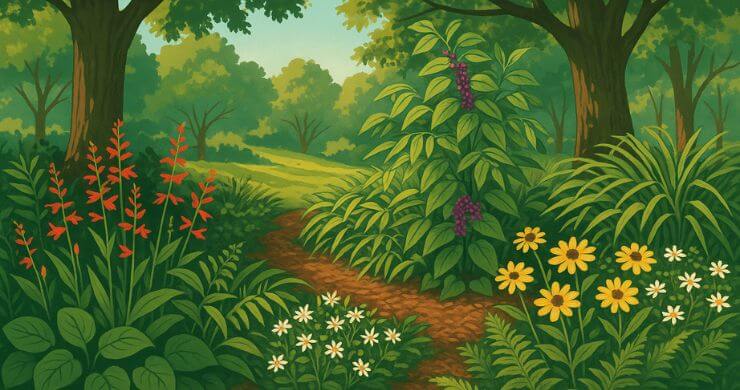
Hot summers in Northeast Florida can stress gardens, especially when plants grow in full sun. But shady areas offer a cooler, low-maintenance solution. With the right planning, you can create a thriving shade garden that supports native wildlife and adds beauty to your space. These gardens work well in a meadow garden in Northeast Florida and help reduce water use and soil erosion.
Why Shade Gardens Work in Hot Climates
Shade gardens lower stress on plants by reducing heat and evaporation. The soil stays cooler and holds more moisture. These gardens also require less weeding and watering.
In shady areas, the ground remains rich with organic matter. Fallen leaves break down slowly and build healthy soil. These spots are also great for native bees, butterflies, and even hummingbirds, making them a good option for a pollinator garden in Northeast Florida.
Know Your Shade Before You Plant
Not all shade is the same. Some areas receive filtered light through trees—this is called dappled shade. Other areas may get only morning sun or no direct light at all.
Spend a few days watching how sunlight moves through the space. Take note of how long each spot gets light. This will help you pick plants that match those conditions. For example, some plants thrive with only four hours of morning sun, while others need bright indirect light all day.
Native Plants That Grow Well in Shade
Using native plants in Northeast Florida supports local ecosystems. These plants handle the heat and humidity better than non-natives and attract native insects and birds. Many natives can grow well in partial or full shade.
Try these native species for a shade garden:
- American Beautyberry (Callicarpa americana) – A shrub with bright purple berries that birds love. Grows in light shade.
- Inland Sea Oats (Chasmanthium latifolium) – A grass with nodding seed heads that does well in deep shade.
- Brown-eyed Susan (Rudbeckia triloba) – Good for dappled shade, blooms bright yellow flowers.
- Wild Ginger (Asarum arifolium) – Low-growing groundcover with heart-shaped leaves.
- Scarlet Sage (Salvia coccinea) – Attracts hummingbirds and grows well in part shade.
- Southern Wood Fern (Thelypteris kunthii) – Easy to grow and spreads in moist shady spots.
These plants fit well into any Florida meadow landscaping design with tree cover or taller structures.
Wildflowers for Shady Corners
Wildflower gardening in Florida can work even in shade. Many native wildflowers tolerate low light and still bloom through summer and fall.
Add these to a shaded border or under a tree:
- Lanceleaf Coreopsis (Coreopsis lanceolata) – Florida’s state wildflower. Grows in part shade with good drainage.
- White Woodland Aster (Symphyotrichum divaricatum) – Blooms in fall, spreads gently in dappled shade.
- Beach Sunflower (Helianthus debilis) – Tolerates partial shade and attracts bees.
Let these plants self-seed and spread naturally. This creates a soft, natural look that blends into the rest of the garden.
Design Tips for a Successful Shade Garden
Design your shade garden with simple layers. Group plants by height and light needs. Place taller shrubs in the back and groundcovers near the edge. Leave space for walking and airflow.
Use mulch made from shredded leaves or pine bark to hold moisture. Avoid landscape fabric or synthetic barriers. Add stepping stones to keep feet off the soil and protect plant roots.
Repeat plant types for a more natural look. Even in shade, aim for blooms across seasons to keep the garden interesting.
How to Support Pollinators in the Shade
Pollinators visit shady gardens if they find flowers, shelter, and water. Choose plants that bloom at different times to offer food across the seasons.
Include nectar-rich flowers like Salvia, Aster, and Coreopsis. Add a water source such as a shallow dish with pebbles. Keep the space free of pesticides, herbicides, and chemical fertilizers.
Even a quiet corner can become a small pollinator garden in Northeast Florida with the right choices.
Shade gardens bring relief from the heat and offer a new way to enjoy your outdoor space. By using native plants, wildflowers, and natural mulch, you can turn a shady patch into a living habitat.
Whether you're growing a meadow garden in Northeast Florida or expanding your wildflower gardening in Florida, shaded areas provide valuable growing space. With a little planning and the right plants, you can create a garden that thrives all summer long—without full sun.