
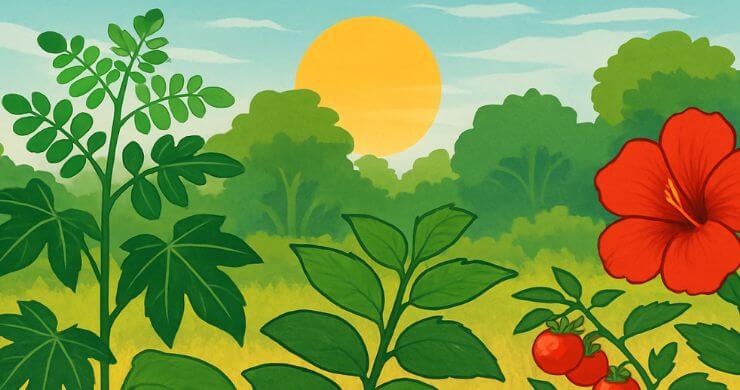
Growing tropical greens in Northeast Florida is a smart way to keep fresh food on your plate all year. These leafy plants thrive in the region’s warm, humid climate. Many grow quickly, resist pests, and come back every season. You can mix them into a meadow garden for both beauty and function.
Tropical greens blend well with native plants in Northeast Florida. They provide nutrition and support your landscape with color, texture, and low-maintenance growth. If you want a garden that feeds you and supports wildlife, these plants belong in your plan.
Why Tropical Greens Work in Florida’s Climate
Northeast Florida has long growing seasons. Temperatures stay warm enough for many tropical greens to grow through fall and even winter. These plants are used to heat, humidity, and heavy rains. They recover well after storms and rarely need extra watering.
Because of the local climate, tropical greens grow faster here than in most of the United States. Many reseed themselves or grow as perennials. That means less planting work each year.
When added to a meadow landscaping design, tropical greens can create edible borders, shade layers, or wild backdrops. They help build strong soil and reduce the need for store-bought greens.
Top Tropical Greens for Northeast Florida Gardens
Choose plants that thrive in heat and can handle humidity. These greens are proven growers in Northeast Florida gardens:
Chaya (Tree Spinach)
Chaya is a hardy shrub that grows 6–8 feet tall. The leaves are rich in protein and iron. Always cook the leaves before eating. Chaya grows best in full sun and poor soil. It does not need much care once established.
Katuk
Katuk is a bushy plant with crunchy, nutty-tasting leaves. It grows well in part shade and reaches up to 6 feet. You can eat the leaves raw or cooked. It blends easily into edible and wildflower gardens.
Moringa (Drumstick Tree)
Moringa grows fast and tall. You can harvest leaves, flowers, and seed pods. The leaves are packed with calcium, potassium, and vitamins. Moringa likes sun and well-drained soil. It loses leaves in winter but bounces back in spring.
Okinawa Spinach
This spreading groundcover has green leaves with purple undersides. It grows well in partial shade and keeps weeds down. The leaves are tender and good raw or cooked. It makes a colorful layer in a wildflower gardening Florida plan.
Everglades Tomato
Not a leafy green, but still worth adding. This small, wild tomato grows like a weed in Florida heat. It produces tiny fruits that are sweet and easy to snack on. It fits well in pollinator gardens in Northeast Florida and supports bees and small birds.
Mix Tropical Greens into a Meadow Garden
You don’t need a separate space for tropical greens. They fit well in meadow garden designs. You can plant them with wildflowers, herbs, and shrubs. This creates a natural look that supports pollinators and soil health.
Let taller greens like Chaya or Moringa form the backbone of a planting bed. Fill in around them with shorter plants like Okinawa spinach. Use mulched paths or native grasses to shape the area.
Adding edible plants into Florida meadow landscaping brings function and diversity to your space. It also makes harvesting easy since greens will be close to your walkways and gathering spots.
Support Pollinators and Healthy Soil Organically
Tropical greens attract bees, butterflies, and beneficial insects when you let them flower. Moringa and Katuk especially support nectar feeders. Combine them with native plants in Northeast Florida like coreopsis or blanket flower for long blooms and strong pollinator activity.
Skip the synthetic fertilizers and use compost instead. Layer mulch around the plants to hold moisture and suppress weeds. These simple steps keep your garden organic and productive.
Healthy soil builds strong plants. That means fewer pests and better growth. Companion planting with wildflowers and native shrubs keeps your garden in balance.
Tips for Year-Round Harvesting
Tropical greens grow quickly but can slow down in cold months. Here are tips to keep your harvest going:
- Plant in stages to have young greens always growing.
- Use row covers or grow near walls for extra warmth in winter.
- Harvest often, and freeze or dry extra leaves for later.
- Protect from frost by covering or bringing potted plants inside when needed.
Some plants, like Okinawa spinach and Everglades tomato, may drop off in winter but return in spring. Others, like Chaya and Moringa, keep producing with minor protection.
Start Growing Greens in Your Florida Garden
Tropical greens are a smart way to grow food all year. They need little care, grow fast, and bring nutrients to your plate. They also blend beautifully into Florida meadow landscaping, especially when paired with native plants and wildflowers.
If you want a pollinator garden in Northeast Florida that also feeds you, tropical greens are a strong choice. Choose a few to try this season. You may find them becoming favorites in your meadow garden.
