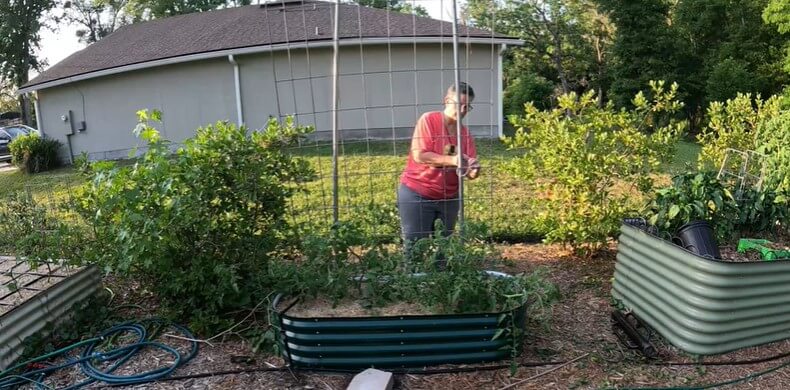
Can I build this tomato trellis in 10 minutes or less? In this video we're going to find out. I'll share the way I did it, the mistakes I made AND how I corrected them.
I wanted to build with items I already had here in the Meadow, but I did have to buy some rebar for the base.
Ideas from Gemini AI
Need Tomato Support? Trellis Ideas Beyond the Cattle Panel!
Here are some of other tomato trellising methods:
1. The Florida Weave:
- What it is: Strong stakes (wood, metal T-posts) placed every few plants in a row, with twine woven horizontally between the stakes, gently sandwiching the tomato stems as they grow. You add more layers of twine as the plants get taller.
- PRO: Very cost-effective, uses minimal materials, easy to set up and take down, and keeps rows tidy. Works best for determinate or smaller indeterminate varieties in neat rows.
2. DIY Heavy-Duty Cages:
- What it is: Forget those flimsy store-bought cages! Create your own sturdy, wide-diameter cages using concrete reinforcing wire mesh (remesh) or smaller sections of hog/cattle panels. Cut a length, form a cylinder, and secure the ends.
- PRO: Provides 360-degree support, lasts for *years*, wide enough for good airflow, and strong enough for the biggest indeterminate beefsteaks.
3. Vertical String Trellising (Overhead Support):
- What it is: Requires a strong overhead support structure (like the inside of a high tunnel/greenhouse, a sturdy wooden frame, or even a well-anchored horizontal pole). Heavy-duty twine or ropes hang down from the support, and tomato vines are trained up the string using clips or by gently twisting the vine around the string.
- PRO: Excellent space saver for vertical growth, promotes great airflow, makes harvesting easy, and keeps fruit super clean. Common in professional settings but adaptable for home gardens with the right setup.
4. A-Frame Trellis:
- What it is: Two rectangular trellis panels (wood lattice, wire mesh, or even smaller cattle panels) hinged or tied together at the top to form an "A" shape. Plants grow up the outside.
- PRO: Very stable design, creates shade underneath for cool-weather crops early/late in the season, provides two growing surfaces, and can often be folded for storage.
5. Classic Wooden Trellis/Lattice Panels:
- What it is: Traditional wood lattice panels or custom-built wooden trellises attached to sturdy posts. Vines are tied or clipped to the structure.
- PRO: Can be very aesthetically pleasing, integrates well into landscape designs, and offers good support if built strongly (use rot-resistant wood like cedar!).
6. Cattle Panel Variations:
- Arched Cattle Panel: Instead of standing it straight, securely anchor the ends further apart to create a beautiful, sturdy archway for tomatoes to climb over. Great visual appeal and strong support.
- Lean-To: Lean a cattle panel against a wall, fence, or shed (ensure good airflow!). Simple and effective use of existing structures.
Key Things to Remember:
- Go Strong: Tomatoes get HEAVY, especially indeterminates loaded with fruit. Don't skimp on support strength!
- Think Airflow: Good circulation helps prevent diseases. Choose a method that doesn't overcrowd the plants.
- Secure Anchoring: Whatever you build, make sure it's well-anchored in the ground or to a structure to withstand wind and plant weight.
What's YOUR favorite way to trellis tomatoes? Let me know in the comments below! Happy Growing! 🌱
Support for Michelle in the Meadow
If you're interested in any of the products we show on this channel, you can use the links below to find them and make a purchase. These links are affiliate links, which means I'll earn a small commission when you make a purchase.
https://michelleinthemeadow.com/support
Birdies Garden Bed https://michelleinthemeadow.com/epic
Vego Garden Bed https://michelleinthemeadow.com/vego
Bully American-Made Tools https://amzn.to/3EbqjQK
Fiskars Hedge Shears https://www.amazon.com/dp/B007HZCRNY/
Gorilla Cart Wagon https://amzn.to/43gYkpq
About Michelle In The Meadow
I'm growing on a 1/4 acre suburban lot. I started gardening here 6 years ago and am glad you are here.
We have more than 80 individual fruit trees and shrubs and more than a dozen different kinds of annuals growing on this property. The slopes make for some interesting ways to garden, but we're trying to make the best of it.
On the first Sunday evening of each month (7PM Eastern), I go live on YouTube sharing updates and answering your questions.
If you enjoyed this video, please give it a thumbs up and consider subscribing to follow along on all the happenings in my Northeast Florida Zone 9B Garden.
🌿Website: https://michelleinthemeadow.com
🌿Instagram: https://www.instagram.com/michelleinthemeadow
🌿Facebook: https://www.facebook.com/michelleinthemeadow
🌿 YouTube: https://www.youtube.com/@michelleinthemeadow
This video: https://www.youtube.com/watch?v=GPyFVCtwZSY