Gardening in Northeast Florida offers long growing seasons, abundant sunshine, and plenty of rain. But the same conditions that make Zone 9B so productive can also stress plants. Heat bakes the soil, sandy ground drains quickly, and storms wash nutrients away. Mulching is one of the simplest and most effective ways to create a cooler, healthier garden. With the right mulch, your plants will thrive, your soil will improve, and your landscape will stay beautiful year-round.
Why Mulch Matters in Zone 9B
Mulch acts like a protective blanket over the soil. In Northeast Florida’s hot summers, bare soil can overheat and dry out quickly. A two- to three-inch layer of mulch shields the ground, reducing evaporation and keeping soil temperatures stable.
Beyond cooling, mulch also improves soil structure over time. As organic mulch breaks down, it feeds earthworms and beneficial microbes. These soil helpers boost fertility and create better drainage. In a Zone 9B garden, where sandy soil is common, mulch becomes essential for building long-term soil health.
Best Mulch Options for Florida Meadow Landscaping
Not all mulches are equal, especially in Florida’s climate. The best mulches are organic, natural, and locally available. Here are a few top picks for meadow-style gardens:
- Pine Straw – Lightweight, easy to spread, and slow to break down. It blends well into natural landscapes.
- Shredded Leaves – Free and abundant in fall. They add valuable nutrients and enrich sandy soil.
- Wood Chips – Long-lasting and effective at cooling the ground. Ideal for paths and around trees.
- Grass Clippings or Seaweed – Only use untreated clippings or natural seaweed. They break down quickly and feed soil life.
When building a Florida meadow garden, these mulches help maintain a natural look while keeping the ecosystem balanced. Avoid dyed wood chips or synthetic mulches. These do not improve the soil and can even harm plant health.
Mulching for Pollinator Gardens in Northeast Florida
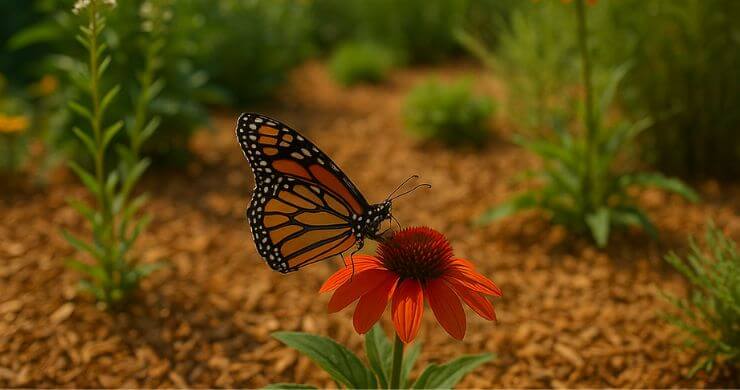
Pollinator gardens thrive when mulch is used wisely. Bees, butterflies, and other pollinators depend on strong, healthy plants. Mulch supports them by conserving moisture and protecting the roots of nectar-rich flowers.
For pollinator habitats, spread mulch carefully. Leave small bare spots of soil for ground-nesting bees. Around perennials and wildflowers, apply a lighter mulch layer so stems are not smothered. This keeps plants vigorous and encourages consistent blooming.
In a pollinator garden in Northeast Florida, the right mulching strategy creates a balance: plants stay hydrated, weeds stay suppressed, and pollinators find both flowers and safe nesting areas.
Simple Mulching Techniques for Lasting Results
Applying mulch correctly makes all the difference. Start by removing weeds before spreading mulch. This ensures the mulch blocks new weeds instead of covering old ones.
Spread mulch about 2–3 inches deep, keeping it a few inches away from plant stems or tree trunks. Piling mulch against plants traps moisture and can cause rot. Reapply mulch once or twice a year, especially after heavy summer rains wash it away.
For even better results, combine mulch with a layer of compost. Compost adds nutrients, while mulch locks in moisture and prevents erosion. Together, they create rich soil that supports strong plant growth in Zone 9B.
Seasonal Mulch Tips for Meadow Gardens in Northeast Florida
Mulch is not just a one-time task. Adapting mulch use to the seasons keeps your garden thriving all year:
- Summer – Apply mulch before peak heat to protect roots and reduce watering needs.
- Fall – Collect and shred fallen leaves for a free, nutrient-rich mulch.
- Winter – Use lighter mulch layers to protect soil life but still allow warming on sunny days.
- Spring – Refresh mulch before planting annuals or vegetables for a healthy start.
For a meadow garden in Northeast Florida, these seasonal practices ensure that wildflowers, grasses, and pollinator plants grow strong through every stage of the year. Mulch keeps the meadow-style design resilient, colorful, and low-maintenance.
Mulching is more than just covering the soil. It is a simple habit that transforms gardens in Zone 9B into thriving ecosystems. From cooling roots and conserving water to feeding soil life and supporting pollinators, mulch is the secret to healthier landscapes.
Whether you are building a Florida meadow landscaping project or nurturing a pollinator garden in Northeast Florida, mulch makes the difference between stressed plants and a vibrant, balanced garden. By choosing natural mulches and applying them with care, you create a cooler, greener, and more sustainable space.
Follow Michelle in the Meadow for more organic gardening insights and inspiration.