
Key takeaways
- Bare summer beds lose soil and gain weeds, while summer cover crops protect the ground and feed it.
- Cowpeas and sunn hemp are easy summer legumes that pull nitrogen from the air and add organic matter.
- Cutting the crop before it sets seed and working it in gets beds ready for a strong fall planting.
Florida summers are tough on a vegetable garden. By June, many spring crops have faded, and the beds sit bare under heavy heat and afternoon storms. Empty soil bakes hard, washes away in the rain, and fills with weeds within weeks.
There is a simpler path. In Florida, summer cover crops give those open beds a job to do, and two of the easiest choices are cowpeas and sunn hemp. These warm season plants protect the soil surface, add organic matter, and leave the ground richer for the fall garden. Growing summer cover crops in Florida turns an idle, weedy season into one that quietly builds better soil.
Why summer cover crops work in Florida gardens
A cover crop is any plant grown to protect and improve the soil rather than to harvest. In a hot climate, that protection matters. A living canopy shades the soil, slows erosion from summer downpours, and crowds out weeds before they take hold. When the plants are cut and worked into the bed, they break down into organic matter that feeds soil life and holds moisture.
Legumes do something extra. According to SARE's Building Soils for Better Crops, a main reason gardeners choose legume cover crops is their ability to pull nitrogen from the air and add it to the soil. That nitrogen becomes available to the next crop as the residue breaks down.
Cowpeas and sunn hemp are both summer legumes, which makes them strong soil building cover crops for the season when beds would otherwise sit empty. The result is looser, darker, more fertile ground heading into fall, with less work and no waste.
Cowpeas as a summer cover crop
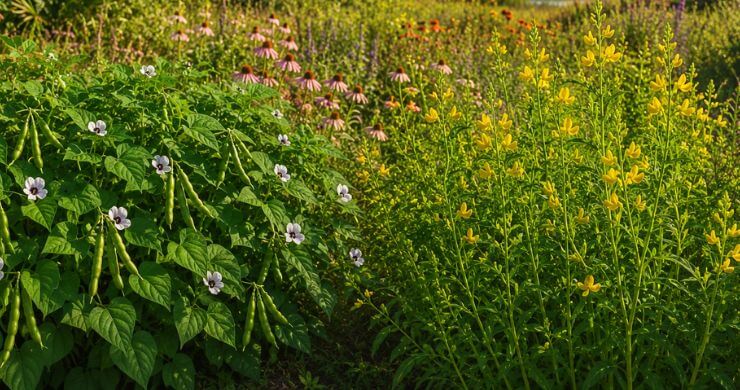
Cowpeas, also called southern peas or iron clay peas, are a favorite for good reason. They love heat and humidity, sprout within days, and spread into a low, leafy cover that shades out weeds fast. As a legume, a cowpea cover crop fixes nitrogen and leaves the bed richer than it found it.
SARE notes that cowpeas are a heat loving summer legume that replenishes soil organic matter and nitrogen as they grow. For a home gardener, that means an inexpensive bag of seed can fill several beds and return real value to the soil. Cowpeas also break down quickly once turned in, so the bed is ready to plant again without a long wait.
They handle dry spells well, which helps during a patchy rain year. For anyone new to cover cropping, cowpeas are a forgiving place to start, and they pair nicely with fall favorites like greens, broccoli, and cabbage.
Sunn hemp as a summer cover crop
Sunn hemp is the powerhouse of the summer bed. It grows tall and fast, sometimes reaching several feet in a matter of weeks, and produces a large amount of leafy and stemmy material. All of that growth turns into organic matter once it is cut and worked into the soil.
UF/IFAS Extension reports that sunn hemp grows well in Florida heat, accumulates nitrogen as a legume, and helps suppress weeds and root-knot nematodes, which are a common trouble in sandy Florida soil. A sunn hemp cover crop is a smart pick when the goal is maximum biomass and a strong soil reset.
The one rule to remember is timing. Sunn hemp is best cut at the flower-bud or early flowering stage, while the stems are still tender enough to break down quickly. Left too long, the stalks turn woody and slow to rot. Managed well, sunn hemp leaves behind loose, improved soil that fall crops will appreciate.
How to plant and turn in summer cover crops in Zone 9
Timing matters most with Zone 9 cover crops. The warm planting window runs through the summer, once spring crops finish and the soil has warmed.
The University of Florida Extension advises planting sunn hemp when the soil is moist and warmer than about 68°F, which suits Florida summers well. Cowpeas like the same warm conditions, so the process below works for both:
- Clear the spent spring crop and loosen the bed.
- Scatter or row-sow the seed, then water it in.
- Let the crop grow through the hottest weeks, watering only if rain is short.
- Cut it down before it sets seed, then chop and work the residue into the soil.
Give the bed about two to three weeks to break down before fall planting. This works just as well in raised beds. If a bed needs topping up first, a soil calculator helps figure out how much mix to add before sowing.
Frequently asked questions
Here are a few questions Florida gardeners often ask about summer cover cropping.
When should summer cover crops be planted in Florida?
The warm season window works best, usually from late spring through summer, once spring crops are done and the soil is warm. The goal is to give the crop enough hot weeks to grow before it gets cut and turned in for fall.
Cowpeas or sunn hemp, which is better?
Both are strong choices. Cowpeas are easy, quick, and great for adding nitrogen and shading out weeds. Sunn hemp grows taller and produces more material, so it is the pick for a bigger soil boost. Many gardeners rotate between them or grow both.
Do cover crops need to be removed before replanting?
They are not pulled out and thrown away. The crop is cut down before it sets seed, then chopped and worked into the top few inches of soil. As it breaks down, it feeds the bed, which is the whole point.
Can cover crops grow in raised beds?
Yes. Raised beds are a fine home for cowpeas and sunn hemp. Sow the seed in the open bed, grow it through summer, then turn it in before planting the fall garden.
Get your beds ready for fall
An empty bed does not have to be wasted space. Summer cover crops give Florida gardeners a low cost, organic way to fight weeds, protect the soil, and store up nitrogen for the next round of vegetables. Cowpeas and sunn hemp make it easy to start this season.
For seasonal guides and more gardening tips, keep exploring the blog. Which cover crop will go in the empty beds this summer? Share it in the comments.
