Most gardeners in Northeast Florida grow familiar vegetables like tomatoes, peppers, and zucchini. These crops do well, but Zone 9B offers much more. The long, warm growing season allows gardeners to explore unusual vegetables that bring fresh flavors and resilience. Many of these vegetables thrive in the heat, resist local pests, and add visual interest to your garden.
These vegetables also fit beautifully into a meadow garden in Northeast Florida. They blend with wildflowers, attract pollinators, and work alongside native plants in Northeast Florida. With a little planning, you can design a space that produces food and supports nature. This is where food gardening meets wildflower gardening in Florida, creating a thriving ecosystem in your own backyard.
Malabar Spinach
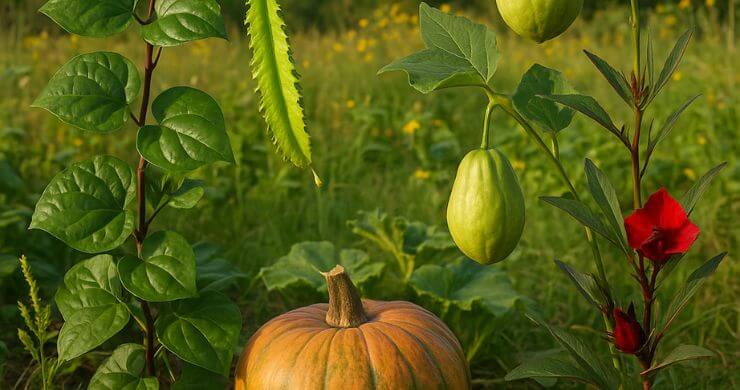
Malabar spinach is a leafy vine that loves Florida summers. While lettuce wilts in the heat, Malabar spinach keeps producing crisp, flavorful leaves. The plant climbs quickly and can cover a trellis or fence, making it useful for shade as well as harvest.
When it flowers, Malabar spinach draws in bees and butterflies, adding value to a pollinator garden in Northeast Florida. The glossy leaves also give your garden a tropical look, blending well with meadow-style plantings. It is a vegetable that works as both food and decoration.
Seminole Pumpkin
The Seminole pumpkin has deep roots in Florida history. Indigenous communities grew it for centuries because of its ability to thrive in sandy soil and hot weather. This pumpkin is tough, needing little care once established. The fruit stores well, giving you food long after harvest season ends.
Plant Seminole pumpkin near native plants in Northeast Florida to create a resilient planting area. The vines sprawl and provide ground cover, which helps keep weeds down. With its history, toughness, and flavor, Seminole pumpkin is a must-try vegetable for Zone 9B gardens.
Winged Bean
The winged bean is a versatile crop with many edible parts. You can eat the pods, leaves, flowers, and even its underground tubers. It grows fast in the heat and tolerates the sandy soils of Florida. Few vegetables give as much variety in one plant.
The flowers attract bees and other beneficial insects, making it an excellent addition to a pollinator garden in Northeast Florida. Its unusual appearance, with winged pods, adds visual interest to your garden. Winged bean combines productivity with beauty in a way few vegetables can match.
Chayote (Mirliton)
Chayote is a climbing perennial that produces squash-like fruits. Once planted, it returns year after year, offering steady harvests. The vines can cover arbors, fences, or trellises, creating a living green wall in your garden.
This makes chayote a great option for Florida meadow landscaping. It provides shade, adds height, and produces edible fruit all in one. With its fast growth, chayote can quickly become a centerpiece in a productive and beautiful garden.
Roselle (Florida Cranberry)
Roselle is a hibiscus relative with bright red calyces used for teas, jams, and sauces. It thrives in late summer and fall, just when many other vegetables slow down. The bold red stems and flowers bring striking color to your garden.
Roselle supports wildflower gardening in Florida by attracting pollinators with its blooms. It fits easily into a meadow garden in Northeast Florida, offering both ornamental and culinary value. Harvesting the calyces adds another layer of excitement to seasonal gardening.
Blending Vegetables with Native Plants and Wildflowers
One of the best ways to garden in Zone 9B is to mix vegetables with flowers and natives. Many unusual vegetables work well in this style. Seminole pumpkin vines can grow under sunflowers or wildflowers, covering the soil and reducing weeds. Malabar spinach can climb up trellises surrounded by flowering plants, creating a vertical layer in your garden.
Mixing vegetables with native plants in Northeast Florida also supports wildlife. Pollinators feed on flowers and vegetable blossoms, while birds find shelter in the vines. This approach creates a balanced ecosystem that benefits both gardener and nature. When paired with Florida meadow landscaping, your vegetable patch becomes part of a larger, living landscape.
Zone 9B in Florida gives gardeners a chance to try unusual and rewarding vegetables. Malabar spinach, Seminole pumpkin, winged bean, chayote, and roselle are all excellent choices. They thrive in the heat, attract pollinators, and offer unique harvests.
By blending these vegetables with wildflower gardening in Florida, native plants in Northeast Florida, and thoughtful Florida meadow landscaping, you create more than a garden. You create a thriving meadow that supports people, pollinators, and plants together. A meadow garden in Northeast Florida can be productive, beautiful, and deeply connected to nature.