
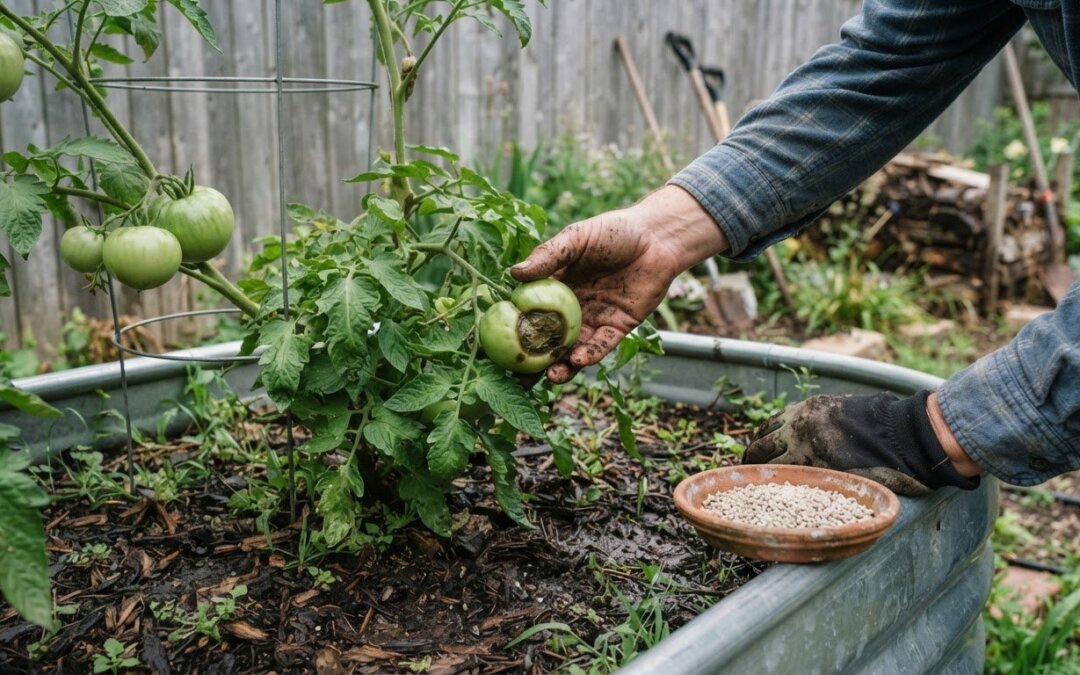
More calcium isn’t always the fix. Tomato blossom end rot calcium supplements can help when the soil lacks calcium, but fruit can develop blossom-end rot even when soil calcium is adequate. A steady supply of water matters too, because roots need water to move calcium into developing fruit.
It’s natural to reach for a supplement when a tomato develops a dark, sunken patch at its blossom end. But adding calcium without understanding the cause may not solve the problem, and spraying the leaves isn’t an effective shortcut. First, distinguish low soil calcium from disrupted calcium movement within the plant.
This guide explains when a soil-applied calcium product may help, why foliar sprays usually fall short, and how consistent watering supports fruit development. You’ll also learn what to consider before adding a supplement, so you can choose a practical next step for your tomatoes.
Key Takeaways
- Use a soil test to guide whether adding calcium is appropriate, rather than assuming every affected tomato needs a supplement.
- Keep soil moisture consistent during fruit growth; roots need water to transport calcium to developing tomatoes.
- Don’t rely on spraying calcium onto leaves as a fix, because it doesn’t effectively reach the fruit.
- Learn how raised-bed soil calculations and practical gardening guidance can help you plan your next steps.
Tomato blossom end rot calcium supplements
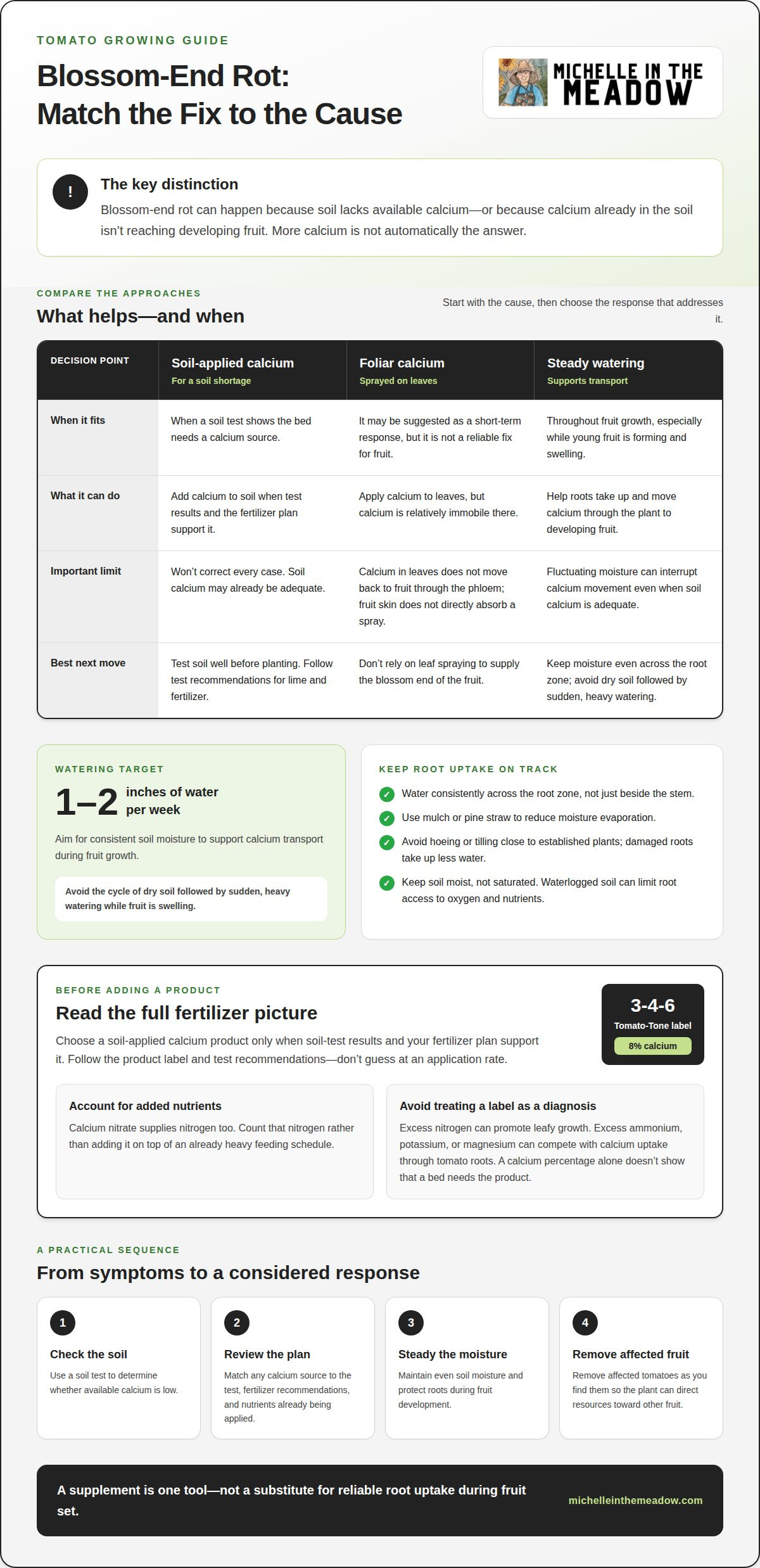
A calcium supplement may help if the soil lacks available calcium, but it won’t correct every case of blossom-end rot. Tomatoes absorb calcium through their roots, and water carries it upward through the plant’s xylem. If water movement falters while fruit develops, the fruit may not receive enough calcium. Soil calcium can be adequate even when a tomato develops a localized calcium deficiency.
Start with a soil test well before planting. Use the results to decide whether the bed needs a calcium source, and follow the test’s lime and fertilizer recommendations. Adding calcium when the soil doesn’t need it may not address the cause. A soil test also helps you avoid treating a water-uptake problem as a simple shortage in the soil.
Timing and placement matter. Tomato plants need a steady calcium supply during fruit set, as young fruit forms. Calcium in leaves doesn’t move back to fruit through the phloem, so a foliar spray cannot reliably supply the blossom end. Fruit skin also doesn’t directly absorb calcium sprayed onto it. Spraying leaves, therefore, isn’t an effective fix for affected fruit.
Choose a soil-applied calcium product only when your soil test and fertilizer plan support it. Calcium nitrate supplies nitrogen along with calcium, so account for that nitrogen rather than adding it on top of an already heavy feeding schedule. Excess nitrogen can promote leafy growth, while excess ammonium, potassium, or magnesium can compete with calcium uptake through tomato roots. Follow the product label and soil-test recommendations; don’t guess at an application rate.
Other fertilizer labels show why the full analysis matters. Espoma Organic Tomato-Tone is labeled as a 3-4-6 fertilizer with 8% calcium. That label gives both its nutrient ratio and calcium content, but it doesn’t establish that every tomato bed needs it. Match the product to the soil’s needs and the rest of your fertilizer plan, instead of treating the calcium percentage as a stand-alone solution.
Water management is part of calcium management. Tomato plants should receive 1 to 2 inches of water a week to support consistent soil moisture and calcium transport. University of Minnesota Extension identifies fluctuating soil moisture during fruit growth as a cause of blossom-end rot. While fruit is swelling, avoid a cycle of dry soil followed by a sudden, heavy watering.
- Water consistently across the root zone, rather than wetting only one spot beside the stem.
- Use mulch or pine straw to reduce moisture evaporation from the soil.
- Avoid hoeing or tilling close to established plants, since damaged roots take up less water.
- Keep soil moist, not saturated; waterlogged soil can limit root access to oxygen and nutrients.
Remove affected tomatoes as you find them. As they develop, those fruits continue drawing moisture and calcium; removing them lets the plant direct resources toward other fruit. Keep the routine steady: soil-test guidance, appropriate fertilizer, and even watering work together. A supplement is one tool, not a substitute for reliable root uptake during fruit set.
A localized calcium deficiency in the fruit can cause blossom-end rot even when soil calcium levels are adequate. This distinction helps explain why a calcium product is not automatically a remedy: the problem may be calcium reaching the fruit, rather than too little calcium in the soil. Southern Ag Calcium Nitrate is listed in a 5-pound bag, while a listed limestone powder product contains 5 pounds of calcium carbonate. Those product descriptions identify available choices, but they do not show that either is needed in a particular bed. Use the soil test and fertilizer plan to guide whether a soil-applied source is appropriate.
Advice about foliar treatment varies. A Gardening & Landscaping answer recommends a foliar calcium nitrate spray as an immediate, short-term response to tomato blossom-end rot. You can apply foliar calcium to tomato leaves while fruit is young, but it is not the most effective approach because calcium is relatively immobile in leaves. This limitation matters when deciding how much to rely on a spray: it may be presented as a short-term response, but it cannot reliably move calcium from leaves into developing fruit. Focus instead on conditions that help calcium reach the fruit, and distinguish foliar application from correcting a soil calcium shortage. A product’s listed calcium content alone doesn’t mean it will resolve a localized deficiency.
Michelle In The Meadow
Michelle In The Meadow offers practical gardening education to help you turn the causes of blossom-end rot into a clear plan for your tomato bed. If you’re weighing a calcium product, its curated gardening product recommendations can help you explore options while keeping soil needs and watering practices in view.
Planning tomatoes in a raised bed? The Soil Calculator for Raised Beds can help you work out the soil volume your setup needs. Pair that planning with gardening education to understand how soil, nutrients, and growing conditions fit together, rather than choosing a supplement by guesswork.
For a thoughtful next step with your raised-bed or tomato-growing questions, contact Michelle In The Meadow.
Make your next growing decision with confidence
Let the next fruiting cycle guide your decisions. Note where symptoms appear, how the soil feels between waterings, and what changes after you adjust your routine. These observations can help you decide whether a calcium product belongs in your plan or whether another growing condition needs attention first. It’s easier to decide whether tomato blossom end rot calcium supplements fit your garden when you consider the whole growing setup, not just the damaged fruit.
If you’re still sorting through options, take the next step with a clear question about your tomato bed or raised-bed plans. Contact Michelle In The Meadow to continue the conversation and find useful gardening guidance for your next decision. A few thoughtful adjustments can make the season ahead easier to manage, and each harvest gives you a chance to learn what works in your garden.