
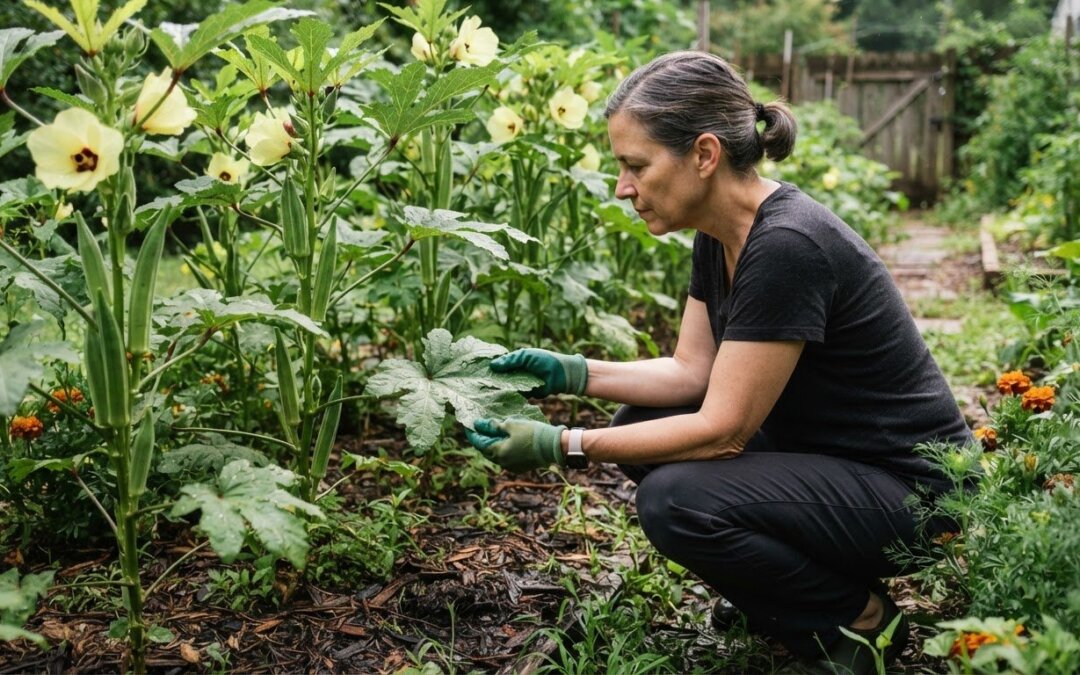
Hot weather alone isn’t the planting signal: wait until the soil is at least 70°F at planting depth before sowing okra. Growing okra in hot, humid climates also means giving it soil with a pH of 6.0 to 6.8, steady moisture, and room for air to move around the plants.
If you’ve wondered whether okra can handle summer heat, the answer is yes: it thrives in warmth. But wet, humid conditions can make disease a concern. The practical details matter: planting in cool soil can slow growth, while crowded plants and foliage that stays damp can create tougher growing conditions.
This guide covers the essentials, from checking soil temperature and preparing fertile ground to watering, managing heat, and watching for disease. Follow these steps to help okra get established and stay productive through a hot, humid season.
Key Takeaways
- Wait until soil reaches at least 70°F at planting depth before sowing, so warm-season seeds get a better start.
- Aim for soil pH between 6.0 and 6.8, and adjust your fertility approach to the condition of your garden soil.
- Okra thrives in heat, but humid, wet weather calls for care with watering and airflow to help limit disease pressure.
- Use a raised-bed soil calculator and practical gardening resources to plan your growing space and make care decisions with more confidence.
Diseases in hot, wet weather
Give okra full sun for at least 6 hours daily. Raised beds aren’t essential, but can help where soil drains poorly; mulch the soil without piling it against stems. According to Utah State University Extension, okra takes 90 days from seed to mature harvestable pods. For fresh eating, harvest pods at 3 to 4 inches long, before they become tough.
- Keep foliage drier. Water the soil rather than spraying leaves, and do it early enough for splashes to dry. In humid, rainy weather, avoid crowding plants and clear weeds that restrict airflow. Persistently wet leaves and dense growth can encourage disease, so remove damaged foliage and spent plant debris instead of leaving it around the bed.
- Inspect plants as you water. Look along stems and at the tops and undersides of leaves for insects, feeding holes, sticky residue, or sudden discoloration. Remove pests by hand when practical, and discard badly damaged leaves. Check again after rain, since fresh damage can be easier to spot on clean, wet foliage once it dries.
- Harvest promptly and often. Okra fruit is normally ready four to six days after bloom. Pick pods while they’re tender, using clean scissors or pruners to avoid tearing stems. Leaving mature pods on the plant can slow continued picking, so check plants regularly during production and remove overgrown pods even if you don’t plan to eat them.
- Match the growing space to the plant. Okra can grow in a container in a hot, humid climate if it has full sun, drainage, and consistent attention to watering. Choose a deep, wide pot sized for the mature plant and its roots; there isn’t one pot size that suits every variety. Raised beds and containers both need freely draining soil, especially during rainy spells.
Soil pH and fertility
- Start with a soil test. Measure the bed’s pH and nutrient levels before adding amendments. Okra prefers a pH between 6.0 and 6.8, so the test helps you choose a useful correction instead of guessing. Retest after changing the soil, since amendments take time to affect the growing area.
- Correct strongly acidic soil before planting. If the pH is below 5.8, apply lime to raise it to 6.0 or more. Use the soil test’s recommendation to guide the amount, because the needed quantity depends on the soil. Mix amendments through the bed rather than concentrating them around individual seed spots.
- Build fertility with measured amendments. Work suitable organic matter into the planting area when the soil needs improved structure or nutrients. Avoid adding fertilizer by habit: soil test results and the bed’s growing history help determine what is needed. Keep amendments distributed through the root zone, where developing okra can reach them.
- Feed low-fertility soil consistently. If the soil isn’t very fertile, give okra liquid feed every 2 to 3 weeks. Follow the fertilizer label’s mixing directions, and apply it to moist soil to avoid concentrating nutrients around dry roots. Watch plant growth between feedings rather than adding extra fertilizer whenever leaves look pale.
- Use nitrogen in staged applications. For okra grown in soil with 5 pounds or less of nitrogen, apply 40 pounds of nitrogen per acre before planting. Two top-dressings can follow: apply 20 pounds per acre three weeks after seedling emergence, then repeat three weeks later. Keep each application measured and evenly distributed.
Heat tolerance and growing temperatures
Okra thrives in summer warmth, but its growth still depends on temperature and variety. Use these steps to match your planting choices and care routine to a long, hot season.
-
Assess Heat Tolerance
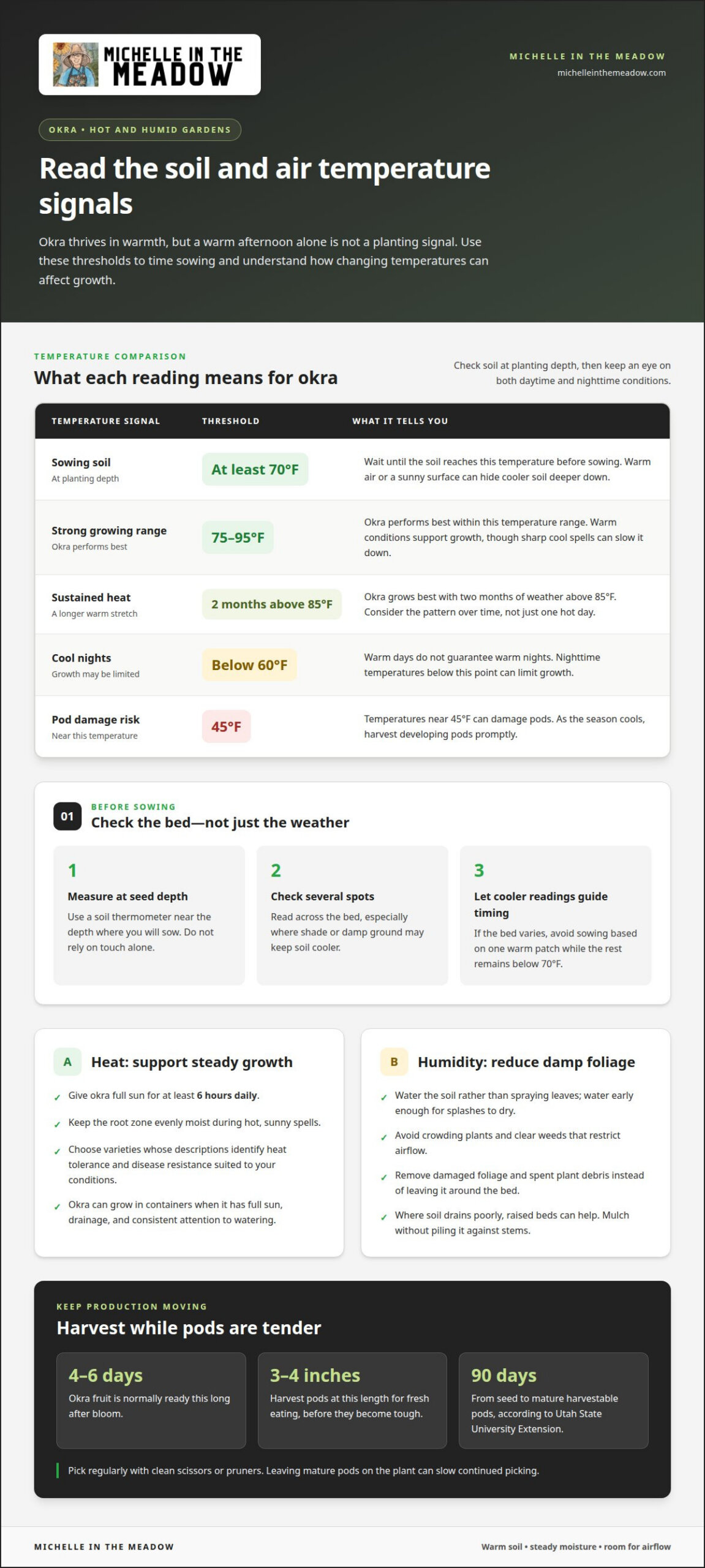
Track daytime and nighttime temperatures as okra establishes and begins flowering. Okra performs best between 75 and 95°F, and grows best with two months of weather above 85°F. Warm days help, but a sharp cool spell can slow growth. Avoid treating a hot afternoon as proof that conditions will stay suitable; look at the pattern across days and nights.
-
Choose Varieties for Heat and Humidity
Choose a variety whose seed description highlights heat tolerance and disease resistance suited to your growing conditions. No single variety suits every humid garden, so consider both traits rather than choosing for heat alone. In warm, damp weather, healthy foliage and steady growth matter as much as heat performance. Check which traits the description actually identifies instead of relying on the variety name.
- Plan for hot spells. Keep the root zone evenly moist when high temperatures and sunny days increase water demand. Water the soil rather than the leaves, especially in humid weather, and avoid leaving plants in saturated ground. Okra can produce in very hot conditions, but prolonged heat makes consistent moisture important for growth and pod development.
- Watch for cooling temperatures. Don’t assume warm days protect okra from chilly nights. Nighttime temperatures below 60°F can limit growth, while temperatures near 45°F can damage pods. As the season cools, harvest developing pods promptly and avoid planning a new planting that won’t have enough warm weather to grow and produce.
Planting soil temperature
Wait for warm soil, not just warm air, before sowing okra. The key reading is at planting depth: the soil must reach at least 70°F.
- Measure where the seed will sit. Use a soil thermometer in the planting area, near the depth where you’ll sow. Okra seed should go into soil that has reached at least 70°F at planting depth. A sunny surface can feel warm while deeper soil remains cooler, so don’t rely on touch alone.
- Check more than one spot. Take readings across the bed, especially where shade or damp ground may keep soil cooler. If the planting area varies, use the cooler readings to guide your timing. This helps avoid sowing into one warm patch while the rest of the row remains below the needed temperature.
- Match the reading to sowing depth. Plant seed about ¾ to 1 inch deep, then firm the soil gently over it. Measuring near that depth gives a more useful picture than checking only the surface. Keep the seedbed evenly moist as it warms, but avoid leaving it waterlogged after heavy rain.
- Wait through cool spells. A hot afternoon doesn’t tell you whether the soil has warmed consistently. If readings remain below 70°F, hold off sowing and measure again as conditions change. Cold, wet soil can delay germination and leave seeds exposed to poor growing conditions for longer.
- Use soil temperature to time direct sowing. In a humid climate, rainfall and cloud cover can slow soil warming even as daytime air feels hot. Let the thermometer, not the calendar alone, make the decision. Once the planting depth reaches 70°F, sow promptly and maintain moisture without saturating the bed.
Michelle In The Meadow
Michelle In The Meadow shares practical gardening education, curated product recommendations, and tools for planning raised beds. If you’re preparing a bed for okra, the Soil Calculator for Raised Beds can help you plan the soil volume you need. For guidance on timing, soil care, and humid-weather challenges, explore the gardening content and adapt the advice to your own conditions.
Use these resources to adapt your growing routine to your garden’s soil and conditions. Explore Michelle In The Meadow’s gardening content and tools for a practical next step in planning your okra garden.
Let Your Garden Guide the Next Planting
A productive okra bed is also a chance to learn what your garden responds to. Notice which areas stay damp after rain, how plants change during warm spells, and where pods develop well. These observations can guide future planting decisions more reliably than a one-size-fits-all routine.
Growing okra in hot, humid climates gets easier when you make small adjustments based on what you observe. Note what you change and what happens next, then use those patterns to plan your next garden bed. You’ll build practical experience each season, one careful choice at a time.
For help thinking through your gardening questions, start a conversation with Michelle In The Meadow. Your next round of okra can begin with a simple, thoughtful plan.
Frequently Asked Questions
How to care for okra?
Care for okra by keeping its root zone supplied with moisture, checking plants regularly, and picking pods while they’re tender. After heavy rain, look for damaged leaves, insect feeding, or debris around stems, then remove affected plant material. Track changes in growth and pod production to help adjust watering and care as the weather shifts.
How to grow okra?
Grow okra in a sunny spot with warm soil, suitable fertility, and enough room for mature plants. Sow seeds directly once the soil has warmed, then thin seedlings according to the variety’s mature size. In a small garden, a short row can be easier to weed and inspect than a large bed. Pick pods regularly as they develop so you can use them while tender.
What temperature and soil conditions are best for growing okra in hot humid climates?
Growing okra in hot humid climates works best when the soil is warm, fertile, and well drained. Okra performs best at 75 to 95°F, and its preferred soil pH is 6.0 to 6.8. Avoid leaving roots in waterlogged soil after rain. In a raised bed, a loose, freely draining soil mix can help excess water move away from the root zone.
When should you plant okra in hot, humid regions of the United States?
Plant okra when soil temperature at seed depth reaches at least 70°F. In hot, humid parts of the United States, that point depends on local weather, shade, and recent rainfall, so a thermometer offers a more reliable cue than a calendar date. If soil remains cool or wet, wait for warmer conditions before sowing; warm air alone doesn’t confirm the seedbed is ready.
How far apart should okra plants be spaced, and how deep should seeds be planted?
Sow okra seeds about ¾ to 1 inch deep, initially spacing them 3 to 4 inches apart in the row. Thin dwarf plants to 12 to 15 inches apart, or standard-to-large plants to 18 to 24 inches apart. For medium-to-large types, leave 48 to 60 inches between rows. Check the variety’s mature size when planning your layout.
How often should you water and fertilize okra during hot, humid weather?
Adjust watering to rainfall and soil moisture rather than using a fixed schedule. If rain is inadequate during production, 1.5 inches of water every 10 days can meet crop water needs. In soil that isn’t very fertile, apply liquid feed every 2 to 3 weeks. Avoid adding fertilizer automatically after rain; use the bed’s fertility and plant growth to guide feeding.