
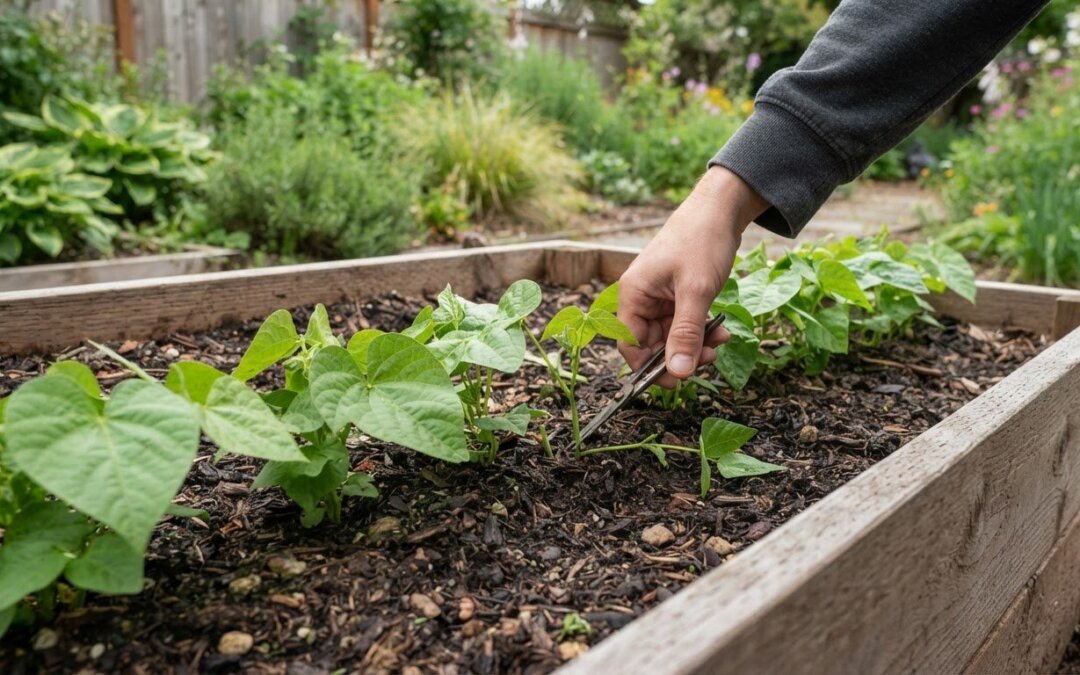
The best planting date isn’t the same everywhere. Growing bush green beans in raised beds usually works best about a week or two after your area’s average last frost, once the soil has warmed; seeds germinate poorly in soil below 65°F. Sow seeds 3 to 4 inches apart, then thin healthy seedlings to about 6 inches apart.
If you’re wondering whether a compact raised bed has room for beans, bush varieties are a practical place to start. They don’t need a trellis, and their simple planting pattern makes the space easier to manage. Pole beans may suit you better if you want to grow upward and have support ready.
This guide covers planting time, seed spacing, and choosing between bush and pole beans. You’ll also find what to consider for containers, so you can match the variety to your space and give your beans a good start.
Key Takeaways
- Prepare a raised bed with well-draining soil and compost to give bean roots a supportive start.
- Plan staggered sowings if you’d like fresh pods over a longer stretch of the season.
- Choose pole beans when vertical support suits your layout; compact bush beans keep the setup simpler.
- Match container size and variety to the growing space before planting.
When should you grow green beans?
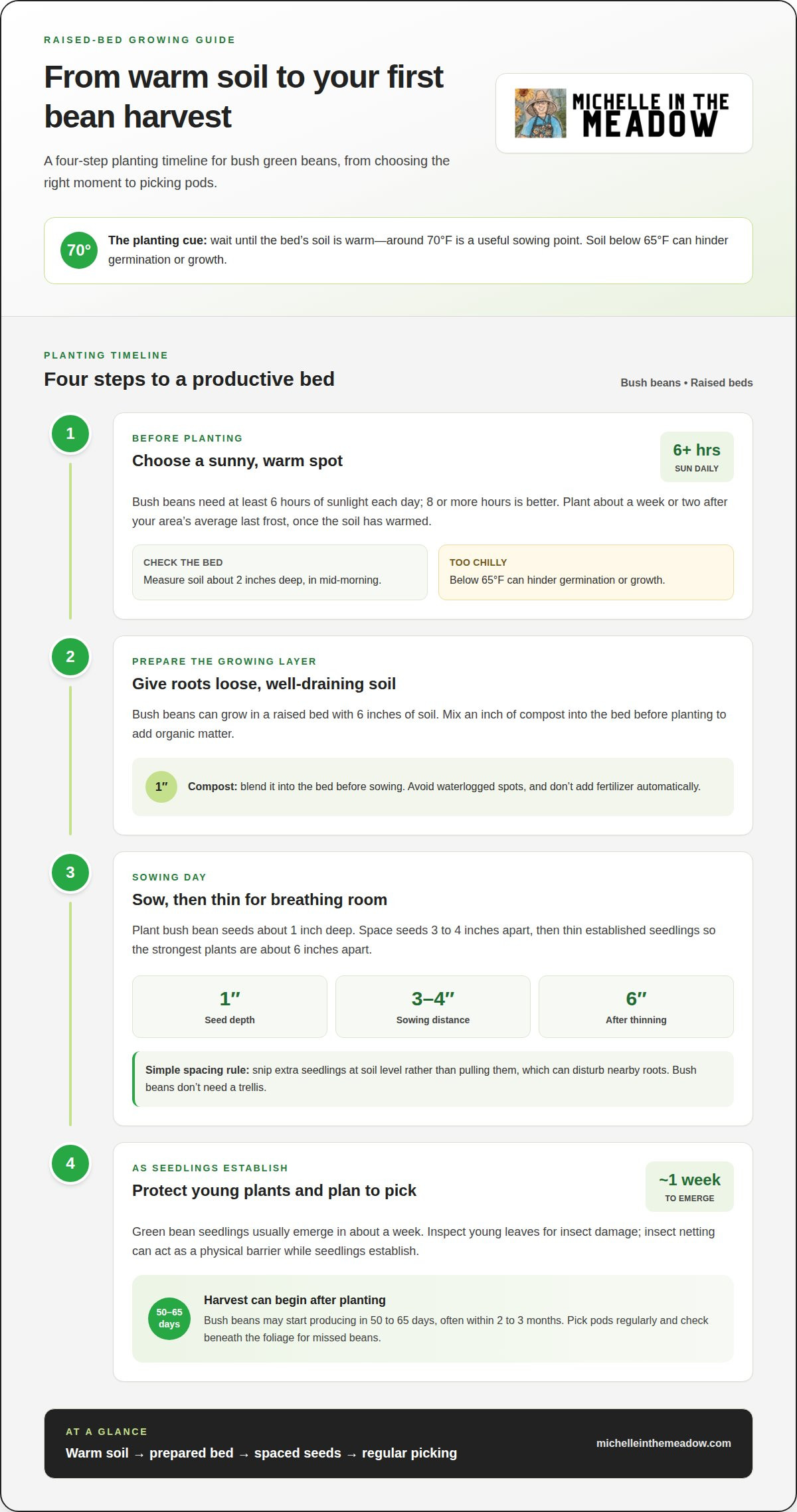
- Choose a sunny, warm spot. Bush green beans need at least 6 hours of sunlight daily; 8 or more hours is better. Plant about a week or two after your area’s average last frost, once the soil has warmed. Soil near 70°F is a useful sowing point, while temperatures below 65°F can hinder germination or growth. For growing bush green beans in raised beds, check the bed’s soil about 2 inches deep in mid-morning.
- Prepare the bed and soil. Bush beans can grow in raised beds with 6 inches of soil. They do best in well-draining soil amended with organic matter, such as compost. Mix an inch of compost into the bed before planting. Compost provides a practical preplant amendment; don’t add fertilizer automatically. For growing bush green beans in raised beds, start with this simple soil preparation and avoid waterlogged spots.
- Sow seeds and choose a variety. Plant bush bean seeds about 1 inch deep. Sow them 3 to 4 inches apart, then thin established seedlings to about 6 inches apart. Bush beans suit beginners because they don’t require a trellis. Mascotte is a compact example, growing about 16 inches tall. Choose a variety that fits your bed and the harvest you want, then mark its row clearly.
- Protect seedlings and plan for picking. Green bean seedlings usually emerge in about a week. Inspect young leaves for insect damage, and use insect netting as a physical barrier while seedlings establish. Bush beans can begin producing a harvest 50 to 65 days after planting, often within 2 to 3 months. Once pods are ready, pick them regularly and check beneath the foliage for missed beans.
Plant spacing and planting density
- Check soil warmth before planting. Measure the soil about 2 inches deep in mid-morning. Green bean seeds can be sown when soil temperature reaches 70°F. Raised beds may warm sooner than nearby ground, but use the temperature in the bed itself to guide planting. For growing bush green beans in raised beds, waiting for warm soil helps avoid sowing into chilly conditions.
- Choose a spacing pattern that fits your bed. Sow bush bean seeds 3 inches apart, then thin them to 6 inches apart as seedlings grow. Keep rows 2 feet or more apart where your layout allows. Square-foot gardening uses 9 seeds per square foot. Mark the chosen pattern before planting so you can distribute seeds evenly and leave room to reach plants.
- Thin deliberately, not by pulling. Once seedlings are growing well, leave the strongest plants about 6 inches apart. Snip extra seedlings at soil level instead of tugging them out, which can disturb nearby roots. For growing bush green beans in raised beds, this final spacing gives foliage room to spread and makes pods easier to reach during harvest.
- Stagger sowings for a longer picking window. Bush beans tend to produce a heavy crop over a short stretch. Sow another batch every two to three weeks while conditions remain suitable. Mark each sowing date on a garden calendar, and leave open bed space for the next row. Bush beans don’t need a trellis, so save vertical support for pole beans if you’re growing both types.
- Use soaking and companion planting thoughtfully. Soaking bean seeds in warm water overnight may speed germination and increase yields, but it isn’t essential. Pair beans with crops such as carrots or lettuce only if their foliage won’t crowd the planting. Arrange the bed so you can easily water, check leaves, and pick pods as they mature.
Choosing bush versus pole beans
- Match the growth habit to your space. Bush bean plants stay compact, commonly growing 12 to 24 inches tall, and don’t need a trellis. Pole beans climb, often reaching eight to ten feet, and need sturdy support. For a low-maintenance raised-bed layout, choose bush beans. If you can give vines room to climb, pole beans make better use of vertical space.
- Decide how you want your harvest to arrive. Bush beans usually produce heavily for a few weeks. Harvest often begins seven to eight weeks after sowing and lasts around three weeks. Pole beans typically start producing after eleven to twelve weeks, with harvests continuing for around six weeks. Choose based on whether you prefer a concentrated picking period or a longer supply.
- Plan support before you purchase pole bean seeds. Plan a support structure for pole beans before planting. A support added later can disturb established roots and tangle vines. Bush beans avoid that extra structure, leaving the bed easier to access for weeding and picking.
- Consider summer heat and pod production. Pole beans may pause production when temperatures rise above 90 to 95°F. Bush beans can also slow in intense heat, so keep either type watered consistently. Flowers need to form and develop into pods; regular harvesting helps prevent mature beans from remaining on plants and interrupting continued production.
- Choose according to your garden routine. Bush beans are a practical choice for a compact crop that needs no trellis. Choose pole beans if you’re happy to guide climbing vines and pick over a longer stretch. As you tend the bed, check plants for beetles and leaf damage, and harvest pods promptly from either type.
Choosing bush beans for raised beds and containers
- Choose a raised bed with enough soil. Bush beans can grow in a raised bed with 6 inches of soil. That makes them a practical vegetable for shallower beds where deeper-rooted crops may not fit as comfortably. Focus on loose, well-draining soil so water can move through instead of pooling around roots. Before planting, clear out large clumps and blend compost through the bed’s growing layer.
- Use a container at least 15 inches in diameter. Bush bean varieties are suited to containers, and this diameter gives plants room to spread. Make sure the container drains freely, then fill it with a growing medium that holds moisture without becoming waterlogged. A compact bush habit also keeps the planting low and accessible, rather than requiring a vertical support structure.
- Prepare container mix with measured ingredients. For beans in containers, combine two-thirds potting mix with one-third compost. Mix thoroughly before filling the pot so the compost is evenly distributed. Leave room at the rim for watering, and don’t pack the mixture tightly. This blend provides a lighter base than garden soil alone.
- Pick bush beans when support space is limited. A bush variety doesn’t need the trellis or tall structure a pole bean requires. That’s useful on a patio or in a narrow raised bed, where vertical support could block access or shade nearby plants. If you want pole beans in a container instead, choose one at least 18 inches in diameter and plan for sturdy support.
- Match the setup to your season and routine. A raised bed suits several short rows, while a container keeps a smaller planting together for easier watering and picking. For a tailored soil-volume estimate before filling a bed, use the raised-bed soil calculator. Choose the layout that leaves you room to reach every plant as the season progresses.
Michelle In The Meadow: Soil Calculator for Raised Beds
Michelle In The Meadow’s Soil Calculator for Raised Beds helps estimate how much soil you’ll need before filling a bed. Use it to plan a new bean bed or refresh an existing one, making it easier to prepare your growing space.
For a container or raised bed, calculating the soil you need makes it easier to plan the planting area and prepare for bush beans. Michelle In The Meadow also shares gardening educational content for practical growing questions, along with curated gardening product recommendations to help you make informed choices.
For more raised-bed gardening ideas, explore Michelle In The Meadow’s educational content and soil calculator.
Let Your Next Bean Planting Build on What You Learn
Use your next planting to learn what suits your garden. Notice how the bed drains after watering, whether nearby plants cast shade, and which spots make picking easiest. These observations can guide small adjustments next season, from row placement to how much space you leave for other vegetables.
Growing bush green beans in raised beds can make a productive garden feel more personal. Keep a few notes as the plants grow, then use what you learn to plan your next planting. Small, practical choices can help you improve your garden over time.
For a little help planning your next step, contact Michelle In The Meadow.
Start with the space you have, and let the season show you what works.
Frequently Asked Questions
When should you plant bush green beans in a raised bed in the United States?
Plant bush beans about a week or two after your area’s average last frost, once the soil has warmed. Soil near 70°F is a useful sowing point; cold soil can slow germination and growth. Since frost dates vary across the United States, use your local average last frost as a seasonal guide, then check the raised-bed soil before planting.
How far apart should bush bean seeds be planted in a raised bed?
Sow bush bean seeds about 3 to 4 inches apart, then leave seedlings roughly 6 inches apart after thinning. For example, a close initial sowing gives you room to keep the strongest seedlings. Avoid leaving extras crowded together, since closely packed leaves make it harder to reach pods and inspect the plants during the growing season.
How many bush bean plants fit in a raised bed?
The number depends on the bed’s growing area and the spacing pattern. Square-foot gardening uses 9 green bean seeds per square foot; at that density, a 3-by-5-foot bed holds 135 seeds. That estimate describes the planting pattern, not necessarily the number of mature plants you’ll keep. Thin seedlings as they grow, leaving space for healthy plants.
How often should you water bush beans in raised beds?
Water bush beans weekly if there has been no rain, then adjust after checking the soil. Raised beds can dry out faster than ground-level gardens, especially in warm, sunny weather. Water near the soil instead of lightly sprinkling the leaves. If rain has kept the bed moist, skip the scheduled watering and check the soil again later.
How do you harvest bush green beans to encourage more production?
Pick pods every few days once they reach about 4 to 6 inches long and are pencil-sized or slightly thicker. Check beneath the foliage, where pods can be easy to miss. Harvesting regularly encourages continued production of flowers and pods; leaving mature beans on the plant can slow further picking. Handle stems gently while removing each pod.
What pests and diseases commonly affect bush beans, and how can you prevent them?
Bean beetles can damage leaves, so inspect both sides of the foliage as plants grow. Insect netting can help protect young seedlings from pests. To reduce disease pressure, leave room for airflow, keep the bed well-drained, and water at soil level. Remove badly damaged plant material instead of leaving it among the beans, and check regularly for new symptoms.