
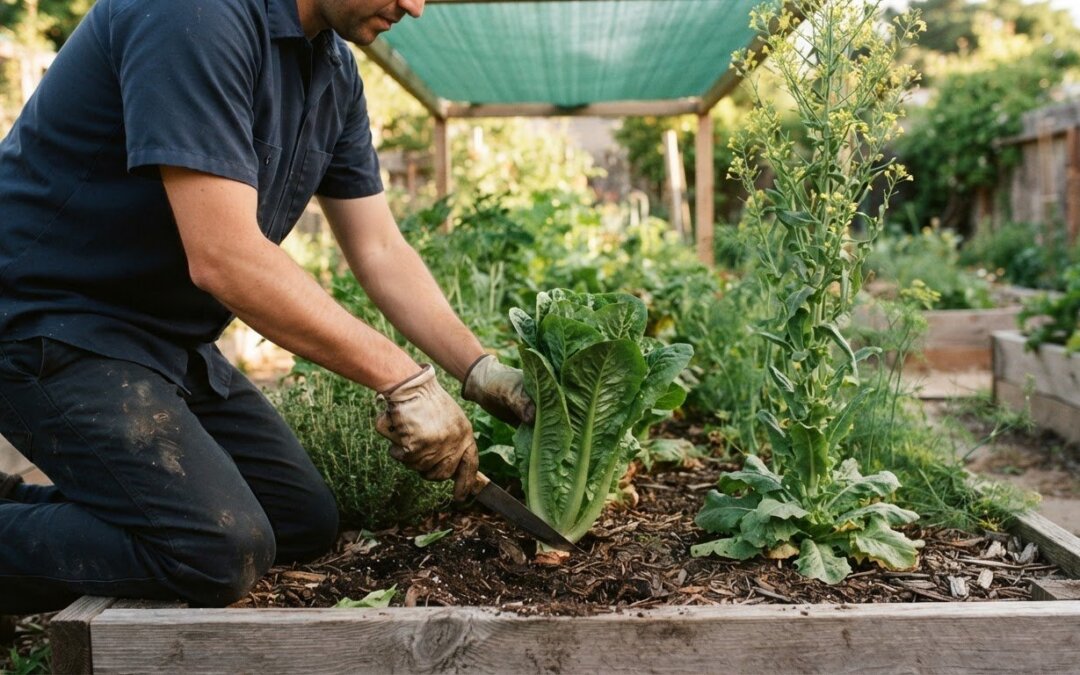
Shade alone won’t always prevent lettuce from bolting. Heat tolerant lettuce varieties for summer include Anuenue and Magenta for crisphead types, Buttercrunch for butterhead, and Nevada, Jericho, Little Gem, or Parris Island Cos for romaine. Leaf lettuce options include Black Seeded Simpson, Green Salad Bowl, and New Red Fire.
If your lettuce sends up a flower stalk or turns bitter as the weather warms, it isn’t necessarily a gardening mistake. Long days, stronger sunlight, and heat can prompt plants to bolt, and each variety has its own tolerance.
This guide explains why bolting happens, which varieties may suit different summer conditions, and when to pick baby greens or wait for mature heads. You’ll also find practical ways to extend the harvest, from choosing a spot with afternoon shade to starting another round indoors during summer heat.
Key Takeaways
- Choose lettuce by type and local summer conditions: romaine varieties such as Jericho and Parris Island Cos are among the options that handle heat better.
- Pick baby greens while leaves are young, or let plants grow toward mature heads; harvest timing varies by variety.
- Long days and hot weather can trigger bolting and bitterness, so combine heat-tolerant varieties with partial shade and steady moisture.
- For crisphead lettuce, consider Anuenue or Magenta, then time sowing and harvest to suit your summer growing window.
1. Harvest timing for baby greens and mature heads
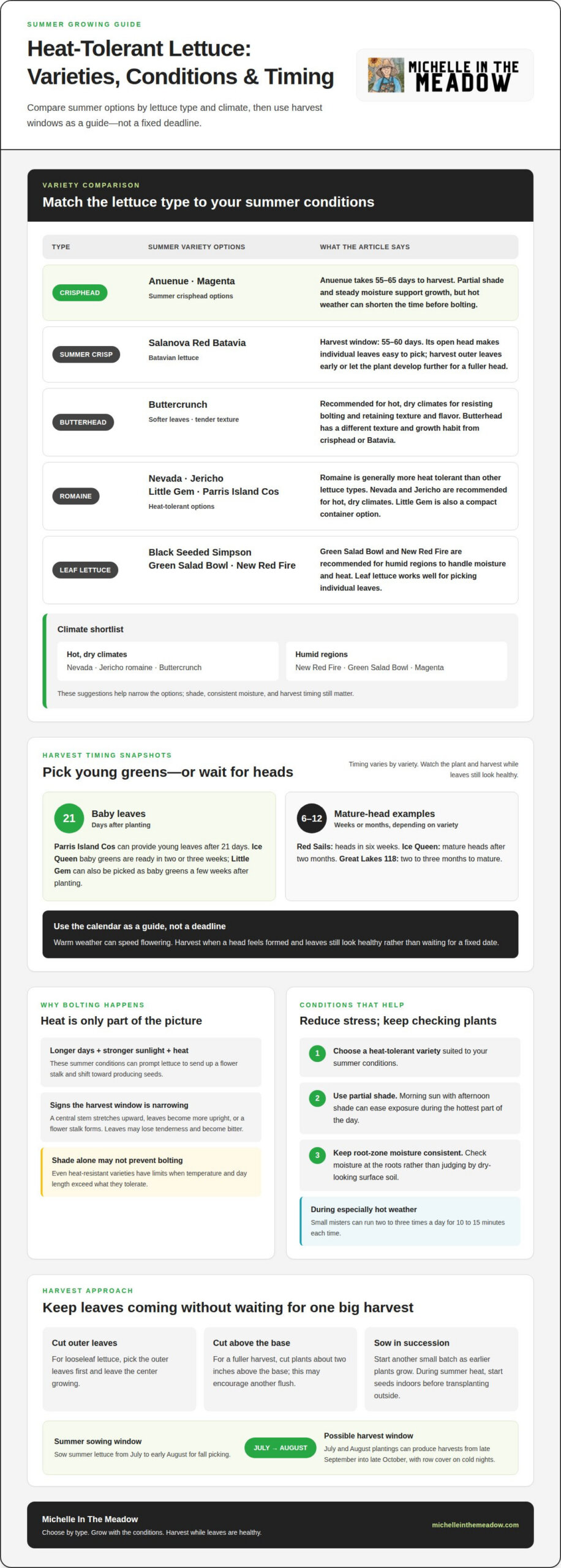
Harvest dates depend on whether you want tender greens or full heads. ‘Parris Island Cos’ can provide young leaves 21 days after planting, while ‘Ice Queen’ baby greens are ready in two or three weeks. ‘Little Gem’ can also be picked as baby greens a few weeks after planting. These early harvests let you enjoy romaine and leaf varieties before they reach full size.
For mature heads, follow each variety’s expected window and watch the plants. ‘Red Sails’ can grow into heads in six weeks, and ‘Ice Queen’ forms mature heads after two months. ‘Great Lakes 118’ takes two to three months to mature. Warm weather can speed flowering, so harvest when a head feels formed and leaves still look healthy, rather than waiting for a fixed date.
Looseleaf lettuce is well suited to cut-and-come-again harvesting. Pick the outer leaves first and leave the center to keep growing. For a fuller harvest, cut plants about two inches above the base; this may encourage another flush. Harvest during a cool part of the day and bring greens inside promptly. If a flower stalk starts to rise, pick usable leaves before they turn more bitter.
Succession sowing spreads out the harvest instead of producing one large crop. Start another small batch as earlier plants grow. During summer heat, start seeds indoors before transplanting them outside. Sow summer lettuce from July to early August for fall picking; July and August plantings can produce harvests from late September into late October, with row cover on cold nights.
Summer lettuce can attract aphids and slugs, while damp foliage can encourage diseases such as downy mildew. Check the undersides of leaves, remove pests and affected foliage, and water the soil rather than the leaves to support airflow and healthier greens.
2. Why lettuce bolts and becomes bitter in hot weather
Lettuce thrives in spring and fall, when air temperatures are in the 60s. Summer brings longer days, stronger sunlight, and heat, which can prompt a plant to bolt. Bolting means the lettuce sends up a flower stalk and shifts toward producing seeds. As the stalk rises, leaves often lose their tender texture and become bitter. A once-bright salad bowl can taste sharp instead.
Heat isn’t the only trigger. Long daylight can push lettuce toward flowering, and even a heat-resistant variety has limits. Shade alone may not prevent bolting when temperatures and day length exceed what the variety tolerates. Watch for a central stem stretching upward, leaves becoming more upright, or a flower stalk forming. These signs mean leafy growth is giving way to flowering, so the harvest window is narrowing.
To reduce bolting, choose a heat-tolerant variety, give plants partial shade, and keep moisture consistent around the roots. Morning sun with afternoon shade can ease exposure during the hottest part of the day. Check moisture at the root zone rather than judging by dry-looking soil at the surface. During especially hot weather, small misters can run two to three times a day for 10 to 15 minutes each time.
Watering supports leafy growth, but it can’t cancel every summer trigger. If lettuce seeds struggle to sprout, soil temperatures above 80°F can cause seed dormancy. Starting seeds indoors during summer heat offers another route to young plants. Swiss chard is a useful contrast for changing seasons: it tolerates both hot and cold temperatures, while lettuce remains more sensitive to heat and long days. Choosing crops with different tolerances can keep garden greens coming as conditions shift.
3. Crisphead and summer crisp lettuce
Crisphead lettuce forms a compact head with a firm center and crisp leaves. In summer, choosing lettuce varieties suited to warm conditions can help, though results depend on growing conditions. Anuenue takes 55-65 days to harvest, giving you a useful planning window for summer salads. Heat tolerance helps these varieties handle warmth, but planting conditions still matter. Partial shade and steady moisture support growing, while hot weather can shorten the time before plants bolt.
Summer crisp types, including Batavian lettuce, offer another texture to try. Salanova Red Batavia takes 55-60 days to harvest. Its crisp leaves work well in salads, while the open head makes it easy to pick individual leaves. Choose a harvest stage based on how you plan to serve the greens: take outer leaves for an earlier meal, or let the plant develop further for a fuller head.
Butterhead is a distinct lettuce type, with softer leaves and a tender texture. It pairs well with crisphead or Batavia in a mixed salad, though its texture and growth habit differ. Matching varieties to your preferred flavor and leaf texture makes it easier to enjoy each harvest while fresh. In warm climates, compare varieties for heat tolerance as well as head type.
In the United States, heat-tolerant lettuce seeds are sold through seed catalogs and garden centers; prices vary by variety, seller, and packet size. For container gardens, compact Little Gem and Divina are recommended options. During summer heat, start seeds indoors, then transplant seedlings outside when conditions are more suitable. A patio container also makes it easier to move lettuce into partial shade.
To plan a crisphead planting, choose Anuenue or Magenta, note its expected harvest window, and sow early enough to allow the heads to develop. Check the leaves as plants mature and harvest before a flower stalk appears. Combining crisphead, Batavian, and butterhead varieties can bring a range of textures to salads as summer conditions change.
4. Heat-tolerant lettuce varieties
Start with your summer conditions, not just the lettuce type. For hot, dry climates, Nevada, Jericho romaine, and Buttercrunch are recommended for resisting bolting and retaining texture and flavor. In humid regions, New Red Fire, Green Salad Bowl, and Magenta are recommended for handling moisture and heat. These suggestions help narrow the options, but shade, consistent moisture, and harvest timing still matter.
Romaine is generally more heat tolerant than other lettuce types. Romaine varieties can be worth considering for summer gardens, though performance depends on local conditions. For humid summer gardens, New Red Fire is a leaf lettuce option, and Magenta offers a crisphead choice. Match the variety to your local summer pattern, then watch how the plants perform as temperatures rise.
Some varieties are noted for extended leafy growth. Slobolt can produce leaves throughout summer, while Summertime was bred at Oregon State University in the late 1980s for areas where lettuce can grow through summer. Those traits make them worth considering when spring planting typically gives way to summer heat. They still need conditions that support leafy growth.
These recommendations are based on climate rather than specific USDA zones. Use your garden’s summer conditions as a practical guide: hot and dry weather points toward Nevada, Jericho, or Buttercrunch; humid conditions point toward New Red Fire, Green Salad Bowl, or Magenta. No variety eliminates every bolting trigger, so combine variety selection with afternoon shade and consistent moisture.
For a small trial, grow lettuce in separate rows or containers and label each variety. Compare leaf texture and flavor, and note when flower stalks first appear as temperatures climb. These simple records can show which plants suit your conditions across seasons. If you want to grow lettuce into winter, time another planting for cooler weather rather than expecting a summer variety to perform equally well year-round.
Michelle In The Meadow
Michelle In The Meadow shares gardening education to help you turn variety choices and harvest advice into a workable summer planting plan. The articles and videos offer guidance on sowing, shade, watering, and picking lettuce before it bolts.
Planning a raised bed? The Soil Calculator for Raised Beds can help estimate how much soil your setup needs. Curated gardening product recommendations can also help you explore useful supplies as you plan your garden.
For practical support as you plan your summer garden, contact Michelle In The Meadow.
Make your next planting a small experiment
Let your garden guide your next decision. Choose a variety that fits your summer conditions, then note where it grows, how its leaves develop, and when its flavor changes. These observations can help you refine future plantings without expecting one variety to suit every bed or season. A simple garden journal turns each harvest into useful experience.
As you plan, consider what you want from your next planting: tender leaves for regular picking or plants that develop into heads. The best heat tolerant lettuce varieties for summer are a starting point; your garden’s light, moisture, and changing temperatures also shape the plan.
If you’d like a little guidance as you plan your garden, contact Michelle In The Meadow. Keep experimenting, learn from each planting, and enjoy the greens your garden gives you.
Frequently Asked Questions
Why Does Lettuce Bolt?
Lettuce bolts when summer conditions encourage it to shift from leaf growth to flowering and seed production. A rising central stalk is a practical sign that this change has begun. Warm soil can also affect seed starting: lettuce seeds may become dormant above 80°F. If that happens, starting seeds indoors can help you establish another batch instead of waiting for direct-sown seeds to sprout.
Which lettuce varieties are most heat tolerant for summer growing?
Useful choices include Slobolt, Red Salad Bowl, and Merveille des Quatre Saisons, along with climate-suited options such as Nevada or Magenta. Slobolt is noted for producing leaves through summer, while Magenta is recommended for humid regions. No variety prevents bolting in every garden, so consider local humidity and heat when choosing. Growing a few different types can show which performs best in your conditions.
How do summer lettuce varieties compare by flavor, texture, and leaf type?
Leaf lettuce, such as Red Salad Bowl, provides individual leaves to pick, while romaine grows upright leaves suited to crisp salads. Butterhead types like Buttercrunch have softer leaves, and Batavia varieties offer a crisper texture. Flavor and tenderness can change as plants mature or encounter heat, so taste leaves at different stages. Pairing two types gives salads a useful mix of textures.
When should I sow heat-tolerant lettuce for summer harvest?
For a fall harvest, sow summer lettuce from July to early August, giving plants time to grow before freezing weather. During summer heat, start seeds indoors and transplant them outside when seedlings are established. To extend the harvest, sow another small batch as the previous planting develops. In warm conditions, watch the plants rather than relying on a calendar alone.
How much shade and water does lettuce need during hot weather?
Give lettuce morning sun and afternoon shade; 30% shade cloth is one option. Keep shade above the plants and the sides open for airflow, rather than enclosing the crop in dense shade. A 2-inch layer of organic mulch can shade soil and conserve moisture. Check dampness around the roots, not just at the surface, and water to keep that root zone consistently moist.
