
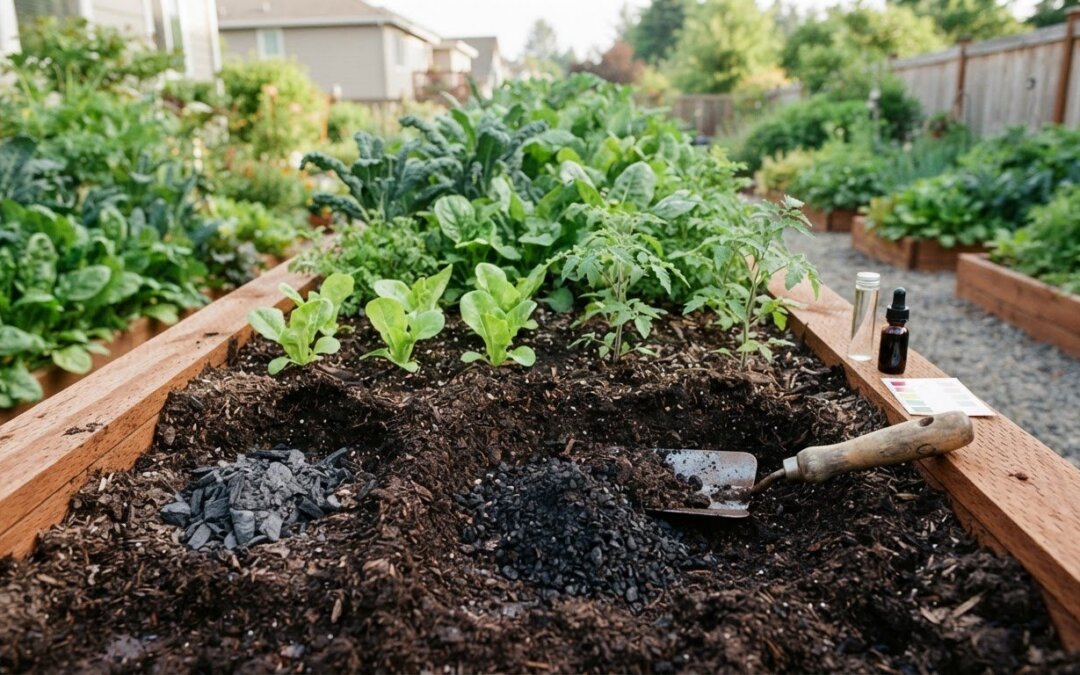
Biochar isn’t a guaranteed win for every garden bed. A biochar soil conditioner for garden beds can help condition soil, but its effect depends on the biochar and the soil it’s added to. For soil incorporation, start with biochar at 5-10% of soil volume, and consider its pH before mixing it in.
It’s easy to see why gardeners are drawn to biochar: it can support soil structure and store carbon for the long term. But fresh biochar has little direct nutritional value, and adding it without preparing it first may not give plants the start you want.
Here, you’ll learn how biochar may affect garden-bed soil, why mixing it with compost and nutrients matters, and how pH can help determine whether it’s a good fit. We’ll also cover potential benefits and risks, including what carbon storage means in a practical garden.
Key Takeaways
- Biochar can affect a bed’s pH, so consider both the material and the soil before choosing how to use it.
- Charging biochar with compost helps it take up nutrients and beneficial soil life before it goes into the bed.
- Soil texture matters: biochar’s effects can differ between sandy and other soils, and particle size can influence aeration.
- For raised beds, a soil-volume estimate can help you plan amendments and avoid adding more material than you need.
Q: Does biochar application affect soil pH?
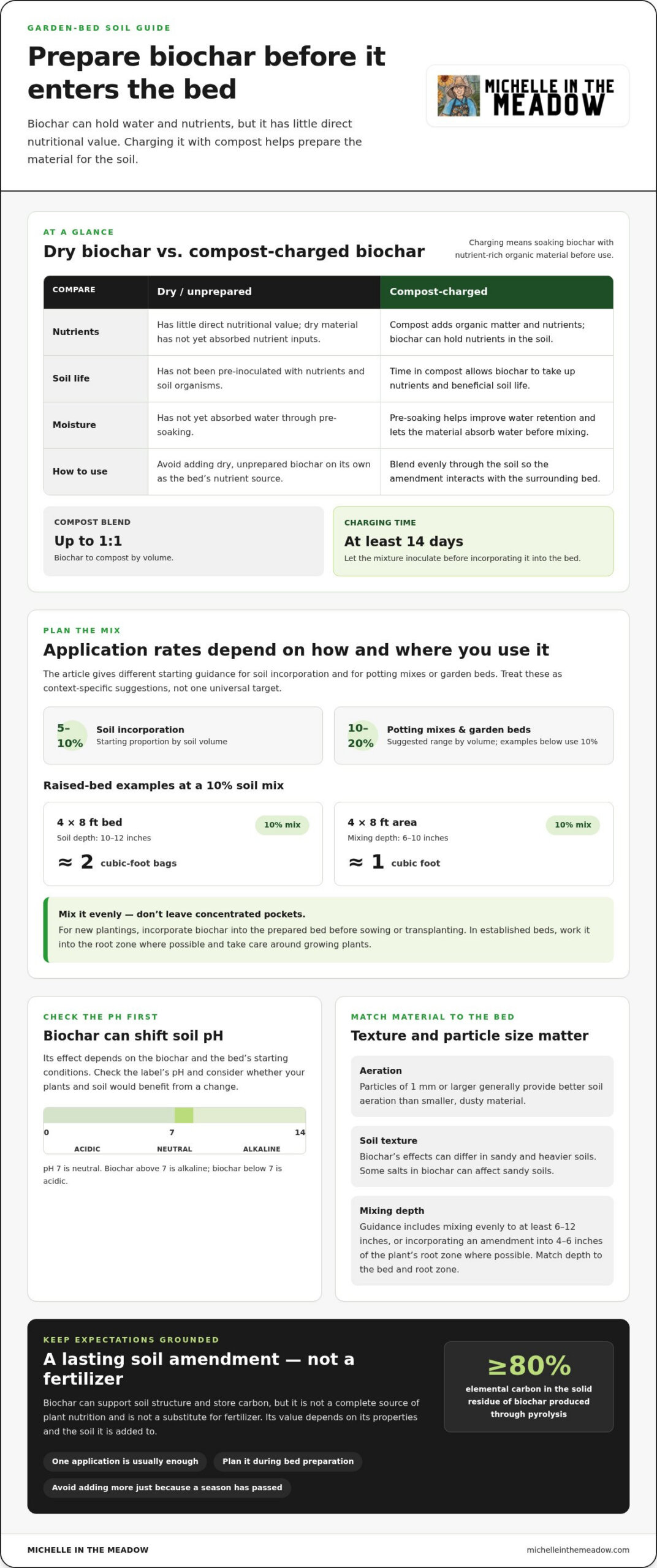
Yes. Biochar can shift soil pH, depending on the material and the bed’s starting conditions. The pH scale runs from 0 to 14, with 7 neutral. Biochars above 7 are alkaline, while those below 7 are acidic. Before adding biochar, consider whether your plants and existing soil would benefit from a pH change. The label’s pH value can help you understand how the material may interact with the bed.
Application rate matters, too. The amount of biochar to use depends on the soil and how it is being applied. For potting mixes and garden beds, a suggested starting range is 10-20% by volume. These ranges differ by use, so don’t treat one percentage as a universal target. A 4-by-8-foot raised bed with soil 10 to 12 inches deep takes approximately 2 cubic-foot bags for a 10% mix.
For a shallower garden area, the estimate changes: a 4-by-8-foot area mixed 6 to 10 inches deep takes approximately 1 cubic foot for a 10% soil mix. Mix the material evenly rather than leaving concentrated pockets. In an established bed, work it into the root zone where possible, taking care around growing plants. For new plantings, incorporate it into the prepared bed before sowing or transplanting, so it’s distributed through the soil rather than placed only in planting holes.
Biochar usually needs only one application, rather than repeated additions as part of each planting. Plan that application while preparing a new bed, or choose a suitable time to incorporate it into an established bed. For soil incorporation, one recommendation is to mix evenly to a depth of at least 6-12 inches; another advises incorporating soil amendment into 4 to 6 inches of the plant’s root zone if possible. Match the mixing depth to the bed and root zone, and avoid adding more simply because a season has passed.
Charging biochar with compost and nutrients
Biochar has little direct nutritional value, so preparing it before use matters. Compost can add nutrients and beneficial soil biology.
Charging Biochar with Compost
Charging means soaking biochar with nutrient-rich organic material so it can take up nutrients and soil organisms before entering a bed. Blend biochar with compost at a ratio as high as 1:1, then leave the mixture to inoculate for at least a couple of weeks. Another practical guideline is to allow at least 14 days. Pre-soaking the biochar also helps improve its water retention. The result is a prepared amendment, rather than dry biochar added on its own.
Nutrient and Moisture Retention
Biochar’s porous structure can retain moisture and nutrients, so preparation matters when using it in garden beds. Pre-soaking allows it to absorb water before mixing, while compost adds organic matter and nutrients. Dry, unprepared biochar has not yet absorbed those inputs. Once blended, work the mix evenly through the soil so it can interact with the surrounding bed instead of building up in one spot.
Nutrient-Enriched Biochar and Its Value
Nutrient-enriched biochar is biochar blended or charged with compost or other organic materials. It can be sold already blended, or prepared by combining biochar and compost at up to a 1:1 ratio. That convenience doesn’t make biochar a fertilizer: it has minimal direct nutritional value and isn’t a substitute for fertilizer. Think of it as a soil amendment that can hold nutrients, not as the source of all nutrients plants need.
For a slower approach, mix biochar into a field intended for cover crops and let it charge over several months as native microorganisms move into it. In a garden bed, compost charging is a more direct way to prepare the material before incorporation. For practical context on amendments and bed preparation, explore gardening educational content.
Biochar soil-conditioning benefits
Biochar’s value is less like a quick fertilizer boost and more like a lasting soil amendment. Its porous structure can create spaces that support air and water movement through soil. Particle size matters: biochar particles of 1mm or larger generally provide better soil aeration than smaller, dusty materials. For a garden bed, that means choosing material with a useful texture rather than assuming every batch will behave alike. As a biochar soil conditioner for garden beds, its role is to support soil structure, not provide a complete source of plant nutrition.
Soil type also affects where biochar may make a difference. Some salts in biochar can affect sandy soils, where water and nutrients move differently than in heavier soils. Biochar isn’t a universal fix; its role depends on the soil it’s added to. Before choosing an amendment, consider whether your bed is sandy and what you want to improve, such as aeration or soil condition. The same material may not suit beds with different textures or planting needs.
Longevity is another part of the appeal. Biochar is intended as an amendment that can last for the lifetime of a garden, so it isn’t simply a short-lived seasonal input. Its carbon storage potential comes from how the material is made: biochar produced through pyrolysis has a solid residue of at least 80% elemental carbon. Incorporated into a garden bed, a biochar soil conditioner for garden beds can serve a soil-conditioning purpose while storing carbon in the soil.
The practical takeaway is to match the material to the job. Coarser particles, for example, may be more useful when aeration is a priority, while the bed’s texture matters when considering biochar’s effect on soil conditions. Think of biochar as one part of the bed’s overall soil structure, not a replacement for compost or fertilizer. Its potential benefits depend on its physical properties and how they interact with the existing soil. Keeping that distinction in mind helps set realistic expectations when deciding whether to use it.
Does biochar application vary by climate, soil type, or local gardening recommendations?
Climate, soil texture, and the plants in a bed can all affect how you use biochar. Rainfall and drying conditions influence how quickly soil loses moisture, while texture affects water movement. Consider what you want biochar to contribute: moisture retention may matter in a dry garden, while in a frequently wet bed, you’ll want to consider how it fits the existing soil structure. These are different goals, so one approach won’t suit every site.
Sandy soil deserves particular attention because some salts in biochar can affect it. The material’s properties matter, not just the amount you add. Consider the bed’s texture and pH alongside the biochar’s pH. For example, alkaline biochar may not suit every planting in soil that already has a high pH. The right choice depends on the starting soil and the plants growing in it.
Climate labels alone don’t tell you how a garden bed behaves. A sunny, exposed bed may dry out differently from a sheltered bed in the same region. Gardening recommendations are most useful when they account for actual conditions, including soil texture, pH, drainage, and crop needs. Compare general advice with these factors before choosing an amendment. Advice for sandy soil may not suit a bed with different soil and moisture conditions.
Application conditions matter, too. Moisten biochar before spreading it to reduce the chance that wind will carry it away. Then incorporate it evenly into the soil rather than leaving a layer on the surface. For an established bed, work carefully around roots; for a new bed, mix the amendment through prepared soil before planting. Consider the season and soil moisture when choosing your timing, since workable soil is easier to mix evenly.
Michelle In The Meadow: Soil Calculator for Raised Beds
Michelle In The Meadow’s Soil Calculator for Raised Beds can help you plan the soil volume for a new or refreshed bed. The estimate is a useful starting point before you decide how much of any amendment to mix in. Consider biochar’s proportion, pH, and preparation separately; the calculator is designed for raised-bed soil planning.
Michelle In The Meadow also shares gardening educational content and curated gardening product recommendations. These resources can help you think through bed preparation and product choices in light of your garden’s needs.
Visit michelleinthemeadow.com to explore the calculator and gardening resources.
Make Your Next Bed-Preparation Choice Deliberate
Think of each garden bed as its own small system. Before adding an amendment, identify what you want to improve and keep that goal in mind as you prepare the soil. A biochar soil conditioner for garden beds is most useful as part of a considered plan, not as an automatic addition to every planting. That approach makes it easier to decide what belongs in the bed and what doesn’t.
As you plan future changes, keep a simple record of the amendments you use and where you apply them. It gives you a clearer starting point for future bed preparation and helps you make thoughtful adjustments as your garden develops. You can contact Michelle In The Meadow to explore the next step for your raised-bed plans.
Good soil takes attention, not guesswork. Keep observing, make deliberate choices, and let each season teach you more about your garden.
Frequently Asked Questions
Is biochar application proven to be always beneficial in the garden?
No. Biochar isn’t automatically beneficial in every garden bed because its properties interact with the existing soil and plants. Before using it, consider the bed’s pH, texture, and growing goals. If changing the soil pH could work against the plants you’re growing, pause and reassess whether the amendment is suitable instead of treating it as a universal improvement.
Can barbeque charcoal be used instead of biochar?
Don’t assume barbecue charcoal is interchangeable with biochar. Biochar is made by carbonizing organic material with little or no oxygen; charcoal sold for grilling is intended as fuel. Unless you know how the material was made and what it contains, you can’t treat it as equivalent to a soil amendment. Choose material intended for soil use instead of repurposing unknown fuel.
Is biochar a source of nutrients, and does it need to be reapplied?
No. Biochar has minimal direct nutritional value, so it shouldn’t replace fertilizer or compost in a feeding plan. It usually needs only one application, rather than routine additions with each planting. If a bed’s vegetables need nutrients, address that need separately instead of adding more biochar as a substitute. Think of biochar as a soil amendment, not plant food.
What is biochar?
Biochar is a carbon-rich material made by heating organic matter with little or no oxygen, a process called pyrolysis. It can be made from different organic feedstocks, so not all biochars have the same properties. That matters in a garden: the name describes a type of amendment, not a guarantee that every batch will behave the same way in soil.
What is biochar, and how does it work as a soil conditioner in garden beds?
Biochar is a porous carbon material added to soil as an amendment. In a garden bed, its pores create surfaces and spaces that can interact with water and nutrients. Mixing it through the soil distributes those spaces where roots grow, rather than leaving a concentrated pocket. Pair it with organic matter for a more complete soil mix; biochar alone isn’t a growing medium.
What are the benefits of biochar for garden soil, plants, and water retention?
Biochar can support soil aeration and water retention, while its porous structure can hold nutrients in the bed. These effects relate to the soil environment, not a direct nutrient boost for plants. For example, if water movement or soil structure is a concern, consider biochar as one part of an amendment plan alongside the existing soil and organic matter.