
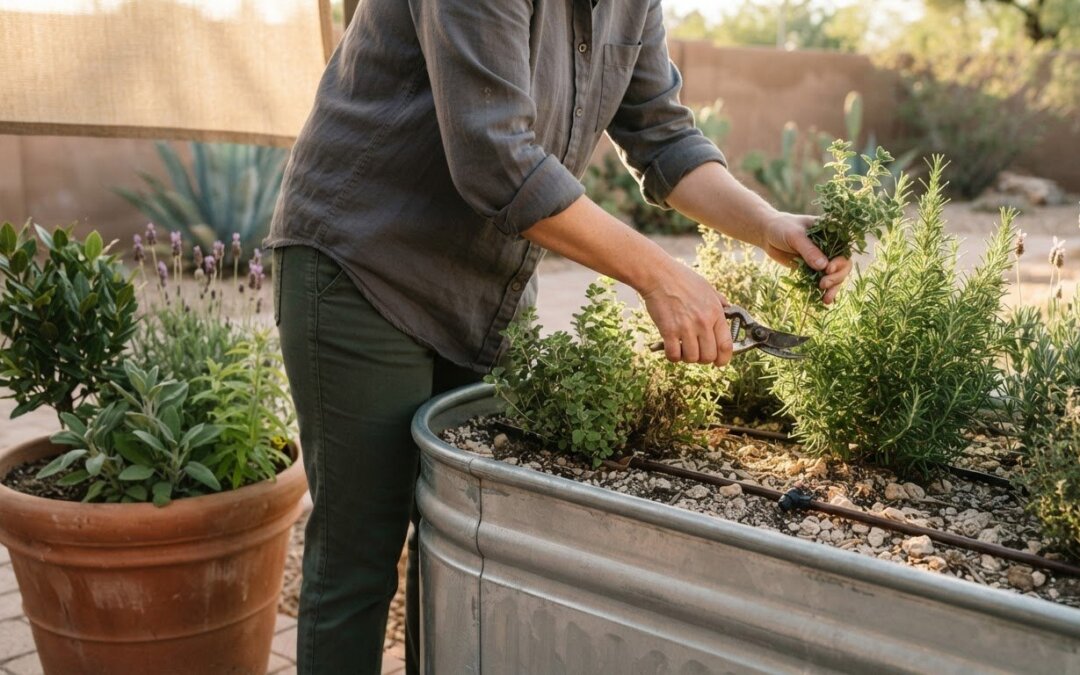
A summer herb garden doesn’t have to fade when the heat sets in. The best perennial herbs for hot climates include rosemary, oregano, sage, lavender, bay laurel, and lemon verbena. Whether they stay perennial depends on winter temperatures and local conditions. Some thrive in warm regions, while others need protection or may grow as annuals in colder areas.
It’s easy to focus on which herbs tolerate heat and overlook how useful they’ll be at the table. These plants bring fresh flavor to everyday cooking, but need the right start: well-drained soil, thoughtful watering, and sun or a little afternoon shade when conditions become extreme.
Here, you’ll learn how to choose heat-friendly perennial herbs, establish them in your garden, and care for them through hot spells. You’ll also find simple ways to use their leaves and stems in cooking, so your herb patch earns its place beyond the growing season.
Key Takeaways
- Choose herbs by both summer heat tolerance and winter hardiness; rosemary, oregano, sage, and lavender are useful starting points.
- Give lavender a sunny, well-drained spot, and learn how establishment and pruning affect its growth.
- Adjust sun exposure and watering during extreme heat to help herbs cope without keeping their roots constantly wet.
- Make fresh herbs part of everyday meals by matching their flavors to dishes you already enjoy.
1. What herbs are perennials?
A perennial herb lives for several growing seasons, though winter cold can limit where it survives outdoors. The best perennial herbs for hot climates include rosemary, oregano, sage, lavender, bay laurel, lemon verbena, and lemongrass. USDA hardiness zones offer a guide to cold tolerance, but humidity, elevation, and drainage also affect how plants handle summer.
Rosemary, thyme, oregano, sage, and lavender differ in both cold tolerance and water needs. Rosemary suits USDA zones 8-10, while oregano grows in zones 5 to 10. Lavender is listed for zones 5-9, and common thyme is hardy to USDA Zone 5. Sage tolerates drought; oregano and thyme also suit sunny, well-drained beds.
For hot, dry climates, start with Mediterranean herbs such as rosemary, lavender, oregano, and sage. These plants handle drought better once established, especially in full sun and fast-draining soil. Bay laurel and lemon verbena suit zones 8-10; lemongrass grows in zones 8-11. In colder regions, grow tender choices in containers and move them indoors before frost.
Some herbs combine summer heat tolerance with winter-frost tolerance. Oregano, thyme, and savory can survive colder conditions, with savory listed for zones 5-10. Lavender varieties also vary: English lavender can grow down to zone 5, while heat-loving types such as Spanish lavender suit warmer gardens. Match the named variety to your local zone.
Lavender needs full sun and sharp drainage. After its first year of establishment, it becomes extremely drought-tolerant, but water it during extreme heat. Prune after flowering to shape the plant: remove spent flower stems, but avoid cutting into old woody growth. Its blooms can also attract pollinators.
Hot, humid weather can bring aphids, spider mites, and fungal problems to perennial herbs. Check the undersides of leaves, leave room for airflow, and water the soil rather than wetting foliage. For oregano, well-drained soil helps prevent root rot.
Rosemary, thyme, oregano, sage, and lavender are edible as culinary herbs, but that doesn’t establish whether they’re safe for pets. Keep plants and clippings away from pets unless the exact plant’s safety for that animal is established.
2. Herb garden establishment and maintenance
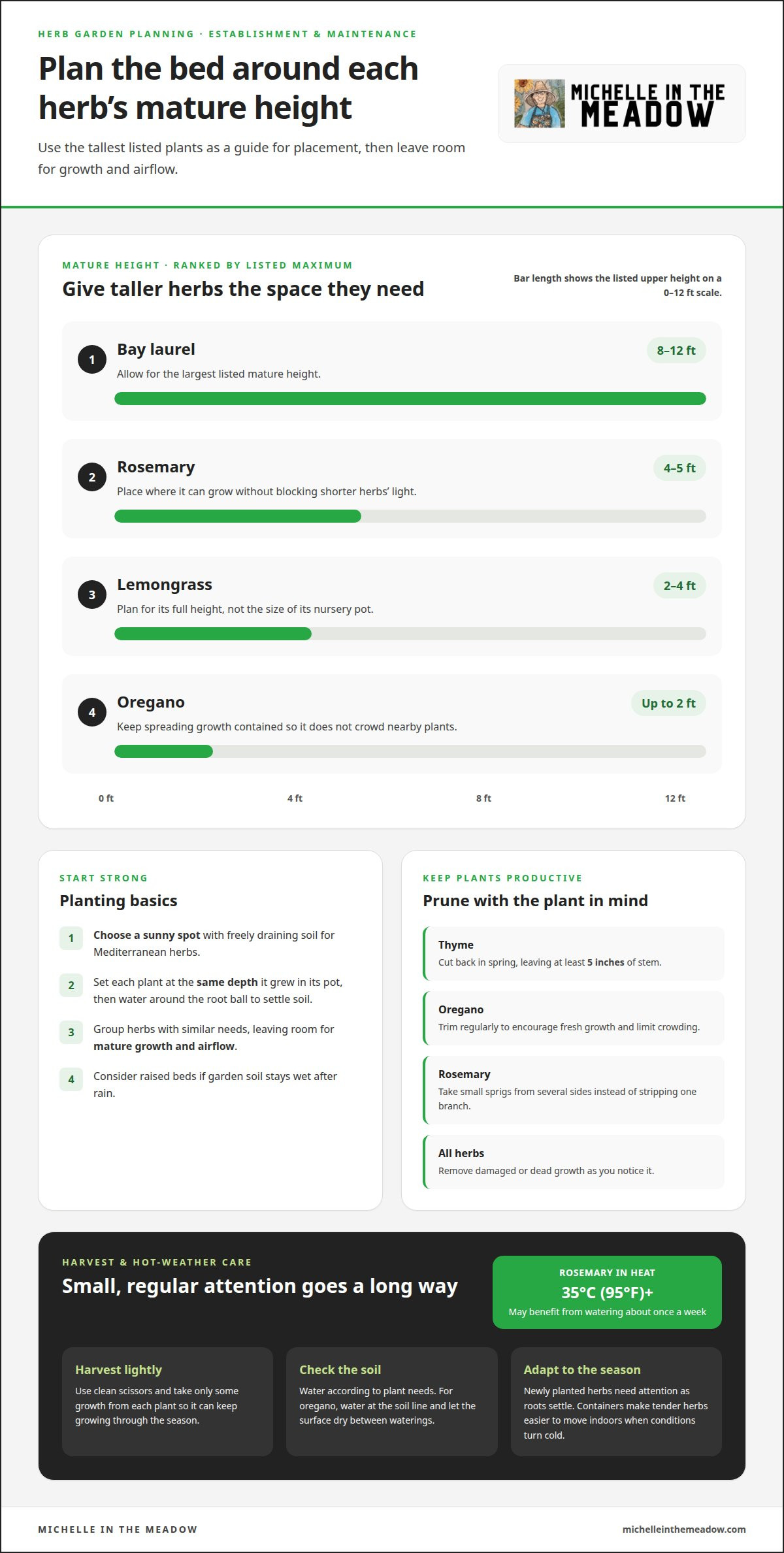
Start a Mediterranean herb garden in a sunny spot with freely draining soil. Set each plant at the same depth it grew in its pot, then water around the root ball to settle the soil. Group herbs with similar needs, leaving enough room for mature growth and airflow. Raised beds can help if garden soil stays wet after rain.
Plan around each herb’s eventual size, not its small nursery pot. Rosemary can reach 4-5 feet tall, while bay laurel may grow 8-12 feet. Lemongrass reaches 2-4 feet, and unpruned oregano can grow up to two feet. Plant shorter herbs where taller neighbors won’t block their light, and keep spreading herbs contained.
Pruning keeps plants productive and reduces woody growth. Cut thyme back in spring, but leave at least 5 inches of stem. Trim oregano regularly to encourage fresh growth and prevent it from crowding nearby plants. For rosemary, take small sprigs from several sides rather than stripping one branch. Remove damaged or dead growth as you notice it.
Harvest leaves with clean scissors, choosing tender growth for the kitchen. Take only some growth from each plant so it can keep growing through the season. Use basil, oregano, and thyme fresh, or dry extra leaves for later meals. For marjoram, wait three months after planting before harvesting. Regular, light harvesting also helps you spot stems that need trimming.
Match care to the plant’s stage. Newly planted herbs need attention as roots settle, while established rosemary may benefit from watering about once a week when temperatures exceed 35°C (95°F). A container makes tender herbs easier to move indoors when conditions turn cold. For practical guidance on planting and maintaining herbs, use educational resources that focus on each step of the garden season.
3. Shade and watering considerations in extreme heat
Heat-loving herbs need well-drained soil and sunlight suited to each plant. Rosemary and oregano prefer sunny conditions, while lemon balm can grow with four to six hours of sun and appreciates damp soil. Keep Mediterranean herbs out of waterlogged ground.
Start by checking how sunlight moves across the bed during spring and summer. Rosemary needs at least six hours of direct sunlight daily, and oregano also grows best in a sunny spot. Basil can handle six to eight hours of sunlight, but afternoon shade is recommended when temperatures exceed 90°F. That shade can ease stress during the hottest part of the day.
For partial shade, lemon balm is a useful perennial. Give it four to six hours of sunlight and soil that stays damp, rather than planting it in the driest, hottest corner. If your garden gets intense afternoon sun, try a spot with morning light and afternoon shade.
Water at the soil line and let the surface dry between waterings for oregano. Deep, regular watering supports its growth without keeping the roots constantly wet. Rosemary also needs some attention during heat: when temperatures hover near 100ºF, afternoon shade can help prevent leaf burn. Established rosemary may benefit from watering about once a week when temperatures exceed 35°C (95°F).
Adjust shade and watering as the season changes. Containers give basil or rosemary more flexibility: move them away from harsh afternoon sun when needed. In winter, place pots where plants get suitable light and protect tender growth from cold. In spring, watch for new growth and gradually move pots into stronger sun. Before watering, feel the soil: dry soil needs water, while soil that stays wet points to poor drainage or overwatering.
4. Culinary uses for hot-climate herbs
A useful herb garden should flavor meals, not just tolerate summer temperatures. Rosemary adds a piney note to roasted vegetables, beans, and grilled foods. Strip the leaves from woody stems and chop them finely to spread their flavor through a dish. Keep freshly cut rosemary near your favorite savory recipes for an easy kitchen habit.
Oregano and thyme bring different strengths to tomatoes, soups, and marinades. Tear oregano leaves into a tomato salad or stir them into sauce near the end of cooking. Add thyme sprigs earlier to broth or beans, then remove the stems before serving. These Mediterranean herbs thrive in hot gardens, and a few leaves can season a whole dish.
Sage pairs well with squash, pasta, and browned butter, while lemon verbena suits fruit and tea. Gently bruise lemon verbena leaves before steeping to release their citrus scent. Lemongrass adds a bright, lemony note to curries and broths. Crush the lower stem before simmering, then remove it if its texture feels too fibrous.
Bay laurel works differently from tender leafy herbs. Add a whole bay leaf to beans, soup, or sauce as it simmers, then remove it before serving. Lavender flowers can add a floral note to baked goods or tea, but use a light touch so they don’t overpower other flavors. Culinary varieties can differ in intensity, so taste as you go.
Harvest clean leaves when you’re ready to cook, and avoid picking wet foliage after watering. Pineapple sage offers another garden-to-table option: its red flowers attract hummingbirds, while its leaves add a fruity note to drinks and desserts. Across America, matching each herb’s flavor to a familiar dish makes fresh harvests easier to enjoy.
Michelle In The Meadow
Michelle In The Meadow shares practical gardening guidance to help you turn herb-growing questions into next steps. Its educational content can help you choose herbs and adapt care to your conditions, while curated product recommendations offer ideas for useful garden tools. Planning a raised bed? The Soil Calculator for Raised Beds can help estimate how much soil your project needs.
Use these resources as you decide which herbs suit your climate, space, and cooking habits. Planning for sunlight, drainage, and mature plant size can make it easier to build a garden you’ll enjoy tending and harvesting.
For help with your gardening questions, contact Michelle In The Meadow.
Make Your Herb Garden a Living Part of the Kitchen
Your next step can be simple: choose an herb you enjoy cooking with, then make room for it in your garden or a container. Watch how it responds to your conditions and adjust its placement and care as needed. The best perennial herbs for hot climates are those that suit both your growing space and the dishes you love to make.
Michelle In The Meadow offers gardening educational content, curated product recommendations, and a Soil Calculator for Raised Beds. Use these resources to plan, from choosing practical tools to estimating soil for a raised-bed project.
Ready to keep planning your garden? Contact Michelle In The Meadow and take your next step toward a garden that brings fresh flavor within reach.
Frequently Asked Questions
What herbs are perennials?
Rosemary, oregano, sage, lavender, thyme, bay laurel, and lemon verbena can grow as perennials, depending on local winter conditions. In warm regions, basil may also live as a perennial, while it grows as an annual elsewhere. Think of “perennial” as describing a plant’s life across seasons, not a guarantee that every variety will survive winter outdoors. Check the herb’s hardiness range against your climate.
Which perennial herbs tolerate extreme heat and full sun?
Rosemary, oregano, sage, and Mediterranean lavender are useful choices for sunny, hot gardens. Rosemary needs at least six hours of direct sunlight daily, while oregano also needs a sunny spot and well-drained soil. In especially intense afternoon heat, give rosemary some shade to protect its leaves. Lavender tolerates drought after it’s established, but still needs water during extreme heat.
What perennial herbs grow best in hot, humid climates?
Oregano and other mint-family herbs can keep growing through summer, while lemon balm suits spots with damp soil. In humid gardens, choose a well-drained planting area and leave room for air to circulate. Oregano particularly benefits from good drainage, since persistently wet soil can encourage root rot. A hardiness zone doesn’t describe every garden: humidity and elevation also affect growing conditions.
How much water do popular heat-tolerant perennial herbs need?
Water according to the herb and its stage of growth, rather than using one schedule for every bed. Deeply water oregano, then allow its soil to dry between waterings. Lavender tolerates drought after its first year, but needs water during extreme heat. Established rosemary may benefit from watering about once a week when temperatures exceed 35°C (95°F); check soil moisture before watering.
Which perennial herbs are best for USDA zones 8-11?
For zones 8-10, consider rosemary, bay laurel, and lemon verbena. Lemongrass suits zones 8-11, while pineapple sage is hardy in zones 8-11. Basil can grow as a perennial in USDA Planting Zones 10-11. These ranges help compare winter hardiness, but don’t describe summer humidity or elevation. Choose among them based on your local conditions and how you plan to use each herb.
When and how should perennial herbs be planted in hot climates?
Plant during a mild stretch rather than peak heat, giving new roots time to settle before harsh conditions arrive. Choose a site with suitable light and well-drained soil for rosemary or oregano. Set each plant at its existing soil depth, water around the root ball, and check moisture as it establishes. In containers, use pots you can move as conditions change.
