
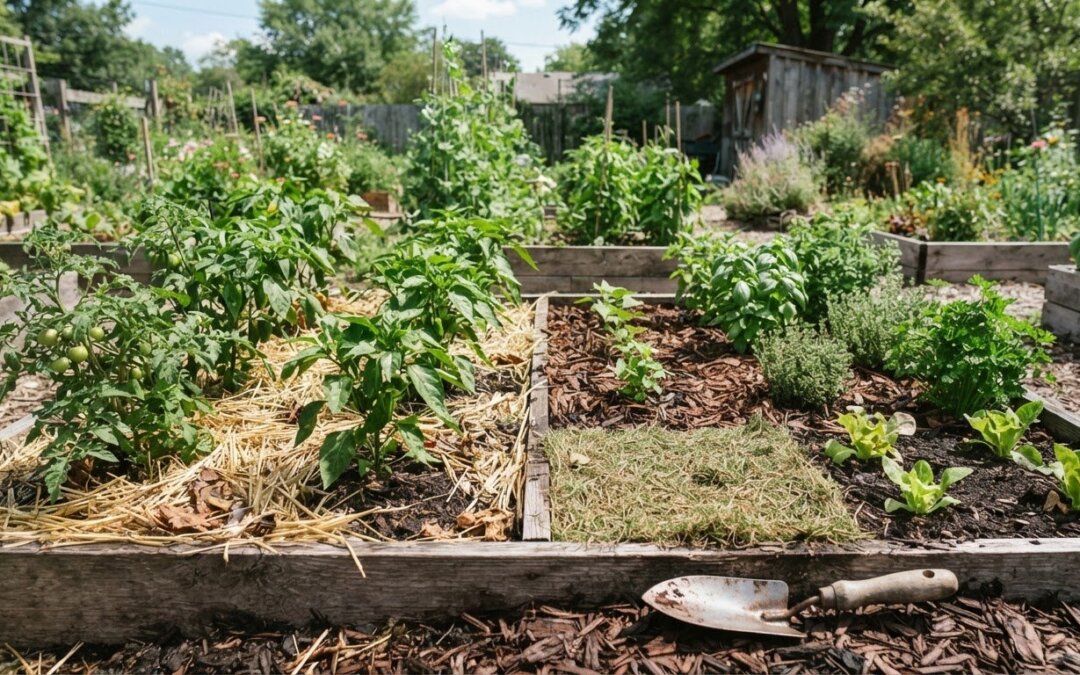
The best mulch for heat-tolerant vegetable gardens depends on whether you want to cool the soil or keep it warmer. Lighter natural mulches, such as straw or leaves, help keep soil cooler, while dark mulch absorbs heat. Mulch also helps retain moisture, suppress weeds, and protect soil structure. Wood chips and dried grass clippings can both be useful, but they have different trade-offs, including how they affect nitrogen availability and the risk of herbicide carryover.
Choosing mulch can feel like a small decision until the garden starts drying out or weeds crowd the vegetables. You can match the material to your crops and growing conditions. This guide compares wood chips with grass clippings, explains nitrogen and herbicide concerns, and shows how mulch can support a more resilient vegetable bed.
Key Takeaways
- Choose mulch with your crops’ temperature needs in mind, and consider how its color affects the soil beneath it.
- Keep wood chips on the soil surface; mixing them in can change how nitrogen is available to plants.
- Dry grass clippings before using them, and consider whether treated lawn grass could carry herbicide residues into the garden.
- Match mulch to your bed’s moisture and weed-control needs, then refresh it as organic materials break down.
Wood chips and nitrogen availability
Wood mulch can protect vegetable beds without automatically depriving plants of nitrogen. The key distinction is whether the material stays on the soil surface or gets mixed into the soil.
Wood chip mulch
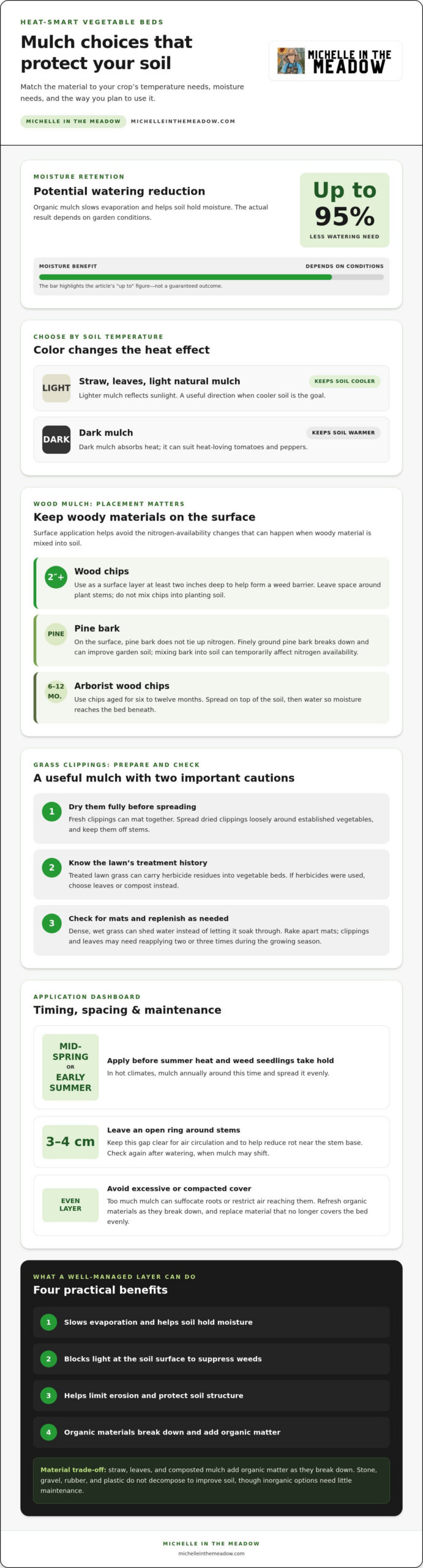
Wood chip mulch consists of pieces of wood that break down gradually above the soil. Keeping wood chips on the soil surface rather than mixing them into the bed can help avoid changes in nitrogen availability. That differs from materials mixed into the bed, where decomposition can affect nitrogen availability. Keep chips as a top layer rather than adding them to planting soil. A layer at least two inches deep can help form a weed barrier, but leave space around plant stems.
Bark mulch and wood shavings
Bark mulch comes from the outer layers of trees, while wood shavings are finer, thinner pieces. Finely ground pine bark breaks down and improves garden soil. Pine bark on the surface does not tie up nitrogen; mixed into soil, it can temporarily do so. Placement matters more than the mulch’s name. Keep bark on top, and avoid mixing it into the root zone when plants need available nitrogen.
Arborist wood chip mulch
Arborist chips are a varied mixture of woody material from tree work. Unlike finely ground pine bark, they tend to remain in larger pieces as they break down. Wood chips aged for six to twelve months are recommended for vegetable-garden mulching. Spread them as a surface layer, then water the bed so moisture reaches the soil below. This keeps the chips separate from the soil where vegetables are growing.
| Option | Nitrogen placement | Best use |
|---|---|---|
| Wood chips | Surface layer does not rob soil nitrogen | Weed barrier, at least two inches deep |
| Pine bark | Surface use avoids nitrogen tie-up | Fine bark breaks down into soil |
| Aged arborist chips | Keep on top of soil | Mulch after six to twelve months |
Choose surface-applied chips for a durable cover, or fine pine bark when improving the soil matters most.
Grass clippings and herbicide concerns
Grass clippings are a readily available garden material, but drying and source matter. Prepare them carefully before using them around vegetables.
Grass clippings as mulch
Fresh clippings can mat together, so dry them fully before spreading. Apply a layer a couple of inches thick around established vegetables. Unlike plastic, clippings are organic and break down over time; leaves and compost are other soil-friendly options. Keep the layer loose so water can reach the soil. Check it during the growing season and replenish it as it decomposes. Grass clippings and leaves may need reapplying two or three times during the growing season.
Herbicide concerns with grass clippings
Grass from a lawn treated with herbicides can carry residues into a vegetable bed. Because clippings sit close to roots and stems, residues may affect sensitive vegetables or seedlings. Use clippings only when you know the lawn’s treatment history. If herbicides were used, choose leaves or compost instead. This source-conscious approach helps avoid turning a useful lawn by-product into a risk for productive beds.
For a tidy application, dry clippings first, then spread them loosely without pressing them against stems. Check for clumping after watering: dense, wet grass can form a barrier that sheds water instead of letting it soak through. Rake apart any mats and add a thinner layer if the bed feels too heavily covered. Keep mulch light around emerging seedlings so they have room to grow through.
For more practical guidance on choosing materials and caring for vegetable beds, explore gardening educational content.
So, What’s the Best Mulch for Vegetable Gardens?
Mulch cost per bag or cubic yard in the United States varies by material, quantity, packaging, and delivery. In hot climates, spread mulch in mid-spring or early summer, before summer temperatures rise and weed seedlings take off.
Organic mulch and moisture retention
Organic mulch, such as shredded bark or composted material, slows evaporation and helps soil hold moisture. It can cut watering needs by up to 95%, though the result depends on garden conditions. Dark mulch absorbs heat, while lighter natural pine reflects sunlight and helps keep soil cooler. Too much mulch can suffocate roots, so use a suitable layer and watch for persistently damp soil.
Mulch alone doesn’t mean pests will appear. Keep the layer managed and inspect plants for changes.
Organic and inorganic mulch types
Straw, shredded leaves, and composted mulch add organic matter as they break down. Stone, gravel, rubber, and plastic don’t decompose to improve soil, though inorganic options need little maintenance. At season’s end, organic mulch can remain and break down; replenish it as needed. Remove or replace material that has become compacted or no longer covers the bed evenly.
Applying mulch in hot climates
Apply mulch annually, generally in mid-spring or early summer, before summer heat and weed seedlings take hold. For heat-loving tomatoes and peppers, dark mulch can keep soil warmer; in cooler conditions, straw or leaves help keep soil cooler. Choose based on crop needs, then spread it evenly. Avoid an excessively thick layer, which can restrict air from reaching roots.
Keeping mulch away from vegetable stems
Leave a 3-4 cm gap between mulch and vegetable stems. This open ring allows air circulation and helps reduce rot around the stem base. Keep the gap clear as you spread or replenish mulch, especially around tomatoes and peppers. Check after watering, since loose material can shift and collect against stems.
Mulch benefits for vegetable gardens
A well-managed mulch layer does more than cover bare soil. Around tomatoes, beans, or squash, it can reduce weed growth, limit erosion, and protect the soil as plants grow.
Weeds compete with vegetables for light, water, and nutrients. Shredded bark blocks light at the soil surface, making it harder for many weeds to establish. Natural mulch also helps prevent soil compaction and erosion, especially where watering or heavy rain would otherwise expose and disturb bare ground. Watch for gaps around plants, where weeds can still emerge.
Organic materials change the bed over time. Shredded leaves, straw, and composted mulch break down, adding organic matter and nutrients that support healthier soil. Straw left in the garden at season’s end can continue decomposing, while shredded leaves offer another way to return fallen material to the bed. Stone and plastic, by contrast, don’t break down into soil amendments.
- For weed control: Use a consistent cover of shredded bark or another natural mulch, then fill bare patches.
- For soil structure: Apply organic mulch over clay soil to help maintain airflow and reduce hardening.
- For seasonal soil care: Leave suitable organic mulch in place to decompose, and replenish it as it breaks down.
Mulch also creates a physical barrier between plants and soil, helping protect the bed from soil-borne pathogens. It works alongside good spacing and careful watering, but doesn’t replace either practice. In sandy beds, heavier pine bark nuggets can help soil hold water longer, while lighter materials suit other needs. Match the material to your soil and crops, then check coverage after watering or wind.
For practical steps on building healthier beds, explore vegetable gardening educational content and put these mulch benefits to work in your garden.
Michelle In The Meadow: Soil Calculator for Raised Beds
Michelle In The Meadow’s Soil Calculator for Raised Beds helps gardeners plan soil needs before filling a raised bed. Use it when preparing a new bed or refreshing one, then choose mulch based on your crops, soil conditions, and watering routine.
Michelle In The Meadow’s gardening educational content helps you compare mulch choices and apply them thoughtfully, while curated gardening product recommendations support practical garden planning. These resources are useful when weighing materials, planning a bed, or connecting soil preparation with ongoing care.
Visit michelleinthemeadow.com to explore gardening resources for your raised-bed plans.
Make Your Next Garden Bed a Thoughtful Experiment
Your next planting can build on what you notice this season. Pay attention to how quickly the bed dries, where weeds return, and how vegetables respond as temperatures shift. Those observations help you refine your mulch choice for the next crop instead of relying on a one-size-fits-all answer. The best mulch for heat-tolerant vegetable gardens is the material that fits your crops and the conditions you actually see.
Try changing one part of your approach at a time. A small, deliberate adjustment makes it easier to tell what helped, whether you’re planning a new raised bed or tending an established one. Keep notes about plants and areas that need attention, and let those details guide your next decisions.
For help planning your gardening next steps, contact Michelle In The Meadow. Keep observing, keep learning, and give your garden room to thrive.
Frequently Asked Questions
What mulch materials work best for heat-tolerant vegetable gardens?
Choose mulch according to each crop’s preferred soil temperature and planting method. The best mulch for heat-tolerant vegetable gardens is the one that supports those needs: dark mulch can help keep soil warmer, while lighter materials such as straw or leaves help keep it cooler. For seeds sown directly in beds, keep heavy chips away from sowing rows because they can inhibit germination.
How do straw, wood chips, compost, and plastic mulch compare for vegetable gardens in hot climates?
Straw provides a natural cover and compresses, so it needs a thicker starting layer. Wood chips form a durable surface barrier, while compost adds organic matter as it breaks down. Plastic doesn’t decompose into a soil amendment, but it can suit heat-loving crops. If using plastic mulch, place drip irrigation underneath so water reaches the bed.
How deep should mulch be around vegetables in hot weather?
Depth depends on the material. A general layer around 5 cm deep is a useful starting point, while wood chips need at least two inches to act as a weed barrier. Compost for vegetable beds also needs at least two inches to suppress weeds. Straw should be at least four inches thick because it compresses over time.
Does mulch keep vegetable garden soil cooler and retain moisture, and by how much?
Yes. Organic mulch reduces evaporation and helps soil retain moisture, which can keep vegetables from drying out too quickly. It can cut watering needs by up to 95%. Soil temperature also depends partly on mulch color: lighter natural materials reflect sunlight and help cool soil, while dark mulch absorbs heat. Check the bed after watering and adjust your routine to its conditions.
Which mulch is safest for heat-loving crops such as tomatoes, peppers, and okra?
There isn’t one safest mulch for every crop and garden. To choose the best mulch for heat-tolerant vegetable gardens, match the material to the crop and planting method. Black plastic can suit tomatoes and peppers when warmer soil is desired; place drip irrigation underneath. For natural mulch, use straw or leaves, keep it clear of stems, and avoid grass clippings from lawns treated with herbicides.
