
Key Takeaways
Gardening for stress relief is supported by a growing body of peer-reviewed research. Studies show that as little as 30 minutes of gardening can lower cortisol levels and restore a positive mood. Soil contact, sensory engagement, and gentle physical activity all contribute to reduced anxiety. Whether through a backyard raised bed or a community garden plot, time spent with plants offers a practical and accessible path to better mental well-being.
Stress has become a constant companion for many people. Between busy schedules, screen time, and daily responsibilities, finding a healthy outlet matters more than ever. Gardening for stress relief is gaining attention from researchers and health professionals alike. A growing number of studies now confirm what gardeners have felt for generations: spending time with plants calms the mind, lifts the mood, and helps the body recover from tension.
Why Gardening Lowers Stress, According to Research
One of the most cited studies on gardening for stress relief comes from the Journal of Health Psychology. Researchers assigned 30 gardeners to either 30 minutes of outdoor gardening or 30 minutes of indoor reading after a stressful task. Both groups showed a drop in cortisol, the body's primary stress hormone. However, the gardening group experienced significantly greater cortisol reduction and full mood restoration.
The benefits go deeper than fresh air and exercise. A 2023 meta-analysis published in Frontiers in Psychology reviewed multiple studies on horticultural therapy and stress. The results showed significant stress-reduction effects across different populations, settings, and activity types.
There is also something happening in the soil itself. Research from the University of Bristol found that Mycobacterium vaccae, a bacterium naturally present in soil, activated serotonin-producing neurons in mice. Serotonin plays a key role in mood regulation. This discovery suggests that the simple act of digging in the dirt may trigger a natural mood boost.
The Role of Mindfulness in Garden Therapy
Gardening engages all five senses at once. The texture of soil between your fingers, the scent of herbs, the sound of birds, and the visual rhythm of a garden row all pull attention into the present moment. This kind of sensory focus is a form of mindfulness, and it is one reason gardening and mental health are so closely connected.
Repetitive tasks like weeding, watering, and pruning create a meditative rhythm. The mind quiets when the hands are busy with simple, purposeful work. Racing thoughts slow down, and the nervous system shifts from a state of alertness to one of calm.
A meta-analysis of therapeutic horticulture programs found large, significant reductions in depression symptoms and moderate reductions in anxiety among participants. The researchers noted that structured gardening activities provided both physical and psychological benefits. These findings reinforce the idea that time in the garden offers real, measurable support for emotional well-being.
Simple Ways to Use Your Garden for Stress Relief
Getting started does not require a large space or years of experience. A single raised bed, a few containers on a patio, or even a windowsill herb garden can become a calming retreat. The key is consistency. Even 20 to 30 minutes of gardening a few times per week can produce noticeable benefits.
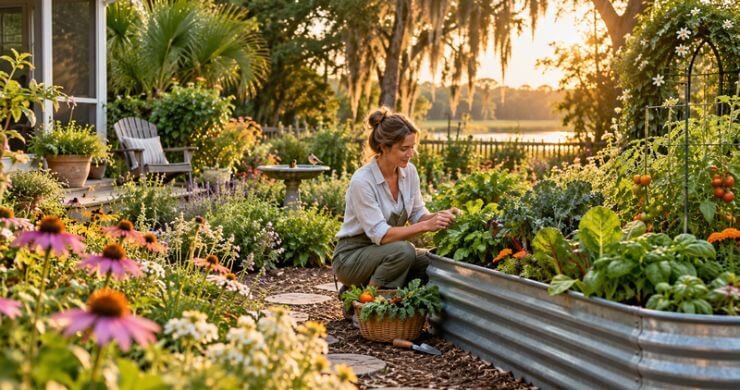
I use Vego raised beds in my own garden, and they make it easy to create a dedicated growing space without a lot of setup. A compact raised bed is a great starting point for anyone looking to build a stress-relieving garden routine.
Choose plants that engage the senses. Lavender, rosemary, basil, and chamomile all offer calming scents and thrive in warm climates like Zone 9. Gardeners in Florida and similar regions have the advantage of growing year-round, which means access to the therapeutic benefits of gardening in every season. Explore what grows well in your zone and start with what excites you most.
Gardening for Stress Relief at Every Experience Level
Beginners often worry about doing things wrong, but gardening is forgiving by nature. Herbs and leafy greens are low-pressure plants that grow quickly and reward new gardeners with early wins. That sense of accomplishment, watching a seed become something real, builds confidence and reinforces the calming habit.
Experienced gardeners can deepen the therapeutic benefits of gardening by trying new varieties or expanding into a pollinator garden. Adding flowers that attract butterflies and bees creates a living, dynamic space that naturally invites stillness and observation. For more gardening tips on building a garden that supports both wildlife and well-being, start with plants native to your region.
Research from Michigan State University found that community gardening improves both mental and social well-being. Participants reported stronger social connections, a greater sense of purpose, and reduced stress. Joining a local garden group or sharing extra produce with neighbors can add a valuable social layer to the experience.
It is important to note that gardening is a complement to professional mental health care, not a replacement. Anyone experiencing persistent anxiety or depression should reach out to a qualified health care provider. Gardening can be a meaningful part of a broader approach to emotional health, but it works best alongside proper support.
Frequently Asked Questions
Many gardeners and newcomers alike have questions about how time in the garden supports mental well-being. Below are some of the most common.
How Does Gardening Reduce Stress?
Gardening lowers cortisol through a combination of gentle physical activity, sensory engagement, and time spent outdoors. Studies show that even brief sessions in the garden can calm the nervous system and restore a positive mood.
How Much Time in the Garden is Needed to Feel Less Stressed?
Research suggests that 20 to 30 minutes of gardening is enough to produce measurable cortisol reduction and mood improvement. Consistency matters more than duration, so even short, regular sessions are beneficial.
What are the Best Plants to Grow for Relaxation?
Herbs with calming scents are a strong choice. Lavender, rosemary, chamomile, and basil are popular options that also grow well in warm and subtropical climates. Flowering plants that attract pollinators add visual calm and a sense of connection to nature.
Can Gardening Replace Therapy for Mental Health Concerns?
Gardening is a helpful complement to professional care, but it is not a substitute. Research supports its benefits for reducing stress and anxiety symptoms. Anyone dealing with ongoing mental health challenges should work with a qualified health care provider alongside their time in the garden.
Ready to Grow Your Own Calm?
Gardening for stress relief does not require a big budget or a green thumb. It starts with one plant, one quiet moment, and a willingness to get your hands in the dirt. I have seen the difference it makes in my own life, and I encourage you to give it a try.
Whether you start with a single pot of basil or a full raised bed, the garden is waiting. Find more inspiration and practical growing guides here on the blog.
