
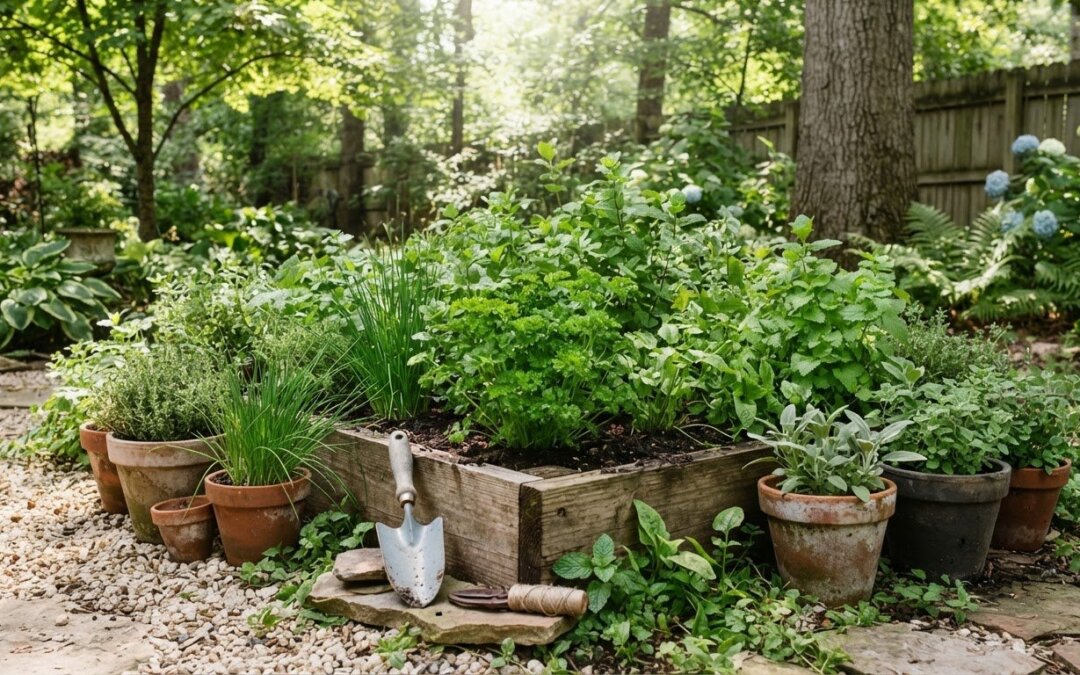
What if the shadiest corner of your garden could still give you fresh herbs for dinner? It can, but the best choices depend on how much direct light reaches that spot. Lists of herbs that grow in shade can be confusing because “partial shade” often means 3 to 6 hours of sun, while full shade gets fewer than 3. Leafy herbs can grow with less sun, but they won’t all thrive in the same conditions.
Start by watching how sunlight moves across your space. This guide will help you assess the light, choose from 10 herbs suited to different conditions, and set up a simple garden without wasting space or supplies. You’ll also learn which herbs are easier to manage in pots and how to tell whether slow growth calls for a change in light, watering, or placement. A little observation can make a shady patch surprisingly useful.
Key Takeaways
- Match herbs to the light your garden actually receives, rather than relying on a generic shade-garden list.
- Compare herbs that grow in shade by flavor, kitchen use, and growth habit to find the best fit.
- Check soil moisture before watering, since shaded soil may stay damp longer.
- Begin with two or three herbs you already enjoy cooking with, then see how they grow before expanding.
- Use containers to keep vigorous herbs manageable and make it easier to adjust their placement.
Can herbs grow in shade? Start by measuring the light you have
Yes, some herbs tolerate partial shade, though they may grow more slowly or produce fewer leaves than they would in a sunnier spot. The useful question isn’t simply whether your garden is “shady.” It’s how much direct sunlight reaches the exact place where you plan to grow. A small yard can have several different light conditions, even within a few steps.
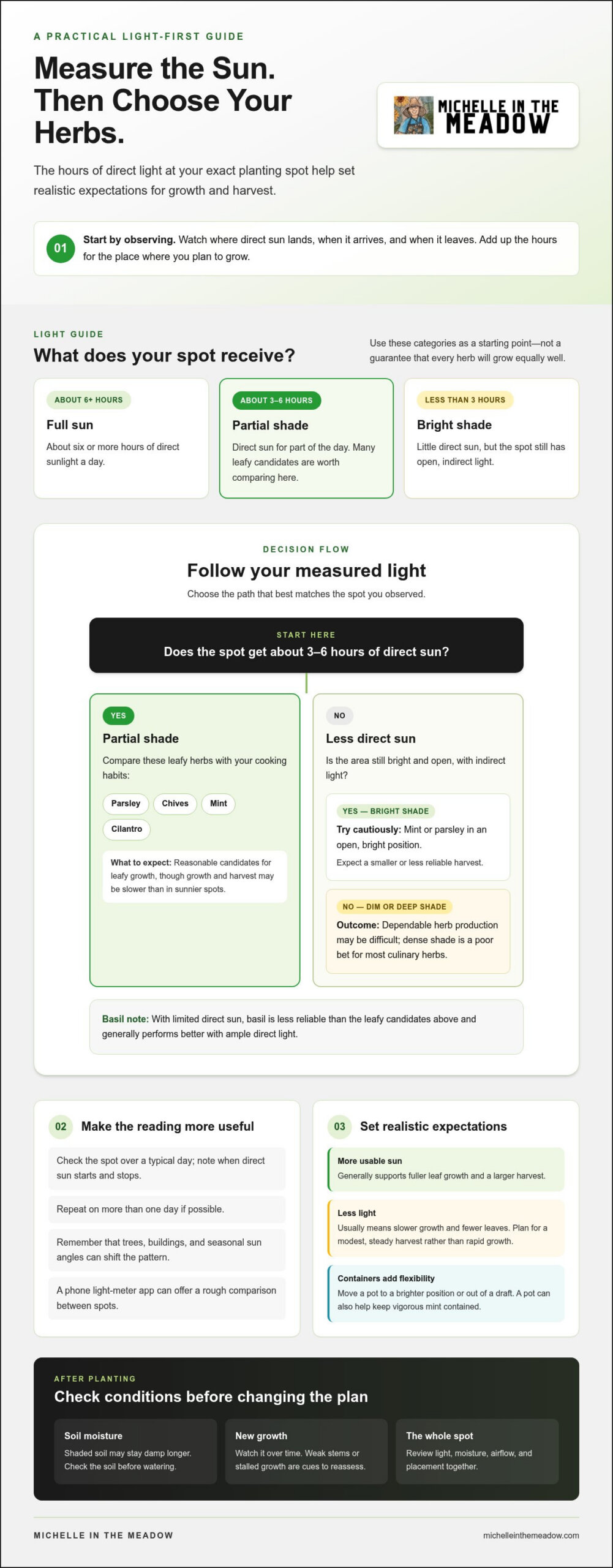
As a practical guide, full sun means about six or more hours of direct sunlight a day. Partial shade generally means about three to six hours, often with sun during part of the day. Full shade receives fewer than three hours of direct sun; dense, deep shade may get little direct sun at all. These categories are useful starting points, not a promise that every herb will grow equally well in each one.
Shade-tolerant herbs are plants that can grow and provide a useful harvest with less direct sun than sun-loving herbs, but they still need enough light to thrive. Bright indirect light, such as the open light beneath a roof or beside a bright wall, can support growth. It isn’t the same as several hours of direct sun, when sunlight falls on the leaves themselves.
How to tell partial shade from deep shade
Check the intended growing spot over a typical day instead of guessing from how it looks at noon. Note when direct sun first reaches the area and when it leaves, then add up the hours. Repeat on more than one day if you can. Trees, buildings, and the sun’s changing angle across the seasons can shift the pattern, so a single day’s reading may not describe the whole growing season.
Dappled light, where sun filters through leaves in shifting patches, and bright open shade can offer more usable light than a spot beneath a dense evergreen or beside a tall wall. A phone light-meter app can offer a rough comparison between spots, but watching where and when direct sun lands is the simplest place to start.
What shade means for growth and harvest
Less light usually means slower growth and less leaf production, especially if a plant receives very little direct sun. That doesn’t make a shade-grown herb a failure. It may simply take longer to provide enough leaves for regular picking, so plan for a modest, steady harvest rather than rapid growth.
Light is only one part of the growing conditions. A cool, sheltered corner may stay damp; a warm spot with gentle airflow may dry faster, even in shade. Containers add flexibility: you can shift a pot to a brighter position or move it out of a draft. Check the soil before watering and watch new growth over time. If stems become weak or growth stalls, reassess the light, moisture, airflow, and placement together. Matching herbs that grow in shade to the light you’ve measured gives your first planting a better start.
How much sun do shade-tolerant herbs need?
Use the hours you recorded for your planting spot as a guide, not a guarantee of how a particular plant will perform. The ranges below use the practical light categories from the previous section: partial shade is about 3 to 6 hours of direct sun daily, while bright shade receives less than 3 hours but still has open, indirect light. Most culinary herbs are more dependable in partial shade than in a dim corner.
| Light available | Herbs to consider | What to expect |
|---|---|---|
| Partial shade, about 3 to 6 hours of direct sun | Parsley (Petroselinum crispum), chives (Allium schoenoprasum), mint (Mentha species), cilantro (Coriandrum sativum) | Reasonable candidates for leafy growth, though growth and harvest may be slower than in sunnier spots. |
| Bright shade, less than 3 hours of direct sun | Mint and parsley are worth a cautious trial in an open, bright position. | Expect a smaller or less reliable harvest; dense shade is a poor bet for most culinary herbs. |
| Limited direct sun | Basil (Ocimum basilicum) | Less reliable than the leafy candidates above; basil generally performs better with ample direct light. |
These are useful starting points, not strict species-by-species promises. The Herbs That Grow in the Shade guide also highlights that some herbs are better suited to shaded conditions than others. Shade tolerance doesn’t mean a plant can produce well in near-darkness, and even herbs listed for partial shade may struggle at the lower end of that range. Mint can spread vigorously, so a pot is a practical way to keep it contained.
Match herb choices to the light you measured
For a spot receiving around 3 to 6 hours of direct sun, compare parsley, chives, mint, and cilantro with both the light pattern and your cooking habits. These herbs are often grown for their leaves, but tolerance doesn’t guarantee vigorous growth. Cilantro may benefit from some protection from intense heat, while basil is a less dependable pick when direct sun is limited. Start with one or two candidates rather than planting a large bed all at once.
Why deep shade changes the plan
If the spot gets almost no direct sun and stays dim even during the brightest part of the day, dependable herb production may be difficult. Look for a nearby position with open sky, or try a movable container where it can catch more light. Available light sets the pace: more usable sun generally supports fuller leaf growth and a larger harvest, while deeper shade calls for slower, smaller expectations.
A small trial can help you learn what your space supports before you expand. If you’re planning a raised-bed growing space, the raised-bed soil calculator can help you plan the soil volume around the herbs you choose.
Which herbs that grow in shade fit your kitchen and garden?
The best herb for a shady spot is one you’ll actually use and that suits the light you measured. Leafy herbs are often practical choices, but their growth can still be slower with less sun. Use this comparison to narrow your options, then consider flavor, harvest habit, and whether you want a plant that stays in place or spreads.
| Herb | Light fit | Flavor and kitchen use | Growth habit |
|---|---|---|---|
| Parsley (Petroselinum crispum) | Partial shade | Fresh, green flavor for salads, soups, and sauces | Leafy; harvest outer stems as needed |
| Cilantro (Coriandrum sativum) | Partial shade; some relief from strong sun can help | Distinctive, fresh leaves for salsa, curries, and garnishes | Leafy annual; can flower and set seed in warm conditions |
| Chives (Allium schoenoprasum) | Partial shade | Mild onion flavor for eggs, potatoes, and dips | Clump-forming perennial; snip leaves as needed |
| Mint (Mentha species) | Partial shade; worth a trial in bright shade | Cool, aromatic leaves for drinks, salads, and sauces | Spreads readily; a container helps keep it contained |
| Lemon balm (Melissa officinalis) | Partial shade | Lemon-scented leaves for tea, fruit, and fresh garnishes | Vigorous perennial; give it room or use a pot |
| Tarragon (Artemisia dracunculus) | Partial shade; choose a brighter spot if possible | Anise-like flavor for eggs, chicken, and dressings | Upright perennial; less suited to a very dim corner |
| Basil (Ocimum basilicum) | More light-sensitive; generally a less reliable shade choice | Sweet, aromatic leaves for pesto and tomato dishes | Leafy annual; limited sun can mean slower, thinner growth |
Leafy herbs for fresh, frequent harvesting
Parsley and cilantro are useful candidates for partial shade because their leaves are the main harvest. Parsley offers a steady handful for everyday cooking; cilantro suits meals where its distinctive flavor is welcome. Cilantro’s response depends on more than sunlight: warm conditions can encourage it to flower and set seed, ending the leafy harvest sooner. If you cook with cilantro often, sow small amounts at different times rather than relying on one planting.
Perennial and spreading herbs for contained spaces
Chives make a tidy clump, while mint and lemon balm can spread beyond their allotted space. All three are commonly grown in partial shade, but a very dark location may still limit growth. A pot is especially useful for mint: it keeps spreading roots contained and lets you place the plant where it gets the best available light. Chives bring a gentle onion note; mint is cool and aromatic, while lemon balm has a citrus-like scent.
Choose a pair that matches both your light and your meals. For instance, parsley and chives offer versatile leaves without the same spreading habit as mint. Treat the table as a shortlist, not a promise: observe new growth and adjust placement if a plant stays sparse.
How to grow a healthy shade herb garden in pots or beds
A shady spot needs observation, not a complicated setup. Start with the light you’ve measured, choose herbs that suit those conditions, then pay attention to how quickly the soil dries and how the plants respond. The same care routine won’t fit every corner: a pot beneath a leafy tree may stay damp longer than one in bright, open shade.
- Choose the spot. Place your herbs where they receive the most usable light, with enough open air around them. For containers, choose a position you can adjust if the plants need brighter conditions.
- Select herbs with similar needs. Group plants that prefer comparable light and moisture so they’re easier to care for. Keep vigorous spreaders, such as mint, in their own containers.
- Prepare the container or bed. Use a growing space that drains freely and soil that isn’t packed tight. Make sure container drainage holes are open before planting.
- Observe before changing your routine. Check the soil and new growth regularly. Adjust watering or placement based on what you see, rather than following a fixed schedule.
Set up containers and soil for steady growth
Choose containers with drainage holes and enough room for each herb’s roots and mature growth. A cramped pot can dry unevenly and restrict roots; an oversized pot may hold more wet mix than a small plant can use. Use a suitable potting mix rather than dense garden soil in containers, and avoid pressing the mix down so firmly that water can’t drain through it.
For a bed, check that water doesn’t linger after rain or watering. Shaded ground often loses moisture more slowly, and persistently wet soil can stress roots. Check soil moisture, keep drainage clear, and water only when the growing mix needs it. Grouping herbs with similar watering needs helps you avoid keeping one plant too wet to meet another’s needs.
Harvest, observe, and adjust
Pick leaves lightly and regularly, but leave plenty of foliage for the plant to keep growing. For leafy herbs, take a few stems from different parts rather than stripping one side bare. Notice the pattern of new growth: long, thin stems reaching toward light can signal that the spot is too dim. Try moving a container to a brighter nearby position, then watch whether fresh growth becomes sturdier.
Look closely at the growing space, too. Soil that stays wet, leaves that remain damp, or crowded stems may point to poor airflow or excess moisture. Move pots slightly apart, clear dead leaves, or adjust watering before problems build. These small changes can make a limited space more workable for herbs that grow in shade. For practical guidance as you plan your setup, explore gardening tips and tutorials.
Make a simple plan for your first shade herb planting
A useful first planting doesn’t need to fill every available corner. Pick two or three herbs that suit the light you measured and the meals you make most often. If you regularly cook with parsley and chives, they may earn their space sooner than an herb you’re only curious about. Starting small also makes it easier to see what your particular spot can support.
A beginner-friendly planting combination
For a spot with partial shade, try parsley, chives, and cilantro if all three are herbs you’ll use. They’re leafy culinary choices suited to partial shade, though growth can vary with the amount of light and other conditions. Keep mint out of this shared planting if you want to avoid its spreading habit; grow it separately in a container instead. If cilantro isn’t a regular in your kitchen, swap it for another herb that fits your measured light and cooking routine.
Containers make a small trial flexible. Place them where the herbs get the best light available, then move a pot if you notice weak, stretched growth or a seasonal shift in the sun. Use separate pots when herbs need different amounts of water or room to spread. There’s no single layout for every small yard, so let the light and your available space guide the arrangement.
Keep improving your small-space garden
Give your trial time, and keep a few simple notes. You don’t need a detailed garden journal; a quick weekly check can reveal patterns that are easy to miss day to day.
- Sunlight: Note when direct sun reaches each pot or bed, and whether nearby shadows have shifted.
- Moisture: Check the soil before watering and record whether it tends to stay damp or dry quickly.
- New growth: Look for fresh leaves and sturdy stems, or note whether growth is sparse or reaching toward brighter light.
- Harvest: Record which herbs produce enough leaves for your meals and which flavors you enjoy most.
After a few weeks of observing growth, you’ll have a better sense of what to keep, move, or replace. Record what works in your conditions rather than expecting every herb that grows in shade to perform the same way. If you’re arranging several plants together, a companion planting guide to spacing and plant relationships can also help you think through spacing and plant relationships.
Small experiments count as progress. For more approachable ideas as your garden takes shape, explore Michelle In The Meadow’s gardening guides.
Let your first planting teach you what works
Your first shade herb garden doesn’t need to be perfect. Treat it as a small experiment: notice which plants settle in, which leaves you reach for in the kitchen, and what changes as the light shifts through the season. That experience will make your next planting more personal and useful. The best herbs that grow in shade for your yard are the ones that suit its conditions and become part of your everyday cooking.
Ready to plan your next growing space? Explore Michelle In The Meadow’s gardening guides for practical tutorials and videos, and use the raised-bed soil calculator to plan the soil volume for a future bed. Start with one manageable step, whether that’s trying another herb or making better use of a small bed. A few fresh leaves from your own garden are a lovely place to begin.
Frequently Asked Questions
What herbs grow best in full shade?
Few culinary herbs produce reliably in true full shade, so a spot with no direct sun and very dim indirect light may not support much harvesting. Among herbs that grow in shade, parsley or mint may be worth testing in bright, open shade, but results can be sparse. If the area is beneath a dense canopy, try the brightest nearby spot instead, such as beside an open doorway or patio.
Can basil grow in the shade?
Basil can grow with some afternoon protection, but it’s a less dependable choice where direct light is limited. In a bright spot with a few hours of sun, try one plant and watch for compact new growth. If stems become stretched and leaves stay small, move the pot to a sunnier position if possible. Harvest a few leaves for a meal to judge whether its flavor and growth suit your conditions.
How many hours of sun do shade-tolerant herbs need?
Many shade-tolerant culinary herbs do best with about 3 to 6 hours of direct sun daily, though the exact amount varies by herb and growing conditions. Less than 3 hours may be workable only in bright, open shade, and harvests can be limited. Morning sun is often gentler than strong afternoon sun. If light changes through the season, reassess the spot rather than assuming its current pattern will last.
Can mint grow in shade?
Mint can grow in partial shade and may manage in bright shade, though it may produce less foliage in a dim location. It’s also vigorous, so a separate pot is helpful if you don’t want it spreading through a shared bed. Choose a container with drainage, and trim usable stems regularly. If the plant grows thin or slowly, try shifting it toward a brighter spot before changing how you water it.
Will herbs taste as strong when grown in shade?
Not necessarily. Shade often affects how quickly an herb grows and how many leaves you can harvest, but it doesn’t automatically make every leaf bland. Flavor varies with the herb, plant maturity, and growing conditions. Taste a fresh leaf from your own plant before deciding whether it suits a recipe. If its flavor seems mild, use a little more in a dish and keep observing as new growth develops.
How often should I water herbs growing in shade?
There isn’t one reliable watering schedule for every shaded herb. Check the growing mix first: feel below the surface with a finger, and water when it’s beginning to dry rather than while it’s still wet. Pots exposed to wind may dry faster than a sheltered garden bed, even in shade. After watering, make sure excess water can drain away, and empty standing water from a saucer.
Can I grow shade-tolerant herbs in pots?
Yes, pots work well for shade-tolerant herbs, especially if you want to move them as the light shifts or keep spreading plants separate. Choose a container with drainage holes and enough room for the plant to grow without crowding. Group pots by similar watering needs, but keep mint in its own container. Check moisture more often during warm or windy spells, since containers can dry at a different rate from beds.
