
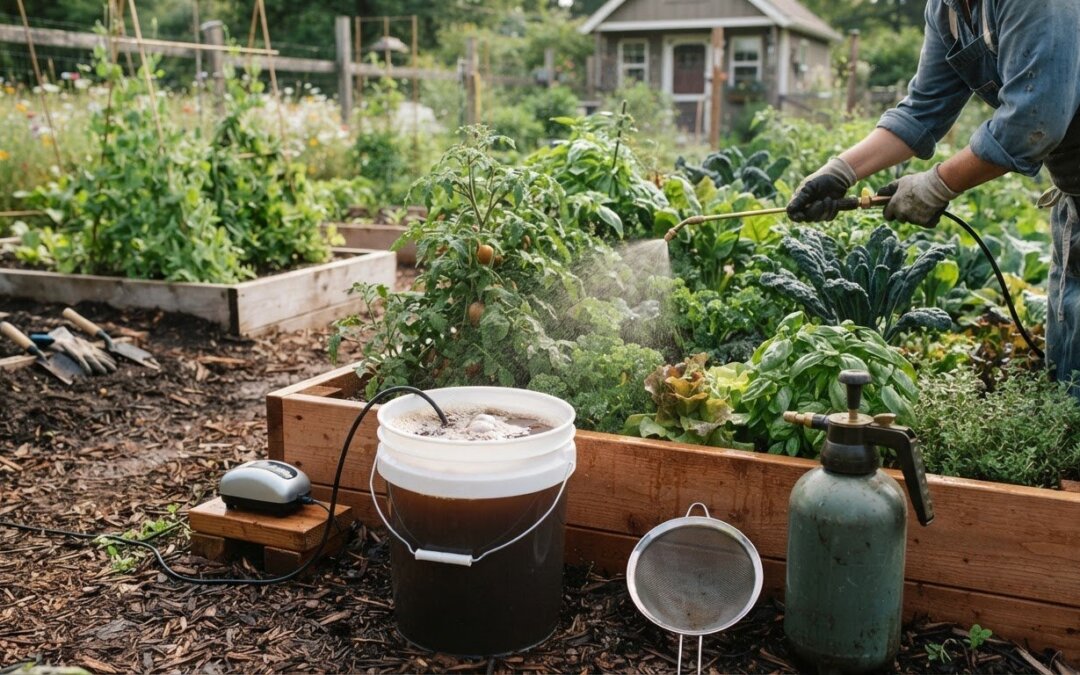
The brew matters, but where you put it matters just as much. To learn how to brew compost tea for vegetables, start with a 5-gallon bucket, 2 cups of fully finished organic compost, 1 tablespoon of unsulfured blackstrap molasses, and 1 tablespoon of liquid kelp fertilizer. Aerate the mixture and brew it for about 24 hours, then strain and use it promptly as a soil drench or foliar spray.
It’s easy to focus on the ingredients, but you may also wonder why gardeners use compost tea. It offers a liquid way to apply compost around roots or over foliage. The application method matters, especially when you’re growing edible crops.
Gather the equipment and ingredients, prepare the water, then choose a simple brewing method. The steps below explain how to make and use compost tea, with practical guidance on applying it as a soil drench or foliar spray.
Key Takeaways
- Choose a simple aerated setup and mature compost, then keep the brewing equipment dedicated to garden use.
- Prepare the water before adding ingredients; water quality and temperature help shape the brewing conditions.
- Use a soil drench to deliver the tea around vegetable roots, or take extra care when applying it to edible leaves.
- Strain the finished brew and apply it promptly, matching the method and timing to the plants’ needs.
Aerated compost tea equipment and ingredients
Choose aeration to keep the brew oxygenated, or make a non-aerated steep that you stir regularly. Compost tea isn’t automatically safe for edible vegetables: contaminated ingredients or water can carry pathogens, including E. coli. Use finished compost and clean, dedicated equipment, and avoid spraying edible parts unless the tea has been tested.
Gather Aerated Tea Equipment and Ingredients
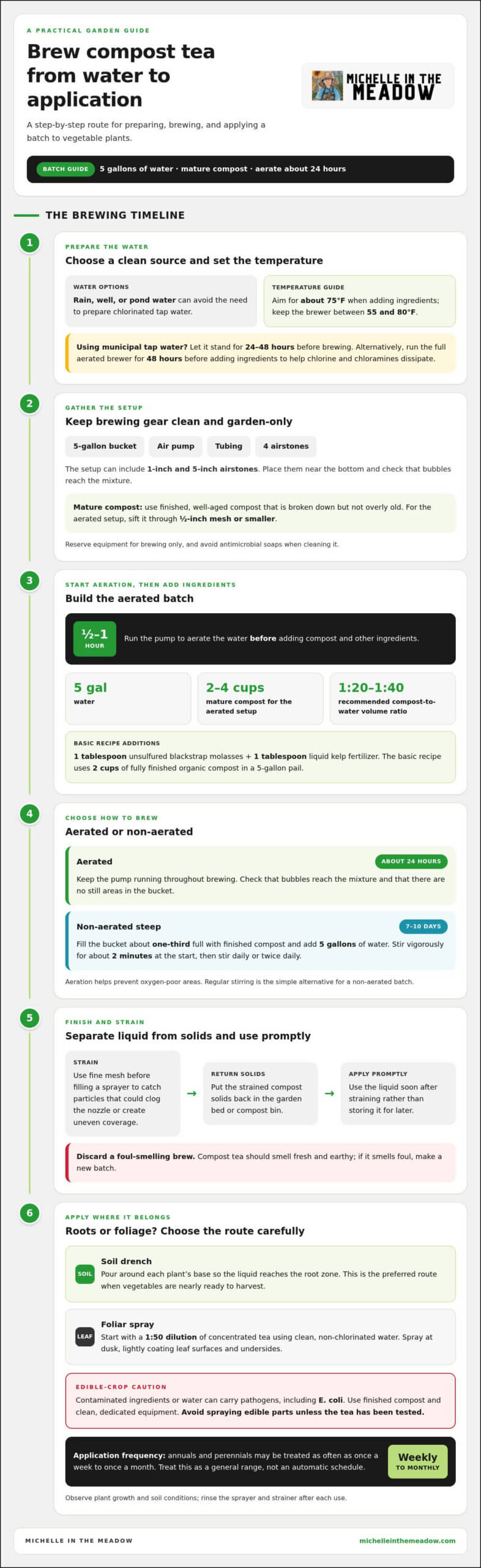
Gather a 5-gallon bucket, an air pump, tubing, and four airstones; the setup can include 1-inch and 5-inch stones. Add 5 gallons of water and 2-4 cups of mature compost, sieved through ½-inch mesh or smaller. Well-aged compost should be broken down, but not overly old. Keep this equipment for brewing only, and avoid antimicrobial soaps when cleaning it.
Choose an Aerated or Non-Aerated Method
Choose an aerated brew if you can keep air moving through the bucket throughout brewing. Aeration helps prevent oxygen-poor areas. Place the airstones near the bottom and check that bubbles reach the mixture. For a simpler non-aerated method, use finished compost and stir the steep regularly. Neither method makes contaminated ingredients safe to spray on vegetables.
- Set up the aerated bucket first. Run the pump for ½ to 1 hour to aerate the water before adding compost and other ingredients.
- Add the sifted compost. A basic recipe also uses 1 tablespoon of unsulfured blackstrap molasses and 1 tablespoon of liquid kelp fertilizer in a 5-gallon pail.
- Keep the air pump running through brewing, without leaving still areas in the bucket. Brew for about 24 hours, then strain the tea for application.
- For a non-aerated batch, fill the bucket about one-third full with finished compost and add 5 gallons of water. Stir vigorously for about 2 minutes at the start, then stir daily or twice daily for 7 to 10 days.
Water temperature and dechlorination
Prepare water before adding compost or nutrients. Aim for about 75°F, and keep the brewer between 55 and 80°F during brewing.
Choose Water and Avoid Chlorine
Use rain, well, or pond water if you have a clean supply. These are non-chlorinated options for aerated compost tea. If municipal chlorinated water is your only option, prepare it before adding ingredients. Chlorine and chloramines can interfere with aerobic brewing, so don’t use fresh tap water without preparing it first.
Dechlorinate Municipal Tap Water
Set municipal tap water aside for 24-48 hours before brewing to allow chlorine to dissipate. Another preparation method is to run a full brewer for 48 hours before adding ingredients, helping chlorine and chloramines dissipate. Keep the water aerated during this preparation, then add compost and nutrients once the water is ready.
- Start with the water source that suits your setup. Rain, well, or pond water can avoid the need to prepare chlorinated tap water. Keep the bucket clean, and use water at about 75°F when adding compost.
- For tap water, allow 24-48 hours of standing time before brewing. If using the aerated method, run the full brewer for 48 hours before adding compost or other ingredients.
- Measure the mixture by volume. A recommended aerated compost ratio is 1:20 to 1:40 compost to water. Keep that proportion consistent when scaling the batch, rather than adding extra compost without adjusting the water.
- Check the water temperature and airflow before adding ingredients. Keep the brewer between 55 and 80°F, and maintain aerobic conditions during brewing. For more practical garden composting guidance, match your preparation steps to the needs of your garden.
Applying compost tea as a foliar spray
Strain the finished tea and apply it promptly, either as a soil drench or a leaf spray. For foliar use, start with a dilute mixture and apply it carefully.
- Strain the finished tea through fine mesh before filling a sprayer. This catches compost particles that could clog the nozzle or cause uneven coverage. Return the solids to the garden bed or compost bin. Use the liquid soon after straining instead of storing it for later.
- Start with a 1:50 dilution of concentrated compost tea for a foliar spray. Mix the tea thoroughly with water before pouring it into the sprayer. If your recipe already makes a weak infusion, keep the starting mix conservative and avoid assuming every batch has the same strength. Use clean, non-chlorinated water for dilution.
- Spray at dusk, lightly coating the foliage rather than drenching the plant. Cover the leaf surfaces and undersides evenly. Avoid applying tea to edible crop parts unless it has been tested. If vegetables are nearly ready to harvest, choose a soil application instead of spraying leaves or produce.
- Compost tea may be applied to annuals and perennials as often as once a week to once a month. Treat this as a general range, not a schedule to follow automatically. Observe plant growth and soil conditions before deciding whether roots or foliage need attention. A soil drench applies the liquid around the root zone; a foliar application targets leaves.
- Rinse the sprayer and strainer after each application so dried compost and organic matter don’t block the equipment. If the tea smells foul rather than fresh and earthy, discard it and prepare a new batch. Healthy-looking plants still benefit from careful application: strain first, dilute for foliage, spray at dusk, and use the brew promptly.
Soil drench and foliar spray application
Choose the application method according to where you want the liquid to go: around the roots or over the foliage. With vegetables, the key difference is whether the tea touches edible parts.
- Strain the finished tea before filling a watering can or sprayer, and return the solids to the garden or compost bin. Apply aerated tea promptly rather than storing it for later. If the brew smells foul, discard it and make a fresh batch.
- For a soil drench, pour the liquid around each plant’s base so it reaches the root zone. Keep the stream low and steady to avoid runoff onto paths or edible leaves. This method lets you apply tea to the soil without spraying the crop.
- For foliar application, begin with a 1:50 dilution of concentrated tea. Strain it carefully, then spray lightly over foliage at dusk. The fine liquid should coat leaves without dripping heavily. Use a clean sprayer, and avoid applying untested tea directly to edible crop parts.
- Match dilution to the recipe because recommendations differ. Some directions use 1:4, while others use 1:10; a concentrate may also be mixed at 10:1 water to tea. Treat these as distinct recipe ratios, not interchangeable measurements. For edible vegetables, keep direct leaf contact in mind when selecting a spray method.
- Keep the application aerobic and use the tea promptly. An air pump supports aeration during brewing, but it doesn’t replace timely application after preparation. Some gardeners apply compost tea at least biweekly; adjust your approach to the plants and whether you’re treating soil or foliage. For more practical vegetable gardening guidance, explore the site’s educational resources.
Michelle In The Meadow: Soil Calculator for Raised Beds
Michelle In The Meadow offers a Soil Calculator for Raised Beds to help you plan the soil mix for your garden beds. After choosing how to brew and apply compost tea, you can use the calculator when you’re preparing or refreshing a raised bed and want to estimate its soil needs.
For the next steps in your garden, Michelle In The Meadow also shares Gardening Educational Content and Curated Gardening Product Recommendations. These resources can help you keep learning about practical growing methods and find useful tools for your setup.
Visit michelleinthemeadow.com to explore the calculator and gardening resources.
Build Your Next Garden Experiment
As you put what you’ve learned about how to brew compost tea for vegetables into practice, observe your garden after each application. Note which plants receive a soil drench or foliar spray and how their growth changes over time. These observations can help you decide what to adjust in your routine.
If you’re planning or refreshing a raised bed, Michelle In The Meadow’s Soil Calculator for Raised Beds can help you estimate its soil needs. You can also explore the site’s gardening education and curated product recommendations as you plan your next steps.
Explore Michelle In The Meadow’s gardening resources, and take your next step with curiosity. Small, thoughtful experiments can make gardening more rewarding.
Frequently Asked Questions
Why Compost Tea?
Compost tea is a liquid extract of compost that you can apply to garden soil or foliage. Gardeners may use it to distribute compost-derived nutrients and microorganisms in a form that’s easy to pour or spray. It doesn’t replace finished compost or good soil care. Think of it as one optional tool in a broader vegetable-gardening routine.
What Are Inoculants and Do You Need Them?
Inoculants are compost-based materials added to a brew to introduce microorganisms. Worm castings or finished compost can serve this purpose; a general ingredient range is 1-2 cups. They’re a useful starting ingredient, not a requirement for every recipe. If you’re trying a brew for the first time, use a simple recipe and avoid adding several unfamiliar materials at once.
What Are the Benefits?
Compost tea is easier to distribute around roots or across foliage than bulky compost solids. It may also bring nutrients and microorganisms into contact with the areas you’re targeting. Choose a soil drench to apply the liquid around roots. Consider foliar application only when the mixture is appropriate for leaves.
How Do You Brew Compost Tea for Vegetable Gardens Step by Step?
To brew compost tea for vegetables, start with a clean, dedicated bucket and suitable water. Add mature compost and any recipe ingredients, then choose aeration or regular stirring. For an aerated batch, keep bubbles moving through the mixture and use the finished tea promptly. Strain it before applying, and choose a soil drench to avoid contact with edible leaves.
What Ingredients and Equipment Are Needed to Make Compost Tea?
For a basic aerated batch, gather a bucket, air pump, tubing, airstones, finished compost, and water. Some recipes also include molasses or liquid kelp. A strainer and watering can are useful for soil application; use a clean sprayer for foliage. Keep brewing equipment separate from household tools, and clean it after use without antimicrobial soap.
What Compost-to-Water Ratio Should You Use for Compost Tea?
For aerated compost tea, use a compost-to-water ratio of 1:20 to 1:40 by volume. Some simpler recipes use a different proportion, including an approximate 5:1 water-to-compost ratio. These are distinct recipe approaches, so don’t combine their measurements. Pick one recipe, measure compost and water consistently, and follow that method through brewing and application.
