
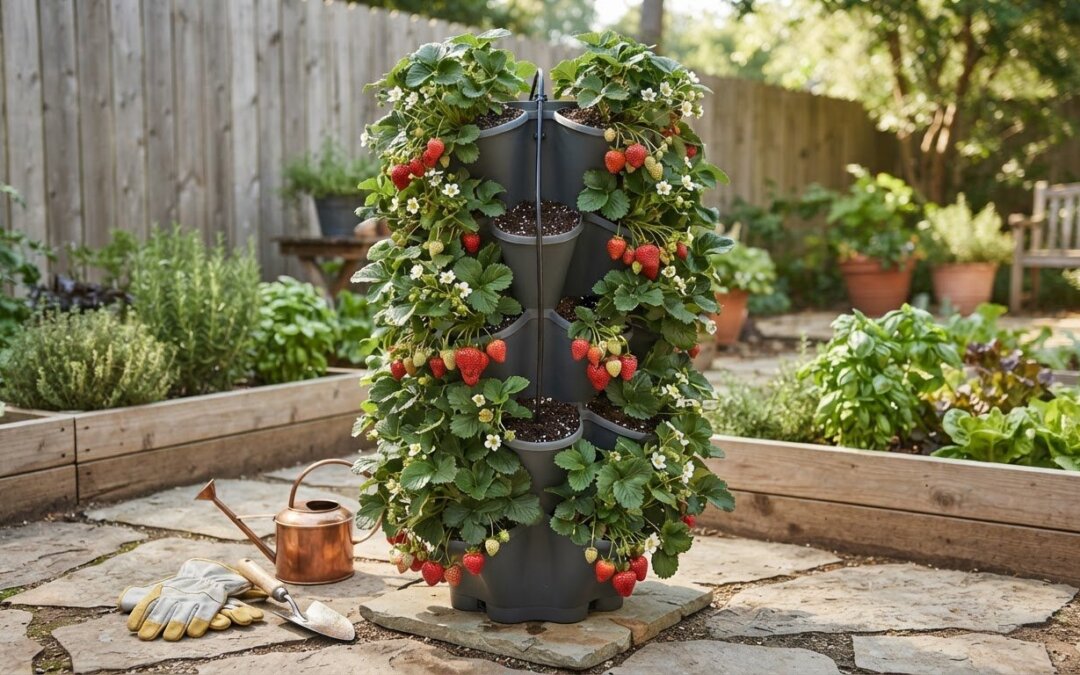
A vertical garden tower for strawberries works best with everbearing or day-neutral plants, well-draining potting mix, and regular watering that keeps the soil moist without waterlogging it. Give the tower at least six hours of direct sunlight each day, and check its pockets often because they can dry faster than garden soil. Set each crown level with or slightly above the soil to help prevent crown rot.
Growing upward is a practical way to make room for strawberries when a garden bed or sunny patio has limited space. The trade-off is that tower plants need thoughtful setup and frequent moisture checks.
This guide covers choosing suitable strawberry types, filling the tower with potting mix, and managing watering and feeding. You’ll also learn how to arrange planting pockets for airflow and drainage, giving your compact setup a solid start and making it easier to care for through the season.
Key Takeaways
- Compare fruiting habits before planting: June-bearing strawberries concentrate their harvest, while other types can suit a tower’s staggered picking better.
- Build the soil fill around drainage, and add the mix in stages so it reaches the planting pockets throughout the tower.
- Use a central watering line to help distribute water downward, then check pockets at different heights for uneven moisture.
- Plan the tower around airflow, drainage, and available space, not just the number of plants it can hold.
- Use the Soil Calculator for Raised Beds to estimate soil needs as you plan your growing setup.
Choosing strawberry types for vertical containers
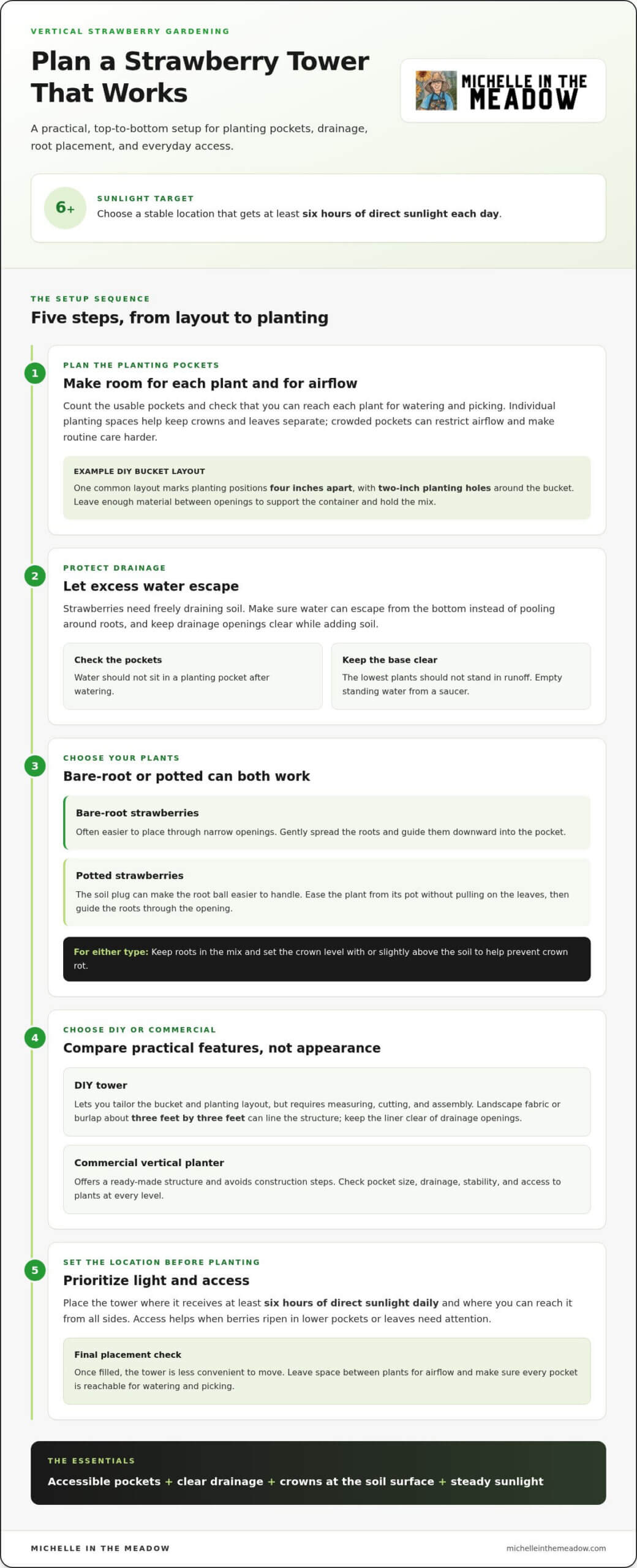
The best towers give each strawberry plant its own pocket, provide good drainage, and leave room for airflow. Choose a stable container that gets at least six hours of direct sunlight daily. For a DIY tower, plan the planting openings before filling it so each crown can sit level with or slightly above the soil.
A DIY tower suits gardeners who want to design their own layout. A commercial vertical planter offers a ready-made structure. Choose based on the pockets, drainage, and available space, not appearance alone.
- Match the tower to your planting plan. Count the usable pockets and consider how easily you can reach each plant to water and pick berries. Individual planting spaces help keep crowns and leaves separate, while drainage openings let excess water escape. Crowded pockets can restrict airflow and make routine care harder.
For a DIY design, mark planting positions before cutting. One common layout places marks four inches apart, with two-inch planting holes around the bucket. Make sure the openings leave enough material between them to support the container and hold the potting mix.
- Choose a container with reliable drainage. Strawberries need freely draining soil, so make sure water can escape from the bottom instead of pooling around the roots. In a DIY bucket tower, make drainage holes in the bottom so excess water can escape. Keep the openings clear as you add soil.
Check the planting pockets, too. Water should not sit in a pocket after watering, and the lowest plants should not stand in runoff. A saucer can catch drips, but empty any standing water to keep the base well drained.
- Decide between bare-root and potted plants. Bare-root strawberries are sold without a soil-filled pot, which can make them easier to place through narrow tower openings. Before planting, gently spread the roots and guide them downward into the pocket. Keep the crown visible at the surface.
Potted plants arrive with their roots in a soil plug, making the root ball easier to handle. Ease the plant from its pot without pulling on the leaves, then guide the roots through the opening. Either way, keep the crown level with or slightly above the mix to help prevent crown rot.
- Check access before choosing DIY or commercial. A DIY strawberry tower can be tailored to your preferred bucket and planting layout, but it takes measuring, cutting, and assembly. A commercial planter avoids those construction steps. Compare practical features such as pocket size, drainage, stability, and access to plants at every level.
For a DIY tower, landscape fabric or burlap about three feet by three feet can line the planting structure. Make sure the liner fits without covering drainage openings. With either option, leave enough space between plants for airflow and to make leaves easier to inspect.
- Place the tower before planting. Choose a spot with at least six hours of direct sunlight each day, then check that you can reach the tower from all sides. Access matters when berries ripen in lower pockets or leaves need attention. Once filled, a tower is less convenient to move.
Choose strawberry plants that fit the pocket dimensions and can be reached without bending or crowding nearby plants. A well-planned vertical garden tower for strawberries combines individual planting spaces, good drainage, and accessible fruit, giving each plant a workable place to grow.
Filling the tower with potting soil
Plant strawberries by filling the tower in stages, adding plants through the pockets as you work upward. Use well-draining potting mix, keep each crown level with or slightly above the soil, and avoid packing the mix tightly around the roots.
- Prepare a strawberry-friendly mix. Choose potting mix that drains freely and combine it with organic compost to provide nutrients. A loose, well-draining mix can help reduce waterlogging around the roots. Blend the ingredients evenly before filling the tower so compost and drainage materials are distributed throughout.
A handful of mix should feel loose rather than dense or sticky. If it clumps heavily when damp, work in more perlite or vermiculite before planting. Keep the mix light enough to settle into the tower pockets without blocking their openings.
- Check the tower before adding soil. Set it on a stable surface and make sure its drainage openings are clear. If the tower has a central watering pipe, keep its openings unobstructed as you add mix. A blocked outlet can trap water in the root zone, even when the soil blend drains well.
Place the tower where you can reach every planting pocket. Filling it in place saves you from moving a heavy container later. Keep a little prepared mix nearby to fill gaps around roots as you plant.
- Add soil in manageable layers. Start at the base and add enough mix to reach the lowest planting pockets. Gently spread it toward the sides rather than forcing it through the openings. Insert a plant through a pocket, guide its roots into the mix, then cover the roots without burying the crown.
Continue upward, alternating between adding mix and planting through each level. This staged approach helps soil reach the lower pockets and reduces empty spaces around roots. Lightly settle each layer by hand, without pressing it into a hard, compact mass.
- Keep each strawberry crown correctly positioned. The crown is the short central growing point where the leaves meet the roots. Set it level with or slightly above the soil surface to help prevent crown rot. Keep the roots in the mix and the leaves and crown exposed.
Check the position from the front of each pocket before moving higher. If a crown is buried, carefully lift the plant and remove excess mix. If roots show above the surface, add a little mix around them without covering the crown.
- Finish with a settling check. Once all pockets are planted, fill visible gaps with mix and water gently. Watch the drainage openings as water moves through the tower. If the soil settles and exposes roots, top up that pocket while keeping its crown visible.
Check the surface again after watering. The mix should feel moist, not saturated, and excess water should drain away. This final check helps the mix settle around each plant’s roots without burying crowns or blocking drainage.
Selecting strawberry varieties for vertical growing
Choose everbearing or day-neutral strawberries for a tower; both are better suited to vertical growing than June-bearing types. June-bearing plants can grow large and spread out, making them harder to fit into compact pockets.
Strawberry tower costs depend on the materials, construction, size, and number of planting spaces. A DIY bucket design and a commercial planter have different cost factors, so compare their features and materials rather than assuming they have a set price.
- Choose a fruiting pattern that fits your harvest plans. June-bearing strawberries tend to produce a concentrated crop, which may suit gardeners who prefer one main harvest. That concentrated crop can suit gardeners who want one main harvest, but the plants’ larger, sprawling growth habit may crowd tower pockets. Before choosing a variety, compare its mature shape with the opening size and available space.
- Select day-neutral plants for a continuing crop. Day-neutral strawberries reliably produce berries continuously regardless of season or temperature. This steady fruiting pattern suits a tower where plants occupy separate pockets and berries can be picked as they ripen. Choose this type when you prefer repeated picking instead of a single midsummer harvest.
- Consider everbearing plants for several harvests. Everbearing strawberries can produce two to three smaller harvests throughout the season when temperatures are 45-80°F (7-27°C). Their harvest pattern offers more than one picking period without the sprawling habit that can make June-bearing types challenging in vertical spaces. Match the variety to your local growing conditions and harvest preference.
- Check growth habit as well as fruiting type. A label such as “everbearing” describes fruiting behavior, but it doesn’t show how a particular plant will fit in a pocket. Compare the plant’s expected size with the tower openings and leave room for leaves to spread. Crowded foliage can restrict airflow between neighboring plants, so don’t fill every pocket without considering mature growth.
- Give new plants time to establish. Remove flowers from vertical strawberries for the first 4-6 weeks, allowing plants to direct energy toward establishment. Strawberries in vertical containers can be expected in 6-8 weeks. Use those timelines as planning points, and keep checking the plants for healthy new leaves and fruit development rather than choosing varieties by harvest timing alone.
- Make the final choice using your space and routine. For a small patio tower, day-neutral or everbearing plants can spread picking across the season and avoid the large, sprawling growth associated with June-bearing types. If you want one midsummer flush, weigh that harvest pattern against the extra space June-bearing plants may need. Match the plants’ growth and fruiting habits to your tower and preferred harvest routine.
Watering and fertilizing vertical strawberries
Use well-draining potting mix with organic compost, and apply balanced, slow-release fertilizer according to the package instructions. Tower strawberries can struggle when pockets dry unevenly or stay waterlogged, so check moisture often and look for signs of stress.
-
Water Tower-Grown Strawberries
Water the tower regularly, keeping the soil moist but never waterlogged. Vertical containers can dry faster than ground beds, so check pockets frequently, including those near the top and bottom. Don’t assume one pocket’s moisture reflects the whole tower; sun and airflow can leave some plants drier than others.
For more even watering, use a central pipe with holes about one-quarter inch wide. Extend the pipe about two inches above the soil so you can pour water into it. One-quarter-inch spaghetti tubing can also work as a central watering line. Keep pipe openings clear so water reaches roots lower in the tower.
-
Choose Soil Mix and Fertilizer
Choose a well-draining potting mix and combine it with organic compost to provide nutrients. Perlite or vermiculite can improve drainage and help prevent waterlogging and root rot. Mix the components evenly before planting so upper and lower pockets receive a similar blend.
Use a balanced, slow-release fertilizer according to its package instructions. Follow the label instead of adding extra fertilizer if growth or fruiting disappoints. More fertilizer won’t fix dry pockets, blocked drainage, or inconsistent watering. Check those growing conditions first, then follow the product directions.
- Check moisture at different heights. Feel the potting mix in pockets near the top, middle, and base. If the top dries while lower soil remains wet, adjust how water enters the tower rather than repeatedly soaking the whole container. Clear drainage openings if water lingers around the roots.
Check moisture especially often during warm, sunny weather, when exposed pockets can dry faster. Look for dry mix, wilting leaves, or water that fails to drain. These signs can help you tell whether a pocket needs water or the tower is holding too much.
- Connect poor fruiting to growing conditions. If plants produce little fruit, review the tower’s moisture and feeding routine before changing the fertilizer. Dry roots can interrupt growth, while waterlogged mix can damage roots. Check that the central watering pipe distributes water downward and that every planting pocket drains freely.
Then review the plants’ position and overall health. Strawberries in vertical containers need at least six hours of direct sunlight each day. Remove dead or diseased leaves and check regularly for pests or disease, since weakened plants may struggle to grow and fruit well.
Space-saving strawberry tower gardening
Plan your tower around plant capacity, access, sunlight, and available space. A compact footprint helps, but crowded pockets can limit airflow and make care harder.
-
Plan Plant Capacity and Spacing
Choose a tower by its planting pockets, footprint, and mature plant spacing. A large seven-tier vertical planter can hold up to 42 strawberry plants, occupy two square feet, and stand approximately four feet tall. A green strawberry tower can hold 24 plants, comparable to growing the same number in a garden bed at least 6 by 4.
Treat those capacities as maximum layouts, not a reason to crowd plants. Individual pockets need proper drainage, and plants need enough space for airflow. In-ground strawberries are usually spaced six to eight inches apart; tower pocket layouts differ, so avoid placing leaves and crowns tightly together.
-
Provide Sufficient Sunlight
Place the tower where strawberries get at least six hours of direct sunlight each day. Check the location at different times, since a nearby wall or railing can shade pockets as the sun moves. Rotate the tower only if its structure allows safe movement, so plants on every side receive useful light.
Keep the tower accessible for watering and harvesting, and choose a sunny spot. A bright patio corner that loses direct sun behind a fence may not meet the daily sunlight need. Observe the space before filling the planter, then position it where neighboring plants won’t block the light.
-
Protect Towers Through Winter
Consider your local winter conditions before leaving a tower outdoors. In Zone 8, strawberries have been overwintered outdoors for several winters without special care. That example describes Zone 8, so don’t assume the same approach suits every climate or exposed container.
In colder or windy conditions, protect roots from exposure by moving the tower to a sheltered spot or insulating the container. Keep drainage openings clear, since trapped water can harm roots. Check the tower after severe weather and remove damaged leaves when growth resumes.
- Arrange the tower for everyday use. Leave room to reach each pocket, inspect leaves, and pick ripe fruit without leaning over neighboring plants. Place the tallest structure where it won’t shade other crops or block a walkway. A four-foot planter can save ground space, but it still needs a stable, reachable position.
Before planting, map the tower’s pockets and compare them with your available space. A seven-tier model’s two-square-foot footprint offers a compact option, while a 24-plant tower may fit a different layout. Choose capacity based on sunlight, airflow, and the time you can give each plant, not plant count alone.
Michelle In The Meadow: Soil Calculator for Raised Beds
Michelle In The Meadow’s Soil Calculator for Raised Beds helps estimate soil needs when you’re planning a garden bed alongside your strawberry tower. It’s useful if your space-saving plan includes both a vertical planter and a nearby raised bed, helping you plan each growing area before filling it.
For practical advice on tower setup, growing conditions, and plant care, explore Michelle In The Meadow’s gardening content. Its curated product recommendations can also help you find supplies that suit your approach. Product links are affiliate links, and Michelle earns a small commission on purchases made through them.
Visit Michelle In The Meadow to explore gardening guidance and planning tools.
Make Your Tower the Start of a Growing Habit
Your first tower doesn’t have to be perfect. Treat it as a small, useful experiment: notice which pockets dry first, how the plants fill their space, and what you’d change next season. Those observations can help you develop a growing routine that suits your patio, balcony, or garden.
A vertical garden tower for strawberries can be one part of a broader growing plan. If you’re adding a raised bed or refining your gardening approach, Michelle In The Meadow offers a Soil Calculator for Raised Beds, gardening content, and curated gardening product recommendations. Product links are affiliate links, and Michelle earns a small commission on purchases made through them. Use the resources that fit your next decision, then keep learning from what happens in your own growing space.
When you’re ready to explore more gardening guidance, visit Michelle In The Meadow. Start with the space you have, make one thoughtful improvement at a time, and enjoy watching your garden grow.
Frequently Asked Questions
Which strawberry varieties grow best in vertical towers?
Everbearing and day-neutral strawberries generally suit towers better than June-bearing types. For your first vertical garden tower for strawberries, choose one fruiting type so you can follow a consistent pattern as you watch for flowers and ripening berries. If you mix types, label each pocket to make it easier to connect different harvest patterns with the plants producing them.
How often should I water strawberries in a vertical tower?
Water according to soil moisture, not a fixed calendar. Check the mix frequently and water when it begins to dry, aiming to keep it moist without making it soggy. After watering, check that it drains, then feel the soil again later. If a pocket stays wet, wait before watering again. Adjust your routine as sunlight, warmth, and airflow change around the tower.
