
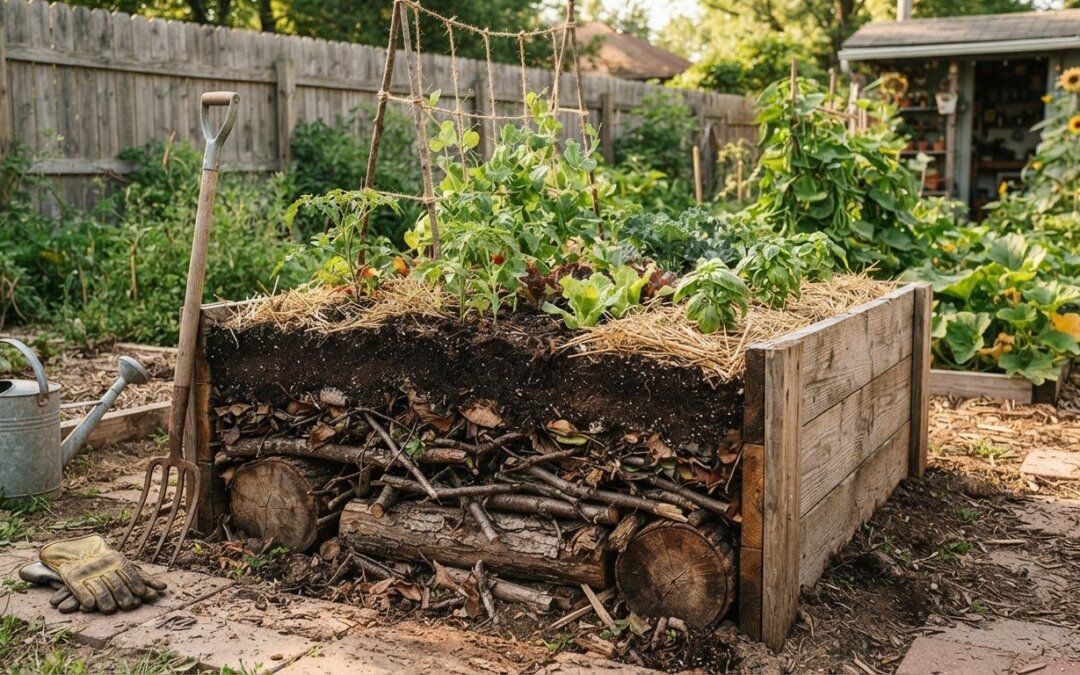
A deep raised bed can start with wood, not a truckload of soil. The hugelkultur method for deep raised beds layers logs and branches beneath smaller organic materials, compost, planting soil, and mulch. Oklahoma State University Extension recommends filling approximately the lower half with organic materials and reserving the upper half for planting soil and compost.
If you’re picturing logs beneath your vegetables, you’ve got the basic idea. The order and materials matter, though. As wood breaks down, it can hold moisture and release nutrients, while temporarily using nitrogen that plants need.
This guide takes you through building the bed layer by layer, from choosing suitable wood to adding soil and mulch. You’ll learn how to water and pack the layers, what to plant as the wood starts to decay, and why the bed may settle. The aim is a practical, resource-conscious growing space that you can build at a pace that suits your garden.
Key Takeaways
- Place sound, untreated logs at the bottom, then add smaller branches and organic matter to fill gaps. Avoid wood or leaves with obvious disease or pests.
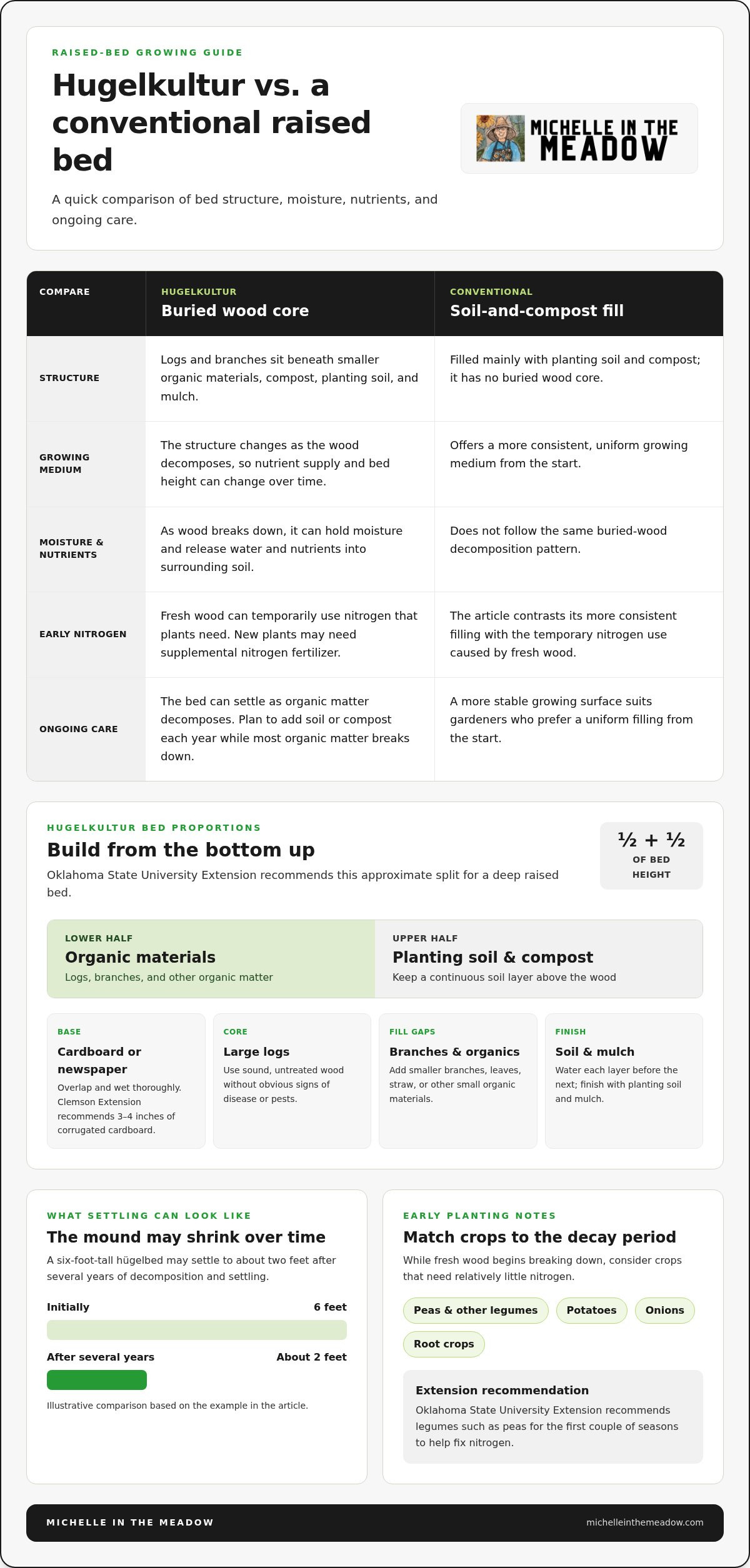
- According to Oklahoma State University Extension, fill approximately the lower half of the bed with organic materials and reserve the upper half for planting soil and compost.
- Water each layer thoroughly before adding the next, and compact the layers to reduce empty spaces.
- During the initial wood-decay period, nitrogen may be less available to plants. Oklahoma State University Extension recommends legumes such as peas for the first couple of seasons.
- Finish with mulch to help retain moisture, and plan to add soil or compost each year as the bed settles, as Oklahoma State University Extension advises.
Comparing decomposition and water retention
Unlike a conventional raised bed filled mainly with planting soil and compost, a hugelkultur bed has a buried wood core that decomposes over time. That structure can retain moisture and release nutrients, but the bed’s nutrient supply and height will change as the wood breaks down.
The trade-off is timing: conventional beds offer a more consistent growing medium, while fresh wood can temporarily reduce the nitrogen available to plants. A hugelkultur bed also needs topping up as its materials settle.
The main risks are an initial nitrogen shortage and a shrinking bed surface. Oklahoma State University Extension notes that new plants may need supplemental nitrogen fertilizer and that a mound can continue to shrink as its materials decompose.
- Match early crops to nitrogen availability. During the initial breaking-down period, decomposing wood uses nitrogen that plants would otherwise draw from the soil. Start with crops that need relatively little nitrogen, such as potatoes, onions, root crops, and legumes. Legumes can fix nitrogen, helping support the bed while the wood begins to decay.
- Consider legumes for the first seasons. Oklahoma State University Extension recommends planting legumes such as peas for the first couple of seasons to fix nitrogen without adding fertilizer. This is a practical starting point if you want to avoid applying supplemental nitrogen while the wood is fresh. Observe plant growth, since the balance changes as decomposition progresses.
- Expect the bed to settle. As logs and branches decompose, gaps collapse and the mound’s surface can drop. A six-foot-tall hügelbed may settle to about two feet after several years of decomposition and settling. That change is part of the process, but it affects planting height and how much soil the bed needs.
- Top up the growing surface. Oklahoma State University Extension advises adding soil or compost each year while most organic matter decomposes. Spread it across low spots to restore planting depth and keep roots covered. A bed built in fall can settle over winter and be ready for planting the next spring.
- Compare moisture needs with bed structure. Decomposing wood releases water and nutrients into surrounding soil, while mulch helps retain moisture at the surface. A conventional bed has no buried wood core, so it won’t follow the same decomposition pattern. In either bed, check soil moisture around plants and water when the soil needs it.
- Choose a bed that suits your maintenance preferences. A conventional raised bed offers a more uniform filling from the start. Hugelkultur trades that consistency for a wood-based structure that changes over time. If you prefer a stable growing surface, consider conventional filling; if you can replenish soil or compost each year, the wood core may suit your garden.
Layering logs, branches, compost, soil, and mulch
Build from the bottom up, filling large gaps before adding finer materials. Keep the layers distinct enough to place in order, but snug enough to avoid hollow pockets.
Rules for burying wood can vary by location, so check your city or county guidance before building. That helps keep your garden plan aligned with local requirements.
For early planting, choose crops suited to the nitrogen conditions around fresh wood. Legumes such as peas, along with potatoes, onions, and other root crops, can work well while the wood starts breaking down.
-
Lay Cardboard or Newspaper as a Base
Place overlapping cardboard or thick newspaper over the bed’s ground surface, then wet it thoroughly before adding wood. Clemson Extension recommends a 3- to 4-inch layer of corrugated cardboard for a hügelkultur raised bed. Keep the sheets flat and overlapped, and avoid glossy or heavily printed paper. The base helps suppress weeds while the layers above settle into place.
-
Layer Logs, Branches, and Organic Matter
Place larger logs at the bottom, then add smaller branches above them. Use untreated wood without obvious signs of disease or pests, and tuck leaves, straw, or other small organic materials into open spaces. For a lasagna-style garden bed, alternate brown materials, such as dried leaves and straw, with green materials, such as grass clippings and vegetable scraps. Avoid making any one material layer too thick.
-
Add Compost, Soil, and Mulch
Spread appropriately cured compost over the wood and organic layers, then add planting soil. Oklahoma State University Extension recommends watering each layer thoroughly before adding the next, and covering the planting surface with topsoil and mulch. Mulch the growing surface to help limit weeds and protect the soil, leaving enough soil at the top for roots to establish.
-
Set Layer Proportions
For a deep bed, follow Oklahoma State University Extension’s guidance: use the lower half for organic materials and reserve the upper half for planting soil and compost. Treat this as a practical structure, not a rigid recipe. Log size, branches, and bed shape all affect how the filling settles. Keep a generous, continuous soil layer on top rather than leaving wood exposed.
To estimate the soil needed for your bed’s dimensions, use a raised-bed soil calculator as you plan the final filling.
Hügelkultur bed structure and materials
Choose sound wood and plant debris before filling the bed, then arrange the layers to leave room for roots. The material mix affects how quickly the structure decomposes and how plants grow.
-
Select Suitable Wood and Plant Materials
Use untreated logs and branches with no obvious disease or pest damage. Leave out diseased trees and leaves, which can contaminate the growing space. Larger wood breaks down more slowly, so pair it with smaller branches and leaves for a mix of material sizes.
For a raised-bed structure, Oklahoma State University Extension recommends a bed at least 17 inches tall for the hügelkultur variation. Its typical mound is approximately 3 feet wide and 3 feet tall. Those dimensions provide room for a wood core and a planting surface, while keeping the mound manageable for a home garden.
Plan the bed’s shape before adding organic matter. A low, contained bed and a taller mound hold different amounts of wood and planting soil. The materials should support the bed, not replace the soil where roots will grow. Keep diseased debris out of every layer, including leaves collected from affected plants.
Wood size affects the bed’s timeline, too. Thick logs last longer than small branches, while leaves and other fine organic materials break down faster. Combine different sizes to create layered material rather than a single mass of large logs. That gives you a range of materials decomposing in the same bed.
-
Add Nitrogen-Rich Green Materials
Add green plant material between branches and above the wood, such as grass clippings and vegetable scraps. These complement brown layers such as dried leaves and straw. For lasagna-style layering, alternate brown and green materials instead of building one very thick layer of a single type.
While fresh wood breaks down, it can use nitrogen that would otherwise be available to plants. Oklahoma State University Extension recommends legumes such as peas for the first couple of seasons, helping fix nitrogen without adding fertilizer. They’re a useful early planting choice as the buried wood begins to decay.
Balance green additions with the rest of the bed. Distribute scraps and clippings among the branches instead of leaving a dense, wet pocket. Use leaves or straw to fill open spaces, and keep the planting area above the organic material. This leaves room for roots while the green matter and wood decompose below.
Before adding the top layers, scan the bed for visible gaps that could take smaller branches, leaves, or straw. Mix fresh green matter through the organic materials, and leave diseased plant debris out of the garden. Wood, brown material, and green matter provide a varied mix of organic material to break down.
Building a hugelkultur bed over a tree stump
A sound, untreated stump can provide a wood core for a hugelkultur bed without needing to be removed. Your costs depend on what you already have and what you need to buy, such as soil, compost, edging, or tools. Using wood and leaves from your own garden can reduce the materials you need to purchase.
- Assess the stump and choose the layout. Build over a stump only if its wood and surrounding plant debris show no obvious disease or pests. Decide whether the bed will sit directly over the stump or extend into a row. Keep enough room around the stump for the mound’s layers and a continuous planting surface above them.
- Shape the ground around the stump. For a contained raised bed, place the sides around the stump, then fill open spaces with logs, branches, and smaller organic material. For a hügelkultur row, Oklahoma State University Extension recommends digging a trench 1 to 2 feet deep. A trench can hold the wood core below ground level, while a raised bed builds that structure above the surrounding ground.
- Arrange the wood from large to small. Set the stump at the center of the wood core, then place sound logs and branches around it. Larger pieces take longer to break down, so use smaller branches and leaves to fill gaps. Avoid diseased wood and leaf matter, which can contaminate the growing space. The mix creates a fuller base than leaving voids around the stump.
- Add organic layers around the core. Place leaves, straw, and other suitable plant material into spaces between the wood. Add compost above the rougher layers, then make room for planting soil. Water each layer thoroughly before adding the next, following Oklahoma State University Extension’s guidance. Keep the top surface level enough for planting, even if the stump makes the base irregular.
- Finish the bed and plan for settling. Cover the planting surface with soil and mulch, leaving the stump and wood beneath the growing area. A wood-filled structure will decompose and settle, so expect the surface to change. Oklahoma State University Extension advises topping off hügelkultur beds with additional soil or compost each year while most organic matter decomposes. Add material where the bed has sunk, rather than disturbing the buried core.
- Choose trench or raised construction for the site. A trench row places more of the wood below ground; a raised bed contains the layers above it. If building a row, align its shape with the usable garden space and keep soil above the buried wood. If building over a stump, fit the bed around the existing core and use branches and leaves to fill uneven spaces.
Water retention and natural nutrient release
Buried wood changes how a raised bed holds water and cycles nutrients. Use these steps to manage moisture as the wood decomposes.
- Place the mound to catch runoff. According to Oklahoma State University Extension, position a hügelkultur mound parallel to site contours or perpendicular to downhill water flow. This placement helps capture runoff instead of letting it pass down the slope. Follow the ground’s shape when choosing the mound’s direction, and keep its growing surface accessible for planting and upkeep.
- Use mulch to slow surface drying. Cover the planting area with mulch to help retain soil moisture, suppress weeds, and moderate soil temperature. Spoiled hay is one example used over hügelkultur beds. Grass clippings can also be part of the organic matter in the bed, but spread them rather than leaving a thick, wet mat over plants.
- Water through the layers as you build. Oklahoma State University Extension recommends thoroughly watering each layer before adding the next. This brings moisture into the wood and surrounding material, rather than wetting only the topsoil. After planting, check the soil around roots and water when it dries; mulch helps reduce surface moisture loss, but doesn’t replace checking the bed.
- Understand the slow nutrient cycle. As buried wood decomposes, it releases water and nutrients into the surrounding soil. The wood also uses available nitrogen during its initial breaking-down period, so early plants may have less nitrogen to draw on. Legumes can help fix nitrogen, while compost and soil above the wood provide the main planting zone.
- Read moisture needs from the bed and weather. A 2- to 3-foot-high hügelkultur bed can last without water for 2 or 3 weeks. That describes a possible interval, not a watering schedule for every garden. Heat, rainfall, plant growth, and the bed’s mulch all affect how quickly soil dries, so check beneath the surface before watering.
- Maintain the mound as organic matter settles. Oklahoma State University Extension advises adding soil or compost each year while most organic matter decomposes. Fill low spots to keep roots covered and maintain a fertile planting surface. As the wood breaks down, the bed’s structure and moisture behavior can change, so keep observing the soil rather than relying on an old watering routine.
Planning the soil volume for a new bed? Use the Soil Calculator for Raised Beds to estimate the filling your garden needs.
Michelle In The Meadow: Soil Calculator for Raised Beds
Michelle In The Meadow’s Soil Calculator for Raised Beds helps estimate the soil needed for your bed’s dimensions. Use it to plan the planting layer above logs, branches, and compost, keeping in mind that buried wood takes up space that would otherwise hold soil.
Michelle In The Meadow’s gardening educational content offers practical guidance for home gardeners, and its curated gardening product recommendations can help you plan useful supplies. Start with your bed’s length, width, and intended soil depth, then use the estimate to organize the filling before construction.
Explore Michelle In The Meadow’s gardening resources as you plan your bed.
Plan Your First Bed With Confidence
Let your garden’s layout guide your next move. Choose an easy-to-reach spot, consider which materials you can reuse, and decide how much ongoing adjustment suits your routine. The hugelkultur method for deep raised beds is a long-term growing choice, so plan for a bed you can observe and maintain, not just one that looks impressive on planting day.
Let what you observe guide your choices next season. Watch how plants grow, where the soil dries, and which areas settle. Those observations can help you decide what to add or adjust, and whether this approach suits another part of your garden.
If you’re ready to plan your bed or want more gardening guidance, visit Michelle In The Meadow. Take the next step at your own pace, and let your garden teach you as it grows.
Frequently Asked Questions
What is hugelkultur?
Hugelkultur is a gardening approach that uses buried or stacked wood beneath a soil-covered growing area. As the wood and other organic materials decay, they change the bed’s structure and contribute moisture and nutrients to the surrounding soil. It’s a way to turn woody garden debris into a growing space instead of treating it only as waste.
What is the hugelkultur method for deep raised beds?
The hugelkultur method for deep raised beds builds a wood-filled base beneath the planting soil. For example, a gardener can arrange logs and branches below smaller plant material, compost, and soil, then grow crops in the upper layer. The wood core gradually decomposes, so plan for the bed to change shape and leave access for adding soil or compost later.
How do you build a hugelkultur raised bed step by step?
Prepare the bed surface, then place logs and branches at the bottom. Fill large gaps with smaller branches, leaves, or other plant material. Add compost and planting soil above the wood, watering each layer as you build. Finish the planting surface with mulch, then plant into the soil layer. Keep diseased wood and plant debris out of the bed.
How deep and wide should a hugelkultur raised bed be?
For a raised bed used for hügelkultur, Oklahoma State University Extension recommends a height of at least 17 inches. Its typical mound is approximately 3 feet wide and 3 feet tall; keep a bed no more than 4 feet across if you need to reach its center from the sides. Choose dimensions that leave enough planting soil above the wood core.
What types of wood are safe for hugelkultur beds?
Use untreated wood without obvious disease or pest damage, such as sound logs and branches from a healthy tree. Avoid diseased trees and leaves, which can contaminate the growing space. Larger pieces take longer to break down, so combine them with smaller branches for a mix of material sizes. Keep treated wood and wood showing signs of disease out of the bed.
How much soil and organic material do you need for a hugelkultur bed?
Base the quantities on your bed’s dimensions and how much planting soil you want above the wood. Oklahoma State University Extension recommends filling approximately the lower half with organic material and reserving the upper half for soil and compost. Logs and branches take up space that would otherwise need soil, so account for the wood structure when measuring the planting area.
How often should you water a hugelkultur bed, especially in its first year?
Water when the soil around young plants begins to dry, rather than following a fixed calendar. In the first year, check beneath the mulch and near the root zone, since weather, plant size, and soil conditions affect moisture loss. A 2- to 3-foot-high bed can last without water for 2 or 3 weeks, but use soil moisture to guide each watering.
What does it cost to build a hugelkultur raised bed?
The author’s beds and their contents cost nothing, apart from a four-dollar investment in beet and carrot seeds.
