
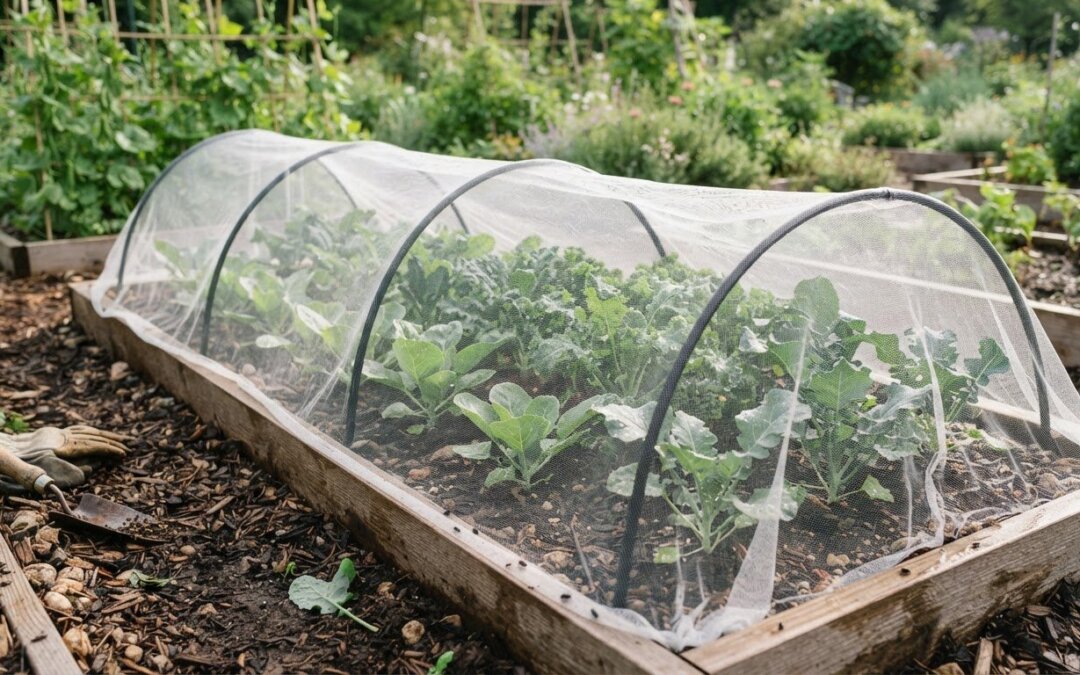
Use insect netting row covers for brassicas on spring or fall transplants, or over direct-seeded crops through summer. Midsummer transplants can get too hot under cover. For cabbage root maggot protection, install the cover immediately after planting and seal its edges against the soil. Timing matters: flies may emerge from soil beneath a cover if brassicas grew there before.
It makes sense to want a simple barrier between tender crops and hungry pests. Netting can help exclude cabbage root maggot flies and flea beetles, but it works best when you get the timing and placement right. A cover won’t solve every pest problem if insects are already underneath it.
This guide explains when to cover spring, summer, and fall brassicas, how crop rotation can reduce the risk of pests emerging beneath covers, and how heat buildup may affect your plants. It also covers disease concerns, so you can weigh the protection against the growing conditions a covered planting creates.
Key Takeaways
- Rotate brassica planting areas to reduce the chance that cabbage root maggot flies emerge beneath a new cover.
- Install and seal covers promptly after planting to help keep cabbage root maggot flies and flea beetles out.
- Watch for heat buildup under summer covers, which can make covered crops warmer than the surrounding air.
- Match cover timing to the crop: spring and fall transplants suit covered growing, while midsummer transplants can overheat.
Crop rotation to reduce pests emerging beneath covers
Crop rotation means growing brassicas in a different bed from the previous planting. It matters because cabbage root maggot pupae, the insect’s resting stage, overwinter in soil where fall brassicas grew. Adult flies can emerge from that soil and find young plants beneath a new cover. Insect netting row covers for brassicas block outside pests, but cannot stop insects already enclosed with the crop.
Before planting, note where fall brassicas grew and choose a different bed for spring crops. Move the next brassica planting away from the previous crop instead of covering the same patch again. Keep a bed map with crop names and seasons: “fall kale” or “spring broccoli” is more useful than relying on memory. Rotation reduces the chance of flies emerging under the cover, although it won’t eliminate every pest risk.
Monitoring means checking covered plants and the space beneath the netting for pests. Inspect after installation and during routine watering, especially around stem bases and soil. Look for small flies under the cover, eggs near stems, or seedlings that wilt despite moist soil. Cabbage root maggot larvae feed on roots and can kill young seedlings. Crucifer and striped flea beetles leave shot-hole patterns on brassica leaves. Include these checks in your plan for insect netting row covers for brassicas.
- Record: Mark each bed’s brassica crop and season on a garden map.
- Rotate: Plant brassicas in a bed that did not hold fall brassicas.
- Inspect: Check under the cover and around stems for flies, eggs, or damaged plants.
- Respond: If pests are trapped inside, open the cover carefully, remove visible insects, and reseal the edges.
For example, if fall cabbage occupied one bed, choose another for spring broccoli. After covering, check for flies trapped underneath. Combining rotation with regular inspections addresses both the risk of pests emerging from soil and insects that may get inside during setup.
Row covers for cabbage root maggot exclusion
Row covers and mesh netting act as physical barriers between brassicas and flying pests. Effective exclusion depends on suitable material, careful timing, and sealed edges.
Row Cover and Netting Options
A row cover is fabric laid over brassicas to block pests, while mesh netting uses woven openings as a barrier. Spun-bonded fabric is recommended for cabbage maggot fly exclusion; mesh provides a different barrier option. The best choice depends on which pests you need to exclude and the growing conditions. After use, remove soil, let material dry fully, and store it folded in a dry place. Row cover material can be reused for 2 to 3 years.
Pest Exclusion and Mesh Size
Pest exclusion means preventing insects from reaching the crop. To keep out cabbage maggot flies, place spun-bonded row cover over plants immediately after planting and seal the edges. Insect netting row covers for brassicas can also exclude flea beetles when installed soon after planting. Choose mesh openings smaller than the target insects, including cabbage moths, cabbage loopers, and flea beetles.
Netting Sizes and Costs
Netting size refers to the length and width of the material. Measure the bed and account for the height of hoops or frames, then leave enough material to secure the edges. Dimensions and costs vary according to the amount and type of material needed. Insect netting row covers for brassicas should cover the entire planting, with enough extra material to close gaps along the sides.
Installing and Securing Netting
A low tunnel is a cover supported above crops by hoops. Set hoops 2 to 4 feet apart, drape netting over them, and use clips to hold it in place. For a low tunnel, hoops can be 15 to 30 inches high. Bury or weigh down the edges to prevent wind from lifting them or pests from entering underneath. Before sealing the last edge, inspect the plants for insects already inside.
Heat buildup and disease risks under covers
Your cover choice affects how much light and warmth reach brassicas, as well as whether insects can get through. Check conditions beneath the material, especially during summer heat.
Cover Protection and Temperature Effects
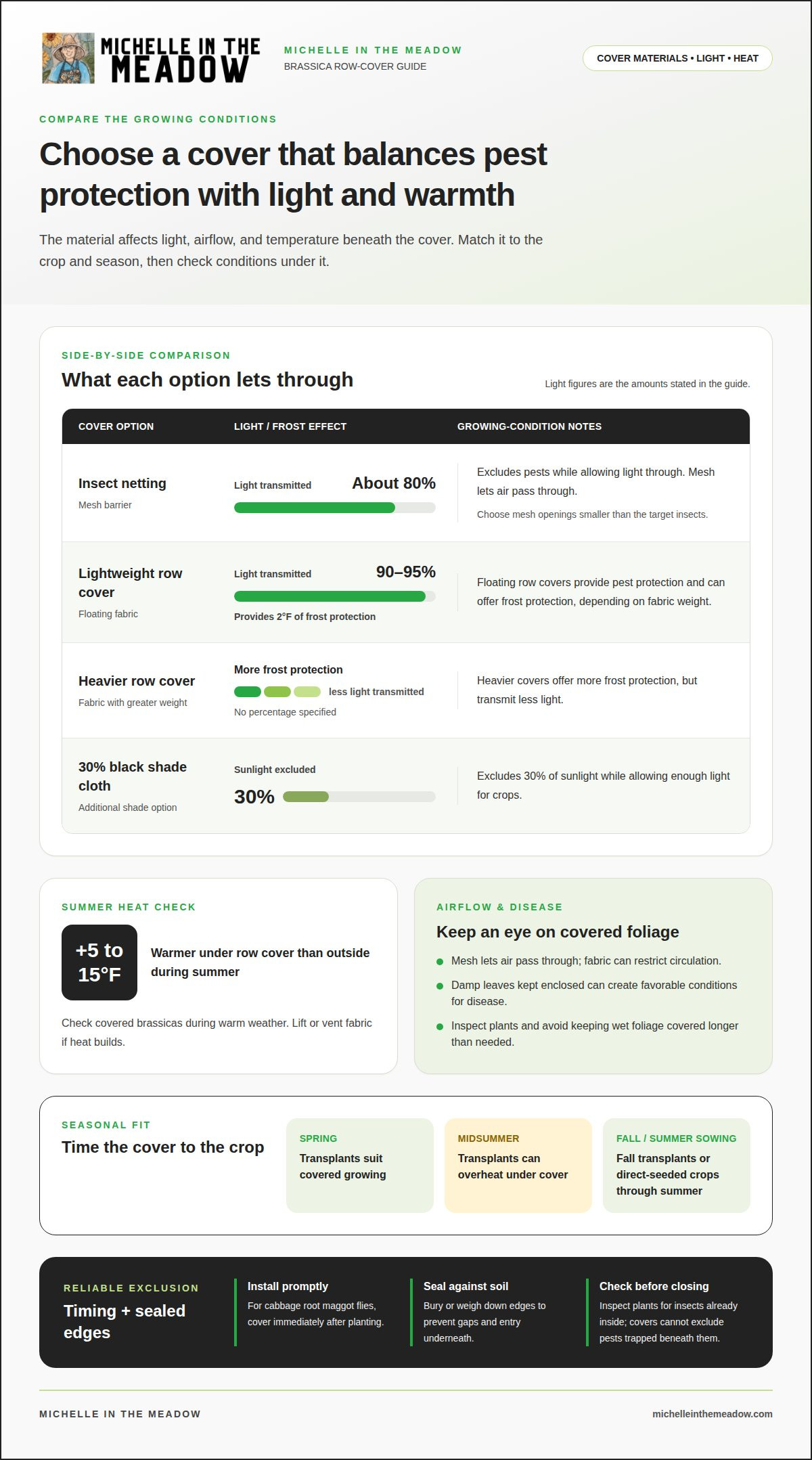
Insect netting is a mesh barrier that excludes pests while allowing light through. Polyethylene insect netting transmits about 80% of light. Floating row covers provide pest protection and can also offer frost protection, depending on fabric weight. Lightweight fabric transmits 90% to 95% of light and provides 2°F of frost protection; heavier covers offer more frost protection but transmit less light.
In summer, temperatures under row cover can be 5 to 15°F higher than outside. Check covered brassicas during warm weather and lift or vent fabric if heat builds. For additional shade, 30% black shade cloth excludes 30% of sunlight while allowing enough light for crops.
Light, Airflow, and Crop Growth
Light transmission is the portion of sunlight that passes through a cover. Insect netting’s roughly 80% transmission reduces incoming light, while row-cover fabric varies by weight. Select a material that balances pest exclusion with the light your planting needs.
Airflow is the movement of air around covered leaves and stems. Mesh lets air pass through, while fabric can restrict circulation. Damp leaves that stay enclosed can create favorable conditions for disease, so inspect plants and avoid keeping wet foliage covered longer than needed.
Pollination is the transfer of pollen between flowers. A barrier can keep pollinating insects away from brassica flowers, which matters if you’re growing plants for seed. For leafy harvests, focus instead on signs of heat stress, yellowing, or damp leaves. Remove or open covers when plants need pollinator access, then restore protection when appropriate.
Make a quick routine: feel under the cover for trapped heat, check leaves for lingering moisture, and look for changes in growth. On hot days, compare the covered bed with uncovered plants nearby. If leaves look stressed, increase ventilation or use shade cloth to reduce direct sun while maintaining light.
Seasonal use of row covers on brassica crops
Seasonal scheduling means matching cover use to both planting method and time of year. Spring and fall brassica transplants can be covered, while direct-seeded crops can stay covered through summer. Midsummer transplants are the exception: row covers can get too hot for them.
For spring transplants, prepare the bed and cover the plants as soon as they’re in the ground. This helps protect young broccoli, cabbage, or kale during early growth. Keep the cover secured as plants establish, and check underneath as temperatures rise. Even a warm spring day can make the space under fabric hotter than the air outside.
Fall transplants can also benefit from row covers, especially while seedlings establish. Plan ahead so the material is ready to lay over the bed as soon as you plant. Make sure leaves have room beneath it and the edges stay in place as plants grow. If you grow different brassicas in the same bed across seasons, record each crop and planting period to guide next year’s rotation.
Summer calls for a different approach. Direct-seeded brassicas can remain under covers throughout summer, but midsummer transplants are too heat-sensitive for this use. In summer, covered air can run 5 to 15°F warmer than outside air, so inspect the bed during hot spells. If seedlings are already transplanted during midsummer, don’t assume a cover is automatically safer; heat can outweigh the pest barrier’s benefit.
- Spring: Cover brassica transplants after planting and monitor warmth beneath the material.
- Summer: Use covers on direct-seeded crops, not midsummer transplants.
- Fall: Prepare covers before transplanting and track the bed’s crop history.
The practical rule is simple: choose a cover based on crop stage as well as season. A spring broccoli transplant, a summer direct-seeded crop, and a midsummer kale transplant call for different decisions. Match the cover to how you started the brassicas, then adjust your routine to the heat around the bed.
Michelle In The Meadow: Soil Calculator for Raised Beds
Michelle In The Meadow’s Soil Calculator for Raised Beds helps you estimate how much soil you need when preparing a raised bed for brassicas. Once you’ve chosen a planting area and planned seasonal covers, use the calculator to help prepare the bed.
Michelle In The Meadow’s gardening guides can help you plan crop timing and care, and the curated product recommendations offer a starting point for choosing garden supplies. Product links are affiliate links, and Michelle earns a small commission on purchases made through them. These resources complement your row-cover plan, but don’t replace practical checks like monitoring heat and keeping barriers secured.
Visit Michelle In The Meadow to explore gardening resources and plan your next planting.
Plan your next brassica planting with confidence
Let your next planting build on what you observed this time. Record the bed you used, planting method, cover setup, and how the crop responded as temperatures changed. Those notes can help you make a more informed choice next season instead of repeating a setup that didn’t suit the weather or planting stage.
Treat insect netting row covers for brassicas as part of an evolving garden plan, not a one-time fix. The right choice can change between spring transplants, summer direct seeding, and fall crops. A brief record of pest signs and plant condition gives you a useful starting point for planning the next planting.
If you’d like to continue exploring your garden plans, contact Michelle In The Meadow. Each season offers another chance to learn, adjust, and grow brassicas with care.
Frequently Asked Questions
When should insect netting be put over brassicas and removed?
Put netting in place as you plant, before flying pests can reach the crop. Remove or open it when plants need pollinator access, when you find insects trapped inside, or when heat beneath the cover becomes a concern. For leafy brassicas grown for harvest rather than seed, pollination usually isn’t the goal, so let crop condition and temperature guide your decision.
Can insect netting trap cabbage worms or other pests on brassicas?
Yes. Netting can trap cabbage worms or other insects if they’re already on the leaves when you cover the plants. Before closing the cover, inspect both sides of leaves and the growing centers of cabbage, broccoli, or kale. If you find larvae, remove them by hand, then check the plants again during routine care. A barrier won’t get rid of pests already inside.
Are there regional or seasonal differences in brassica pests that affect netting choices?
Yes. Pest activity and planting windows vary with local climate and season, so a cover plan that suits spring crops may not work for a summer planting. Match the barrier to the pests you see and the crop’s stage, while watching for heat beneath the material. Keep seasonal notes on pest damage and planting dates to help tailor your next brassica planting.
