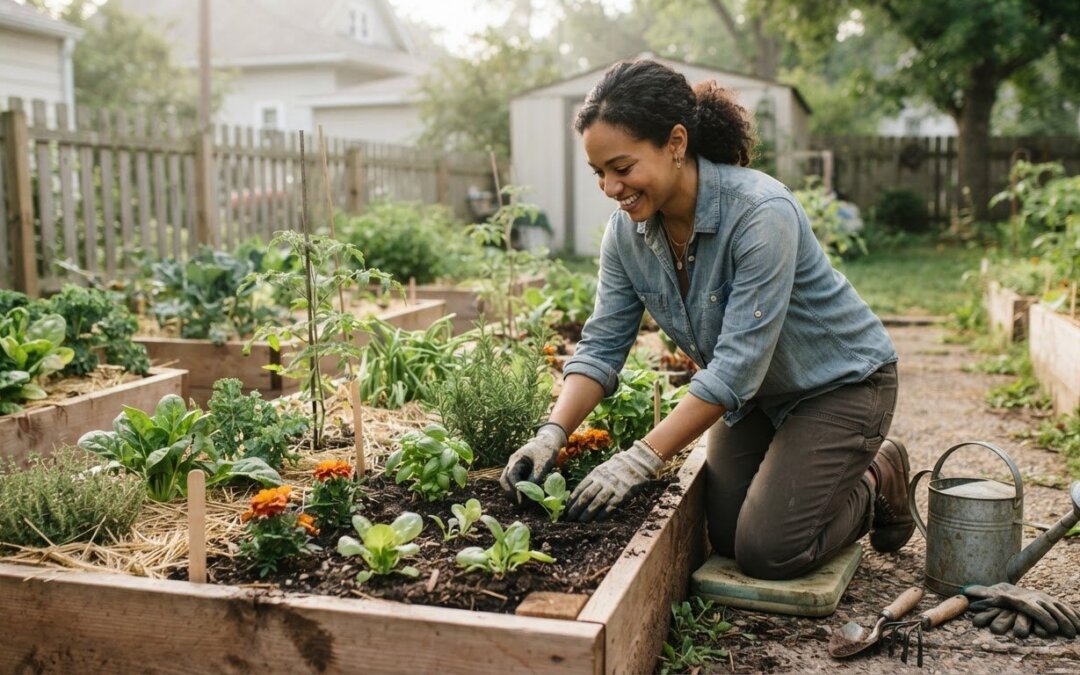
What if your first organic garden needed fewer supplies, not more? If soil, pests, watering, and a long list of rules have made organic gardening for beginners feel overwhelming, you’re not alone. It’s easy to assume you need perfect soil, expert knowledge, and a full weekend every week just to get started.
You don’t. A manageable organic garden can begin with one small growing space and a few thoughtful habits. The focus is less on buying a particular kit and more on observing your garden, caring for the soil, watering wisely, and preventing pest problems where you can.
This guide will help you understand what organic gardening means at home and choose a realistic place to begin, whether you have a yard, a raised bed, or a few containers. You’ll find practical steps for soil, plant choices, watering, and pest care that don’t require a perfect setup. Start small, notice what your plants need, and let each season teach you a little more.
Key Takeaways
- Organic gardening for beginners is about working with natural processes and limiting reliance on synthetic inputs, not passing a perfection test.
- Healthy soil, thoughtful watering, and plant diversity can support growth and help you use resources wisely.
- Organic gardening doesn’t mean ignoring pests. Prevention-first habits offer a practical starting point, though they take patience and don’t prevent every problem.
- Build a first-season plan by checking sunlight, choosing a manageable garden size, and using local extension resources for planting dates.
- Improve one step at a time: observe what happens, choose one issue to address, make a measured change, and reassess.
Organic Gardening for Beginners: What It Means
You don’t need a flawless garden or a shelf full of approved products to begin. Organic gardening is a learning process, not a perfection test. The aim is to work with the living systems around your plants and make thoughtful choices as you learn what your space needs.
Organic gardening means growing plants by supporting ecological processes, caring for soil and other resources, and limiting reliance on synthetic fertilizers and pesticides. That approach can guide a small container garden just as much as a raised bed or an in-ground plot. For a broad overview of the principles of organic cultivation, including soil health and different growing methods, see the linked reference.
What makes a home garden organic?
In practice, the focus is on building healthy soil, using water thoughtfully, and preventing problems where possible before intervening. That might mean choosing plants suited to your conditions, checking leaves regularly, and identifying what’s causing a pest issue before reaching for a treatment. There’s no single recipe every gardener must follow, and organic practices don’t depend on having a particular kind of garden bed.
Home gardening practices are also different from formal USDA Organic certification. Certification is a regulated program for agricultural products sold as certified organic. Under USDA National Organic Program guidance, producers selling less than $5,000 worth of organic products annually are exempt from certification, but must still follow applicable organic production and handling requirements. If you sell produce or use organic claims on labels, check current USDA guidance to understand which rules apply. Growing food for your own household doesn’t mean you need to pursue certification.
What should beginners expect in their first season?
Expect to learn as you go. Weather can shift, pests may appear, and a plant that thrives in one spot might struggle in another. A first season is useful even when the harvest is smaller than you hoped: it helps you see what grows well in the light, space, and time you have available.
Start with a small area and a few plants suited to your conditions, rather than trying to grow everything at once. Watch how plants respond, then adjust one thing at a time, such as a container’s location or how often you check soil moisture. That steady observe-and-adjust habit is at the heart of organic gardening for beginners. You don’t need to get every choice right on the first try. You need a manageable place to start.
How Soil, Water, and Garden Diversity Support Organic Growing
A garden works as a connected system. Soil provides a home for roots and tiny organisms. Water moves through the soil and helps plants take up what they need, while a mix of plants creates a more varied habitat. Understanding these connections gives organic gardening for beginners a practical foundation without requiring a complicated recipe or a pile of supplies.
Why healthy soil is the foundation
Soil is more than a place to hold plants upright. It stores and drains water, gives roots room to grow, and supports organisms that break down organic matter and help cycle nutrients. You can think of the soil food web as a community of living things working on a small scale. As they feed and interact, nutrients move through the soil and become part of the growing system.
Before adding amendments or making major changes, get to know the soil you already have. Notice whether water drains quickly or lingers, whether the surface crusts, and how established plants are growing. These clues can help you decide whether anything needs attention instead of applying products by habit. For raised beds, if you’re working out how much soil to plan for, use this raised-bed soil calculator as a practical planning resource.
Organic growing also sits within a broader framework of environmental practices. The EPA’s overview of official organic standards offers background on organic farming and its relationship to the environment. In a home garden, a useful starting point is to support the soil’s living processes rather than treat soil as an inert material.
How water and diversity help the garden work together
Watering by the calendar alone can miss what’s happening in your garden. Check the soil near the roots first. If it still feels moist, you may not need to water yet. If it’s dry, water so moisture reaches the root zone rather than briefly wetting only the surface. The right rhythm depends on your plants, containers or beds, weather, and soil, so notice how quickly your garden dries between checks.
Plant choice matters, too. A plant placed where its light and moisture needs are met is less likely to struggle from the start. Adding different kinds of plants, such as vegetables alongside flowering plants, can make the garden more varied and provide habitat for a wider range of organisms. Diversity isn’t a guarantee against pests, but it helps create a garden that isn’t built around just one plant or one growing condition.
Healthy soil, sensible watering, and plant diversity work together to help a garden grow with greater resilience. Notice what your garden is already telling you, then make small adjustments based on those observations.
Organic Gardening Myths: Is It Difficult, Expensive, or Pest-Free?
Organic gardening isn’t a promise of effortless plants, zero pests, or a guaranteed harvest. It’s a way of making growing decisions that favors prevention and works with garden ecology, while accepting that weather and living things don’t always follow our plans. The useful question isn’t whether problems will happen. It’s how to respond thoughtfully when they do.
Is organic gardening harder or more expensive?
The time and expense depend on the size of your garden, what you already have, and which methods you choose. A few containers may need little beyond suitable growing space and regular attention. A larger plot may take more time to water, weed, and monitor. Some organic seeds and supplies can cost more than conventional alternatives, but buying extra products isn’t a requirement of organic gardening.
Start with what’s on hand. Pay attention to plant needs, check soil moisture before watering, and reuse suitable containers or tools if you have them. A hand tool that makes routine care easier might be useful. A specialty gadget or a separate product for every possible problem may be optional. Before buying something, ask what specific garden need it solves. Starting small and observing carefully can keep the workload and shopping list manageable, though it can’t guarantee savings or a particular harvest.
Does organic gardening mean accepting every pest?
No. Organic gardening doesn’t mean leaving plants to suffer or pretending pests aren’t there. It means starting with prevention and identification, then choosing a proportionate response. Look closely at the damage before acting: holes in leaves, sticky residue, and wilting can have different causes, and the right response depends on what you find.
Prevention-first habits, such as checking plants regularly and keeping them suited to their growing conditions, can help you catch trouble early. They take attention, and they won’t prevent every pest or disease. A quick fix may seem simpler, but acting before identifying the problem can waste effort or affect organisms you didn’t intend to target. If a response is needed, research the specific issue and follow product directions carefully if you choose a treatment. Organic doesn’t automatically mean harmless.
Pest and disease pressure can still occur in an organic garden. That’s normal, not proof that you’ve failed. For a closer look at diagnosing damage and choosing responses, explore dedicated pest-identification and organic pest-control guidance as you need it. The core idea is simple: notice the problem, understand it, then choose the least disruptive useful next step.
How to Start an Organic Garden: A Simple First-Season Plan
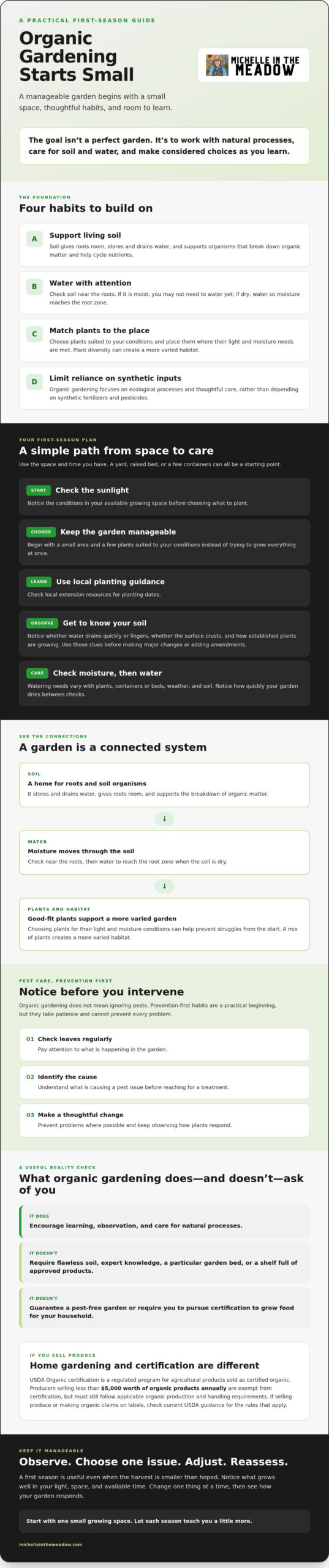
A good first garden starts with a few observations, not a shopping trip. The most useful plan is one that fits the space and time you actually have. Assess your space, track its sunlight, choose a few suitable plants, then plan a care routine around your schedule.
- Assess your space. Decide where a garden can fit and how you’ll reach it to water and check on plants. Containers, raised beds, and in-ground gardens can all support organic practices.
- Observe sunlight. Notice how much direct sun different spots receive throughout the day. Light can vary across even a small yard or balcony, so observe before choosing plants or placing containers.
- Choose a manageable scale. Start with a few plants suited to your space, available light, climate, and experience. A smaller garden is easier to understand and care for than one filled with plants you’re still learning to grow.
- Plan care. Decide when you can check soil moisture, look for new growth, and notice signs of stress. A simple routine helps you respond before small issues become harder to understand.
Plan around your space, sunlight, and growing conditions
Think about convenience as well as growing conditions. Is water easy to reach? Can you get close enough to check plants and harvest them? These details affect whether a garden is practical to maintain. Once you’ve chosen a likely spot, match plants to its light and space rather than trying to make every plant fit. For raised beds, planning soil quantities is another useful step before you begin filling the bed.
Planting dates vary with local conditions, so don’t rely on one national calendar. Check your local Cooperative Extension resources for region-specific planting guidance and advice on crops suited to your area. That can help you time planting more sensibly than copying a schedule written for a different climate.
Start small and build a repeatable routine
Keep the first season simple. Choose a few plants you’re interested in growing, then check on them regularly. Look at soil moisture before watering, notice whether new growth appears, and watch for wilting, leaf damage, or other signs of stress. This isn’t about constant monitoring. It’s a short, practical check that helps you learn what your garden needs.
If you want to explore specific next steps, look for focused guidance on planning a vegetable garden, starting seeds, and choosing supplies. You don’t need to solve every gardening question at once. Explore practical gardening resources to help shape a first-season plan that fits your space.
Keep Organic Gardening Manageable: Learn, Observe, and Adjust
A garden changes as the season unfolds, so a plan that worked last month may need a small adjustment now. That’s not a setback. Organic gardening for beginners is less about finding one perfect product or recipe and more about noticing what’s happening, responding thoughtfully, and learning from the results.
What to notice as your garden grows
A few brief notes can make patterns easier to spot. You don’t need a detailed journal. Record what will help you make sense of changes later:
- When you planted, and how much sunlight the spot receives
- When you watered and whether the soil seemed dry or moist
- How plants are growing, including new leaves, flowers, or fruit
- Any signs of stress or damage, and whether they return
One wilted plant after a hot day may be a one-time response. The same plant wilting repeatedly, or similar symptoms appearing across several plants, may point to a pattern worth investigating. Look for a likely cause before making a change. When possible, adjust one factor at a time, such as watering frequency, so you can better understand whether it helped. Changing several things together makes the result harder to interpret.
Where to find practical next steps
Gardening is seasonal and adaptive. A new round of planting brings different weather, growth, and challenges, so your observations can guide what you try next. Michelle’s gardening tutorials and videos are optional resources for exploring questions as they come up. If you’re planning a raised bed, the soil calculator can help you work out the amount of soil needed. It isn’t necessary for other garden setups.
You don’t need to solve every issue today. Keep the routine simple: observe, identify one concern, make one measured adjustment, and give yourself time to reassess. That steady loop helps you build experience without turning garden care into a long list of chores.
This week, take a few minutes to note the light in your chosen growing spot and what you notice about the soil. If you’d like guidance as you learn, explore Michelle In The Meadow’s gardening tutorials and videos at your own pace.
Take Your First Small Step Toward an Organic Garden
Organic gardening for beginners doesn’t require a perfect setup or a fixed formula. Start with a space and a few plants that suit its conditions, then care for the soil, water thoughtfully, and make pest decisions based on what you observe. Your garden will change with the season, and each small adjustment can teach you what to try next.
Keep the first step simple: take a closer look at your growing space this week. Notice its sunlight, consider how you’ll water, and choose one manageable action to move your garden forward. You can keep learning at your own pace with Michelle’s gardening tutorials and videos. If you’re planning a raised bed, the soil calculator can help you plan soil quantities, and curated product recommendations are available alongside the educational guidance as optional resources.
Explore Michelle’s practical gardening guides and tools when you’re ready for another helpful step. Start small, stay curious, and let the garden teach you as it grows.
Frequently Asked Questions
What is organic gardening for beginners?
Organic gardening for beginners means growing plants while supporting natural processes and limiting reliance on synthetic fertilizers and pesticides. That can include caring for soil, watering thoughtfully, and checking plants before deciding how to respond to a problem. These practices work in containers, raised beds, or in-ground gardens. Home gardening doesn’t automatically mean pursuing USDA Organic certification, which is a formal program for agricultural products represented as certified organic.
Is organic gardening hard for beginners?
It doesn’t have to be hard, especially if you begin with a small garden and a few plants suited to your space. You’ll still need to check on them, water as needed, and notice signs of stress or pests. Those observations help you make sensible adjustments rather than guess. Weather and other growing conditions can bring surprises, so treat your first season as a chance to learn, not a test you have to pass.
Can you start an organic garden without a raised bed?
Yes. Organic practices can be used in containers, directly in the ground, or in a raised bed. Choose based on the space you have, how easily you can reach water, and what you want to grow. A container garden may suit a small patio, while an in-ground plot can work where you have suitable space. The growing method doesn’t determine whether your approach is organic; your care and input choices do.
What do you need to start an organic garden?
Start with a suitable growing spot, a few plants or seeds that match its light and conditions, access to water, and a way to check on your plants. You may already have useful containers or basic tools, so there’s no need to buy a long list of supplies first. Learn how your soil holds water and how plants respond before making major changes. If you’re planning a raised bed, estimate its soil needs as part of setup.
Is organic gardening more expensive than conventional gardening?
Not necessarily. Costs depend on garden size, what materials you already have, and which supplies or methods you choose. Some organic seeds and supplies can cost more, but organic gardening doesn’t require buying a product for every task. Reusing suitable containers, starting small, and learning what your garden actually needs can help avoid unnecessary purchases. There’s no guarantee that organic growing will cost less, but you can make choices gradually instead of buying everything at once.
Do organic gardens still get pests?
Yes. Organic gardens can still have insect pests, plant diseases, and other problems. Organic gardening isn’t about ignoring damage; it’s about identifying what’s happening and choosing a considered response. Check which plants are affected and look closely at the symptoms before taking action, since different causes may need different approaches. Regular observation and prevention can help you spot issues, but they can’t promise pest-free plants or prevent every problem.
How often should you water an organic garden?
There isn’t one watering schedule that suits every garden. Check the soil near the roots before watering, then consider the plant, weather, soil, and whether it’s growing in a container or garden bed. Containers may dry differently from in-ground soil, and conditions can change from day to day. Water when the root area needs it, rather than following a rigid calendar. Checking moisture regularly helps you avoid watering by guesswork and respond to your plants’ conditions.