
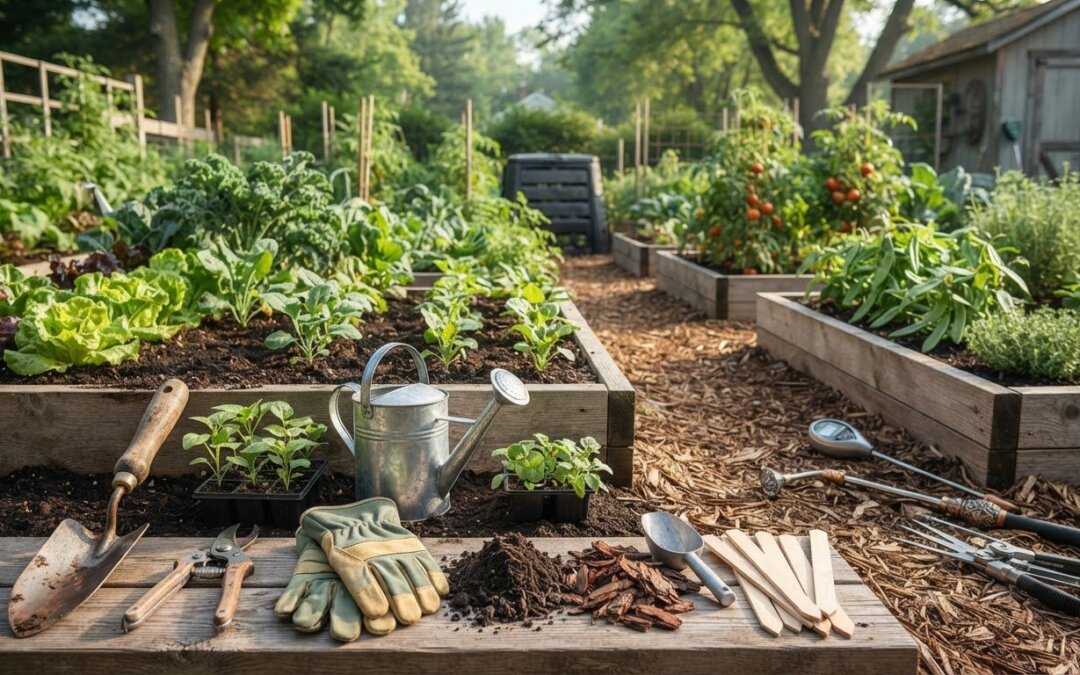
A bigger garden cart doesn’t make a better organic garden. A useful organic gardening supplies list starts with a few dependable basics, not every product labeled “natural.” If you’re unsure which tools and materials matter, or wary of buying supplies that won’t suit your space, start by identifying what your garden needs.
It’s sensible to question product claims, too. Labels and ingredient lists can be confusing, and a supply that works well in one garden may be unnecessary in another. The goal isn’t to buy the most. It’s to choose what supports your soil, plants, and growing setup.
This guide separates essentials from optional upgrades and items you can skip. You’ll find a prioritized checklist, tips for choosing supplies by garden size and purpose, and ways to assess organic claims before you buy. You’ll also learn how to estimate raised-bed soil needs so you can plan for your setup and add supplies as you learn.
Key Takeaways
- Use the organic gardening supplies list to prioritize items by task, separating foundational needs from upgrades you can add later.
- Choose compost, mulch, and other soil amendments for a specific purpose rather than applying the same materials to every garden.
- Compare tools by comfort, durability, repairability, and how well they fit your garden’s size and routine.
- Before buying, define the task, check what you already own, compare options, and consider storage and refill needs.
- Build your checklist around soil, planting, tools, watering, and monitoring, then adjust quantities to your setup.
Organic Gardening Supplies List: Start With the Jobs Your Garden Needs
Buy for a defined task, not for an “organic” label alone. Before adding anything to your cart, identify what you need to do: prepare soil, sow seeds, water plants, or monitor pests. This turns an organic gardening supplies list into a practical plan instead of a collection of products that may not suit your garden.
Organic gardening is an approach to managing a garden, not a shopping list by itself. Soil care, thoughtful planting, and regular observation all matter; purchased inputs are only part of the picture. For a helpful overview of the principles of organic horticulture, consider how these practices work together rather than expecting one product to do the job.
What counts as an organic gardening supply?
An organic gardening supply is a material or tool used for soil care, planting, watering, or pest monitoring as part of an organic gardening approach. Compost, mulch, seeds, a watering can, and a hand trowel can all have a role. The method itself, such as checking plants regularly or hand-removing pests, isn’t a purchased input. “Natural” or “organic” wording alone doesn’t show that a product is appropriate for every crop, task, or growing setup. Check the label, ingredients, and intended use before choosing one.
Build a starter kit around your garden setup
Start with four notes: garden size, growing method, crops, and tools you already own. A few herb containers may need only a small trowel and watering can, while a larger in-ground bed may call for a sturdy digging tool and more mulch. Raised beds need supplies based on their soil volume. If you’re planning one, a raised-bed soil calculator can help estimate how much soil to prepare.
Use this checklist to separate the basics from later additions:
- Foundational: suitable soil or growing medium, seeds or plants, a way to water, and a hand tool that fits the job. Reuse clean household containers or tools when they’re safe and practical for gardening.
- Optional: specialized soil amendments, dedicated pest-control products, powered equipment, and monitoring gadgets. Add these only when your garden’s conditions or a recurring task give you a clear reason.
Quantity matters as much as category. A container garden may need only a little growing medium and a compact tool; a large bed may use more materials and make durable, versatile tools worthwhile. Start with reusable basics, then add supplies as real needs arise.
Soil, Seeds, and Planting Supplies for an Organic Garden
Soil and planting needs depend on what your growing space already has. An established in-ground bed may need little more than a surface layer of compost or mulch, while a new raised bed or container garden may need growing medium from the start. Take stock of your soil and setup before buying amendments. For a raised bed, the raised-bed soil calculator can help estimate the soil volume you’ll need.
Soil-building materials: compost, mulch, and amendments
Compost adds organic matter and can support soil structure, but its ingredients and quality vary. Check what it’s made from and whether it suits your growing use. Mulch serves a different purpose: covering bare soil can help conserve moisture and reduce exposure. Choose a material that fits your plants and bed, and follow the product guidance for use.
Choose other amendments for a specific reason, not as a routine addition. If you suspect a soil deficiency, assess or test the soil before buying a product intended to correct it. Conditions differ from garden to garden, so don’t assume an amendment or application rate that suits one bed will suit another. Follow package directions and match the material to your soil and plants.
Seeds and seed-starting basics to keep on hand
Choose seeds for the crops you plan to grow and the timing that fits your growing season. A short, intentional selection is easier to sow and track than a collection of packets that doesn’t match your space. For indoor seed starting, gather:
- Seeds for your planned crops and sowing schedule
- Clean, reusable trays or suitable containers with drainage
- Labels and a pencil or marker to identify varieties and sowing dates
- A clean growing medium intended for seed starting
Labels are easy to overlook, but seedlings can look alike before their leaves develop. Reusable trays reduce the need for disposable containers, provided you clean them before reuse. A beginner seed-starting guide and a seedling potting-soil roundup can help you compare approaches and growing media. Choose a medium suited to sowing rather than assuming garden soil will work in every container.
Keep your organic gardening supplies list tied to actual needs: improve soil only when there’s a clear purpose, cover bare ground where mulch makes sense, and buy seeds you expect to sow. If pest concerns arise, Utah State University Extension’s overview of organic pest management methods offers context for considering approaches before purchasing a product.
Organic Garden Tools and Pest Supplies: Compare Before You Buy
The best tool is one you’ll use comfortably for the work your garden needs. In a compact container garden, a trowel and hand-picking pests may cover many tasks; larger beds may call for pruners or a dedicated weeding tool. Use this comparison to distinguish everyday basics from supplies to consider only when a clear need arises.
| Task | Status | What to compare | Maintenance to check |
|---|---|---|---|
| Planting and transplanting with a trowel | Core for many setups | Comfortable grip, sturdy construction, size suited to containers or beds | Cleaning and drying; whether the handle or other parts can be replaced |
| Trimming stems with pruners | Useful if your crops need pruning | Comfort in hand, cutting capacity suited to the task, repairable parts | Cleaning after use and care needed to keep the blades working well |
| Pulling weeds with a weeding tool | Optional | Whether it helps with the weeds and growing space you have | Cleaning soil from the working end; storage requirements |
| Protecting hands with gloves | Optional, based on comfort and task | Fit, dexterity, and material suited to the work | Washing and drying instructions |
| Checking plants for pests | Core habit; dedicated tools optional | Whether a hand lens or monitoring aid helps identify what you see | Cleaning reusable aids and storing them where they’re easy to find |
| Treating an identified pest | Optional, only if needed | Target pest, intended site, directions, and current product listing | Label instructions for storage and disposal |
Choose hand tools for comfort and repair
Try a tool’s grip if you can. A trowel loosens soil and moves small amounts of growing medium; pruners trim stems; a weeding tool helps remove unwanted plants; gloves provide a barrier for tasks that call for them. Consider durability and repairability as well as material. Check whether worn parts can be replaced and how the tool should be cleaned. A household spoon or container may already handle a small gardening job, so check what you own before buying a duplicate.
Identify pests before considering treatment
Observe plants and identify the pest before reaching for a treatment at the first sign of damage. Monitoring supplies, such as a hand lens, can help you inspect leaves, while regular checks help you understand what’s happening. An organic label alone doesn’t establish that a product suits your crop, site, or pest. Read the label for the intended site, target pest, and directions. OMRI is a listing gardeners may encounter, but verify its current listing and the product details. A listing or label isn’t a guarantee of pest control, safety, or environmental outcomes.
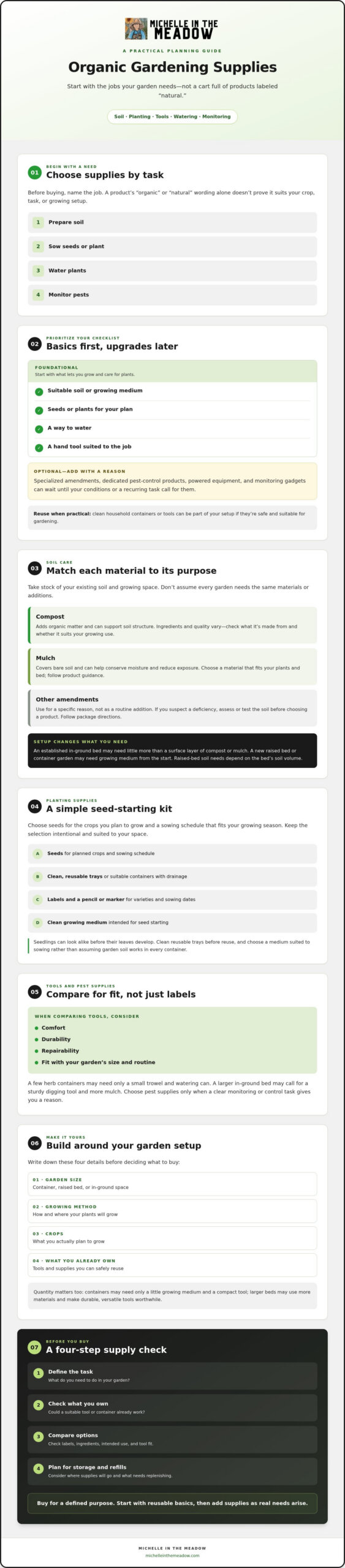
Choose Organic Gardening Supplies That Fit Your Budget and Routine
A supply earns its place when it solves a real problem and fits the way you garden. A small container setup, a large bed, a dry spell, or limited time for watering can all change what’s useful. Instead of buying a complete kit upfront, use a simple sequence to make each purchase count.
A four-step checklist for comparing supplies
- Define the task. Name the specific job or problem, such as trimming stems, labeling seed trays, or watering while you’re away. If you can’t identify the task, pause before buying.
- Check what you already own. Look through household tools and stored garden supplies first. A clean container may work as a scoop, and a tool you already have may be suitable.
- Compare options. Read directions and ingredients for materials or treatments. For tools, consider durability, repairability, and comfort. Check that the item fits your garden, intended use, and available storage.
- Buy cautiously if suitability is uncertain. If the product is appropriate to buy in a smaller quantity, consider starting there. Follow the label and observe how it fits your routine before purchasing more.
Look beyond the upfront cost. A tool used often may be worth choosing for its comfortable grip and repairable parts; a specialized item used once may be better borrowed or postponed. For consumables, consider how often they’ll need replenishing and whether the package size fits your garden. Storage matters, too: bulky gear can be inconvenient if you have little room to keep it dry and accessible.
A label tied to a verifiable standard or current listing gives you specific criteria to check, while broad terms such as “natural” are marketing claims unless the product provides clear supporting information. Read the full label and verify current product details rather than treating one word as proof that a supply suits every garden.
What to buy now, borrow, or postpone
Prioritize items needed for current planting and routine care. A small garden may need only a few hand tools and a way to water, while a larger setup can call for more durable tools or greater quantities of materials. Your climate and available time also matter: a garden that dries quickly or needs frequent attention may call for a different watering routine than one you can check daily.
Borrow or share infrequently used equipment when practical. Postpone specialized treatments and accessories until you’ve identified a clear need, such as a confirmed pest issue or a recurring task that a basic tool can’t handle. This keeps your organic gardening supplies list manageable and makes it easier to see what earns a place in your routine.
For approachable guidance as you plan your next purchase, explore practical gardening resources.
Put Together a Practical Organic Gardening Supplies List
Use this checklist as a starting point, not a cart to fill all at once. Mark the core items you need for your setup, adjust quantities to your growing space, and leave optional supplies unchecked until a real need appears.
A first-season checklist for a small home garden
- Soil: Core: suitable soil or growing medium for your bed or containers. Optional: compost or mulch if your soil and growing conditions call for them.
- Planting: Core: seeds or plants for crops you plan to grow. Optional: seed-starting trays if you’ll start seeds indoors; reuse clean containers when suitable.
- Tools: Core: a hand trowel or another tool that covers your planting tasks. Optional: gloves, pruners, or a weeding tool if your routine calls for them. Reusable tools can serve season after season with appropriate care.
- Watering: Core: a watering can, hose, or other method that fits your space. Optional: watering upgrades if your current routine isn’t meeting your garden’s needs.
- Monitoring: Core: a habit of checking plants and soil. Optional: labels for identifying sowings, or a hand lens if closer pest inspection would help.
Seeds and growing materials are consumables; tools, trays, and many containers are reusable. For guidance on these foundations, explore an organic gardening beginner guide as you plan your first season.
When to add supplies as your garden grows
Let observation shape your next purchase. Add an amendment after assessing your soil, consider a watering upgrade if your setup or schedule makes watering difficult, and look at pest products only after identifying a pest and checking that a product is intended for your crop and use. A raised-bed soil calculator can help estimate how much soil your bed needs. Michelle In The Meadow offers gardening education and curated product recommendations; its resources can help you research supplies, while guides on raised-bed soil amendments and beginner garden tools can inform later decisions.
Affiliate disclosure: Some product recommendations may include affiliate links. If you buy through one, the publisher may earn a commission. Check current product labels and claims before choosing a supply.
A practical organic gardening supplies list grows with the garden. Start with what supports planting and routine care, then add only what experience shows you need.
Start Small, Then Let Your Garden Guide You
A useful organic gardening supplies list isn’t a mandate to buy one item from every category. Begin with what your garden needs now: suitable soil and seeds, a way to water, and a few tools for planting and routine care. Check what you already own, compare labels and intended uses, and add specialized products only when you’ve identified a clear need.
Your setup matters. Containers, in-ground beds, and raised beds call for different quantities and sometimes different materials. If you’re planning a raised bed, estimating soil volume before you buy can help you prepare thoughtfully.
Michelle In The Meadow shares practical gardening tutorials and product recommendations to help you make informed choices. Its raised-bed soil calculator can also support soil-volume planning. Explore Michelle In The Meadow’s gardening guides and planning tools as you map out your next steps.
Keep your kit simple, learn from each growing season, and let real garden needs shape what you add. A few well-chosen supplies are a fine place to begin.
Frequently Asked Questions
What supplies do you need to start an organic garden?
Start with supplies for your garden’s immediate needs: suitable soil or growing medium, seeds or plants, a way to water, and a basic hand tool for planting. Labels help track seed varieties, while trays are useful if you’re starting seeds indoors. The right organic gardening supplies list depends on whether you’re growing in containers, raised beds, or in-ground soil, so check what you already own before shopping.
Are organic gardening supplies the same as natural gardening products?
No. “Organic” and “natural” aren’t interchangeable guarantees that a product suits your garden. These words may be used differently on product labels, so check ingredients, intended use, and any supporting certification or listing. A product described as natural may not be appropriate for every crop or task. Choose supplies for their specific purpose and directions, not a broad label alone.
Do I need special fertilizer for an organic garden?
Not necessarily. Whether you need fertilizer depends on your soil, what you’re growing, and whether plants show a specific nutrient need. Assess or test the soil before buying a product intended to correct a deficiency, and follow product directions if you decide to use one. Check the ingredients and any organic-use claims carefully. Avoid adding fertilizer simply because it’s marketed for organic gardens.
Is compost enough for an organic vegetable garden?
Compost can add organic matter, but it isn’t automatically all a vegetable garden needs. Its ingredients and nutrient content vary, and garden conditions differ. Consider the existing soil, the crops you’re growing, and how plants are developing before deciding whether to add anything else. If you suspect a nutrient problem, assess or test the soil rather than relying on compost alone to solve an unidentified issue.
What tools are essential for organic gardening?
For many small gardens, a hand trowel, a suitable watering method, and a way to label or track plantings are a practical starting point. Gloves, pruners, and a weeding tool are useful for particular tasks, but not every gardener needs them immediately. Choose comfortable, durable tools that fit your space, check whether parts can be replaced, and use household tools when they safely cover the job.
How can I tell if a gardening product is OMRI Listed?
Check the product packaging and the current OMRI listing for the exact product name and details. Don’t assume that a similar product, brand, or older package has the same listing status. OMRI listing information can help you evaluate a product, but it doesn’t establish that the item is right for every crop or use. Read the full label and follow its directions before applying anything.
Can I start an organic garden without buying everything at once?
Yes. Begin with what you need to plant and care for your garden now, then add supplies as clear needs arise. Check your tools and containers before buying duplicates, and consider borrowing equipment you’ll use only occasionally. Michelle In The Meadow’s gardening tutorials and raised-bed soil calculator can also support your planning. Explore its gardening guides and planning tools to help choose what your garden needs next.
