The most hands-off seed tray isn’t always the best fit for your seedlings. A reservoir can help keep growing mix evenly moist, but it still needs attention, and too much moisture can cause problems. If you’re comparing self watering seed starter tray reviews, focus on which watering design fits your seeds, space, and routine.
Steadier watering can be appealing, especially when life gets busy or you’re starting seeds for the first time. But tray designs, materials, and included features vary, so paying more doesn’t automatically mean a better match. This guide compares popular options, from passive reservoirs and capillary mats to terracotta pots, and explains the trade-offs that matter in everyday use.
You’ll learn what each system is designed to do, where its limitations may show up, and how to weigh product specifications and retailer claims alongside customer feedback. We’ll also cover practical considerations such as capacity, cleaning, and moisture checks, so you can choose based on your needs rather than hype or outdated prices.
Key Takeaways
- Self-watering describes how moisture reaches the growing medium, not a promise of perfect moisture or successful germination.
- These self watering seed starter tray reviews compare Orta and GrowEase by design, materials, reported strengths, limitations, and evidence type.
- Match tray capacity and footprint to your seed count and growing space before paying for extra features.
- Check how the reservoir is accessed, which parts can be reused, and what the manufacturer recommends for care.
- Choose according to your priorities: everyday convenience, material preference, and the strength of available product evidence.
What Does a Self-Watering Seed Starter Tray Actually Do?
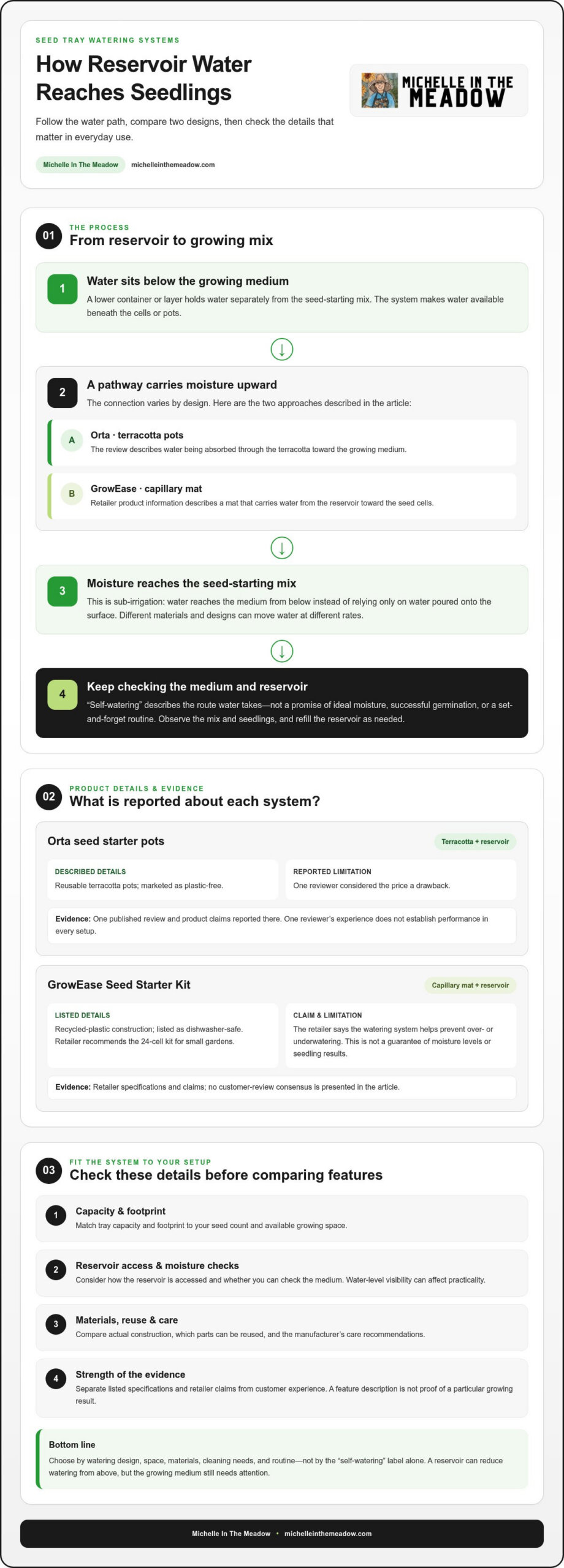
A self-watering seed starter tray supplies moisture to its growing medium from a reservoir or another lower layer, rather than relying only on water poured onto the surface. Water moves upward into the medium through a wick, mat, or porous material. This is a form of sub-irrigation, a concept explained in the Sub-irrigated planter overview.
The label describes the route water takes, not a guarantee that the medium will stay at an ideal moisture level or that seeds will germinate. Results depend on the tray’s design, the seed-starting mix, and growing conditions. A reservoir can reduce the need to water from above, but you still need to observe the medium and seedlings.
How does a reservoir-based seed starter tray work?
In a reservoir system, water sits in a lower container or layer, separate from the seed-starting medium. A connecting material or porous surface draws water upward toward the cells or pots. Depending on the design, that connection may be a capillary mat, a wick, or the pot material itself. Water moves at different rates in different systems, so “self-watering” doesn’t mean every tray works the same way.
A review of Orta’s terracotta seed pots describes water in a reservoir being absorbed through the terracotta toward the growing medium. That differs from a mat-based kit. GrowEase product information describes a reservoir system with a capillary mat that carries water toward the seed cells. These are product descriptions, not proof that either design will keep every mix at the same moisture level in every setup.
What is different about self-watering and ordinary seed trays?
With an ordinary tray, you add water yourself, usually over the surface of the cells or into a tray beneath them. This gives you direct control over when and how much you add, but it means checking the mix and watering as needed. A reservoir-based tray shifts part of that routine to the system: water is available below, and a mat or other pathway carries it toward the medium.
That can be convenient if you’d rather not water each cell individually, but it isn’t a set-and-forget solution. You may still need to refill the reservoir and check that the medium isn’t staying too wet or drying out. Reservoir access, water-level visibility, and ease of cleaning also affect how practical a tray is to use.
Materials and water-delivery designs differ. Terracotta, plastic components, and capillary mats each have their own care considerations, so compare the actual construction rather than relying on the label alone. In these self watering seed starter tray reviews, the useful question isn’t whether a tray waters itself, but how its specific system fits your seeds and routine.
Self-Watering Seed Starter Tray Reviews: Orta and GrowEase Compared
Orta and GrowEase use different approaches to move water toward seedlings: one pairs terracotta pots with a reservoir, while the other uses a capillary mat in a tray system. The table separates reported features from performance claims, so you can see what’s documented without mistaking a product description for a guarantee.
| Product | Water delivery and materials | Reported strengths | Limitations | Evidence type |
|---|---|---|---|---|
| Orta seed starter pots | Review describes terracotta pots used with a water reservoir; the pots are reusable and marketed as plastic-free. | One reviewer reported that the design suited their seed-starting routine. | The reviewer considered the price a drawback. Their experience doesn’t establish how the pots will perform in every setup. | One published review and product claims reported there. |
| GrowEase Seed Starter Kit | Retailer describes a reservoir system with a capillary mat; the kit uses recycled plastic and is listed as dishwasher-safe. | The retailer recommends the 24-cell kit for small gardens and says the watering system helps prevent over- or underwatering. | Those watering benefits are retailer claims, not a guarantee of moisture levels or seedling results. No customer-review consensus is presented here. | Retailer product specifications and claims. |
Comparison takeaway: Product features explain how a tray is intended to deliver water; they don’t verify a particular growing result. For broader context on watering and consistent moisture, see the University of Minnesota Extension’s indoor seed-starting guidance.
Orta seed starter review: who might appreciate the terracotta design?
The review describes Orta’s seed pots as terracotta, paired with a reservoir and designed for reuse. It also reports the plastic-free claim, which may appeal if reducing plastic in your seed-starting setup is a priority. The reviewer considered the price a drawback, but that’s one person’s account, not a promise that the system will suit every grower or seed.
GrowEase Seed Starter Kit review: what does the retailer describe?
GrowEase’s product information describes a reservoir and capillary mat that carry water toward the seed cells. It also lists recycled-plastic construction and dishwasher-safe trays. Keep the distinction clear: those are listed product details, while the claim that the system helps prevent over- or underwatering describes the retailer’s expected benefit. Without a customer-review consensus to consider, don’t treat the retailer’s claims as proof of typical user experience.
For both systems, compare current product details and care instructions, especially if material preference or cleaning matters to you. For practical seed-starting guidance alongside product comparisons, explore Michelle In The Meadow’s gardening resources. Some product links may earn a commission, at no extra cost to you.
Do Self-Watering Seed Trays Have Real Advantages and Drawbacks?
A reservoir can make seed starting easier to fit into a busy routine, but it doesn’t remove the need to pay attention. Its benefit is about how water reaches the growing medium, not an automatic improvement in germination or seedling health. The tray’s design, the mix in its cells, and the conditions around it all affect how quickly moisture is used or lost.
A reservoir does not replace observing your seedlings and growing medium. Check both regularly: the reservoir can run low, while medium that stays too wet may cause problems, including root rot. A tray’s water-delivery design can help you manage moisture, but it can’t respond to changing conditions for you.
When can self-watering make seed starting more convenient?
A lower reservoir may reduce how often you need to water each cell from above. That can help if you’re starting several trays indoors or prefer a steady routine to checking each cell individually. The convenience depends on the setup: a capillary mat provides a path for water toward the cells, while a terracotta pot uses its material as part of the water-delivery design. Neither approach means you can leave seedlings unattended indefinitely.
Fewer rounds of surface watering may make an indoor seed-starting routine easier to manage. Keep the benefit in perspective: a reservoir may reduce one task, but the design determines how you refill it and monitor moisture.
What limitations should buyers weigh before choosing a tray?
Look beyond the watering feature. You may need to learn how to fill or inspect the reservoir, clean reusable parts, or make room for a particular tray footprint. Conditions can change, too. Light, airflow, and temperature affect how quickly moisture leaves the growing medium, so yesterday’s moisture level may not be right today. Follow the manufacturer’s directions and check the mix rather than assuming the tray will prevent both drying and oversaturation.
“Self-watering” doesn’t mean seedlings can’t become too wet. If water is continually available and the medium holds it longer than the seeds need, excess moisture can be a concern. The balance depends on the tray, the medium, and the growing environment, not just the presence of a reservoir. Treat retailer claims about avoiding over- or underwatering as intended benefits, not guaranteed results.
Consider value in terms of your routine. A reusable system may appeal if you plan to start seeds repeatedly and want durable components or a particular material, such as terracotta. A simpler tray you water manually may suit you better if you’re starting a small number of seeds or prefer direct control without managing a reservoir. Neither option is universally better; weigh the upkeep against the work it could realistically save.
These are useful questions to bring to self watering seed starter tray reviews: What task does the design reduce? What will you still need to monitor? Do its materials and care requirements suit the way you grow?
How to Choose a Self-Watering Seed Starter Tray for Your Setup
A good match is the tray that fits your seed-starting habits, not the one with the most features. Before comparing options, consider how many seeds you’ll start, where the tray will sit, and how often you can check on it. Use this checklist to narrow the options and compare product details.
Which tray features matter for your seed-starting routine?
Start with your space and seed plan, then check the tray layout and water system. A compact cell tray may suit a small batch; a wider footprint may be awkward on a crowded shelf even if its capacity looks appealing. Consider how you’ll refill the reservoir, clean the components, and store the tray between seasons. Confirm these details in current product information and the manufacturer’s instructions.
- Measure your growing space. Compare the full tray footprint with the shelf, windowsill, or table where it will sit. Leave room to reach the reservoir.
- Match capacity to your seed plan. Consider both the number of seeds and whether the cell layout suits the types you’re starting. Don’t pay for unused capacity if a smaller setup is easier to manage.
- Picture the watering routine. Check how the reservoir is accessed and refilled. A system that’s inconvenient to reach may not save time in your space.
- Weigh materials and upkeep. Look at which components are reusable, how they’re cleaned, and whether the material fits your preferences. Follow the manufacturer’s care guidance rather than assuming every tray can be cleaned the same way.
How should you judge product reviews before buying?
Look at what kind of evidence each review offers. A hands-on account may describe use over time; customer feedback reflects individual buyers’ experiences; retailer copy explains listed features and intended benefits. Give more weight to specific observations about refilling, cleaning, or moisture than to broad claims about successful seedlings, which depend on more than the tray alone.
Check the date, too. Older recommendations may refer to product details that have changed, so compare current specifications with the review before relying on it. In these self watering seed starter tray reviews, a useful claim should make clear whether it’s a listed feature, a retailer’s performance claim, or an individual reviewer’s experience. That distinction helps you judge how much the evidence matters for your setup.
Your growing medium is part of the setup, too. Pair tray research with a seed-starting beginner guide and potting-soil recommendations so you can consider the tray and medium together, rather than expecting one component to solve every watering concern. Once you’ve narrowed down the features that matter, explore gardening resources for your seed-starting setup.
Which Self-Watering Seed Starter Tray Should You Choose?
There isn’t one right tray for every gardener. The best fit depends on what you want to simplify, which materials you prefer, and how much weight you give to product descriptions versus firsthand accounts. Use this quick decision guide to turn those priorities into a practical choice.
Affiliate disclosure: Some product links in this article may earn a commission at no extra cost to you. Product features and retailer claims are identified separately from individual reviewers’ experiences, and we don’t present these products as personally tested.
Which design fits convenience, material, or budget priorities?
- If terracotta and a reusable, plastic-free design appeal to you, consider the Orta pots. A published review describes their reservoir and terracotta construction, but it’s one person’s account. That reviewer also considered the price a drawback.
- If you prefer a tray with a capillary mat, GrowEase is described by its retailer as a reservoir-based kit. The retailer lists recycled-plastic construction and dishwasher-safe trays, and promotes the watering system as helping prevent over- or underwatering. Treat that benefit as a retailer claim, not a guaranteed result.
- If neither design fits your routine, don’t buy a reservoir just for the label. A simpler tray with manual watering may suit your seed count, space, and habits better.
For budget, compare the current price with the features you’ll actually use, the components included, and your plans for reusing the tray. The Orta reviewer’s cost concern is useful context, but it doesn’t establish today’s value for every buyer. Retail prices and product details can change, so check the current listing rather than relying on an older review.
What should you do before placing an order?
Do a quick fit check. Confirm the current specifications and included components, then compare the tray’s footprint and cell format with your seeds and available growing space. Read the manufacturer’s instructions for filling, care, and cleaning, and review the seller information so you know which listing you’re using. These checks can prevent a mismatch between an appealing feature and your actual setup.
As you weigh self watering seed starter tray reviews, ask what kind of evidence supports each recommendation. A hands-on review, a customer comment, and a retailer’s product description aren’t interchangeable. Specific observations about everyday use can help you judge fit, but they don’t guarantee the same outcome in different growing conditions.
Choose Orta if its terracotta and reusable design match your material priorities and you’re comfortable weighing one reviewer’s account. Consider GrowEase if its listed tray format and capillary-mat system suit your space and routine. If easy monitoring and a simpler setup matter more, manual watering may be the better match. For more help planning your setup, explore Michelle In The Meadow’s seed-starting guidance.
Make Your Next Seed-Starting Season Easier
Once you’ve chosen a tray, use your first sowing to learn how it fits your space. Keep a brief note of when you refill the reservoir, how the growing medium feels, and how seedlings respond as conditions change. That record can help you adjust your routine for the next batch, whether you keep the same system or decide a simpler setup suits you better.
That’s a practical next step after reading self watering seed starter tray reviews: find a watering rhythm you can maintain instead of chasing a perfect product. Seed starting involves regular observation, and you don’t need to get every detail right on the first try. Make a thoughtful choice, monitor your seedlings, and refine your approach as you learn.
For practical ideas to support your next sowing, explore more seed-starting guidance from Michelle In The Meadow. A little planning can make the season ahead feel more manageable, and those first green shoots are worth the care.
Frequently Asked Questions
Can I use a self-watering seed starter tray for every type of seed?
No. A self-watering tray won’t make every seed’s needs identical. Check the seed packet for sowing and moisture guidance, and follow the tray maker’s instructions for setup. A fine, moisture-sensitive seed and a larger seed may behave differently in the same medium. Watch surface moisture and germination rather than assuming one tray setting will suit every variety.
How often should I refill a self-watering seed tray reservoir?
There’s no universal refill interval. Reservoir capacity, tray design, seedling growth, and indoor conditions all affect how quickly water is used. Check the reservoir and growing medium regularly, especially as seedlings develop or the room gets warmer or drier, and follow the manufacturer’s directions. If the reservoir is nearly empty, refill as instructed rather than relying on a fixed schedule that may not fit your setup.
Can self-watering seed trays cause mold or damping-off?
A reservoir alone doesn’t determine whether mold or damping-off will occur. Persistently wet medium and poor airflow can contribute to problems, so don’t treat a self-watering system as disease protection. Keep trays and tools clean, use suitable seed-starting medium, and follow sound seed-starting guidance for airflow and moisture. If you notice fuzzy growth or seedlings collapsing, reassess the growing conditions rather than assuming the tray is the only cause.
Do self-watering seed trays need special seed-starting mix?
Not necessarily, but the medium should suit the seeds you’re growing and the tray maker’s instructions. A mix’s structure affects how water moves and how long it stays available, so a dense medium may behave differently from a lighter seed-starting mix. Don’t assume every tray needs the same formula. For help choosing a medium, consult a seedling potting-soil guide alongside the tray directions and seed packet.
Can I reuse a self-watering seed starter tray next season?
That depends on the tray’s construction and care instructions. Before storing it, inspect the reservoir, cells, mat, or other components for damage or residue. Clean each part as directed, let it dry fully, and store the pieces somewhere clean and dry. A reviewer’s report that one product is reusable applies to that product, not automatically to every tray or its components.
Do self-watering trays replace grow lights for indoor seed starting?
No. Water delivery and light serve different purposes: a reservoir helps supply moisture, while seedlings may need suitable light in an indoor growing space. Check how much natural light reaches your chosen spot and follow guidance for the seeds you’re starting. Don’t assume a watering feature includes lighting; review the specific kit’s listed components and plan for a separate light if your setup needs one.
Are self-watering seed trays useful for a small number of seedlings?
They can be, if the tray’s footprint and capacity suit your project and you value its watering format. A large kit may take up more room than a few seedlings require, while a compact option may fit more comfortably. In these self watering seed starter tray reviews, compare the tray dimensions, cell layout, and included parts with your seed list before deciding whether the reservoir is worth managing.