
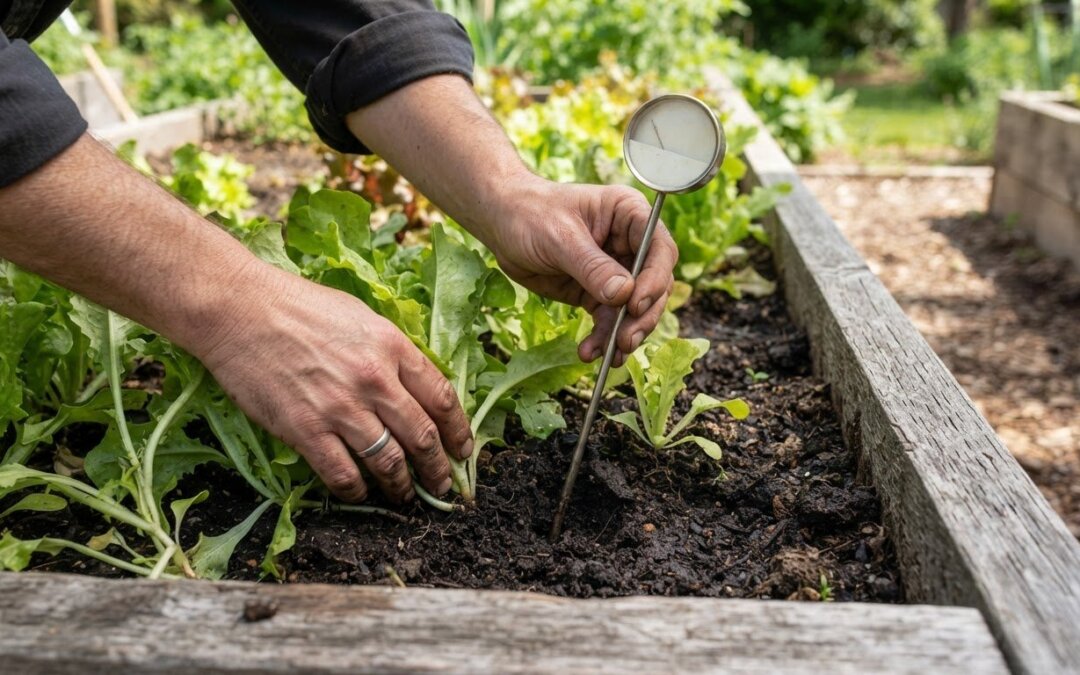
A soil moisture meter for raised bed gardening can help you decide when to water, but one reading won’t describe every part of the bed. Insert the probe at the depth of the plant roots, then read the display; an analog meter shows a dial, while digital meters often use a scale from 1 (dry) to 10 (wet).
It’s easy to second-guess a watering decision when the soil surface looks dry but the soil below may still be moist. A meter gives you another clue, especially when you check where your plants’ roots are growing. It works best alongside what you observe in the bed.
Here, you’ll learn what soil moisture meters can and can’t tell you, how analog and smart options compare, and what to consider when choosing a meter for raised beds and outdoor plants. We’ll also cover how probe placement and sensor type affect readings, helping you choose a practical way to check moisture and water with more confidence.
Key Takeaways
- Judge a meter by how it gathers its reading, not just by whether its display is analog or digital.
- Compare sensors that measure volumetric water content with those that measure soil tension to understand what each reading represents.
- For outdoor beds, consider whether combined readings for moisture, fertility, pH, and sunlight would be useful for your gardening decisions.
- Use the Soil Calculator for Raised Beds to help plan your bed, then draw on gardening guides and product recommendations as you decide what tools fit your routine.
Do soil moisture meters really work?
Yes. A meter measures moisture where its probe sits, but placement and soil type affect how useful that reading is. Choose a probe and measuring method suited to your plants and growing medium.
Probe Length for Root Depth
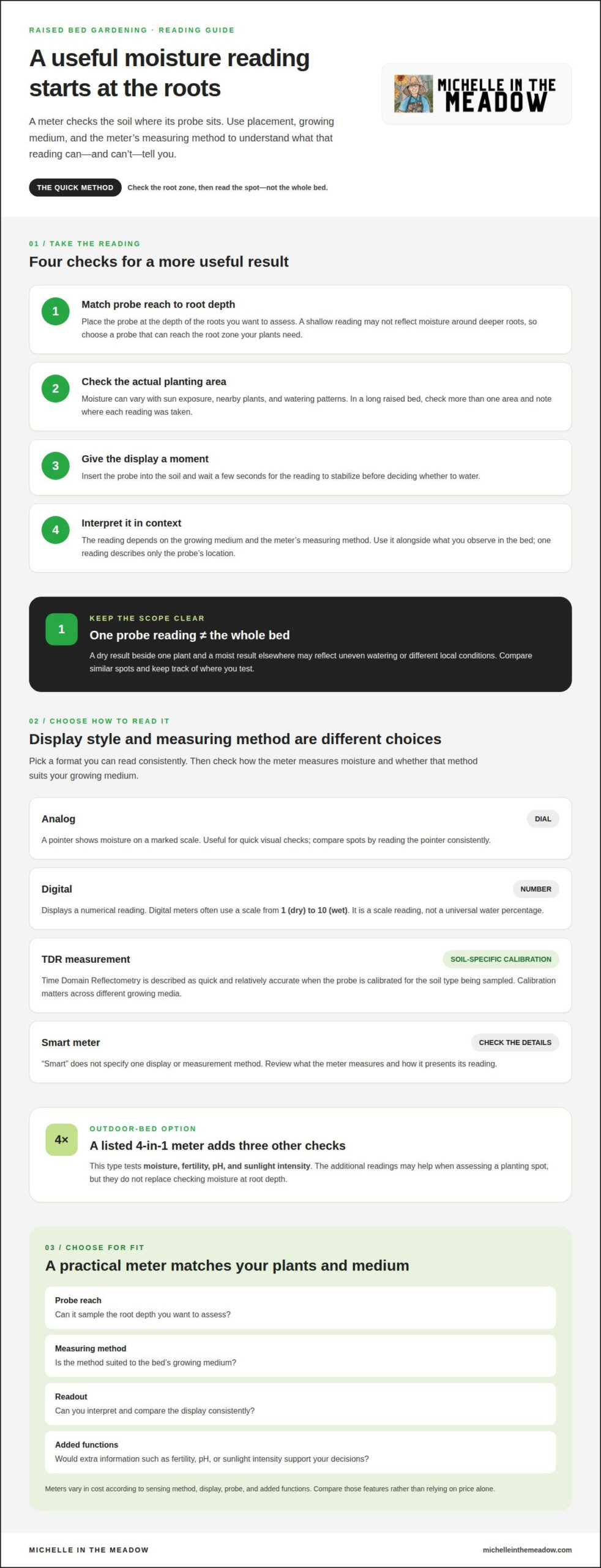
The probe should reach the root zone you want to assess. A shallow reading may not reflect moisture around deeper roots, so choose a probe that can sample at the depth your plants need. Insert it into the soil and read the pointer or display. Wait a few seconds for the reading to stabilize before deciding whether to water.
Meters for Outdoor Gardening
For outdoor beds, consider whether you need a moisture-only reading or several kinds of information. A listed 4-in-1 meter tests moisture, fertility, pH, and sunlight intensity. Those extra readings can be useful when you’re assessing a planting spot, but they don’t replace checking moisture at root depth. Choose according to the decisions you want the meter to support.
Raised Bed Meter Types
Analog meters show moisture on a dial, while digital meters display a numerical reading. Digital meters often use a scale from 1 (dry) to 10 (wet), making changes easy to track. Time Domain Reflectometry (TDR) is another approach: Penn State Extension describes it as quick and relatively accurate when the probe is calibrated for the soil type sampled. That calibration matters across different growing media.
Meters can work in potting mix, compost, and different soil types, but readings depend on the medium and the meter’s measuring method. For TDR, use a probe calibrated for the soil type being sampled.
Rated Raised Bed Meters
When choosing a soil moisture meter for raised bed gardening, focus on fit rather than the display alone. Match probe reach to root depth and choose a measuring method suited to your growing medium. Meters vary in cost according to their sensing method, display, probe, and added functions, so compare those features instead of relying on price alone.
| Option | Reading style | Best fit |
|---|---|---|
| Analog | Dial | Quick visual checks |
| Digital | Numerical scale | Tracking displayed readings |
| TDR | Moisture measurement | Soil-specific calibrated use |
Choose a meter with a probe that reaches your plants’ root zone and a measuring method suited to your bed’s growing medium.
Comparing analog and smart soil moisture meters
The display affects how quickly you can interpret a reading and compare spots in a bed. Analog and digital meters present moisture differently, while “smart” can refer to added technology rather than a particular display. A soil moisture meter for raised bed gardening is easiest to use when its readout suits your routine.
Analog Meter Displays
An analog meter shows moisture on a dial, with a pointer against a marked scale. That gives you a direct visual indication without requiring you to interpret a digital number. A dial can work well for a quick spot check, but comparisons depend on reading the pointer consistently. If you check different parts of a bed, note each dial position so you can compare them later. A soil moisture meter for raised bed gardening with a dial keeps the readout simple, though it may be less convenient for recording exact values.
Digital Meter Displays
A digital meter shows moisture as a number instead of a pointer position. Digital meters often use a scale from 1 (dry) to 10 (wet), giving you a reference point for comparing readings. The number is still a scale reading, not a universal water percentage. Use the same meter and scale across different areas to make changes easier to interpret. This format may suit gardeners who prefer recording numerical readings over estimating dial positions.
“Smart” doesn’t describe one specific reading format. A smart meter may have a digital display, but the label alone doesn’t tell you what it measures or shows. Check its measurement method and display details before comparing it with another meter. One might show a number, while another uses an indicator. What matters is whether its readings help you make a watering decision.
| Option | Display | Reading approach |
|---|---|---|
| Analog | Dial | Read pointer position |
| Digital | Numerical scale | Interpret displayed number |
| Smart | Depends on meter | Review listed display and measurement details |
Choose a format you can read consistently, then compare readings using the same meter. For practical context on interpreting garden readings, explore gardening educational content alongside your meter checks.
Soil moisture meters for garden beds and outdoor plants
Moisture can vary across a raised bed. Sun exposure, nearby plants, and watering patterns all affect the reading at the probe’s location. Treat a meter reading as a local check, not a summary of the whole bed. For a useful comparison, test similar spots in each area, such as beside a leafy crop and near an exposed bed edge. This helps you notice patterns without assuming one reading represents every plant.
Outdoor plants also grow in containers, borders, and mixed beds, so choose a meter for the places you’ll use it. A probe meter is practical when you can place its probe directly into the growing medium. In a long raised bed, check more than one planting area instead of relying on a single convenient spot. Keep track of where you take each reading. A dry result beside one plant and a moist result elsewhere may point to uneven watering or different local conditions.
Some meters combine several checks. A listed 4-in-1 soil meter tests moisture, fertility, pH, and sunlight intensity. Those extra readings can help when you’re assessing both soil conditions and the planting site. They also mean the display covers more than watering alone, so identify which reading answers your immediate question. If you’re deciding whether to water, focus on the moisture result; use the other functions for their specific garden checks.
- For a single outdoor pot, choose a meter you can position in its growing medium.
- For a raised bed, compare readings from separate planting areas.
- For site assessment, consider whether fertility, pH, and sunlight readings are useful alongside moisture.
After inserting the probe, wait a few seconds for the reading to stabilize. Then interpret it in context: the plant, its location, and the meter’s other readings all help inform your next watering decision. The key takeaway is simple: use outdoor meter readings to compare specific spots, not to label an entire bed uniformly wet or dry.
What types of soil moisture meters are best for raised bed gardens?
The right sensor depends on what you want the reading to tell you. A raised-bed gardener can choose between measuring water content directly and measuring how tightly the soil holds that water.
According to University of Minnesota Extension, soil moisture sensors fall into 2 categories: those measuring volumetric water content and those measuring soil tension. Volumetric water content describes how much water occupies a given volume of soil. Soil tension describes how firmly the soil holds water, indicating how much effort roots need to draw it in. Both approaches help assess moisture, but they describe different parts of the soil-water picture.
For example, choose a volumetric sensor if you want a reading about the water in the sampled soil. Choose a tension sensor if you want information about how readily plants can access that moisture. Neither type is automatically best for every raised bed. Your plants, growing medium, and watering decisions determine which reading is more useful.
Keep the display separate from the sensor category. Analog describes a dial, and digital describes a numerical display; neither term tells you by itself whether the meter measures volumetric water content or soil tension. Before choosing, identify the measurement method, then consider whether the probe reaches the root zone you want to sample. This helps you avoid choosing by appearance alone.
- Volumetric water content: useful when you want to assess the amount of water in sampled soil.
- Soil tension: useful when you want to understand how tightly soil holds moisture.
- Display format: choose a dial or number you can interpret consistently.
For a mixed raised bed, select the sensor method that best supports your watering decisions, then use it consistently in comparable areas. If bed planning is part of that decision, use the Soil Calculator for Raised Beds to help plan your growing space.
Michelle In The Meadow: Soil Calculator for Raised Beds
Michelle In The Meadow’s Soil Calculator for Raised Beds is a useful next step when you’re planning a new bed or adjusting an existing one. A moisture meter helps you assess soil in place; the calculator helps with raised-bed planning. Each tool supports a different gardening decision.
Use the calculator to work out your bed’s soil needs, and explore the site’s gardening educational content for guidance on ongoing care. Curated gardening product recommendations can help you find tools that fit your routine. Together, these resources connect practical planning with the day-to-day observations a meter provides, without treating one reading as the whole story of your bed.
Explore Michelle In The Meadow’s raised-bed calculator and gardening resources to plan your bed and support its ongoing care.
Turn readings into a steady garden habit
Make each meter check part of what you learn about your raised bed. Notice how your plants respond after watering, and keep brief notes about changing conditions, such as sunny weather or a newly planted crop. Over time, these observations help you interpret readings in the context of your own garden rather than relying on a number alone.
A soil moisture meter for raised bed gardening is most useful when it supports a thoughtful decision rather than a fixed watering rule. Use your observations to adjust your approach as plants grow and the bed changes. Regular checks can help you spot patterns and care for your garden with confidence.
If you’d like help with your next gardening step, contact Michelle In The Meadow. Keep observing, keep learning, and let your garden guide the way.
Frequently Asked Questions
How accurate are analog and digital soil moisture meters?
Neither an analog dial nor a digital display is automatically more accurate; accuracy depends on the meter’s sensing method and how it’s used. A numerical reading can look precise without representing a universal moisture percentage. For comparable checks, use the same meter and sampling depth each time. Penn State Extension notes that Time Domain Reflectometry is relatively accurate when its probe is calibrated for the soil type sampled.
How deep should you insert a moisture meter in a raised bed?
Insert the probe far enough to sample the root zone of the plants you’re checking. In a bed with crops at different growth stages, a reading near one plant may not describe another plant’s root area. Choose a probe that can reach the intended depth, then use a consistent position for repeat checks. This makes it easier to interpret changes for that crop over time.
What are common problems or limitations of soil moisture meters?
A meter reports conditions where its probe sits, so one reading may miss wetter or drier areas elsewhere in a raised bed. The growing medium matters too: a reading from compost or potting mix may not compare directly with one from garden soil. To avoid confusion, note the probe location and medium, and compare readings taken with the same meter under similar conditions.