
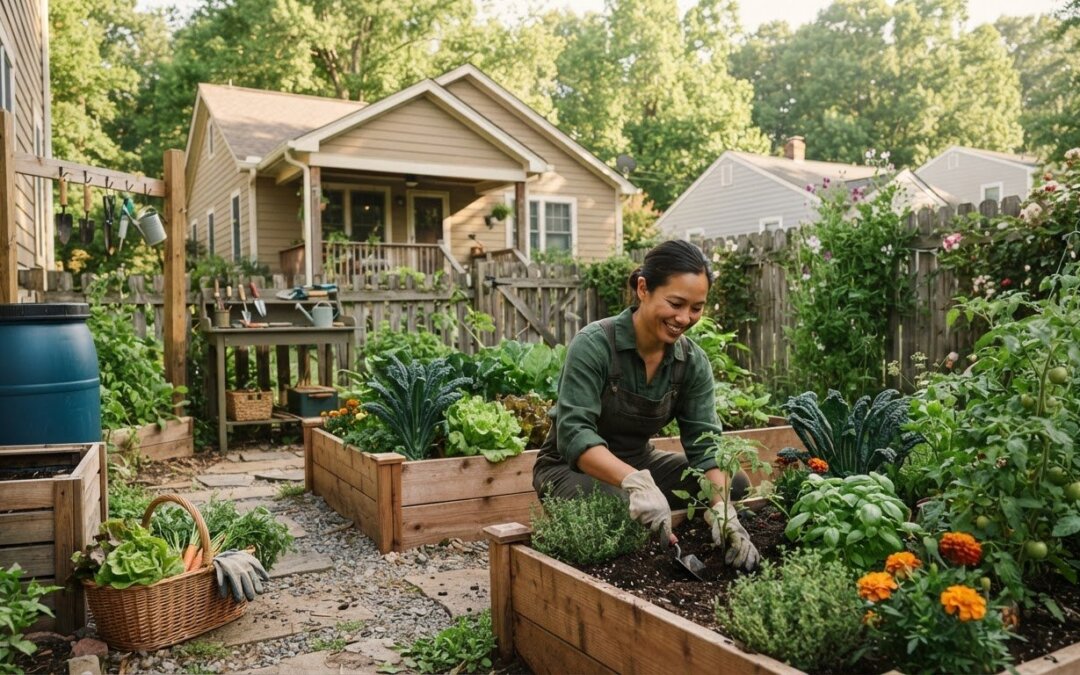
What if homesteading didn’t require acreage, expert skills, or every spare hour? For suburban homesteading for beginners, progress can start with herbs near the kitchen, a simple food-waste routine, or one small growing space. The goal isn’t to recreate a farm in your backyard. It’s to build useful habits that fit the home and life you already have.
Homesteading can seem expensive, rural, or overwhelming when you see large gardens and ambitious projects online. But a small yard, balcony, or sunny windowsill can still give you room to learn. You don’t need to take on several projects at once. Start with one manageable system, then see whether it fits your routine before adding anything else.
This guide shows what suburban homesteading can look like in everyday life, how to choose projects that suit your space and schedule, and how to make a practical first-month plan. You’ll find approachable ways to grow food and build household skills, with gardening as one useful place to begin. Go steadily, learn as you go, and let small efforts add up.
Key Takeaways
- Think of homesteading as practical household skills and routines, not complete self-sufficiency.
- Connect growing food, using what you harvest, and caring for household resources in ways that suit your home.
- Compare the space, recurring time, learning curve, and usefulness of a project before choosing where to begin.
- Use the four-step first-month plan to observe, pick one project, gather essentials, and review your progress.
- With suburban homesteading for beginners, adjusting or pausing a project is part of learning what works for your household.
What Is Suburban Homesteading, and What Can It Look Like at Home?
Suburban homesteading means building useful, more self-reliant home skills with the space and time you already have. It isn’t a test of whether you can produce everything your household needs. It’s a flexible way to grow food, use resources thoughtfully, and learn practical tasks that make everyday life feel a little more capable.
The idea has roots in broader traditions of self-sufficiency, but modern homesteading can take many forms. What is homesteading? For a suburban household, it’s less about a particular type of property and more about choosing skills and routines that make sense at home. One person might grow a few ingredients; another might focus on cooking from scratch or repairing household items.
With suburban homesteading for beginners, progress can be easy to overlook if you measure it against complete independence. Instead, look for small, practical results: Did you learn to care for a plant? Make a meal with something you grew? Find a way to waste less food? Each is a real result, even if it’s modest.
Does homesteading require land, livestock, or a rural move?
No. Acreage-based farming is one way of working with land, not an entry requirement for homesteading. A patio could hold a pot of useful plants, a sunny windowsill could support a small indoor growing experiment, and a kitchen can be a place to practice cooking or storing food. Even a small yard can offer a starting point. Livestock and large-scale food production are optional, not prerequisites.
Think of your home as a set of possible spaces rather than one big plot. You might have room for a single project, or your first step might involve no outdoor space at all. Choose a scale you can maintain without making home life feel like another full-time job.
Which parts of homesteading can fit suburban life?
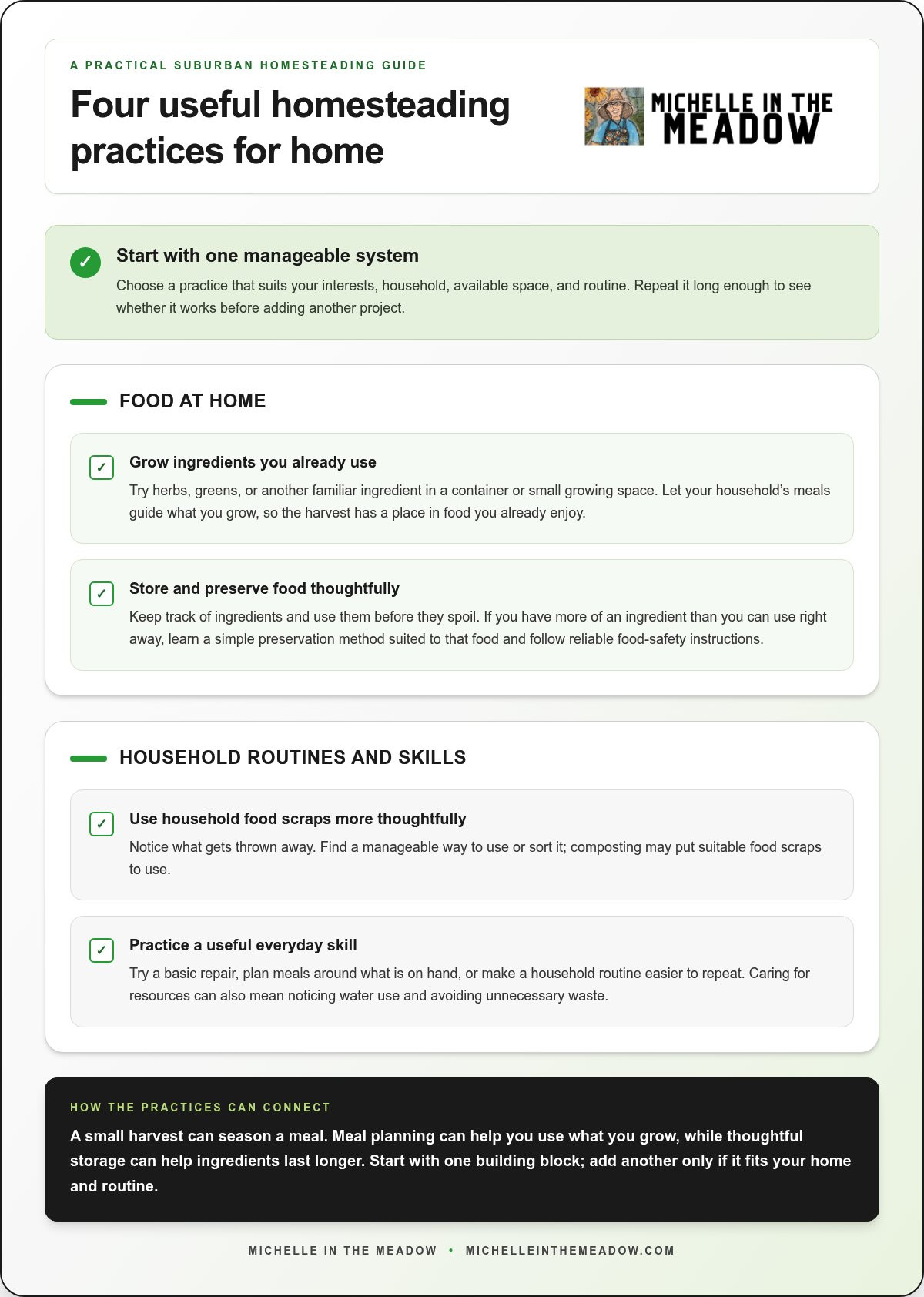
There’s no checklist to complete. Choose an area that fits your interests, household, and available space. These options can stand alone or gradually complement one another:
- Growing food: Try a small harvest of herbs, greens, or another ingredient your household already uses.
- Reducing household waste: Notice what gets thrown away and find a manageable way to use or sort it more thoughtfully.
- Preserving food: Learn a simple method for keeping seasonal ingredients useful for later meals.
- Building practical skills: Practice a basic repair, plan meals around what’s on hand, or make a household routine easier to repeat.
These areas can connect naturally. A few fresh leaves might season dinner, while meal planning can help you use ingredients before they’re forgotten. But you don’t need to build a complete system right away. One useful harvest, one skill learned, or one routine that sticks is meaningful progress.
The Building Blocks of Suburban Homesteading: Food, Resources, and Skills
Homesteading habits become more useful when they support one another. Growing food can lead to fresher meals; planning meals can help you use what you harvest; and storing food thoughtfully can make ingredients last longer. Caring for household resources and building practical skills fit into the same picture, but you don’t need to start them all at once.
Repeatable household routines turn small homesteading efforts into useful habits that can grow with your home and your experience. For suburban homesteading for beginners, that might mean tending one container regularly or finding a reliable way to use leftovers. Begin with one building block, then notice whether it naturally connects to another.
Growing and using food at home
A container of herbs, a few edible plants, or a small garden can give you a manageable way to learn about growing food. Let your household’s meals guide what you try. If you often use basil, parsley, or leafy greens, growing something you already enjoy makes it easier to put the harvest to use instead of ending up with unfamiliar produce.
Picture snipping a few herbs for dinner or adding homegrown greens to a meal you already know how to make. A harvest doesn’t have to supply the whole dish to be worthwhile. To learn gardening basics for your project, explore vegetable gardening guidance and find ideas for growing food and starting seeds at a pace that suits you.
Building useful household habits beyond the garden
Food growing is only one part of the picture. Composting may help put suitable food scraps to use, while thoughtful food storage can help you keep track of ingredients and use them before they spoil. Simple preservation is another possible skill, especially if you have more of an ingredient than you can use right away. Choose a method that suits the food and follow reliable food-safety instructions.
Resource care can also include noticing how water is used at home. Look for ways to avoid unnecessary waste, or consider reuse when it’s appropriate and safe for the intended use. Don’t assume that water used for one purpose is suitable for another; household, plant, and food-safety needs differ.
The best building block is often the one you’ll practice again. You might focus on storing produce properly for a while or learn one food-preservation method before adding another project. Repetition helps you understand what works in your home, how much effort it takes, and whether it genuinely makes daily life easier. Keep the routine, adjust it, or move on. Homesteading doesn’t require collecting every skill; it’s about making a few useful ones part of ordinary life.
How to Choose Suburban Homesteading Projects That Fit Your Space and Time
The best beginner project isn’t necessarily the one that produces the most. Choose one that fits the space you can use, the time you can give it, and what you want from the effort. A small project can be worthwhile even if it never replaces store-bought essentials. A few herbs for meals or a basic repair completed yourself can still add usefulness and experience to everyday life.
Use this comparison as a starting point, not a promise about exactly how much work each project will take. Weather, household routines, experience, and scale all affect the effort involved.
| Project | Space needed | Recurring time | Learning curve | Household usefulness |
|---|---|---|---|---|
| Container herbs | Small patio, balcony, or bright indoor spot | Regular checks and care | Gentle start, with plant needs to learn | Fresh herbs for meals |
| Composting | Small area suited to the method | Ongoing attention to inputs and conditions | Some trial and adjustment | Turns suitable scraps into a resource |
| Food preservation | Kitchen workspace and storage room | As ingredients and your schedule allow | Varies by method; food safety matters | Helps extend the use of seasonal food |
| Basic repairs | Small work area, depending on the task | Usually tied to a specific household need | Varies with the repair | Builds practical confidence and care skills |
How can beginners match projects to available space?
Start by noticing what space you can use comfortably. Indoors, a windowsill may suit a small growing experiment or a food-storage routine. A patio or balcony might accommodate containers; a small yard could offer room for gardening or composting. In shared spaces, choose compact projects that don’t obstruct others, and follow household rules while using the area safely.
Space alone isn’t enough to decide. Consider access to light and water, ventilation, and a place to store supplies. If a project would crowd a walkway or be difficult to reach, try a smaller version or choose a different skill. For suburban homesteading for beginners, a realistic match beats an ambitious setup that’s hard to maintain.
How can you keep a project manageable?
Before choosing, ask yourself: How often can I check on this? How much ongoing care feels comfortable? Am I genuinely interested, or do I feel I ought to do it? Pick a project that meets a real household need or brings you pleasure. Learn its basic requirements before buying supplies; you may be able to begin with what you already have.
Try one project, then notice how it fits into ordinary life before adding another. If gardening is the direction you’re leaning, explore practical gardening education for ideas to help you choose a manageable starting point.
A Beginner’s First-Month Plan for Suburban Homesteading
A first month doesn’t need to end with a finished garden or a shelf full of preserved food. Use it to learn what suits your home and build one routine you can keep. You can begin in any season, whether you have a yard, a balcony, or only indoor space. Adjust the steps to your household instead of trying to follow a perfect calendar.
Observe your household, choose one project, gather only the essentials, then review what worked. That sequence gives suburban homesteading for beginners a practical shape without making it another demanding commitment.
Week one: notice what your household uses and wastes
Spend a few ordinary days paying attention. You don’t need a spreadsheet or special equipment; a short note on your phone or a scrap of paper is enough. The aim is to spot a real opportunity in your routine, not to track everything perfectly.
- Notice which ingredients your household uses often and which food scraps or leftovers tend to go unused.
- Look at where natural light falls and which areas would be convenient to reach for a small project.
- Consider what you have time and interest to maintain, rather than copying a project that looks appealing online.
Perhaps you use fresh herbs regularly and have a bright spot near the kitchen. Or maybe you’d rather begin by improving how you store food. Let your observations point to a useful first step.
Weeks two through four: start small and learn
Choose one project that fits your space, schedule, and interests. Keep the first version simple. For a garden project, try one container of an herb your household enjoys if the season and available light suit it. If growing isn’t practical right now, a non-garden habit can be just as worthwhile.
- Choose one project. Name the specific need it meets, such as having a familiar herb on hand or using stored ingredients before they’re forgotten.
- Gather the essentials. Find out what the project requires, then collect only what you need to begin. Wait on larger purchases until you know the setup works for your home.
- Pay attention as you go. Jot down a few observations: how much effort the project takes, how weather or light affects it, garden pest identification clues and other changes over time, and whether it’s useful to your household.
- Review before expanding. At the end of the month, decide whether to continue, adjust, pause, or try something else. One month may be enough to assess a routine, though a garden project may need longer to show results.
There’s no wrong season to begin. At some times of year, a small growing experiment may make sense; at others, you might organize food storage or learn a basic household skill. If you’re considering a garden project, explore gardening education and tutorials to help you choose a suitable next step.
Make Suburban Homesteading Sustainable: Build on What Works
A homesteading routine should support your household, not become another source of pressure. As seasons change, take a few minutes to review what you’ve tried. A project that suited your schedule in one season may feel less practical in another. That’s useful information, not a setback.
For suburban homesteading for beginners, progress isn’t measured only by how much food you grow or how many supplies you stop buying. A project can be valuable because it taught you something, helped you notice how your home works, or showed you what you’d rather do differently next time.
How to tell whether a homesteading habit is working
At a seasonal check-in, consider whether the project was useful, whether you could keep up with it, and whether you enjoyed it. Notice its workload and the resources it used, too. Did it fit your available space and current capacity, or did it regularly feel like one more task? Your honest answers matter more than a perfect result.
Separate what you learned from outcomes you couldn’t fully control. Weather can affect a harvest, and a new skill may take practice. Keep a routine that’s genuinely useful, adapt one that’s promising but awkward, or stop a project that no longer fits. Pausing is a decision, not a failure.
- Keep it if it feels useful and manageable in everyday life.
- Adapt it if the idea still appeals but the setup or routine needs changing.
- Pause or stop if the effort outweighs its usefulness or enjoyment right now.
Where to find practical gardening guidance for your next step
If your review points you toward growing food, use clear, practical guidance to build your skills at a comfortable pace. Gardening tutorials and video guides can help you understand the next steps for a project without taking on a bigger one. If you decide to plan a raised bed, a soil calculator can help you work out how much soil the bed requires.
Let your next choice follow from what you learned, rather than from pressure to do more. Explore practical garden guides and tools for ideas and planning help as you decide what fits your home.
For now, choose one small project and write down what you’ll observe, such as the effort it takes, how useful it feels, or how it responds to the season. That simple note gives you a starting point for your next review.
Let Your Next Small Step Take Root
Homesteading doesn’t have to follow a straight line. Your needs, interests, and available time can shift, so give yourself room to adjust as you learn. A project that works well now might change with the season, and choosing a different focus is part of making the practice fit your real life.
For suburban homesteading for beginners, the next step doesn’t need to be bigger. It can be more confidence with the skill you’ve chosen or a clearer sense of what you want to try next. If gardening is part of that path, educational articles and video guides can help you keep learning. Planning a raised bed? A soil calculator can help you estimate the soil it needs.
Explore practical garden guides and tools to plan your next project. Choose one small thing to begin, then notice what it teaches you. Steady progress counts, and your homestead can grow at your pace.
Frequently Asked Questions
Can you start homesteading in a suburban backyard?
Yes, a suburban backyard can support homesteading, even if you use only a corner of it. You might grow an edible plant, keep a small composting routine, or learn to care for soil over time. Start by noticing which areas get sun, stay accessible, and won’t interfere with how your household uses the yard. A productive homestead doesn’t have to fill every outdoor space.
Do you need land or livestock to be a homesteader?
No, neither land nor livestock is required. Homesteading can also mean developing skills that don’t depend on a yard, such as planning meals around pantry ingredients, mending a household item, or learning to store food well. Animals bring additional care needs and may be subject to local rules, so they’re a choice to consider separately, not a measure of whether you’re homesteading.
What is the easiest homesteading project for a beginner?
The easiest project is one with a clear purpose and a routine you can manage. For suburban homesteading for beginners, organizing one pantry shelf and noting which ingredients need using soon can be a simple first experiment. It takes no growing space and helps you see what your household actually reaches for. If you’d rather work with plants, choose a small edible project suited to your light and interests.
How much time does suburban homesteading take?
There’s no set time commitment; it depends on the project and how much you take on. A pantry check or basic repair happens occasionally, while plants need attention suited to their growing conditions. Before starting, decide when you can realistically check in and what you’ll do during that time. If the routine regularly crowds out other priorities, scale it down or choose a less demanding project.
Can you homestead in an apartment with no yard?
Yes. An apartment can still make room for useful home skills. You could grow a suitable plant indoors if you have the right light, practice making meals from pantry staples, or learn to mend and maintain household items. For shared balconies or common areas, follow building rules and keep pathways and neighbors’ spaces clear. A homesteading habit can begin entirely inside your home.
Is suburban homesteading expensive to start?
It doesn’t have to be expensive to begin, especially if you choose one small project and use suitable items you already own. Costs depend on the activity and what your home needs; avoid buying a full set of supplies before you understand the basics. For example, try planning meals from food already in your kitchen before investing in equipment for a more involved preservation project.
What should you grow first in a small garden?
Start with something you enjoy eating and can match to your growing conditions. Consider how much sun the space receives, the season, and whether you want a frequently used ingredient or an easy-to-harvest addition to meals. Herbs or leafy greens may suit some small spaces, but they aren’t right for every setup. Choose one crop, learn its needs, and expand only if you enjoy the experience.
