
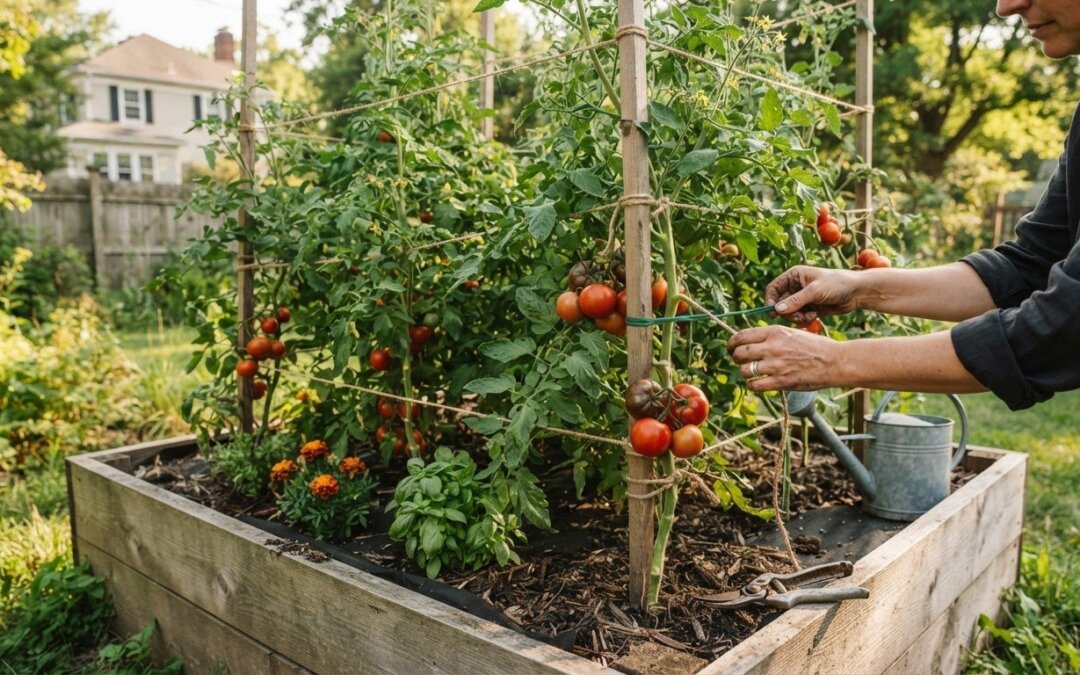
What if the best tomato trellis isn’t the tallest or most elaborate one, but the one your raised bed can anchor and you can easily tend? Trellising indeterminate tomatoes in raised beds can feel tricky when vigorous vines need sturdy support, there’s little room outside the bed, and each method calls for a different amount of pruning and tying. Planning ahead helps: a support that’s easy to reach and strong enough for fruit-laden vines makes the growing season more manageable.
This guide will help you choose a trellis to suit your bed, plants, and materials, then install it before the vines become difficult to handle. Compare stakes, string systems, and panels, and learn how to train, tie, and maintain tomatoes as they grow. The goal is to support stems without blocking watering or making ripe fruit hard to reach.
Key Takeaways
- Match the trellis to your bed’s dimensions, plant count, and available anchoring points before choosing a method.
- Trellising indeterminate tomatoes in raised beds is easier when you weigh support strength against the tying, pruning, and training each system requires.
- Install supports while plants are small, and position them to preserve room for watering and harvesting.
- Check ties, vines, and trellis stability regularly so you can redirect growth before it crowds the bed or strains the support.
- Compare cages, stakes, Florida weave, and panels, then choose an approach that fits your gardening routine.
Why Indeterminate Tomatoes Need Reliable Support in a Raised Bed
An indeterminate tomato keeps extending its stems and producing new growth as the season progresses, rather than stopping at a set size. In plain terms, it behaves more like a continuing vine than a compact bush. An indeterminate tomato is a tomato plant whose stems keep growing and producing new leaves, flowers, and fruit throughout the growing season. This pattern of ongoing growth is part of Indeterminate Growth in Plants, and it explains why a small seedling can eventually need substantial, season-long support.
In a raised bed, support isn’t only about keeping stems upright. Vines can spread across neighboring plants and into the space you need for watering, pruning, and picking. A trellis gives growth a direction, but it doesn’t replace routine care: you’ll still need to water, decide whether and how to prune, and check that the plant is growing as expected.
How indeterminate growth changes the support plan
Determinate tomatoes grow to a more limited size, while indeterminate varieties keep adding length and fruiting growth. That difference affects when to plan support. A young plant may seem easy to manage, but as stems lengthen and fruit clusters develop, it can become harder to lift, guide, or tie without bending or tangling stems. Setting up a support early gives you a clear route for training growth while the plant is manageable.
Bed layout matters, too. If stems sprawl into the path you use to reach the center of the bed, simple tasks can become awkward. Consider where each plant will grow, where you’ll stand to tend it, and whether neighboring tomatoes might crowd one another. Leave room for both vines and your hands to preserve access as the plants fill out. Trellising indeterminate tomatoes in raised beds works best when the support plan accounts for the mature plant, not just the seedling.
What a trellis can and cannot do
A well-placed support keeps stems organized and can make developing fruit easier to see and reach. It also helps keep vines from wandering across the bed. But a trellis doesn’t make tomato care hands-off. You’ll still need to decide which stems to prune, check that ties remain loose, and water and monitor the plants regularly.
Choose a structure that’s secure and suited to the plant’s expected size and fruit load. A support that shifts, leans, or pulls loose may need attention before the plant becomes difficult to reposition. Check how it’s anchored and whether the bed can hold it steady. The goal isn’t to force every vine into a perfect shape. It’s to guide growth while keeping care and harvesting practical.
How Tomato Trellis Methods Differ in Support and Upkeep
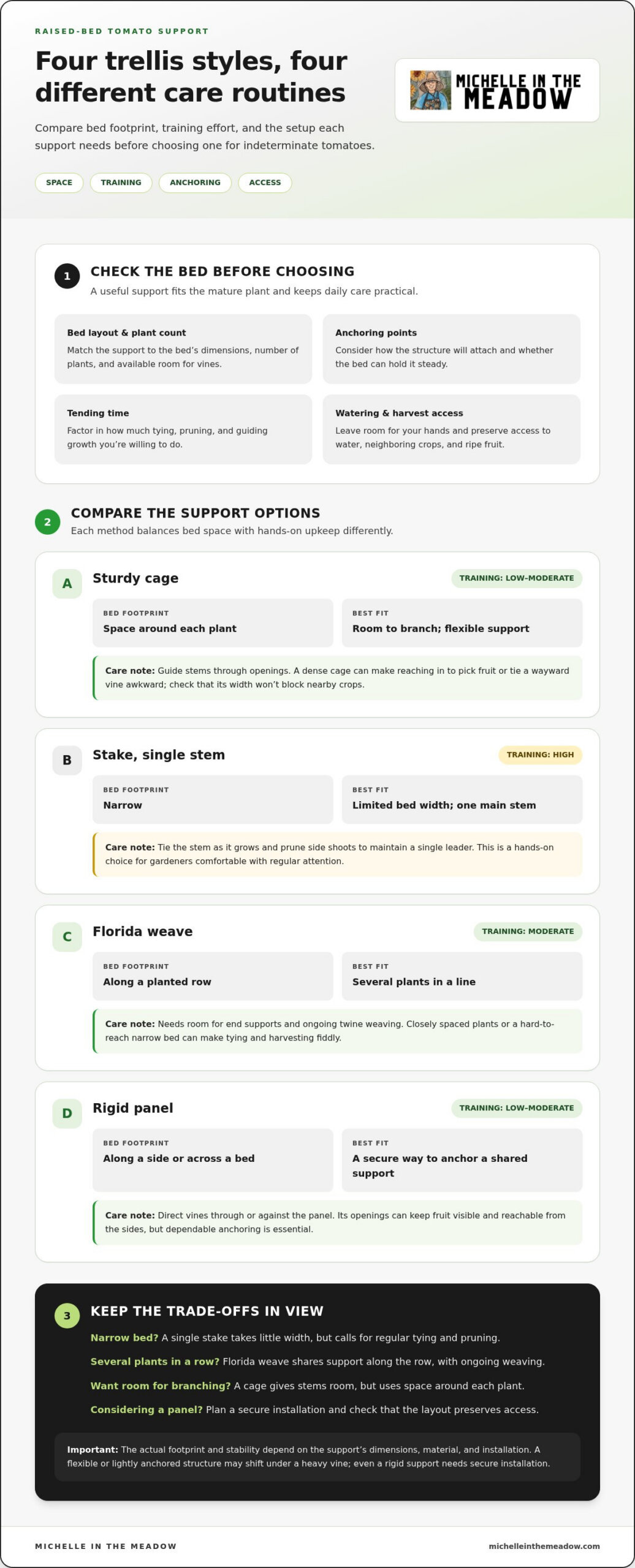
Each trellis style calls for a different balance of bed space and hands-on care. A broad cage gives a plant room to branch, while a single stake keeps growth narrow but needs regular pruning and tying. Florida weave supports a row with shared twine, and rigid panels offer a firm surface for sprawling vines. The right fit depends on sturdiness and how much time you want to spend guiding growth.
The best tomato trellis is the one that fits your space and the upkeep you’re willing to give it. Use this comparison as a starting point. The actual footprint and stability depend on the support’s dimensions, material, and installation.
| Support style | Bed footprint | Training effort | Suitable situations |
|---|---|---|---|
| Sturdy cage | Space around each plant | Low to moderate; guide stems through openings | Plants with room to branch and gardeners seeking flexible support |
| Stake, single stem | Narrow | High; tie and prune regularly | Limited bed width and gardeners comfortable managing one main stem |
| Florida weave | Along a planted row | Moderate; weave twine as plants grow | Several plants arranged in a line with room for end supports |
| Rigid panel | Along a side or across a bed | Low to moderate; direct vines through or against the panel | Gardeners with a secure way to anchor a firm, shared support |
Cages, stakes, and Florida weave
A cage surrounds a plant, giving stems several directions to lean as they grow. It’s less restrictive than single-stem training, though reaching into a dense cage to pick fruit or tie a wayward vine can be awkward. Choose a cage sized for the mature plant, and check that its width won’t block access to other crops.
A stake supports a main stem vertically. This method takes little bed width but needs more hands-on care: gardeners typically tie the stem as it grows and prune side shoots to maintain a single leader. Florida weave uses stakes along a row, with twine passed around each stake and between plants to hold stems upright. It supports several plants together, but requires ongoing weaving and works best when the bed allows a clear row. Closely spaced plants or a narrow bed that’s hard to reach can make tying and harvesting more fiddly.
Panel-style supports and sturdy cages
Rigid panels create a broad, open surface for vines to lean on or grow through. A panel takes up more space along the bed than a narrow stake, but its openings can leave fruit visible and reachable from the sides. A sturdy cage offers similar room for branching around an individual plant. Neither is automatically the easiest choice: a panel needs dependable anchoring, while a cage can take up valuable bed space. When trellising indeterminate tomatoes in raised beds, weigh those trade-offs against the time you can give to tying and pruning.
Material matters, too. A flexible or lightly anchored structure may shift under a heavy vine, while a rigid support still needs secure installation. Consider the panel or cage’s weight, shape, and attachment points alongside the bed’s construction. If you’re comparing garden supports, raised-bed gardening recommendations can help you think through practical choices for your setup.
Which Trellis Fits Your Raised Bed, Space, and Gardening Style?
Choose a support after looking at the whole bed, not just the spot where a seedling will go. A trellis can suit the plant but still make the bed awkward to water or harvest. For trellising indeterminate tomatoes in raised beds, consider these questions before choosing a design:
- How much room is available? Note the bed’s length and width, the paths beside it, and any nearby plants that could be crowded.
- Where will you reach from? Leave space to water at the base, inspect leaves, and pick fruit without leaning heavily over other plants.
- How many vines will you manage? A row of plants may suit a shared support, while a single plant may be easier to manage with its own stake or cage.
- What can you anchor securely? Decide whether supports can be set into the bed or need a stable structure outside it. Don’t assume the bed edge itself can bear the load.
- What materials do you have? Consider whether they’re sturdy enough for mature vines and can be assembled in the available space.
Sketching the bed can help. Mark paths, neighboring crops, and the sides you’ll use to reach the plants. Then draw the support in place, including the space its frame or posts occupy. Planning now is easier than trying to shift a structure after stems have spread.
Match the support to bed size and access
A narrow bed with a path on only one side calls for a different layout than a wide bed you can reach from both sides. A panel along an accessible edge may leave the middle open, while a broad cage takes up room around an individual plant. If posts need to stand outside the bed, make sure there’s room for them and that they can be anchored securely. Keep access to the soil and fruit in mind, not just the trellis footprint.
Match the method to the time you want to spend
A narrow single-stem system can use bed space efficiently, but it asks you to tie and manage growth regularly. A cage or panel may allow more branching, though vines still need occasional guidance. Florida weave requires returning to the row to add twine as plants grow. Think honestly about how often you want to tend each plant and how many you can comfortably train. A simple initial setup doesn’t always mean less work later.
Choose a method you can maintain through the season, not just one that looks tidy on planting day. When comparing supplies, look for clear information about materials, dimensions, and how the support is anchored. For more practical planning ideas, explore Michelle’s raised-bed gardening resources.
How to Install and Train a Tomato Trellis in a Raised Bed
A sturdy support is easier to set up before tomato stems spread through the bed. The exact installation depends on the system, but the sequence is similar: plan its position, anchor it securely, plant with access in mind, and guide growth as it develops. This keeps the work manageable without assuming every bed or trellis needs the same dimensions or installation method.
- Map the growing area. Note the bed edges, paths, neighboring plants, and the spots you need to reach for watering and picking. Mark where each tomato and support will sit so the frame won’t block access or shade another plant unnecessarily.
- Install the support while the bed is clear. Follow the structure’s instructions and anchor it in a way that suits its design and the bed. If it relies on a stable structure beyond the bed, plan that position before planting. Check for movement before vines depend on it.
- Plant with the support in mind. Set each plant where you can reach its base and tend the surrounding soil. Avoid placing stems so close to a post, panel, or neighboring plant that watering and harvesting become awkward.
- Guide new growth gradually. As stems lengthen, direct them toward the support while they’re still flexible. Use soft garden ties, securing the stem loosely rather than cinching it against the structure.
Plan and install the support
Measure the usable growing area, but don’t treat a measurement as a universal spacing rule. A cage, stake, panel, or row system occupies space differently, and the bed’s construction affects how it can be anchored. Keep the route to both the plants and the soil open. Before planting, check that posts, crosspieces, and outside anchors won’t interfere with nearby crops or routine tasks.
Install the structure according to its design and instructions rather than relying on a one-size-fits-all depth or attachment. Then gently test for wobbling or shifting. If it moves, improve the anchoring before the plant grows into it. Making adjustments now is simpler than working around a mature vine.
Guide vines as they grow
Check growth regularly and redirect a stem when it starts leaning away from its intended route. Attach ties loosely, leaving room for the stem to thicken, and revisit them as the plant develops. Loosen or replace any tie that begins to press into the stem. The aim is steady support, not a rigid bind.
Training varies by method. With single-stem training, choose the main stem you’re guiding and manage side shoots according to your pruning plan, adding loose ties as it grows. With Florida weave, pass twine around the row’s supports and between plants to hold stems in place, then repeat as growth rises. In either case, avoid pulling stems sharply into position. Small adjustments made early are easier on the plant and your hands.
For practical help planning your bed and garden setup, explore Michelle’s raised-bed gardening resources.
Season-Long Trellis Care for Easier Tomato Harvests
A trellis needs attention as the plant grows, but quick checks during routine garden visits can catch small problems before they’re awkward to fix. Inspect the whole support, not just the top growth: a loose tie, leaning post, or stem that has slipped away from the trellis can affect how the plant is supported. Aim for steady support and clear access, not a perfectly shaped vine.
A simple routine for checking vines and supports
As you water or inspect the bed, check whether ties have room around each stem and whether new growth is following its intended path. Loosen or replace ties that press into stems. Guide a wandering vine back gently rather than pulling it sharply. Check the structure’s base and connections, too. A new lean, wobble, or separation at an attachment point may mean the support needs attention.
Pruning is a separate decision, and the right approach depends on the trellis method and how you want to manage the plant. Single-stem training involves regularly selecting and guiding one main stem. A cage or panel can accommodate more branching, so you may choose to leave more side growth. Don’t assume every indeterminate tomato needs the same pruning routine. Match your approach to the support and the time you have for tending.
Harvesting, troubleshooting, and next steps
As stems and fruit add weight, watch for changes in the support’s position. A tilting post, panel pulling at its anchor, or cage shifting in the bed deserves attention. Fix a loose connection or support an overloaded stem before the structure moves farther. Avoid forcing a heavy vine back into place; support it gently while making adjustments.
Crowded growth can hide ripe fruit and make it harder to inspect leaves or reach the plant’s base. If picking becomes awkward, gently redirect stems that are blocking access and review whether your pruning approach still suits the vine. Routine watering and plant monitoring remain important, even with a well-managed trellis.
Use this short checklist during your regular visits:
- Support: Look for leaning, wobbling, loose connections, or shifting anchors.
- Ties: Check that they’re secure but not tight around thickening stems.
- Growth: Redirect stems that have wandered away from the support.
- Access: Make sure you can inspect the plant and reach fruit for picking.
- Pruning: Follow the approach that fits your trellis, rather than pruning every plant identically.
With regular checks, trellising indeterminate tomatoes in raised beds can stay manageable as vines fill out and fruit ripens. For more ideas to support your season’s garden care, find more practical gardening guides from Michelle.
Make Your Tomato Support Plan Work for You
Your first trellis doesn’t need to be elaborate. Start with a setup you can anchor confidently and maintain without making everyday garden care feel like a chore. As the season unfolds, notice what works in your bed: which stems need more guidance, where access feels tight, and what you might adjust next time. That experience can help you plan future plantings.
Trellising indeterminate tomatoes in raised beds is an ongoing practice, not a one-time project. Keep observing, make small changes when needed, and give yourself room to learn as your plants grow. Explore Michelle’s practical gardening guides, video guides, and raised-bed soil calculator for more help planning your garden.
Take it one step at a time. Your garden will teach you plenty along the way.
Frequently Asked Questions
Can indeterminate tomatoes grow in a raised bed?
Yes, indeterminate tomatoes can grow in a raised bed. Their continuing vine growth means you’ll need to plan for both the space above the soil and the route stems will follow. For example, placing a plant near an accessible edge may make it easier to guide vines and reach fruit than tucking it behind other crops. Consider root space, neighboring plants, and support placement together before planting.
What is the best trellis for indeterminate tomatoes in a raised bed?
There isn’t one best trellis for every bed. For trellising indeterminate tomatoes in raised beds, choose according to the bed layout, available anchors, access, and the maintenance you prefer. A stake suits a narrow footprint but needs regular stem management; a cage allows branching but occupies space around the plant. A panel or Florida weave may suit a row if it can be anchored securely and reached for care.
How tall should a trellis be for indeterminate tomatoes?
There’s no universal trellis height because mature growth varies with the tomato variety and growing conditions. Check the expected mature size on the seed packet or plant label, then consider where the upper growth can go without hitting an overhead obstruction or becoming difficult to reach. If the vine may outgrow its support, plan how you’ll guide or manage the top rather than assuming every plant will stop at the trellis.
Can I use a tomato cage for indeterminate tomatoes?
Yes, a cage can support an indeterminate tomato if its size and strength suit the plant’s growth. Some compact cages may become crowded as a vigorous vine fills out, so consider whether stems can spread through the openings and whether you can reach inside to pick fruit. In a small bed, account for the cage’s full width, not just the space taken by the plant’s base.
When should I install a tomato trellis in a raised bed?
Install the trellis before planting or while plants are still small, when you can work around the bed without disturbing established roots and stems. If plants are already in place, add support before vines spread and become tangled, taking care not to damage roots as you position it. Setting it up early also lets you check that paths, watering access, and nearby crops remain unobstructed.
Do indeterminate tomatoes need to be pruned when trellised?
No, trellising doesn’t automatically mean you must prune. Pruning depends on the training method and how much branching you want to manage. A single-stem approach requires selecting and guiding a main stem, while a cage can accommodate more side growth. Decide on your approach before growth gets dense, and avoid removing stems simply because they don’t fit a pruning routine intended for another system.
How do you keep a tomato trellis from tipping over?
Keep a trellis upright by positioning it securely and anchoring it in a way that suits its design and the raised bed. Some structures can be supported within the bed; others need a stable point beyond it. Before vines grow onto the support, check for wobble and adjust the setup if it shifts. Recheck after heavy growth or rough weather, especially at posts, joints, and anchor points.