

Summary
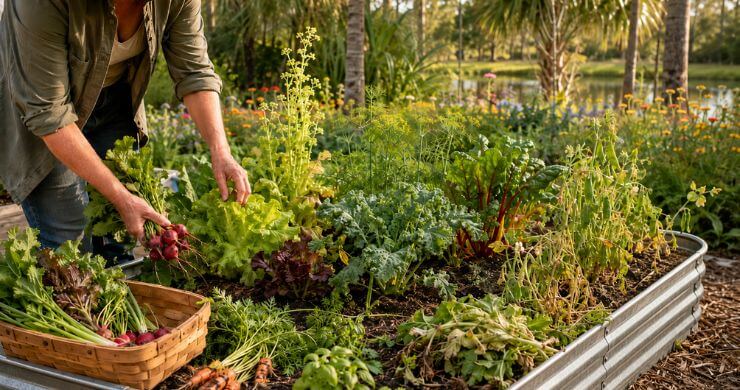
A struggling spring vegetable garden in Northeast Florida usually reaches a decision point in late May or June, when heat and humidity outpace what cool-season and early warm-season crops can handle. Gardeners face three paths: harvest what remains at peak quality, remove plants that cannot recover, or give healthy plants more time if they show signs of pushing through the summer transition.
By late May, a spring vegetable garden in Northeast Florida often shows the first signs of stress. Tomatoes slow their fruit set. Cool-season holdovers like lettuce and cilantro shoot up flower stalks. Beans and cucumbers develop spots on their leaves after humid stretches.
What thrived through March and April now looks tired and uncertain. This is the seasonal turning point every Zone 9A/9B gardener recognizes, even if the choice of what to do next is not always clear. Three options sit on the table: harvest before quality drops further, pull weakened plants that spread trouble, or give strong plants more time to push through. The right choice depends on what each plant is telling the gardener.
Why a Spring Vegetable Garden in Northeast Florida Starts to Struggle
By late May, temperatures across Northeast Florida climb into a range that most spring vegetables cannot tolerate for long. Warm-season crops planted in February and March face growing conditions that stress their roots, flowers, and fruit at once. Understanding what happens under the surface helps a gardener read the signals correctly.
Heat is the biggest driver. UF/IFAS notes that tomatoes will not set fruit when nighttime temperatures rise above 70°F, which happens regularly in Northeast Florida from May onward. Flowers still form, but pollen loses viability, and blooms drop without producing fruit. Cherry and grape tomatoes handle heat better than large-fruited types.
Humidity brings the second wave. Warm, wet stretches feed fungal diseases like downy mildew and powdery mildew on cucumbers, squash, and leafy greens. Insect populations multiply quickly as temperatures rise, and aphids, whiteflies, and caterpillars start showing up in force.
Cool-season holdovers respond differently. Lettuce, cilantro, mustard, and spinach begin to bolt, sending up a central stalk that turns leaves bitter. Once bolting starts, quality drops fast. Recognizing this cluster of vegetable garden heat stress signals early makes the next decisions easier.
When to Harvest Spring Vegetables Before Quality Drops
Once heat stress sets in, timing matters more than the calendar. A harvest that would have waited a week in April cannot wait now, because quality drops fast under sustained heat. Knowing when to harvest spring vegetables during this window protects the last of the season.
Tomatoes offer the clearest example. Penn State Extension explains that at the breaker stage, when the first blush of color appears at the blossom end, the plant stops sending nutrients to the fruit. Picking at that point and finishing the ripening indoors avoids sunscald, cracking from summer downpours, and insect damage. Flavor stays vine-ripened because the plant already gave the fruit what it needed.
Peppers and cucumbers do best when picked on the small side once heat arrives. Waiting for larger size gives pests and disease more time, and often costs quality.
The last of the cool-season crops need faster action. Lettuce, spinach, and other leafy greens should come out of the garden the moment the center starts to elongate, which signals bolting. Harvesting during cool morning hours keeps produce fresher and reduces wilting on the walk back to the kitchen.
When to Remove Vegetable Plants that Cannot Recover
Some plants reach a point where the smartest move is to pull them out. UF/IFAS Extension Duval County advises pulling struggling spring crops by late June if they look diseased or have stopped producing. Leaving weakened plants in place risks spreading disease and pest problems to healthy neighbors.
A few signals point to this decision: widespread yellowing or spotting that has not responded to cleanup, no new blooms or fruit set for two weeks or more, or pest damage that outpaces hand removal. Knowing when to remove vegetable plants at this stage prevents disease from spreading to healthier crops. Large-fruited tomato plants often reach this point first, followed by cucumbers and squash after fungal issues take hold.
Sanitation matters at removal. Diseased foliage should go in the trash rather than the compost pile, since many fungal spores survive a home compost cycle. Clearing the space fully opens the door for a summer refresh, and readers can find more gardening tips on seasonal shifts across the year.
Once the bed is empty, options open up. Solarizing the soil during the hottest weeks kills weed seeds, pathogens, and nematodes. Heat-tolerant crops from a different plant family also break pest and disease cycles.
When to Give Plants More Time and Plan the Transition to Summer
Not every plant needs to come out. A healthy tomato that has slowed can rebound during a cooler stretch, especially when overnight lows dip into the 60s for a few nights. Peppers and eggplant often keep producing into summer with consistent water and afternoon shade.
The vegetable garden transition to summer works best when planned in advance. UF/IFAS lists okra, southern peas, sweet potatoes, eggplant, roselle, and heat-tolerant peppers as summer crops that thrive in Northeast Florida after spring crops finish. Tropical greens like Malabar spinach and longevity spinach also take over where lettuce and spinach leave off.
Bed preparation supports the shift. Working compost into cleared beds restores nutrients that spring crops used up. Mulching with an organic layer holds moisture, cools the soil, and reduces splash-up of fungal spores from summer storms. For raised beds that need topping off, my soil calculator can help estimate how much mix to add.
Consistent watering matters more than fertilizer during this window. Deep morning irrigation supports root health and lowers heat stress, and it gives foliage time to dry before nightfall to reduce disease pressure.
Frequently Asked Questions
A few questions come up often when a spring garden reaches this seasonal turning point, and quick answers help gardeners act with more confidence.
How do I know when to pull up my spring vegetables?
The clearest signals are widespread disease unresponsive to cleanup, no new blooms or fruit set for two weeks, and pest damage that outpaces hand removal. Late June is a common cutoff in Northeast Florida for struggling large-fruited tomatoes and other declining spring crops, per UF/IFAS Extension guidance.
Why do tomatoes stop producing in Florida heat?
Nighttime lows above 70°F cause tomato pollen to lose viability, so flowers drop without setting fruit. This threshold hits regularly in Northeast Florida from May onward. Cherry and grape varieties handle the heat better than large-fruited types, so a summer harvest often depends on variety choice.
What can I plant after a spring vegetable garden ends in Northeast Florida?
Heat-tolerant crops that thrive after spring crops finish include okra, southern peas, sweet potatoes, eggplant, roselle, and Seminole pumpkin. Tropical greens like Malabar spinach and longevity spinach replace lettuce through summer. Solarizing cleared beds also prepares the soil for a strong fall garden.
Can shade cloth save a struggling spring vegetable garden?
Iowa State Extension recommends 30 to 50 percent shade cloth for most vegetables, with cool-season crops responding best. Suspended above the plants, it can slow bolting for a short time and cool the leaf surface. It will not reverse bolting that has started or fix widespread disease damage.
Share Your Spring Garden Experience
Every spring vegetable garden in Northeast Florida hits a turning point where the choice between harvest, remove, or wait feels harder than it should. Have you faced this decision in your own garden this season? I'd love to hear how you handled it in the comments, whether that meant pulling plants early, holding on for one more week, or making the shift to summer crops.
Leave a Reply