
Summary
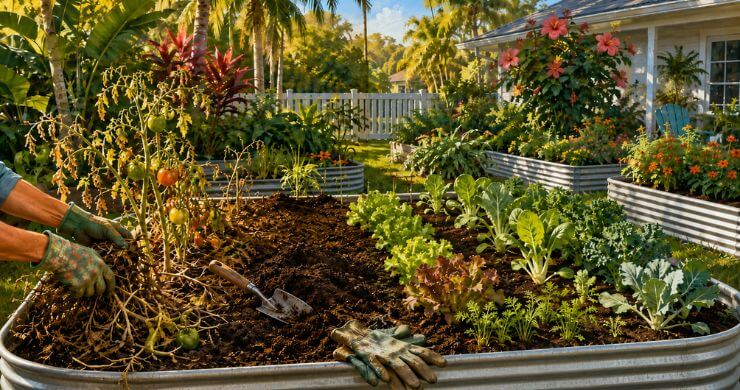
Transitioning a raised bed from summer crops to fall vegetables involves three steps: clearing spent summer plants, refreshing the raised bed soil, and selecting cool-season crops suited to the region. In Northeast Florida's Zone 9B/9B gardens, this handoff typically begins in late summer.
The end of summer marks a turning point for home gardeners. Tomatoes fade, squash vines yellow, and pepper plants slow down under the last heat waves. In warm climates like Northeast Florida, this shift also opens a productive planting window.
Raised bed fall vegetables can go in the ground once summer crops are cleared, the soil is refreshed, and the timing lines up with cooler days ahead. Gardeners who plan the transition carefully often see a stronger fall harvest and healthier soil for the following season. A rushed handoff, however, can shorten the growing window and leave beds vulnerable to nutrient loss.
When to Plant Raised Bed Fall Vegetables
Timing hinges on the first expected fall frost date. In Northeast Florida, USDA Zone 9B/9B carries mild winters and a long, productive fall planting window. Cool-season crops need to mature before the first hard frost of the season.
Soil temperature is the second signal. According to Oregon State University Extension, cool-season seeds germinate best after soil cools from peak summer highs. Seeds sown into overly warm soil often show reduced germination and weaker seedlings.
Raised beds transition faster than in-ground gardens because they warm and cool more quickly. This gives fall crops an earlier start, though late-season hot spells still call for careful monitoring during germination.
The UF/IFAS Florida Vegetable Gardening Guide breaks planting windows down by region. North Florida gardeners typically start most cool-season crops from August through October, allowing full maturity before shorter days slow growth.
Preparing the Raised Bed for Fall Vegetables
Old summer plants can be removed two ways. Cutting stems at the soil line leaves root systems in place to decompose and feed soil organisms. Pulling entire plants disturbs more soil life but makes sense when roots are matted or when soil pests have flared up. Many gardeners cut healthy plants at the base and pull only those showing signs of disease.
Composting spent crops returns nutrients to the garden. The UF/IFAS publication Compost Tips for the Home Gardener advises gardeners to keep seed-laden weeds, diseased plants, and nematode-infested roots out of home compost piles. Home compost units rarely reach the 130 to 140 degrees Fahrenheit needed to destroy these pests. Diseased material like tomato vines with leaf spot or cucurbits with powdery mildew belongs in the trash instead.
Raised bed soil also settles and loses organic matter over the growing season. Watering, harvesting, and plant uptake all reduce soil volume and nutrient reserves by the time fall arrives. Refreshing the bed is one of the most important steps before the next planting cycle begins.
The UF/IFAS Florida Vegetable Gardening Guide recommends a soil pH between 5.8 and 6.3 for vegetables grown in sandy Florida soils. A layer of finished compost worked into the top few inches of soil restores biology and structure. Topping off with fresh soil mix restores volume that has been lost, and a raised bed soil calculator simplifies the math by factoring in bed dimensions and depth.
Best Fall Vegetables for Raised Beds
Cool-season crops thrive in the mild temperatures of a Zone 9 fall. Popular choices include lettuce, kale, spinach, carrots, radishes, broccoli, cabbage, beets, mustard greens, and Swiss chard. The UF/IFAS Florida Vegetable Gardening Guide lists planting dates for each of these across North, Central, and South Florida.
Raised beds work especially well for tight-spacing crops like radishes, lettuce, and carrots. These vegetables turn around quickly and can be succession-planted every two to three weeks for a continuous fall harvest. Brassicas such as broccoli, cabbage, and cauliflower need more room but reward the space with heavy heads and long harvest windows.
Some vegetables handle warm fall days better than others. Leafy greens can bolt when weather turns unexpectedly hot, so gardeners in warm zones often start seeds in shaded transplant trays before moving seedlings outside. Direct-seeded crops like carrots, radishes, and beets are best sown straight into the raised bed once soil temperatures drop.
For more seasonal planting ideas and companion combinations, check out my gardening articles. Every fall is a chance to test new varieties and refine the timing that fits a particular garden.
Frequently Asked Questions
Fall raised bed planning often raises the same practical questions among home gardeners. Here are quick answers to four common ones.
What is the best order for crop rotation?
The most important principle is to avoid planting members of the same vegetable family in the same section of the garden season after season, according to UF/IFAS Extension. Tomatoes, peppers, and eggplants all belong to the nightshade family, for example, and rotating them across beds helps break pest and disease cycles. Keeping a simple planting log makes it easier to track which family was planted in which bed.
When should raised bed fall vegetables be planted?
Timing depends on the first fall frost date and the maturity window of each crop. In Northeast Florida, most cool-season vegetables can be started between August and October, with cool-loving greens planted later once soil temperatures drop.
What vegetables should you plant together in a raised bed?
Good fall raised bed companions include carrots grown alongside lettuce, brassicas paired with onions or garlic, and beets tucked between rows of leafy greens. Tight raised bed spacing rewards this kind of interplanting, which uses different root depths and canopy layers to maximize yield.
Can fall vegetables be planted while summer crops are still producing?
Yes. Interplanting fall seedlings under fading summer crops is a common strategy in warm climates. Once summer plants are cleared, the fall crops already have a head start on establishing roots and canopy.
Grow Your Fall Garden with Confidence
Growing a strong fall garden starts with getting the raised bed ready. When I'm topping off soil for the season, I always run the numbers with my raised bed soil calculator so I know exactly how much mix to buy. Raised bed fall vegetables have thrived in my Vego raised beds year after year, even through hot Florida summers.
Have you started your fall garden yet? I'd love to hear what you're planting this season in the comments.
