
Summary
Watering a Florida garden in summer requires reading both the sky and the soil. Rain often supplies enough moisture during the wet season, but overwatering causes real damage. Yellow lower leaves, wilting despite wet soil, and lingering puddles all point to too much water. A quick soil check tells the truth.
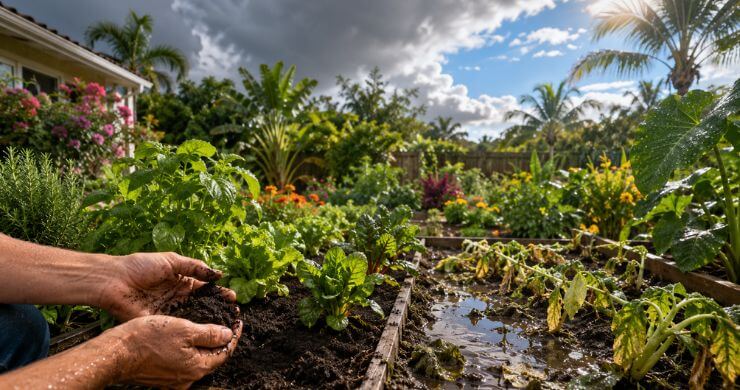
Florida summers deliver a steady rhythm of afternoon storms, high humidity, and long stretches of overcast skies. For gardeners in USDA Zone 9B/9B, all that natural rainfall raises a practical question: is the garden getting enough water, or is it getting too much? Watering a Florida garden in summer is less about following a fixed schedule and more about reading the signals plants send back. The wet season can flip from helpful to harmful within a single week, especially in beds with poor drainage or heavy mulch. Knowing what to look for makes the difference between plants that thrive and plants that rot at the roots.
Watering a Florida Garden in Summer Starts with Reading the Rain
Northeast Florida sits in a subtropical zone where summer rainfall is frequent, brief, and intense. Afternoon thunderstorms often develop and drop heavy water volumes in a short window before clearing quickly. This pattern means the soil surface can look dry within hours after a downpour, while the root zone below stays saturated for far longer.
Humidity compounds the effect. Warm, moisture-heavy air slows evaporation from the soil surface, and mulch layers hold that moisture in place. A garden bed that drained well in April may hold water for days in July.
Rainfall alone does not guarantee that every plant is watered correctly. Container plants dry out faster than in-ground beds. Shade beds retain moisture longer than sunny beds, and newly transplanted seedlings need different moisture levels than established shrubs. Summer watering Florida gardeners rely on works best when it treats rainfall as a variable input, not a substitute for observation.
Signs a Florida Garden is Getting Too Much Water
Overwatered plants show stress in ways that look, at first, similar to underwatering. This overlap tricks many gardeners into adding more water when the plant actually needs less. Learning the signs of overwatering plants show helps prevent that mistake.
Yellowing lower leaves are one of the earliest signs. When roots sit in saturated soil, they cannot absorb oxygen properly. The plant then struggles to move nutrients upward, and older leaves lose color first.
Wilting is another telling sign, especially wilting that appears when the soil is clearly wet. Healthy roots pull water into the plant, but roots damaged by too much moisture cannot do that job. A quick finger check confirms it: if the soil is damp two inches down and the plant is still wilting, the roots are in trouble.
Other signs include soft, mushy stems near the soil line, fuzzy fungal growth on the mulch surface, and standing water that lingers more than a day after a storm. Efficient watering focuses on matching water application to actual plant need rather than following a preset schedule.
How Drainage Shapes Summer Watering Needs
Florida garden drainage varies with soil type, bed construction, and mulch depth. Sandy soils common across much of the state drain quickly, which usually helps during the rainy season but can leave plants thirsty during dry spells. Amended garden beds and raised beds with quality soil mixes hold moisture longer, sometimes too long during heavy rain weeks.
Raised beds offer a reliable way to manage summer moisture. Elevation and controlled soil mix let excess water drain rather than pool around roots. A gardener building or expanding raised beds this season can use a soil calculator to figure out how much mix each bed needs, which affects drainage performance directly.
Mulch plays a dual role. A two-inch layer conserves moisture and moderates soil temperature. A four-inch layer can trap so much water that the soil stays saturated for days after a storm. Container gardens face a different challenge. Pots with clogged drainage holes or trays holding standing water put roots at constant risk during summer storms.
Simple Checks to See what a Garden Actually Needs
The most reliable way to answer the question "does this garden need water?" is to check the soil directly. The finger test works in most beds. A gardener pushes one finger into the soil to the second knuckle. If the soil feels dry at that depth, the plant likely needs water.
A soil moisture meter offers a more precise reading, especially in raised beds or containers where finger depth may not reach the root zone. Weather forecasts also matter. A bed that reads slightly dry on a Monday afternoon may not need supplemental water if a storm is forecast for Tuesday.
Watching how plants respond to rain gives the clearest feedback. A garden that perks up 12 to 24 hours after a storm is getting the right amount. A garden that stays wilted or develops yellow patches after rain is signaling too much water. UF/IFAS guidance on Florida landscape irrigation recommends adjusting watering based on plant response, not habit. Zone 9 garden watering routines that work in April rarely work unchanged in July.
Frequently Asked Questions
Several questions come up often about summer watering in Florida gardens.
How often should a Florida garden be watered in summer?
Frequency depends on rainfall, soil type, and plant stage. During Florida's rainy season, most established in-ground plants may need little to no supplemental water. Container plants and newly planted seedlings usually need checking every day or two. The best rule is to check soil moisture at the root zone before watering.
Can too much rain damage plants in a Florida garden?
Yes. Extended saturation cuts off oxygen to the roots and creates conditions where root rot fungi thrive. Plants most at risk include tomatoes, peppers, herbs like basil and rosemary, and young transplants. Raised beds and well-drained soil reduce the risk considerably.
What are the first signs of overwatering in Florida plants?
The earliest signs are yellowing lower leaves, wilting despite wet soil, and slower new growth. Fungal growth on the soil surface or a sour smell near the roots appears later. Catching those first signs early prevents most serious damage.
Should Florida gardeners water plants after a heavy summer storm?
Usually no, but check first. In-ground beds are almost always saturated after a storm. Container plants sometimes drain so fast that the pot is dry a few hours later, especially in full sun. A quick finger test in each area answers the question.
Keep Growing with Me
Florida summer weather keeps every gardener on their toes, and figuring out the balance between rain and supplemental water is a year-to-year learning process. I share what works in my own garden through seasonal updates and quick posts, and I love hearing what other Florida gardeners are seeing in their beds this season. For more seasonal advice, check out my more gardening tips collection. Drop a comment about how watering a Florida garden in summer is going for you this year, and I will reply as soon as I can.
