
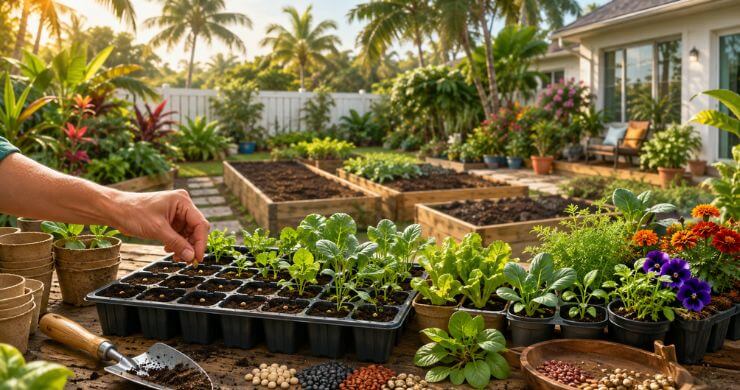
Key Takeaways
Northeast Florida gardeners can build a productive fall garden by starting seeds indoors in August, timed for the region's second growing season. Cool-season vegetables like broccoli, cabbage, kale, and lettuce need protection from late-summer heat, while tomatoes, peppers, and beans can still produce a final harvest before Zone 9B/9B's mid-November frost.
While gardeners in northern states wind down their summer harvest and prepare for frost, Northeast Florida enters its most productive growing window. A fall garden Northeast Florida residents plan in August yields cool-season vegetables through winter and into spring, thanks to the region's Zone 9B/9B climate.
Starting seeds in August gives transplants time to establish before September planting, sidestepping the shock of dropping seedlings into hot soil. The trick is knowing which crops to sow indoors, which can go outside with protection, and how to time everything against Florida's first frost around mid-November. This guide covers the vegetables worth starting from seed in August, plus the techniques that keep young plants alive through summer heat.
Why August Matters for a Fall Garden in Northeast Florida
August marks a turning point in Zone 9B/9B. Summer heat begins to ease as fall approaches, and gardeners face a narrow window to prepare for the region's second growing season. According to the UF/IFAS North Florida Gardening Calendar, many cool-season crops can be started in August, alongside a final round of warm-season vegetables. October through March delivers the mildest, most productive weather Northeast Florida sees all year.
Soil temperatures in August stay too warm for most cool-season vegetables to germinate outdoors. Lettuce, spinach, and other tender greens struggle to sprout in soil that stays too warm. Starting seeds indoors, where temperatures stay controlled, solves the problem. By September, seedlings are strong enough to transplant into cooler outdoor beds.
Timing also matters for garden preparation. Solarizing garden soil in July kills weeds, disease, and nematodes over four to six weeks, leaving clean beds ready for September transplants. Northeast Florida's average first frost falls around mid-November, so August seed starting gives slower-maturing crops enough time to produce before cold nights arrive.
Cool-season Vegetables to Start from Seed in August
Most August seed starting focuses on cool-season crops that thrive in Northeast Florida's fall and winter weather. Broccoli, cabbage, and cauliflower top the list for indoor starting. These brassicas need six to eight weeks from seed to transplant, making an August sow ideal for September planting.
Leafy greens like kale, collards, and mustard greens can go directly into shaded outdoor beds, though many gardeners still prefer indoor starts for reliability. Raised beds prepared now will be ready to receive September transplants; a soil calculator can help gardeners figure out how much soil mix to order for new beds. UF/IFAS Extension confirms August as prime timing for cool-season starts across brassicas and greens.
Lettuce and spinach require the most care. Both crops need cool soil to germinate, so indoor trays with consistent temperatures produce far better results than direct sowing. Loose-leaf lettuce varieties handle transplant shock better than head types.
Brussels sprouts deserve a special mention. This long-season crop needs about 90 to 110 days from transplant to harvest, so starting seeds in August gives gardeners enough runway before the coldest winter nights arrive.
Warm-season Crops for a Final Fall Harvest
Cool-season vegetables get most of the attention, but August is also the last practical window for planting warm-season crops that will produce before winter. Northeast Florida's mild fall extends the growing season for heat-tolerant plants that would already be finished in cooler regions.
Tomatoes remain the biggest opportunity. Planting transplants in August, or starting them from seed early in the month, gives fruit time to set before the first frost around mid-November. Determinate varieties often work best because they produce their harvest in a concentrated window. According to the Florida Vegetable Gardening Guide, warm-season vegetables like tomatoes and peppers are damaged or killed by frosts, so timing matters.
Peppers and eggplant transplants can push production through November and often into December if fall stays warm. Both crops thrive in Florida's August heat once established.
Bush beans, pole beans, and lima beans still have time to mature from an August sow. Their 50 to 75 day cycles fit into the pre-frost window. Cucumbers and squash can also be planted for a final harvest, though gardeners should watch for pest pressure that peaks in late summer.
Seed-starting Techniques for Florida's Late-summer Heat
Indoor seed starting is the most reliable method for August sowing in Northeast Florida. A bright indoor spot, grow lights, or a sunny screened porch provides the controlled conditions cool-season seeds need. Quality seed-starting mix outperforms garden soil for germination reliability. Garden soil holds too much moisture, compacts easily, and can carry disease.
A commercial seed-starting mix drains well and gives roots room to develop. Shade cloth is essential for any seedlings or transplants that spend time outdoors in August. A 30 to 40 percent shade rating protects young plants from direct sun that would otherwise scorch them.
The UF/IFAS guide to starting from seed notes that seeds need air, moisture, and warmth in the correct amounts, with lettuce specifically requiring light to germinate. Watering frequency also increases in August because evaporation rates spike. Seedlings in trays may need daily watering, while outdoor beds benefit from mulch to retain moisture.
The transplant window from indoor tray to garden bed usually falls in late September, once nighttime temperatures start to drop. Hardening off seedlings for a few days before planting helps them adjust to outdoor conditions.
Frequently Asked Questions
Northeast Florida gardeners often have similar questions when planning their August seed starts. These answers cover the most common ones.
Can you start seeds outdoors in Florida in August?
Some seeds tolerate direct sowing in August with shade cloth protection, particularly kale, collards, and mustard greens. Most cool-season vegetables germinate better indoors where temperatures stay cooler. Heat-loving crops like beans and squash can be direct-sown outdoors.
What vegetables grow best in a Northeast Florida fall garden?
The most productive fall crops for Zone 9B/9B include broccoli, cabbage, kale, collards, lettuce, and spinach, plus a final round of tomatoes, peppers, and beans. These plants match the region's mild fall weather and mid-November first frost.
When should you plant tomatoes for a fall harvest in Northeast Florida?
Tomato transplants should go in the ground in August or very early September. Determinate varieties work best because they set fruit within a shorter window before the first frost around mid-November.
Is August too hot to plant seeds in Florida?
August is too hot for outdoor germination of most cool-season crops, but not too hot for indoor seed starting. Warm-season crops like beans and squash can go directly into the ground with proper watering.
Ready to Plant Your Fall Garden
August is my favorite month in the garden because it's when the real growing season starts here in Zone 9B/9B. A successful fall garden Northeast Florida gardeners love starts with the right August seed prep and a little patience through the last of summer's heat. Want to keep planning? Check out more gardening tips written for our climate.