
Summary
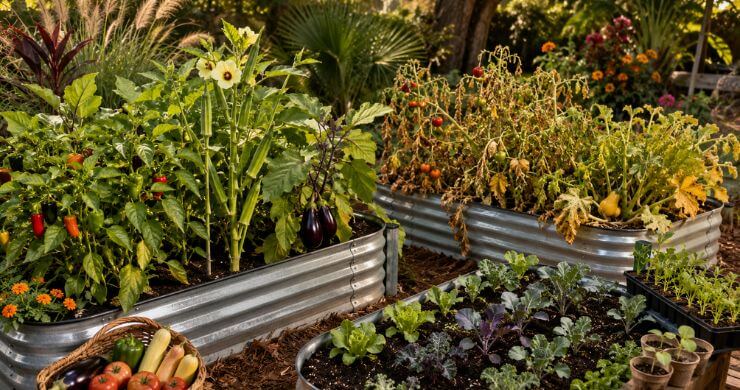
Summer vegetables in September fall into two clear groups for Zone 9 gardens. Heat-tolerant crops like okra, eggplant, sweet potatoes, southern peas, and hot peppers keep producing well into fall. Tomatoes, cucumbers, summer squash, bush beans, and melons typically decline under lingering heat, pest pressure, and disease. Recognizing which vegetables stay and which should go opens bed space for cool-season planting.
September is a turning point for Northeast Florida gardeners. Summer vegetables in September behave in two very different ways: some warm-season crops keep pushing steady harvests, while others show every sign that their productive run is over. Zone 9B and 9B gardens still see high temperatures and humidity through much of the month, which favors heat-tolerant vegetables but stresses the plants that peaked back in spring.
Bed space starts to matter more, too. Cool-season crops need room to go in soon, and hanging onto a spent tomato vine or a mildew-covered squash means giving up planting space that could carry a fall harvest. The stay-or-go decision saves both time and yield.
Why September Marks a Turning Point for Zone 9 Gardens
Northeast Florida stays hot deep into September. Daytime highs still reach into the upper 80s, and afternoon humidity often builds toward another round of thunderstorms. Nights start to cool slightly toward the end of the month, but the change happens gradually. That combination of heat, moisture, and shortening days changes what warm-season plants can do.
UF/IFAS Extension Duval County notes that many warm-season crops become unproductive by mid to late summer, turning into magnets for insects and disease once intense heat and humidity peak. Fungal pressure builds. Pest populations peak. Shorter daylight hours cue some plants to slow flowering entirely.
The turning point matters because a Zone 9 fall garden depends on smart timing. Cool-season crops like broccoli, cabbage, and lettuce need bed space and cooler soil to establish well. Waiting too long to pull spent summer plants pushes fall crops later, which shortens their productive window before spring heat returns. Gardeners who read the signals early tend to harvest longer through both seasons.
Summer Vegetables in September that Keep Producing
Several warm-season vegetables handle September conditions well. These are the crops worth keeping in the ground as long as they look healthy and continue setting fruit.
Okra thrives in September heat. The plants keep flowering and producing pods into fall across Zone 9, often right up to first frost. UF/IFAS Gardening Solutions identifies okra as one of the standout summer crops for Florida's subtropical climate.
Eggplant often continues into fall when plants stayed healthy through summer. Established plants can push a new flush of blossoms and fruit as nights cool slightly. Healthy foliage and steady flowering are the main signals to leave eggplant in place.
Sweet potatoes are still developing tubers below ground in September. Vines that look vigorous should stay untouched, since harvest typically comes later in fall after the plants have completed their full growing cycle.
Southern peas love the heat. The UF/IFAS North Florida Research and Education Center confirms these legumes grow well in hot weather and sandy soils, making them a natural fit for North Florida summer beds. As a bonus, they fix nitrogen into the soil for whatever follows.
Hot peppers often keep producing into fall in Florida gardens. Slightly cooler nights and continued warm days can push production higher. According to UF/IFAS, peppers are among the vegetables well-adapted to Florida's summer conditions.
Summer Vegetables that Should be Pulled
Some warm-season crops send clear signals that their productive run has ended. Pulling them makes room for fall planting and reduces the risk of pests or disease moving to nearby beds.
Tomatoes are the classic September pull in Florida. According to UF/IFAS, summer humidity, wilts, and pests all contribute to tomato struggles in Florida gardens. By September, spring-planted tomatoes usually show yellowing leaves, sparse fruit, and pest damage. Fall tomato planting works better started fresh in August or early September as new transplants.
Cucumbers rarely last through Florida's late summer. Downy mildew, pest pressure, and heat-stressed vines usually mean production has dropped to almost nothing.
Summer squash and zucchini face heavy disease and pest challenges. UF/IFAS Gardening Solutions lists squash vine borers, squash bugs, downy mildew, powdery mildew, and mosaic virus as common problems that shorten these crops' season in a Florida vegetable garden by September.
Bush beans typically finish their productive flush by late summer. Yields drop sharply once the plants push through the heat wave, and the beds are better used for fall crops.
Melons are usually done in September. Harvest has passed for most gardens, and the sprawling vines take up valuable bed space needed for cool-season planting.
Compost the healthy plant debris. Set aside anything showing disease so it does not carry problems into the next season.
Preparing Beds for the Fall Transition
Once spent summer plants come out, September is the time to refresh beds and plan the fall lineup. A short reset now pays off across the whole cool-season garden.
Removing spent plants first clears space and reduces disease carryover. Adding compost and organic amendments rebuilds the soil, preparing beds for what to plant next in September gardens across Florida. Raised bed gardeners can use the soil calculator to figure out how much soil mix a bed needs after summer settling.
UF/IFAS Extension recommends planting cool-season vegetables such as radish, carrot, cabbage, and lettuce in North Florida during September. Broccoli, kale, and collards belong on that list too. Earlier plantings give crops a longer productive window before spring heat returns.
Frequently Asked Questions
Zone 9 gardeners often ask the same set of questions as the season transitions. The answers below draw on UF/IFAS Extension guidance for Northeast Florida.
Can tomatoes survive September heat in Florida?
Most spring-planted tomatoes decline sharply by September in Florida. Sustained heat prevents reliable fruit set on standard varieties, and pest and disease pressure add to the stress. Fresh transplants started in August or early September usually perform better than pushing spring plants forward.
What vegetables can be planted in September in Zone 9?
September opens the fall planting window for cool-season crops in Northeast Florida. Good starters include radish, carrot, cabbage, lettuce, broccoli, kale, and collards. Transplants or direct seeding both work, depending on the crop and the space available.
When should summer vegetables be pulled from the garden?
Yellowing leaves, sparse fruit set, chronic disease symptoms, and heavy pest damage are all cues to remove a plant. Waiting too long can spread problems to nearby crops and delay fall planting. Healthy, productive plants can stay in the ground.
Do peppers keep producing into fall in Florida?
Peppers, especially hot varieties, often keep producing into fall. Slightly cooler nights and continued warm days favor fruit set. Bell peppers can also continue if the plants stayed healthy through summer.
What's Staying in Your Zone 9 Garden this September?
Every Northeast Florida garden looks different by the time fall planting starts. Some gardeners are still pulling okra by the basket, while others are already clearing beds for lettuce and broccoli. What summer vegetables in September are staying in your garden, and which ones are heading to the compost pile? I'd love to hear how you are making the stay-or-go call in the comments below.