
Summary
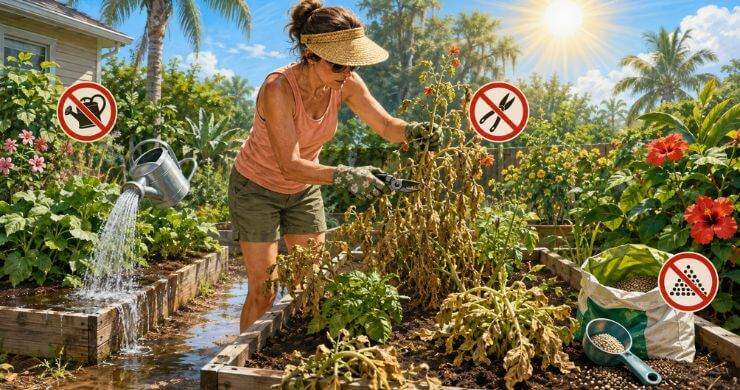
August gardening in Florida is not the time to follow spring rules. Peak heat, tropical rainfall, and the height of hurricane season all raise the stakes for common mistakes. Skipping four costly ones (planting cool-season crops outdoors too early, watering on a fixed schedule, over-fertilizing or over-pruning, and ignoring pest and storm monitoring) protects the garden through the toughest month of the year.
August gardening in Florida punishes routine. The month that looks easy on the calendar delivers the hardest conditions of the year. Relentless heat, humidity that keeps foliage wet overnight, tropical rainfall that swings soil moisture, and the ramp-up of the Atlantic hurricane season all hit at once.
Zone 9B/9B sits at the crossroads of these pressures. Daily highs frequently top 90°F, and warm nights that stay above 80°F push plants past their normal recovery window. The Atlantic hurricane season also climbs into its most active stretch, with most tropical activity occurring between mid-August and mid-October, according to the National Hurricane Center.
The right August strategy in this environment is defensive. Florida summer gardening rewards restraint, and doing less at the right moments protects the harvest more than doing more. Four common mistakes account for most of the damage Florida gardeners see this month.
Don't plant cool-season crops outdoors yet
The urge to start broccoli, cabbage, cauliflower, lettuce, and spinach in August is common, especially for gardeners eager for a fall harvest. Direct-sowing these crops outdoors in August, however, sets them up to fail. Soil temperatures remain too high for reliable cool-season germination. Young seedlings face immediate pressure from heat stress, damping-off fungus, and hungry pests.
The UF/IFAS Extension North Florida Gardening Calendar recommends starting cool-season transplants indoors in August for outdoor transplanting in September, when overnight temperatures begin to moderate. Growing under a shade cloth or in a bright indoor window with a grow light gives seedlings a stronger start than a hot, sun-scorched outdoor bed.
Warm-season crops still have a place in the August garden. Okra, southern peas, cherry tomatoes bred for heat, eggplant, and peppers remain viable for direct sowing this month. Herbs like basil, Mexican tarragon, and rosemary also handle the heat well.
Northeast Florida gardening in August also rewards fall preparation. Gardeners can use this window to solarize garden soil, prep raised beds, and plan crop rotations. For more Zone 9b gardening tips throughout the season, gardening articles on the blog cover fall planting, watering rhythms, and pest management.
Don't run irrigation on a fixed schedule
Florida garden August rainfall arrives in bursts, which is why fixed irrigation schedules cause more damage than any single pest. Running sprinklers on top of already-wet turf extends leaf wetness for hours. That extended wetness invites fungal outbreaks like brown patch, gray leaf spot, and take-all root rot.
UF/IFAS Extension flags this pattern in its summer lawn management guidance, listing scheduled irrigation instead of watering as needed among the top summer mistakes. The St. Johns River Water Management District also caps landscape irrigation to specific days per week across Northeast Florida. Watering is also prohibited between 8 a.m. and 6 p.m. under district rules. Recent drought conditions have periodically tightened these limits further, so checking the district's current schedule before each watering week is worth the minute it takes.
The practical fix is small and cheap. Install a functioning rain sensor, check soil moisture before running the system, and pause irrigation during heavy rain periods. Watering only when plants show early drought stress, like leaf curl or footprint impressions in the lawn, preserves both plants and water. Early-morning watering, before sunrise, minimizes evaporation and shortens leaf wetness during the day.
Don't over-fertilize, over-prune, or skip pest and storm monitoring
Three habits from cooler months can cause serious damage in August. Slow-release, organic fertilization is the right approach for peak heat, since any feeding that pushes rapid growth in August produces soft, water-rich tissue that attracts aphids, whiteflies, and caterpillars.
Many north Florida municipalities also restrict fertilizer application during the June-through-September rainy season, since heavy rains leach nutrients into groundwater before plants can use them. UF/IFAS Gardening Solutions recommends slow-release feeding because Florida's seasonal rains carry soluble nutrients away before plants can absorb them.
Heavy pruning creates similar problems. Removing too much leaf tissue at once strips the plant of the shading and photosynthesis it needs to weather heat and drought. Light shaping is fine. Aggressive cutbacks belong to cooler months.
Weekly pest and disease scouting catches problems while they are still small. Yellowing patches in St. Augustine turf, spots on foliage, and clusters of soft-bodied insects on new growth all warrant a closer look before treatment. Scouting works best when it is quick and regular, a few minutes each week rather than a single deep inspection once a month.
Storm prep matters just as much. The Atlantic hurricane season peaks in September, so August is the moment to secure trellises, containers, and lightweight structures before a system is on the radar. Clearing debris that could block drainage also protects beds from prolonged flooding.
Sturdy raised beds hold up better than wood-frame beds through repeated heavy rain and wind. For storm-prone gardens, these metal raised beds are a reliable option year after year.
Frequently asked questions
The same questions come up every August from Florida gardeners across the state.
Can vegetables be planted in Florida in August?
Yes. Warm-season crops like okra, southern peas, cherry tomatoes bred for heat, eggplant, and peppers can go directly in the ground. Cool-season crops like broccoli, cabbage, and lettuce should be started indoors this month for outdoor transplanting in September.
Is August too hot to garden in Northeast Florida?
Not at all. Gardening in Zone 9B/9B continues year-round, but August is a shift toward maintenance, monitoring, and fall preparation rather than aggressive new planting. Working in the coolest parts of the day and focusing on shade, mulch, and drainage keeps plants and gardeners in better shape through the peak heat.
What is the biggest mistake Florida gardeners make in August?
Overwatering. Running irrigation on a fixed schedule during a rainy month keeps foliage wet for hours, which drives fungal diseases like brown patch and root rot. Watering only when plants show early signs of drought stress, and pausing the system during rain events, prevents most of the disease pressure August delivers.
Share your August gardening in Florida experience
Share what has worked or backfired in your own Zone 9 garden in the comments below, since every gardener learns from another's story. And if fall raised beds are on the list, my soil calculator can help figure out exactly how much soil mix to order.