
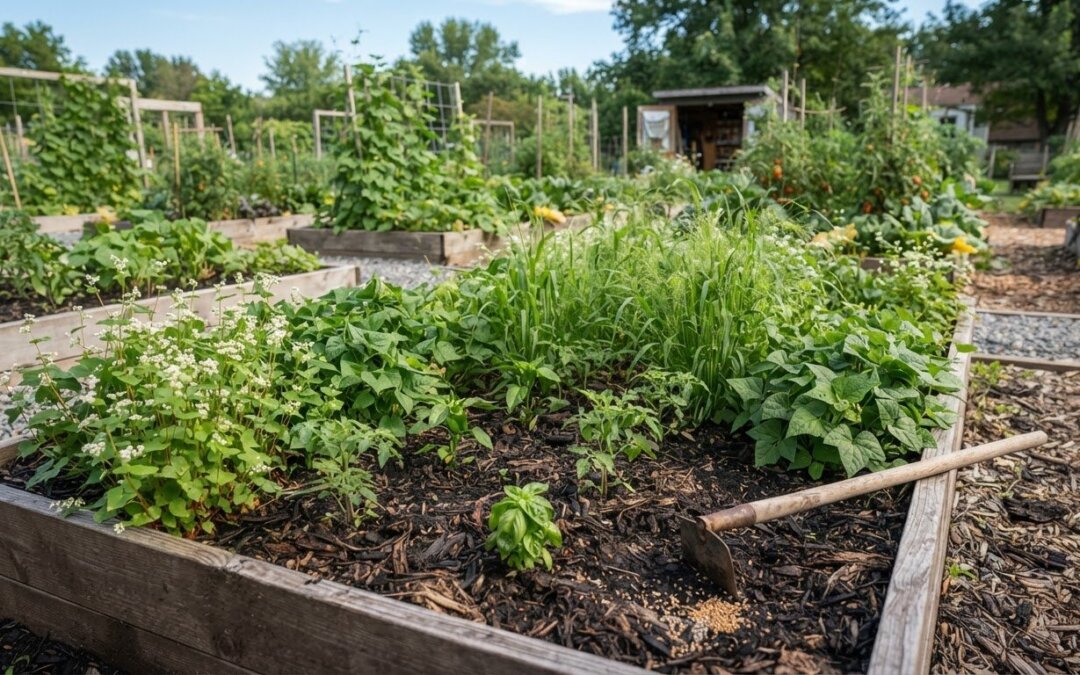
In a warm-climate vegetable garden, the right cover crop depends on your goal and the time between vegetable plantings. Cover crops for warm climate vegetable gardens are planted after the soil warms and frost danger has passed, with choices such as buckwheat, cowpeas, and sorghum-sudangrass offering different benefits. Match the crop to your frost-free days, expected temperatures, and available moisture.
A living cover can keep bare soil from baking or washing away, but it can also affect how quickly the next crop bed warms and when you can plant. That timing matters: a cover crop that grows quickly may fit a short gap, while a taller, biomass-producing option needs room to mature and time to break down.
This guide compares warm-season cover crops for weed suppression, erosion control, and soil improvement, and explains how they can affect soil temperature and harvest timing. You’ll find practical tips for choosing a crop that fits your garden’s growing window and water conditions.
Key Takeaways
- Choose a warm-season cover crop to fit your frost-free window, expected temperatures, and available moisture.
- Plan termination and residue breakdown around your next planting date, since cover crops can keep soil cooler and shift harvest timing.
- Brown top millet can build a dense canopy that shades weeds, while its roots and ground cover help limit runoff and erosion.
- For a two-species mix, sow about 60% of the recommended single-crop amount for each species, then tailor the total to your garden area.
2. Cover-crop effects on soil temperature and harvest timing
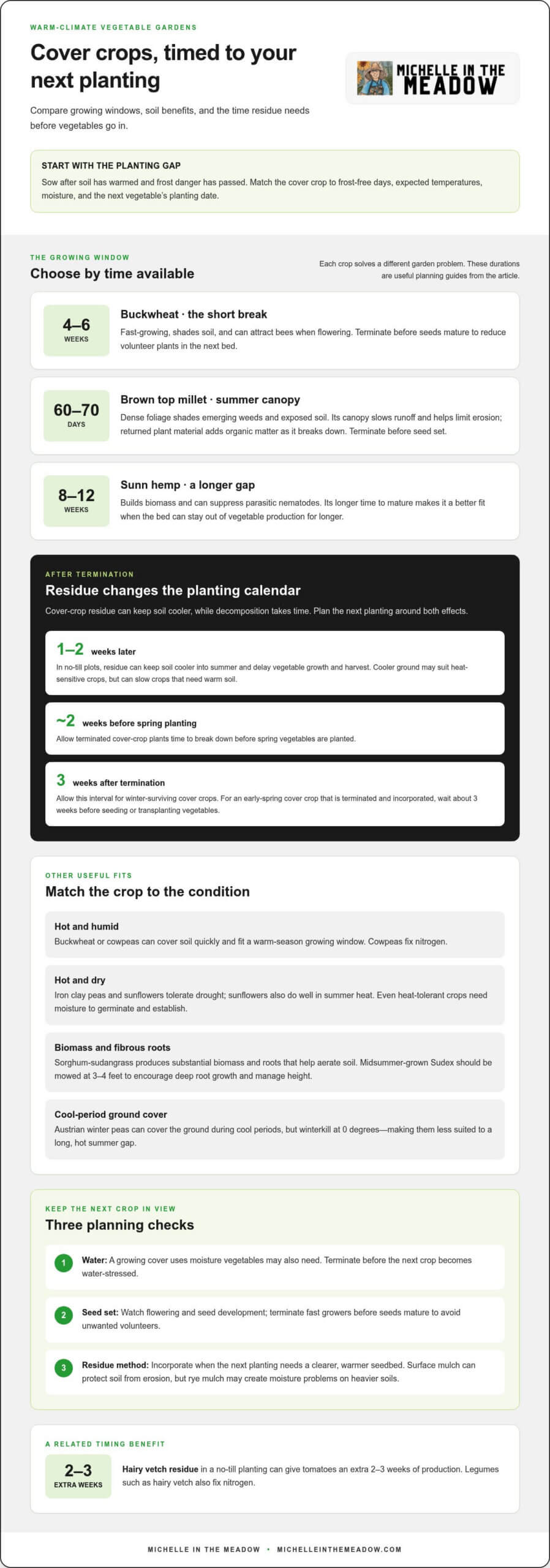
A cover crop changes the soil’s surface, so its effect can continue after termination. In no-till plots, residue can keep soil cooler into summer, delaying vegetable growth and harvest by 1 to 2 weeks. That cooler ground may suit heat-sensitive crops, but it can slow planting and early growth when warm soil is needed. Choose cover crops for warm climate vegetable gardens with the next crop’s temperature needs and harvest window in mind.
Residue also feeds the soil as it breaks down. Summer cover crops can add organic matter as green manure, while legumes such as hairy vetch fix nitrogen. In a no-till planting, hairy vetch residue can give tomatoes an extra 2 to 3 weeks of production. Flowering cover crops may attract beneficial insects, and a living canopy can shelter soil between vegetable crops. These benefits depend on selecting a crop that fits the garden’s planting gap.
Termination timing matters. Allow about 2 weeks for terminated cover crop plants to break down before spring vegetable planting. For winter-surviving cover crops, allow 3 weeks after termination. If an early-spring cover crop is terminated and incorporated, wait about 3 weeks before seeding or transplanting vegetables. These windows give plant material time to decompose and reduce delays to the next crop.
You can also leave residue on the surface as mulch instead of incorporating it. Some growers leave terminated winter rye as mulch for pumpkins on sandy soils, where it protects the ground between plants. On heavier soils, though, rye mulch can create moisture problems. Match the method to your soil: incorporate residue when the next planting needs a clearer, warmer seedbed, or leave it on the surface when cover helps control erosion. For warm-season use, sow after the soil has warmed and frost danger has passed, then time termination around the next harvest.
3. Brown top millet for erosion control and weed suppression
Brown top millet can cover bare ground during a warm-season gap between vegetable plantings. It typically matures in 60 to 70 days, giving gardeners a defined window to build cover before the next crop. Its foliage shades the soil, making it harder for emerging weeds to compete for light, moisture, and space.
A dense cover crop canopy slows runoff that can carry soil and nutrients downhill during heavy rain. Millet shades exposed soil from direct rainfall and helps limit erosion. Once cut and returned to the bed, its plant material adds organic matter as it breaks down. Plan sowing around the next vegetable’s schedule, then terminate millet before it sets seed.
Other crops fit different conditions. Austrian winter peas can provide ground cover during cool periods, but they winterkill at 0 degrees. Their seasonal limits make them less suited to a long, hot summer gap than brown top millet. Sorghum-sudangrass, by contrast, produces substantial biomass and fibrous roots that help aerate soil. Midsummer-grown Sudex should be mowed when it reaches 3 to 4 feet to encourage deep root growth and manage its height.
Buckwheat is another fast-growing choice for a short gap between plantings. It matures in four to six weeks, shades the soil, and can attract bees when flowering. Its short growing window can fit between vegetable crops, but terminate it before seeds mature if you want to avoid volunteer plants in the next bed. Apply the same approach to millet and other fast growers: watch flowering and seed development instead of relying only on the calendar.
Match the crop to your goal: brown top millet for a summer canopy, sorghum-sudangrass for biomass, or buckwheat for a shorter break between crops. For practical guidance on planning a planting gap, explore these cover-crop gardening lessons.
4. Cover crops for warm-season vegetable gardens
Sunn hemp, cowpeas, buckwheat, sorghum-sudangrass, and millet serve different gaps: sunn hemp builds biomass and can suppress parasitic nematodes; cowpeas fix nitrogen; buckwheat matures in four to six weeks; and sorghum-sudangrass produces fibrous roots and substantial biomass. Millet offers a useful canopy, with brown top millet typically maturing in 60 to 70 days.
In hot, humid weather, choose a crop that covers soil quickly and fits the available growing season, such as buckwheat or cowpeas. For hot, dry gardens, iron clay peas and sunflowers are useful options because both tolerate drought, and sunflowers also do well in summer heat. Even heat-tolerant crops need moisture to germinate and establish.
In a small vegetable garden, sow a cover crop after the soil has warmed and frost danger has passed. Match its growing window to the bed’s next planting: buckwheat suits a shorter gap, while sunn hemp needs eight to twelve weeks to mature. Cut or mow the crop before it sets seed, then leave the residue as ground cover or incorporate it as green manure.
Potential problems include competition for water, unwanted volunteer plants, and cover crops that host pests or disease. A growing cover uses moisture vegetables may also need, so terminate it before the next crop becomes water-stressed. Summer cover crops can help manage pests by reducing harmful nematodes and soil fungi, while sunn hemp can suppress parasitic nematodes. Avoid letting a crop mature and shed seed where volunteers would interfere.
Warm-season covers can be interseeded with vegetables or used as living mulch when they won’t crowd the food crop. At Twin Oaks, a clover mix was undersown with fall broccoli, grew through the following year, and was turned under in late April before vegetables went into the plot in May or June. Try this approach where row spacing and light let the cover establish without competing with vegetables.
4. How much seed is needed per 1,000 square feet for common cover crops?
Measure the bed’s area first, then scale the seed rate to match. For a single-species planting across 1,000 square feet, use these amounts:
- Winter rye: 30 to 40 ounces.
- Crimson clover: 10 to 20 ounces.
- Oats: 30 to 40 ounces.
- Forage radish: 10 to 20 ounces.
- Winter wheat: 30 to 40 ounces.
These amounts scale the listed rates of 3 to 4 ounces per 100 square feet for rye, oats, and wheat, and 1 to 2 ounces for crimson clover and forage radish. For a smaller bed, measure its square footage and adjust proportionally. A 500-square-foot plot needs half the listed amount; a 250-square-foot bed needs one quarter.
For a two-species mixture, use about 60% of each crop’s recommended single-species rate. For example, combining winter rye and crimson clover across 1,000 square feet means roughly 18 to 24 ounces of rye and 6 to 12 ounces of clover. This lowers each component’s rate while allowing both species room to establish.
A separate two-species example uses 2.6 ounces of each crop instead of the full 4 ounces of each, per 100 square feet. Keep that example’s area in mind when measuring; it equals 26 ounces of each crop for 1,000 square feet. Avoid treating a per-100-square-foot amount as the full-bed total.
To distribute seed evenly, divide the measured quantity into portions and sow each portion across a different part of the bed. For instance, split a 30-ounce rye total into three 10-ounce batches for three sections. Seed size and bed conditions affect how easily seed spreads, so work steadily and cover it as appropriate for the crop. Plan the rate before sowing, then keep the seed amount matched to the planted area. Use gardening educational content to support your cover-crop planning.
Michelle In The Meadow: Soil Calculator for Raised Beds
Michelle In The Meadow’s Soil Calculator for Raised Beds helps you plan soil for a raised-bed garden, a useful step when preparing beds for vegetables or cover crops. Pair the tool with Gardening Educational Content for guidance on seasonal planting, soil care, and managing cover crop residue.
Use these resources when planning a new raised bed or preparing an existing one for the next growing season. Curated Gardening Product Recommendations can also help you choose relevant gardening supplies as you put your plan into practice.
Visit michelleinthemeadow.com to explore the calculator and gardening resources.
Make Your Next Bed Plan Count
Start small: choose one bed, decide what you want a cover crop to do between vegetable crops, and note what you’ll plant next. This simple plan helps you use cover crops for warm climate vegetable gardens according to your actual planting rhythm, rather than treating every bed alike.
If you’re preparing a raised bed, Michelle In The Meadow’s Soil Calculator for Raised Beds can help with soil planning. Its Gardening Educational Content supports practical decisions as your garden changes, while Curated Gardening Product Recommendations can help you choose useful supplies for the work ahead. Start with the resource that fits your next task, then adjust your plan as you observe how your soil and crops respond.
Ready to plan your next garden step? Explore Michelle In The Meadow’s gardening resources, and keep building a garden that works with your climate and growing season.
Frequently Asked Questions
Which cover crops grow best in warm-climate vegetable gardens?
The best choice depends on the gap between vegetable crops and what you want the cover crop to do. For a short break, buckwheat matures in four to six weeks; for nitrogen contribution, consider warm-season cowpeas. Sorghum-sudangrass suits gardeners seeking substantial plant material, while sunflowers have deep roots that can cycle nutrients from lower soil layers.
What warm-season cover crops suit USDA zones 8-11?
In USDA zones 8-11, choose crops by local frost timing, expected temperatures, and summer moisture, not zone number alone. Buckwheat, cowpeas, sunflowers, and sorghum-sudangrass are options to compare for warm growing periods. In a dry garden, consider drought-tolerant iron clay peas or sunflowers; where moisture is reliable, a fast-growing crop can cover open ground between vegetable plantings.
When should I sow and terminate cover crops in warm climates?
Sow warm-season cover crops after the soil has warmed and frost danger has passed, then plan backward from the next vegetable planting. Buckwheat’s four-to-six-week maturity window can fit a brief opening, while sunn hemp takes eight to twelve weeks. Terminate before seeds ripen, and allow residue to break down according to whether you’ll incorporate it or leave it on the surface.
Which cover crops fix nitrogen, suppress weeds, or improve soil structure?
Iron clay peas also fix nitrogen and can suppress weeds, while sunn hemp can suppress parasitic nematodes. For soil structure, sorghum-sudangrass develops fibrous roots that help aerate the soil. Buckwheat can scavenge phosphorus, so you can choose a cover crop to address a specific garden need.
How can I terminate warm-season cover crops without herbicides?
In a small garden, cut plants at soil level with hand shears or a hoe, leaving the roots in place. Crowder peas can be cut this way, with their roots left in the soil. For taller stands, mow or flatten the plants, then leave the residue as surface mulch or turn it into the bed. Remove or manage seed heads before mature seeds scatter.
