
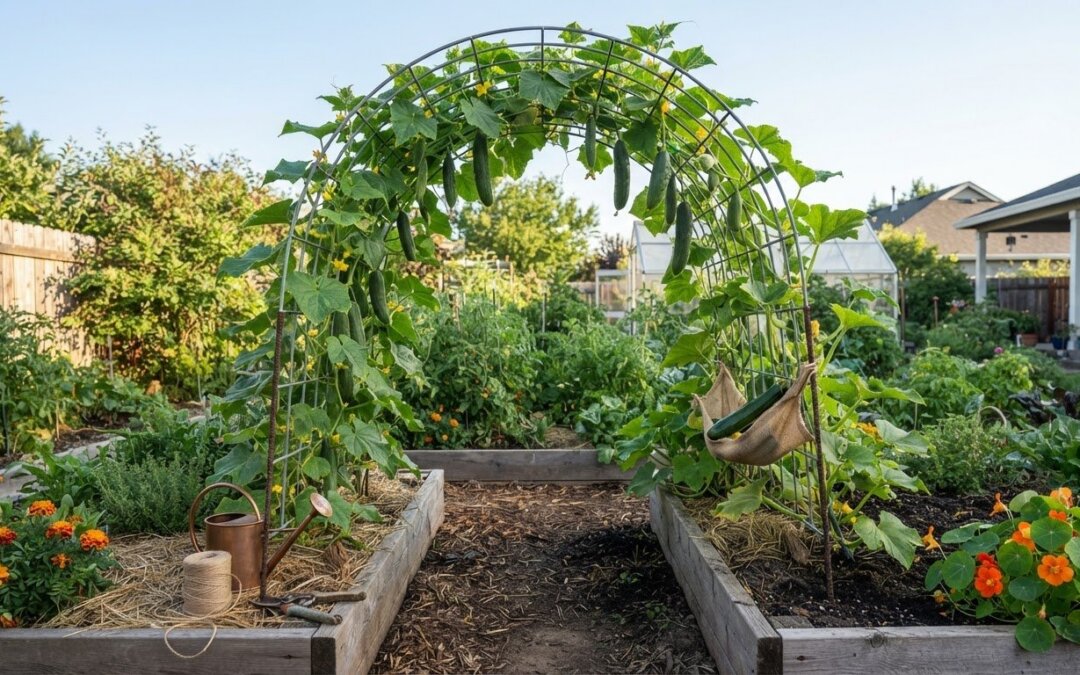
Can an arch trellis hold a crop of cucumbers and squash without sagging or tipping? It can, but the right setup depends on what you’re growing. Cucumbers and vining squash can grow vertically, while bush-type zucchini generally isn’t suited to an arch. If you’re considering an arch trellis for squash and cucumbers but aren’t sure how to manage fruit weight or keep the structure steady, start by matching the trellis to the plant’s growth habit and mature fruit size.
This guide explains how to choose and anchor an arch, position plants so you can reach them, and guide vines without damaging them. You’ll also learn when squash vines need ties and when developing fruit may need separate support. A little planning and regular checking can make vertical growing easier to manage and leave more ground space open.
Key Takeaways
- Choose an arch trellis for squash and cucumbers based on each crop’s growth habit, mature fruit size, and the space you have.
- Compare cattle-panel arches, framed supports, and ready-made trellises by how they’ll be anchored and how easily you can reach through them.
- Plan separately for supporting the vine and supporting heavier fruit as it develops.
- Use local frost dates and seed-packet guidance to time planting, then follow a simple routine for tying, checking, and harvesting vines.
- Plan around your bed layout and available time, choosing tools or materials to solve specific setup needs.
Is an Arch Trellis a Good Fit for Squash and Cucumbers?
An arch trellis is a curved support that gives vines a route up one side, over the top, and down the other. It can open up ground space and create a walk-through growing area, but it isn’t right for every squash plant. Match the structure and the care it requires to each crop’s growth habit and fruit size. The arch supports the plant; it doesn’t guarantee a larger harvest or remove the need to support heavy fruit separately.
How cucumbers and squash use an arch differently
Cucumber vines produce tendrils that curl around nearby supports as the stems extend. Squash needs more hands-on guidance because its vines don’t cling in the same way. Squash includes many kinds and varieties, as outlined in Squash (plant), so the crop name alone won’t tell you whether a plant will suit an arch.
Check the seed packet or variety description for terms such as vining, bush, or compact, and note the mature fruit size. A vining squash may suit vertical growing, while a compact plant is generally better left to grow in its natural shape. Small-fruited vining squash also presents a different support challenge from a variety with large, heavy fruit. Choose based on the plant you’re actually growing, not just the word “squash” on the label.
What gardeners gain from growing over an arch
Vertical growth can free ground space that sprawling vines would otherwise cover, leaving more room for another crop or easier movement around the bed. Lifted foliage and fruit are more visible, which can make it easier to inspect plants and spot cucumbers ready to pick. An arch may make harvesting more accessible, though fruit position and your reach still matter.
Growing foliage upward can allow more air to move around the plants, but spacing and plant health still matter. Avoid crowding vines across the arch, and consider how nearby plants or structures affect sunlight. A trellis changes how you use garden space; it can’t make up for unsuitable growing conditions.
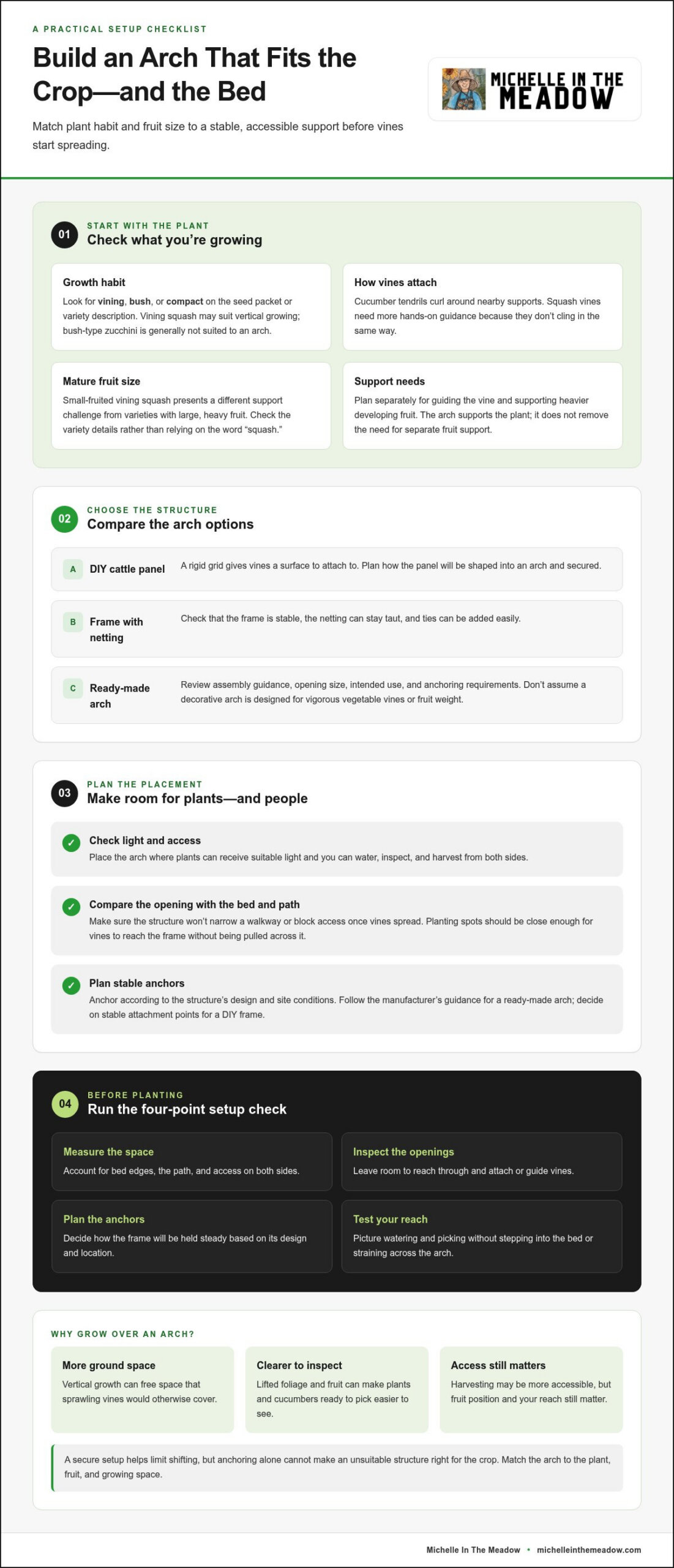
Before choosing an arch, check each crop:
- Growth habit: Does the variety trail or climb, or is it compact and bush-shaped?
- Fruit size: How large and heavy are mature fruits likely to be?
- Support needs: Can the vine be guided on the arch, and will developing fruit need separate support?
- Access: Can you reach both sides to inspect foliage and harvest without pulling or twisting the vines?
If you’re growing a climbing variety with a manageable fruit load, an arch trellis for squash and cucumbers can be a practical way to grow upward. If a squash variety is unfamiliar, use its growth habit and mature fruit details to decide whether it’s a good fit. Then choose an arch you can anchor securely and access throughout the season.
How to Choose and Set Up an Arch Trellis for Squash and Cucumbers
Choose an arch by starting with the site and crops, not a particular material. Consider the space available around the bed, how the structure will be anchored, and whether the support gives vines somewhere to attach or be tied. Set it up and check that it feels steady before plants cover it, while you can still reach the base and adjust the frame.
Which arch materials and designs make sense?
A cattle panel is one DIY option. Its rigid grid provides a surface for attaching vines, and the panel can be shaped into an arch with suitable support. Other framed structures may use bars or netting. A rigid frame provides a defined structure, while netting offers places to secure vines but may require a frame to keep it taut. Ready-made arches can reduce assembly work, though their openings and setup requirements vary.
For a purchased structure, read the instructions for its intended use, assembly, and anchoring. Don’t assume a decorative garden arch is designed to support vigorous vegetable vines or fruit weight.
Option
What to consider
DIY cattle panel
A rigid grid for attaching vines; plan how the panel will be shaped and secured.
Framed support with netting
Check frame stability, how the netting stays taut, and whether ties can be added easily.
Ready-made arch
Review assembly guidance, opening size, intended use, and anchoring requirements.
Where and how should you position the arch?
Place the arch where plants can receive suitable light and where you can water, inspect, and harvest from both sides. Compare its opening with the bed and path before installation. A structure that narrows a walkway or blocks access can become frustrating once vines spread. Planting spots should also be close enough for vines to reach the frame without being pulled across it.
Anchor the support according to its design and the conditions at the site. Follow the manufacturer’s guidance for a ready-made arch. For a DIY frame, decide on stable attachment points before planting. Secure anchoring helps limit shifting, but it doesn’t make an unsuitable structure appropriate for the crop.
Before setting the arch in place, run through this check:
- Measure the space: Account for the bed edges, path, and access on both sides.
- Inspect the openings: Make sure there’s room to reach through and attach or guide vines.
- Plan the anchors: Decide how the frame will be held steady based on its design and location.
- Test access: Picture watering and picking without stepping into the bed or straining across the arch.
Once you know what your setup needs, gardening product recommendations can help you compare materials or basic tools. Choose items to address a specific need, and still check that the finished setup fits the space and is stable.
Will an Arch Trellis Hold Squash? Match Support to the Fruit
An arch may support a vine without safely carrying every fruit it produces. These are separate jobs: the frame and its anchors support plant growth, while a developing squash can put concentrated strain on its stem or the section of trellis below it. A sturdy-looking vine doesn’t prove that a heavy fruit is secure. When choosing an arch trellis for squash and cucumbers, consider the fruit as well as the plant’s ability to climb.
Which squash varieties are more practical to trellis?
Squash varieties differ in growth habit. Vining types send out long stems that can be guided along a support; bush or compact types grow in a more contained form and aren’t automatically good candidates for an arch. Fruit size also varies among vining varieties, affecting how much attention vertical growing may require.
Choose trellising varieties by mature fruit weight, not vine length alone. Check the seed packet or variety description for both plant habit and expected mature fruit size. Smaller-fruited vining squash may be simpler to manage overhead than a variety with large, heavy fruit, though the support and growing conditions still matter. Don’t assume a squash will climb just because it has long leaves or belongs to a familiar crop group.
When does a squash fruit need extra support?
Watch fruit as it develops. If it becomes substantial, hangs at an angle, pulls its stem downward, or causes the vine to shift against the trellis, consider supporting it separately. These are practical signs to reassess, not a precise weight threshold. The variety’s expected mature size can help you plan before the fruit is fully grown.
A breathable sling or hammock can cradle an individual squash, with its ends secured to a sturdy part of the frame. The fabric should spread the fruit’s weight rather than pinch it, while leaving room for the squash to grow. Avoid tight knots around the fruit or narrow cord that could cut into the skin as it enlarges. Check the sling periodically to ensure it stays in position without rubbing or constricting the fruit.
- Read the variety description: Look for vining or bush growth, plus mature fruit size.
- Watch the developing fruit: Notice whether its weight appears to pull on the stem or vine.
- Add support thoughtfully: Use a breathable cradle when needed, leaving space for growth.
A trellis guides a vine upward, but fruit support is a separate decision for each variety and developing squash. Match the frame to the plant and keep an eye on how each fruit grows rather than assuming the vine alone will bear its weight.
How to Plant, Train, and Harvest Vines on an Arch
Once the arch is in place, regular attention helps vines use it well. Follow the seed packet and local frost dates to plan planting instead of relying on a fixed calendar date. As young growth reaches the support, guide it gently, check how stems and fruit are developing, and harvest without tugging on the vine. The routine is simple: guide, check, adjust.
- Confirm planting timing. Use the variety’s packet or growing guidance alongside local frost dates. Plant when conditions suit the crop, not just because a particular month has arrived.
- Set plants where they can reach. Leave room for each vine to grow toward the arch without crossing a path or being pulled sharply sideways. Water at the plant base and keep the growing area accessible.
- Guide young growth. When a flexible vine reaches the structure, direct it across an open section. Give tendrils time to catch where they can; use a loose tie only if the stem needs help staying near the support.
- Check and adjust as vines grow. Look for tight ties, stems bent against the frame, crowded foliage, or fruit pulling on a vine. Redirect new growth gently and keep fruit visible and reachable.
- Harvest carefully. Pick at the stage recommended for the variety. Support the vine with one hand while cutting or removing fruit so you don’t tug stems away from the arch.
Training cucumbers and squash without damaging vines
Young stems are easier to guide than mature ones. Move flexible growth gradually toward the support, following its natural direction rather than bending it sharply. Cucumbers may attach with tendrils. If they haven’t found the structure, use a soft, loose tie to hold the stem nearby. Squash vines may need more manual guidance. Check ties as stems thicken, and loosen or reposition any that begin to press into the plant.
Caring for and harvesting arch-grown crops
Water consistently according to the crop’s needs, and check soil moisture near the roots rather than judging by foliage alone. During routine visits, inspect leaves, stems, ties, and developing fruit. Notice issues early, such as a damaged stem, a vine under strain, or fruit hidden behind dense growth. Keep both sides of the arch accessible so you can reach plants without pulling on them.
Follow the variety’s harvest guidance because the right stage differs among cucumbers and squash. Use a clean cutting tool when appropriate, and avoid yanking fruit free. Checking plants as you water can help you spot ready-to-pick crops before they become difficult to reach.
For practical supplies for planting and vine care, explore gardening tools and recommendations that fit your setup.
Plan Your Arch Trellis for a Useful, Manageable Growing Season
Planning before planting can make an arch easier to manage from the first tendril to the final harvest. Start with the crops you want to grow, then consider how much attention they’ll need and how the structure fits into your bed. An arch trellis for squash and cucumbers works best as part of a practical growing plan, not as a one-size-fits-all garden feature.
A simple checklist before planting
Use seed descriptions to confirm each variety’s growth habit and mature fruit size. Picture where each plant will sit and how its vines can reach the arch without crowding one another or blocking a path. If a squash variety may produce larger fruit, plan for individual support if needed. Gather supplies before vines begin climbing so you’re not improvising later.
- Confirm the crop: Note whether each variety is vining, bush, or compact, along with its expected fruit size.
- Check the layout: Make sure the arch fits the bed and leaves practical access for watering, inspecting, and picking.
- Prepare simple supplies: Keep soft ties ready for guiding stems, and consider breathable fruit supports for varieties that may need them.
- Plan for your schedule: If you can’t check plants often, choose a manageable number of vines and make routine inspection part of watering.
Choose optional materials and basic tools to solve a specific need. Ties can help guide stems, while a suitable cutting tool can make harvesting easier on the vine. Pick items that fit your structure and budget. You don’t need extra equipment just because it’s commonly shown in a garden setup.
What to review after the growing season
After clearing the vines, inspect the arch before storing it or preparing it for another season. Look for loosened anchors, damaged connections, bent sections, and worn ties or netting. Addressing small issues while the frame is clear can make the next setup easier. Follow the structure’s care instructions if it came with them.
Note what worked: which varieties were easiest to guide, where fruit was easiest to reach, and whether planting positions left enough room to move around. If a vine crowded the opening or a fruit needed extra support, adjust the layout or variety choice next season. These observations are more useful than trying to remember every detail when planting time returns.
Gardening is a series of small experiments, and each season gives you useful information for the next. For more growing ideas and product recommendations, explore Michelle’s gardening guides and recommendations.
Make Your Next Garden Step a Simple One
You don’t need every detail figured out before you begin. Start by choosing the crop you’re most excited to grow, then make one practical decision: where the arch could fit, which variety suits it, or what part of the setup to prepare first. A well-planned arch trellis for squash and cucumbers can be a useful experiment, with each season teaching you more about what works in your garden.
Keep notes and adjust as the vines grow. Let the structure support your routine rather than complicate it. Michelle’s gardening education includes blog and video content, alongside curated product recommendations for relevant projects.
Explore Michelle’s practical gardening guides and recommendations for ideas to support your next garden project. Start with what feels manageable and enjoy watching your garden take shape.
Frequently Asked Questions
Can I grow cucumbers and squash together on the same arch?
Yes, cucumbers and squash can share an arch if the structure, spacing, and varieties suit both. Check each seed description for mature plant size and growth habit, then give each vine its own starting point, such as cucumbers at one end and squash at the other. This helps reduce tangling. For an arch trellis for squash and cucumbers, also plan for suitable light, airflow, harvest access, and separate support for squash fruit if needed.
Can an arch trellis work in a container garden?
Yes, if the container has enough room for the chosen crop and the arch is secured according to its design. A lightweight or undersized pot can become unstable as vines spread and catch wind, so don’t rely on it alone to hold the structure upright. Follow the plant’s growing requirements and the trellis maker’s setup guidance, and make sure watering and harvesting remain easy.
Does growing squash and cucumbers vertically change pollination?
No, growing upward doesn’t remove the need for flowers to be pollinated. Observe whether flowers are opening and whether pollinators visit, but don’t assume the arch itself ensures pollination. If flowers appear but fruit set is poor, consider whether plants are mature and whether growing conditions or pollinator activity may be affecting them. Consider those factors before changing the trellis arrangement, since the support alone may not be the cause.
Will an arch trellis shade the vegetables planted nearby?
It can, depending on where the arch sits, how densely vines cover it, and the sun’s path across your garden. Observe the area at different times of day before deciding what to plant beside it. Shorter or shade-tolerant crops may fit where light is reduced, while sun-loving plants need a spot that meets their light needs. The shade pattern can shift with season, orientation, and nearby structures.
Can I reuse the same arch trellis for another crop next season?
Often, if the structure remains sound, clean, and suitable for the next crop. Before planting, inspect joints, anchors, and netting or other support material for wear or damage, and repair or replace parts as appropriate. Where practical, rotate crops rather than repeating the same crop in the same bed. Reconsider the new plant’s growth habit and fruit size too, since last season’s layout may not suit it.
What should I do if vines grow across the top of the arch?
Guide flexible growth along the frame gradually rather than pulling or sharply bending an established stem. If the top is crowded, preserve access to both sides and avoid disturbing stems as you reach for fruit. Check that developing squash remains supported and harvest carefully, using a clear route through the foliage. You don’t need to force every vine into a perfect pattern.
Ready to plan your setup? Explore Michelle’s gardening guides and curated product recommendations for practical ideas to help with your next growing project.
