
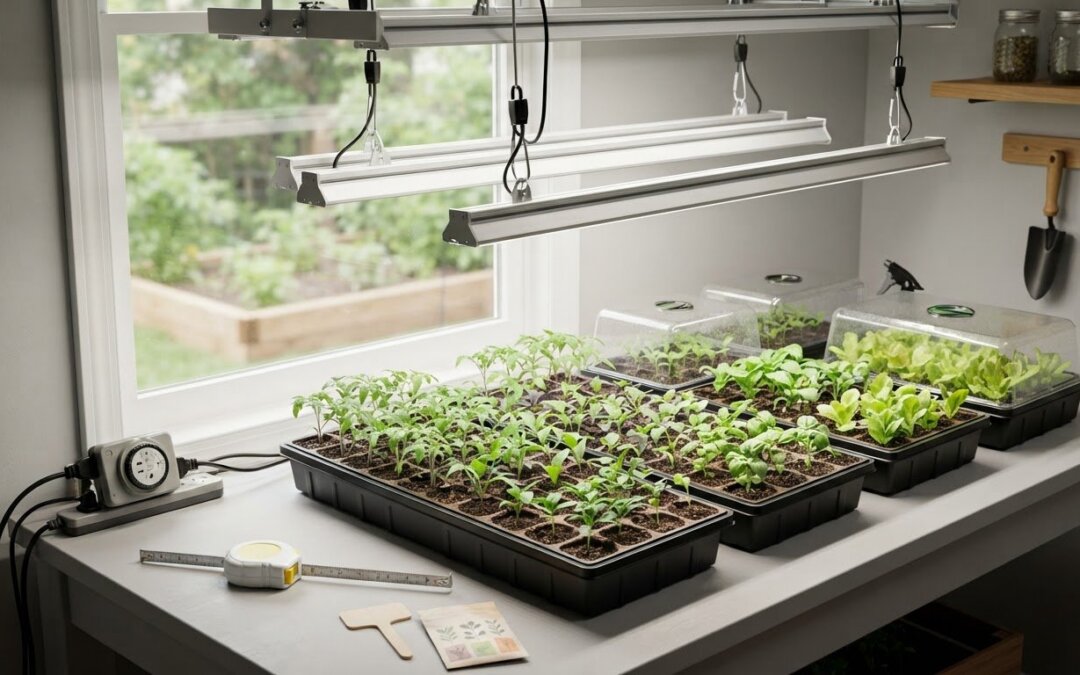
What if the best grow lights for seed starting indoors aren’t the brightest or most expensive ones, but the fixtures that cover your trays evenly and are easy to adjust? It’s easy to get caught up in wattage and technical specs, especially when you want to prevent leggy seedlings without turning a spare corner into a complicated grow room.
A simple setup can work well. The right choice depends on the area you’re lighting, how many trays you’re starting, and how much control you want. Affordable LED shop lights can be a practical option, while purpose-built grow lights may include features such as dimming or more even coverage.
This guide explains which features matter, including usable coverage, light positioning, spectrum, and daily scheduling. You’ll learn how to match a fixture to your growing area, position it according to its instructions, and set a manageable light schedule. By the end, you’ll have a clearer way to choose a setup that fits your space, budget, and routine.
Key Takeaways
- Compare PPFD and usable coverage to understand how much light reaches your trays, not just how much a fixture produces overall.
- Choose between LED bars, shop lights, and panels by matching their footprint and mounting style to your shelf or growing area.
- Use the fixture’s recommended hanging distance as your starting point, then adjust the setup as seedlings grow.
- Use a checklist of area dimensions, tray count, adjustability, energy use, and installation details to narrow down the best grow lights for seed starting indoors.
- Balance upfront cost and ease of setup with room to expand if you plan to start more seedlings later.
Why a Grow Light Can Make Indoor Seed Starting More Reliable
A grow light is a light source selected to support indoor plant growth. It can supplement daylight or serve as the main light source for seedlings. Using one can help make light more consistent across seed trays, especially as daylight hours and the sun’s angle change. For an overview of how grow lights work and the types available, see Understanding Grow Lights.
Consistency matters because seedlings that don’t receive enough usable light may develop elongated stems and lean toward a brighter spot. Stretching can make seedlings look weak, but it doesn’t prove that light is the only issue. Growing conditions vary, so treat the plant’s appearance as a cue to assess the whole setup rather than as a diagnosis.
A room can look bright to people while still delivering too little useful light to seedlings. Human eyes adjust to indoor brightness; seedlings need light to reach their leaves with enough intensity, across the growing area, for a suitable length of time. That’s why choosing the best grow lights for seed starting indoors involves more than picking the lamp that looks brightest.
When is a sunny window enough for starting seeds?
A bright window may be enough in some spaces, but results can change as daylight hours and the sun’s angle shift. Window orientation affects when direct light comes in, while nearby buildings, trees, curtains, or a deep sill can reduce the light reaching the trays. Watch the seedlings: stems that become noticeably elongated or lean toward the glass may signal that the light is inconsistent or insufficient.
A grow light can supplement window light or provide a more dependable source when daylight falls short. It doesn’t replace suitable warmth or watering. Keep checking moisture and temperature as you adjust the light, since sturdy seedlings depend on a balanced growing environment.
What makes seedling lighting different from ordinary room lighting?
Room lighting is usually chosen to help people see comfortably, not to deliver consistent light across a tray of plants. Seedling lighting needs to reach the growing area, including its edges, rather than simply make the room feel bright. Intensity, coverage, and schedule work together: a strong fixture may still leave tray corners dim, and good coverage won’t help if the light is used inconsistently.
Think of the setup as a small growing zone. Consider how many trays need light, how evenly it reaches them, and whether you can keep a regular schedule. No single lamp type or color temperature is right for every crop and space. The following sections explain how to compare fixtures based on your seedlings and setup.
Grow-Light Specs for Seed Starting: Understand PPFD, Coverage, and Spectrum
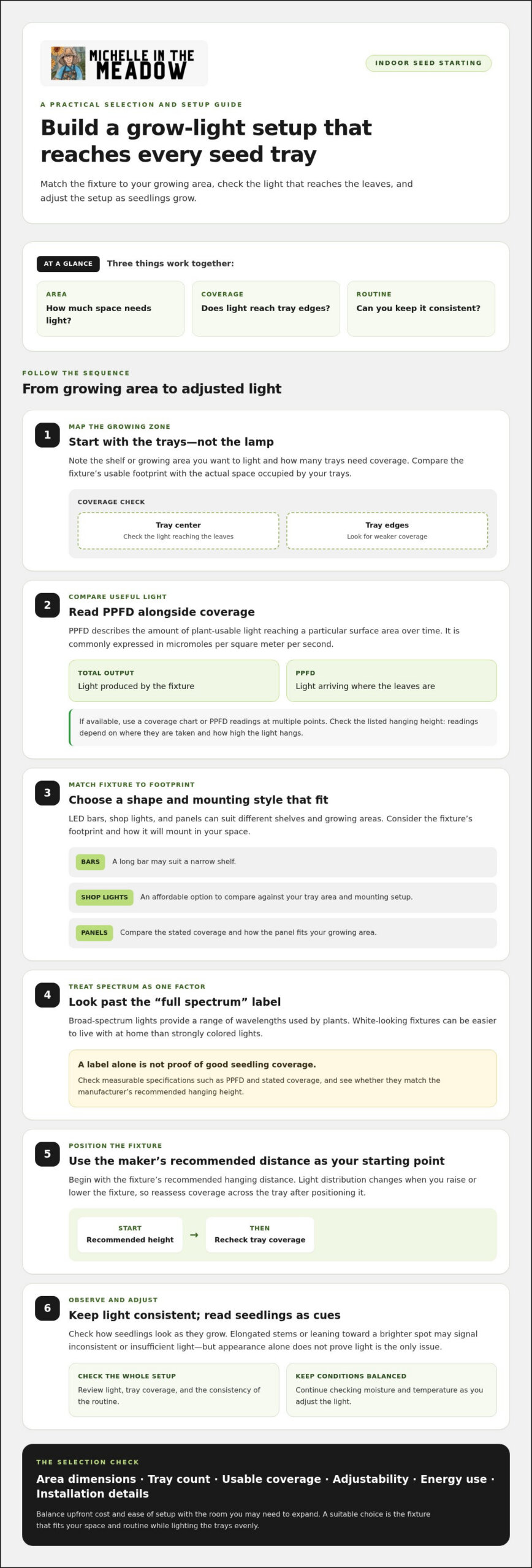
A fixture’s wattage or total light output doesn’t tell you exactly how much light reaches your seedlings. For that, look for PPFD, short for photosynthetic photon flux density. It describes the amount of plant-usable light reaching a particular surface area over time, commonly expressed in micromoles per square meter per second. Think of total output as what leaves the fixture; PPFD is what arrives where the leaves are.
Coverage matters because seedlings can only use the light that reaches their trays. A fixture might produce plenty of light overall yet leave tray edges receiving less than the center. Matching the fixture’s usable coverage to your tray dimensions helps you avoid paying for output that misses the plants or leaving parts of the growing area underlit.
PPFD readings are useful for comparing fixtures when manufacturers provide them, but they’re not a complete answer on their own. A reading depends on where it’s taken, how high the light hangs, and the fixture’s shape. For an overview of light types, spectrum, and plant-growing applications, Understanding Grow Lights offers helpful background.
How should beginners interpret PPFD and light coverage?
Start with the manufacturer’s coverage chart and note the hanging height used for its measurements. Compare the listed footprint with the actual area occupied by your trays. If a chart shows stronger readings in the center and lower readings near the edges, seedlings along the perimeter may receive less light than those in the middle. Treat coverage figures as estimates, not guarantees: raising or lowering a fixture and changing the tray layout can alter the light reaching each spot.
If a product lists only a maximum coverage area, that figure may not show how evenly light spreads across it. Look for PPFD measurements at multiple points or a coverage map, if available. The fixture’s shape matters too: a long bar may suit a narrow shelf, while another design may spread light differently across a wider area.
Does light spectrum matter for starting vegetable and flower seeds?
Broad-spectrum lights provide a range of wavelengths used by plants, and white-looking fixtures can be easier to live with at home than strongly colored lights. But “full spectrum” is a broad product label, not proof that a fixture delivers suitable intensity or even coverage. For seedlings, focus on the specifications and intended growing area rather than assuming one spectrum is best for every crop, shelf, or room.
Some product descriptions emphasize performance through flowering or fruiting stages. Those claims may matter to growers raising mature plants through a full life cycle, but they don’t automatically show how evenly a light serves seed trays. Read the specifications for measurable information, such as PPFD and stated coverage, and check whether those figures match the manufacturer’s recommended hanging height.
To compare the best grow lights for seed starting indoors, put tray dimensions and usable coverage first, then use PPFD and spectrum details to narrow your options. If you’re planning the rest of your growing space, gardening tips and product recommendations can help you plan a practical setup.
LED Bars, Shop Lights, and Panels: Which Grow-Light Style Fits Your Setup?
A grow light’s shape affects how easily it fits above your seed trays, but the format alone doesn’t tell you how well it will perform. A long, narrow shelf may suit bar-style fixtures, while a wider growing area could call for a panel or multiple lights. Start by measuring your space, then compare mounting options, height adjustment, and the manufacturer’s coverage information.
Here’s a practical overview. These are general trade-offs, not a ranking: output and usable coverage vary among individual fixtures, even within the same style.
| Format | Suitable setup | Strengths | Limitations |
|---|---|---|---|
| LED bars | Shelves or trays arranged in a row | Long shape can align with a narrow growing area; some setups allow multiple bars | Length, mounting points, and coverage differ by fixture |
| Shop-light-style fixtures | Simple shelf or bench setups | Familiar fixture style; can be a straightforward option to mount | Not every model is designed for plant growth or provides suitable coverage |
| Panels | Broader or more open growing areas | One fixture may cover a wider footprint, depending on its design | May be awkward in low-clearance spaces; coverage and mounting vary |
When do LED light bars suit seed-starting shelves?
Bars can be a tidy fit when their length lines up with the shelf and tray arrangement. Depending on the fixture, one or several bars can be mounted above a row of trays. Before choosing, check how the bars attach and whether you can raise them as seedlings grow. A bar’s shape doesn’t guarantee even output, so use its coverage details to assess whether it suits your shelf.
When might a panel or shop-light-style fixture make sense?
A panel may suit a broader footprint, but check its measured output and coverage rather than assuming its shape lights every corner equally. Shop-light-style fixtures may appeal if you want a familiar, simple setup or are watching your budget. However, a general-purpose fixture isn’t automatically equivalent to a grow light. For either style, consider ceiling height, mounting options, and the exact area you need to cover.
Practical fit matters. A fixture that’s difficult to secure or adjust can make everyday seedling care less convenient. A setup that accepts additional lights may be easier to expand if you add trays later. Also account for clearance: low shelves can limit how a fixture hangs, and tall mounting hardware can take up space needed for plants.
To narrow down the best grow lights for seed starting indoors, measure the shelf or bench, note how many trays fit, and compare that footprint with each fixture’s stated coverage at its recommended hanging height. Then weigh ease of installation against adjustability and room to expand. Choose the format that suits your growing area, not the one with the most impressive label.
Set Up a Grow Light for Seedlings: Height, Hours, and Daily Adjustments
A good fixture still needs a sensible setup. Begin with the shelf or table, not the lamp: measure the area you want to light, check how many trays fit, and note any shelves or ceiling features that limit mounting height. Then install the fixture securely, arrange the trays within its stated coverage, and follow the manufacturer’s instructions for hanging distance and use.
- Measure the growing area and arrange trays so their leaves fit within the fixture’s intended coverage.
- Mount the light according to its instructions, leaving room to raise or lower it as plants grow.
- Set a regular daily schedule, following the fixture’s guidance and the needs of the crops you’re starting.
- Observe seedlings and adjust placement or timing gradually if growth looks uneven.
A timer can make the routine easier to maintain. Set it to turn the light on and off at consistent times, rather than relying on memory, and follow any built-in controls or product directions. Seedlings also need a dark period, so don’t assume leaving a light on continuously is better. Consistent placement, a steady schedule, and regular observation help give seedlings more even exposure.
How far should a grow light be from seedlings?
There isn’t one hanging height that suits every fixture. The right distance depends on output and design, so use the manufacturer’s recommended distance as your starting point instead of copying a height from another setup. If you change it, do so gradually and watch how seedlings respond over several days. Stretched growth can suggest too little usable light, while a powerful fixture placed too close may cause other stress. Appearance alone doesn’t identify the cause.
As trays fill out or plants gain height, reassess the distance and keep the light positioned evenly over the growing area. Follow fixture guidance if it specifies adjustments for different growth stages.
How long should seedlings stay under grow lights?
A common starting schedule for seedlings is 14 to 16 hours of light per day, with a consistent dark period overnight. Treat that as a general framework, not a rule for every crop or fixture: seed packets, crop-specific guidance, and the light manufacturer’s instructions can help you tailor the routine. A timer makes the schedule easier to repeat each day.
Check the setup as seedlings develop. Their distance from the fixture changes as they grow, and available window light can shift with the season. If natural daylight increases, reassess the overall setup rather than automatically extending the artificial-light period. Keeping a brief note of light timing and adjustments can help you spot patterns without making several changes at once.
Choose the best grow lights for seed starting indoors with a maintainable routine in mind, then set up the fixture carefully and adjust based on its guidance and your seedlings’ progress. Explore practical gardening guidance and product recommendations as you plan your seed-starting setup.
Choose the Best Grow Light for Your Seed-Starting Space
The right fixture fits your trays and your routine, not simply the one with the longest feature list. Before comparing models, measure the area you’ll light and decide how many seedlings you expect to start. Then use those details to judge each fixture’s coverage, mounting needs, and capacity to suit a changing setup.
Which grow light fits a small shelf, a multi-tray rack, or occasional seed starts?
For a small shelf with a few trays, look for a compact fixture whose stated coverage matches the measured growing area. On a multi-tray rack, consider each shelf separately: will the light cover its full usable width, and can you mount or adjust a fixture without crowding the plants? If you start seeds occasionally, consider how easily the light can be assembled, stored, and adapted for another tray or shelf.
Use this checklist to separate essentials from nice-to-haves:
- Growing area and tray count: Measure the shelf or rack and allow for every tray you plan to light.
- Usable coverage: Compare the fixture’s stated coverage with that footprint at its recommended hanging height.
- Adjustability: Check whether the mounting setup lets you change the height as seedlings grow.
- Energy use: Compare published actual power draw where available, rather than relying only on an “equivalent wattage” label.
- Installation and expansion: Consider how the fixture attaches, how much room it needs, and whether the setup can accommodate more trays.
- Optional controls: A built-in timer or dimming control can be convenient, but prioritize suitable coverage and straightforward mounting first.
What should you check before buying a seed-starting grow light?
Read the fixture dimensions, coverage details, recommended mounting distance, timer information, and care instructions. Compare products using the same assumptions: growing-area size, tray arrangement, and hanging height. If one listing describes coverage at a different distance, the figures may not be directly comparable. Focus on the specifications that help you judge fit and everyday use.
Weigh upfront budget against energy use and the value of features you’ll actually use. A simpler fixture may suit a small, seasonal setup; a more adjustable or expandable option may make sense if your seed-starting plans are likely to grow. Extra controls can’t make up for a fixture that doesn’t suit the area you need to light.
Michelle In The Meadow shares curated recommendations to help you compare options, but your shelf dimensions, tray count, and mounting constraints should guide your final choice. Product specifications and retailer listings can change, so compare current details against your checklist. Where product links are affiliate links, Michelle In The Meadow may earn a commission from qualifying purchases. The best grow lights for seed starting indoors meet your actual growing needs without adding complexity you don’t need.
Make Your Next Seed-Starting Season a Little Easier
Your first setup doesn’t need to be elaborate. Choose a light that fits your space, start with a routine you can keep, and observe how your seedlings respond as they grow. Those observations can help you make a more confident choice next season.
If you’re comparing the best grow lights for seed starting indoors, use your growing space and everyday habits as your guide, not a long list of features. Michelle In The Meadow shares practical gardening education through articles and tutorials, along with curated gardening product recommendations through referral links, to help you explore options thoughtfully.
Explore Michelle In The Meadow’s curated gardening recommendations for useful ideas for your next growing project. Start with your tray dimensions and choose a setup that feels manageable for seed-starting season.
Frequently Asked Questions
Are LED grow lights good for starting seeds indoors?
Yes, LED grow lights are a practical choice for starting seeds indoors. LEDs are widely used for home growing because they use energy efficiently, have a long lifespan, and produce relatively little heat. The best grow lights for seed starting indoors still need to suit your setup. Check that the fixture can illuminate the full area where your seedlings sit, rather than choosing by the LED label alone.
Can regular LED lights grow seedlings?
Yes, some regular LED lights can support seedlings if they provide enough usable light across the growing area. A lamp that makes a room feel bright may not deliver suitable intensity to plants, so check its specifications and coverage rather than relying on appearance. Some budget shop-light options use 5000K or higher white light, but color temperature alone doesn’t show whether the fixture provides enough light for your trays.
How many hours a day should seedlings be under a grow light?
A common starting schedule is 14 to 16 hours of light daily, with a regular dark period. A timer can switch the light on in the morning and off in the evening, keeping the routine steady even on busy days. Treat this as a general guide: crop-specific instructions and the fixture’s recommendations can call for adjustments, especially as plants develop or daylight conditions change.
How close should grow lights be to seedlings?
Use the hanging distance recommended for your particular fixture, since output and design affect how close it should sit. Some seed-starting guidance suggests roughly 2 to 4 inches above seedlings, but that isn’t a universal setting and shouldn’t override product instructions. Keep the light level over the plants, then make small adjustments as they grow. If seedlings stretch or show stress, assess the overall setup before changing distance alone.
Do seedlings need full-spectrum grow lights?
Not necessarily. A broad-spectrum white light can be a practical option for seedlings, but “full spectrum” on a package doesn’t guarantee suitable performance. Look for useful specifications, including coverage and light output, and consider what crops you’re growing. A light marketed for flowering or fruiting plants may include features aimed at mature growth, which doesn’t automatically make it a better choice for a shelf of young seedlings.
Are grow lights better than a sunny window for starting seeds?
It depends on how much consistent daylight your window provides. A bright, unobstructed window may work for a small batch, while a shaded sill or changing daylight can make conditions less dependable. For example, a spot that gets strong morning sun may receive little direct light later in the day. A grow light can supplement that window. Judge the setup by watching whether seedlings grow evenly rather than lean toward the glass.
