
What if the most expensive part of your garden isn’t the organic seeds or the beautiful cedar beds, but the “guessing tax” you pay at the checkout counter? We’ve all been there, standing in a garden center aisle, staring at stacks of 40-pound bags and wondering how to use a soil calculator to get the right amount the first time. It’s easy to get lost between cubic feet, yards, and bag weights. It’s even worse to be halfway through filling a bed only to realize you’ve run out of dirt just as the sun is setting. You shouldn’t have to choose between wasting money on extra bags or leaving your plants with shallow roots.
I want to help you trade that confusion for confidence. In this guide, you’ll master the simple steps to measure your garden beds and use our tools to buy exactly what you need without overspending. We’ll walk through everything from standard rectangles to those tricky irregular shapes. I’ll also explain how to account for the 10 to 20 percent settling that happens after the first watering. By the time we’re done, you’ll have a clear shopping list and the peace of mind that comes from knowing your garden’s foundation is solid and your budget is intact.
Key Takeaways
- Learn why measuring the interior dimensions of your bed is the secret to getting an accurate volume reading every time.
- Discover how to use a soil calculator to turn your garden’s measurements into a precise shopping list for bags or bulk delivery.
- Understand the difference between cubic feet and cubic yards so you can decide which buying method saves you the most money.
- Find out why adding a 15% “settling factor” to your final total ensures your beds stay full and healthy after the first rain.
- Get a simple walkthrough of our no-math calculator designed to take the stress out of your seasonal garden planning.
Why Precision Matters: Avoiding the ‘Half-Full Bed’ Disaster
Precision in the garden isn’t about being a perfectionist; it’s about respecting your own time and hard-earned money. When we guess how much soil we need, we usually get it wrong. Most people tend to underestimate, leading to that frustrating moment when you’re staring at a half-full bed with a pile of empty plastic bags at your feet. It’s a momentum killer. Overbuying isn’t much better, as it leaves you with heavy, wet bags taking up space in the garage or attracting pests in the yard.
Beyond the annoyance, under-filling your beds directly impacts your plants. If the soil level is too low, the sides of the bed create artificial shade, blocking precious sunlight from reaching young seedlings. Even worse, shallow soil limits root development. Your plants need depth to anchor themselves and find nutrients. Without enough volume, you’re also compromising the drainage benefits that make Raised-bed gardening so effective in the first place.
The Hidden Cost of Inaccurate Math
The real price of a math error isn’t just the cost of a bag of dirt. It’s the extra trip to the garden center when you’re already tired. It’s the gas money and the hour lost in traffic. Often, when you go back for ‘just one more bag,’ you find your original brand is sold out. Mixing different soil textures can lead to uneven moisture retention, which stresses your plants. By understanding how to use a soil calculator, you avoid these logistical headaches entirely. You buy once, fill once, and get straight to the joy of planting.
What a Soil Calculator Actually Does
Think of a calculator as your translator. It takes the three-dimensional space of your garden bed and turns it into something you can actually buy. Whether you’re shopping for individual bags or ordering a truckload, you need a specific number. A good tool simplifies the ‘Cubic Foot’ mystery by breaking down exactly how many bags or cubic yards you need. This gives you a reliable baseline when calling for bulk delivery quotes, ensuring no one overcharges you for material you don’t need. Learning how to use a soil calculator turns a guessing game into a clear, actionable shopping list.
Step-by-Step: Measuring Your Garden Beds Like a Pro
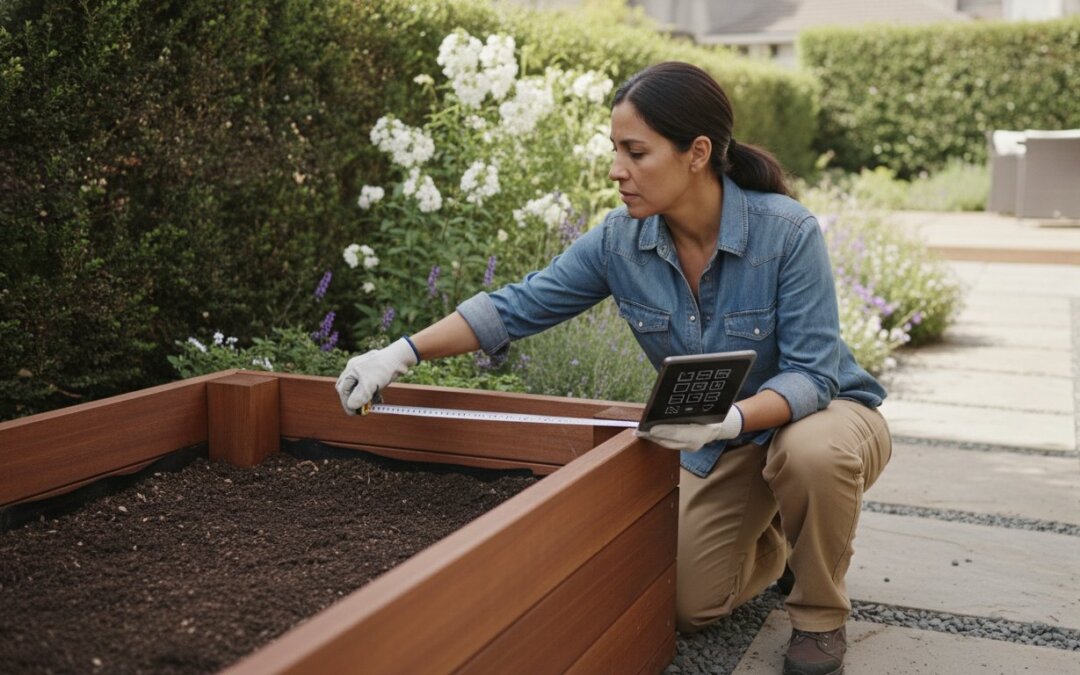
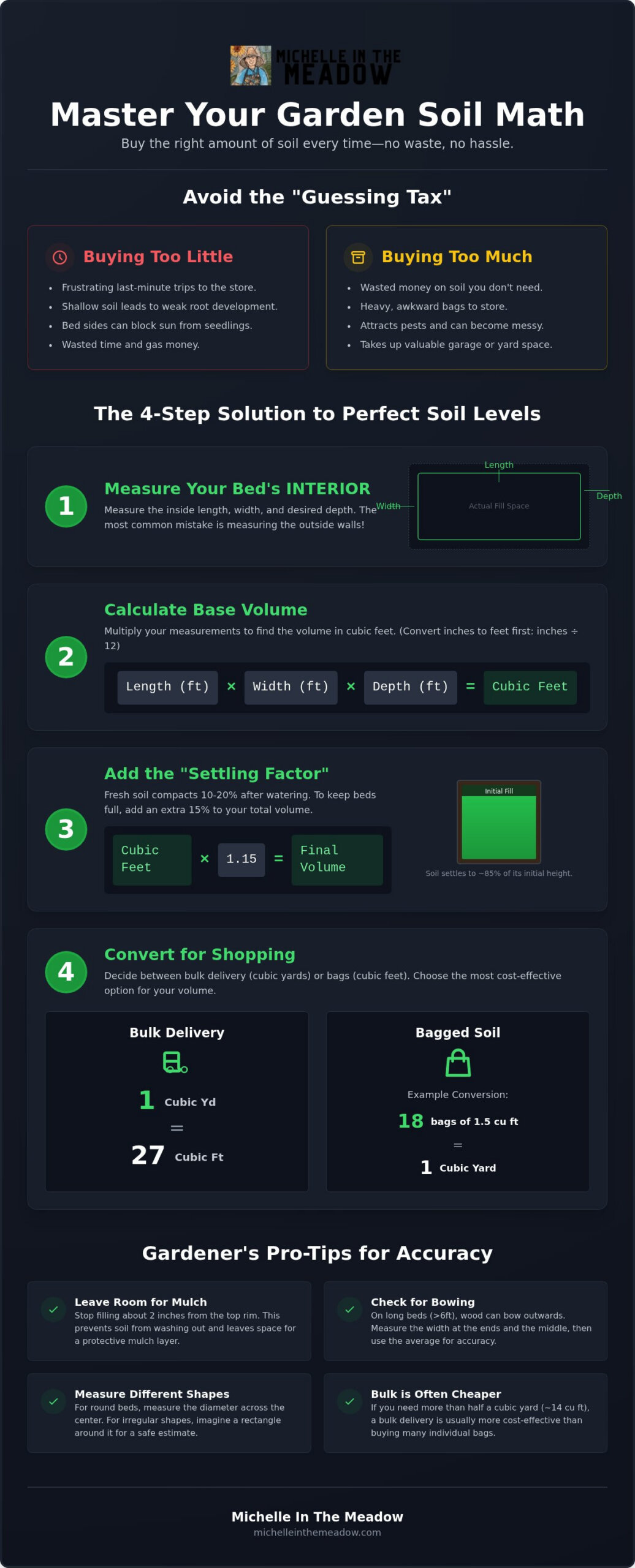
Before you even touch your phone or computer, you need to get out into the garden with a reliable tape measure. Accuracy here is the foundation of everything else. If your measurements are off by even an inch on a large bed, you could end up short by several bags of soil. The most common mistake I see is measuring the outside of the bed. If you’re using thick cedar or heavy timbers, those walls take up space. Always measure the interior dimensions. This ensures you’re calculating the actual space where roots will grow, not the footprint of the wood itself.
Consistency is your best friend when learning how to use a soil calculator. Pick a unit, whether it’s inches or feet, and stick with it for every measurement. Mixing them up is a recipe for a math disaster. Also, take a moment to look down the length of your bed. If it’s longer than six feet and doesn’t have a center brace, the wood might be bowing outward in the middle. If it is, take a measurement at the ends and one in the middle, then use the average width to get a more realistic volume.
Measuring Standard Rectangular Beds
For most of us, our beds are simple rectangles. Start by measuring the longest inside edge for your length. Next, measure the shortest inside edge for your width. The depth is where people often get tripped up. Don’t measure the total height of the wood. Instead, measure from the top of your filler material, like cardboard or branches, to about two inches below the top rim. Leaving that two-inch gap prevents soil from washing over the sides during a heavy rain and gives you room for a nice layer of mulch later on.
Measuring Round or Irregular Planters
Round beds or stock tanks might look intimidating, but the math is straightforward. For a circle, just measure the diameter, which is the distance straight across the center. If you have an oval, measure the longest and shortest widths. For those beautiful, custom-shaped beds that don’t fit a standard mold, use the “Square Peg” trick. Imagine a rectangle that would fit snugly around your odd shape and use those dimensions for a safe estimate. It’s better to have a tiny bit of soil left over for your potted plants than to run out. If you’re ready to plug in those numbers, our soil calculator for raised beds makes it easy to get your final totals without the headache.
Decoding the Results: Cubic Feet vs. Cubic Yards vs. Bags
Once you’ve run the numbers, you’ll likely see your results displayed in cubic feet or cubic yards. Understanding these terms is just as vital as knowing how to use a soil calculator. In the gardening world, we don’t measure by weight. A 40 pound bag of soil might be light and fluffy when dry, or it could be a soggy, heavy mess if it’s been sitting in the rain. Weight tells you how much water is in the dirt, not how much space it will fill. Volume is the only metric that matters for a healthy garden.
Think of a cubic yard as a giant cube that is three feet tall, three feet wide, and three feet deep. Since one yard is three feet, a cubic yard contains exactly 27 cubic feet. This “27 to 1 Rule” is the golden ratio of soil shopping. It’s the bridge between the small bags you carry by hand and the massive piles dropped off by a dump truck. Keeping this ratio in mind helps you visualize exactly how much material is headed for your driveway.
When to Buy Bags vs. Bulk
Deciding between bags and bulk usually comes down to the “25 Cubic Foot Rule.” If your project is smaller than 25 cubic feet, grabbing bags from the local garden center is usually the path of least resistance. It’s easier to toss a few bags in the trunk than to coordinate a truck delivery. However, once you cross that threshold, bulk becomes much more attractive. While bulk soil is typically cheaper per unit, you must factor in delivery fees, which often range from $50 to $150. If you’re filling several large beds, that fee pays for itself quickly. Just remember that bulk soil is often a basic topsoil blend, while bags frequently contain premium mixes with added perlite or specialized organic fertilizers.
Common Bag Sizes to Look For
When you’re standing in the garden center aisle, check the fine print on the bag. Most “large” bags are 1.5 cubic feet. Premium organic mixes or potting soils often come in slightly larger 2.0 cubic foot bags. To find your final shopping list, take the total volume from your results and divide it by the bag size you’ve chosen. If your bed needs 15 cubic feet and you’re buying 1.5 cubic foot bags, you’ll need exactly 10 bags. Knowing how to use a soil calculator to get that initial volume saves you from the “one more trip” syndrome we discussed earlier. It turns a stressful afternoon of heavy lifting into a simple, one and done task.
Advanced Calculation: The ‘Settling Factor’ and Soil Layers
Most online tools give you a mathematical volume, but soil isn’t a solid block of wood. It’s alive, it’s porous, and it changes the moment it hits your garden bed. To avoid that disappointing sinking feeling a month after planting, you need to account for compression. I always recommend adding a 15% buffer to your final number. This ensures that even after the air pockets collapse, your plants still have the depth they need. This is a crucial part of learning how to use a soil calculator effectively; you’re planning for the future of the soil, not just the day you pour it in.
If you’re using the Hugelkultur method, you’re essentially filling the bottom half of your bed with logs, branches, and organic debris. In this case, don’t calculate for the full height of the bed. Instead, measure the remaining space from the top of your wood pile to your desired soil line. This is where knowing how to use a soil calculator for specific layers becomes incredibly handy. You can treat the bottom layer as “dead space” and only buy the premium mix for the top portion where the roots will actually live.
Accounting for Soil Compression
Soil settling is the natural reduction in volume after the first watering. When soil is bagged or moved in bulk, it’s full of air. Once you water your new bed, that water pushes the air out and the particles pack closer together. If you don’t plan for this, you’ll find your soil level has dropped several inches below where you started. Adding that extra 15% acts as a safety buffer. Trust me, having one extra bag left over for your porch pots is much better than having a bed that looks half-empty by June.
Calculating for Multi-Layer Beds
Not every bed needs a full refresh of deep soil. Maybe you’re just topping off an existing bed for the new season. To do this, measure from the current soil level up to your target line. You can also use the calculator to figure out your planting layer, which is usually the top 6 inches of high-quality mix, separately from the cheaper fill soil below. This method saves you a significant amount of money on larger projects.
- Compost: Calculate for a 1 to 2 inch layer across the top to replenish nutrients.
- Mulch: Remember to leave room for a 2 inch mulch cap to hold in moisture and suppress weeds.
If you’re ready to get these specific numbers and start your project, head over to our soil calculator for raised beds to get your precise shopping list today.
Put It Into Practice: Using the Michelle In The Meadow Calculator
Now that you’ve got your tape measure back in the toolbox and your interior dimensions written down, it’s time to let technology do the heavy lifting. I built our tool to be a neighborly companion for your garden planning, removing the need for scratch paper and long division. You’ve already done the hard work of prep; this part should be as easy as checking the weather. By learning how to use a soil calculator that’s built specifically for raised beds, you’re ensuring that your garden starts on a foundation of accuracy rather than guesswork.
Using Our Free Soil Calculator
Our tool is designed to be intuitive and fast. Follow these three steps to generate your custom shopping list:
- Step 1: Select Your Shape. Use the dropdown menu to choose between rectangular, circular, or oval beds. This ensures the math behind the scenes matches the actual geometry of your garden.
- Step 2: Enter Your Interior Measurements. Plug in the length, width, and depth you measured earlier. Remember to use the depth of the soil you actually need, not the height of the wood walls.
- Step 3: Get Your Results. The calculator will instantly provide your total volume in cubic feet. It also breaks this down into the specific number of 1.5 and 2.0 cubic foot bags you’ll need to buy.
I recommend taking a quick screenshot of these results on your phone. Having that specific “Bag Count” visible while you’re standing in the garden center aisle prevents that mid-shopping second-guessing that often leads to overspending.
From Math to Masterpiece
Once you have your volume, your next step is deciding what actually goes into the bed. If you’re looking for the best results, I recommend checking out our guide on the DIY Raised Bed Soil Mix for a balanced, organic recipe. This mix pairs perfectly with the volume results you just calculated, helping you figure out exactly how much compost, peat, or perlite to buy for a custom blend.
If your project is large enough for a bulk order, use your cubic yard result to get quotes from local landscape suppliers. Most companies appreciate it when a customer knows their exact yardage; it makes their delivery scheduling much more accurate. Before you place that order or head to the nursery, run through this final checklist: double-check that you measured the inside of the bed, confirm your depth includes a small gap for mulch, and ensure you’ve accounted for the 15% settling factor we discussed earlier. With these numbers in hand, you’re ready to build a garden that’s built to last. Learning how to use a soil calculator is the final hurdle between a pile of lumber and a thriving, productive harvest.
Ready to Build Your Best Garden Yet?
You’ve done the hard work of planning; now it’s time to get your hands in the dirt with total confidence. By mastering how to use a soil calculator, you’ve skipped the typical frustrations of multiple store trips and the “guessing tax” of overbuying. Remember that the secret lies in those interior measurements and your 15% settling buffer. These simple steps ensure your plants have the deep, nutrient-rich home they need to thrive all season long.
If you’re standing in your yard with your measurements ready, let us handle the math. Ready to plan your garden? Use our Free Soil Calculator for Raised Beds here! We built this tool specifically for home gardeners to provide instant bag-count conversions without the hassle of an email signup. It’s a straightforward way to turn your garden dreams into a concrete shopping list.
Your future harvest depends on the solid foundation you’re building today. I’m so excited to see your meadow bloom!
Frequently Asked Questions
How many bags of soil do I need for a 4×8 raised bed?
You need approximately 22 bags if they are 1.5 cubic feet each. This assumes a standard 12 inch depth for your 4×8 space. If you use 2.0 cubic foot bags, you will need exactly 16 bags. It’s always a good idea to have one extra bag on hand to account for natural settling after the first watering. This ensures your bed doesn’t look half-empty after a week of gardening.
Is it cheaper to buy soil in bulk or in bags?
Bulk is generally more cost-effective for projects requiring more than 27 cubic feet of material. While individual bags are convenient for small containers, the price per cubic foot is significantly higher. However, you must factor in delivery fees for bulk orders, which often range from $50 to $150. If you are only filling one small bed, the convenience of bags often outweighs the bulk savings you might find elsewhere.
How deep should the soil be in a raised garden bed?
Most vegetables thrive in 12 inches of soil, though 18 to 24 inches is better for deep-rooted crops like carrots or tomatoes. If your bed is taller than 12 inches, you don’t necessarily have to fill the entire height with premium soil. You can use less expensive fill material at the bottom and reserve the top 8 to 12 inches for your high-quality planting mix where the roots actually reside.
Do I need to account for the wood thickness when measuring?
You should always measure the interior dimensions of your bed to get an accurate volume. If you measure the outside, the thickness of the wood or stone walls will inflate your numbers, leading you to buy more soil than you actually need. For a bed made of 2 inch thick lumber, measuring the exterior could result in a 10 percent error in your final order. Stick to the inside for accuracy.
What happens if I use too much soil in my calculator?
Using too much soil in your calculation results in wasted money and the physical burden of storing heavy, extra bags. Soil left in open bags can attract unwanted pests or become waterlogged if stored outdoors. Learning how to use a soil calculator with interior measurements helps you avoid this common mistake. If you do end up with extra, use it to top off your patio containers or fill in low spots.
How do I calculate soil for a round garden bed?
To calculate soil for a round bed, measure the diameter straight across the center and the depth from the bottom to the desired fill line. Our tool simplifies this process by allowing you to select “circular” from the dropdown menu. You don’t need to remember complex geometry formulas. Just plug in your diameter and depth to get a precise bag count for your next shopping trip to the nursery.
Should I fill the bottom of my raised bed with something else?
Filling the bottom of deep beds with organic materials like logs, branches, or untreated wood scraps is a great way to save money. This method, often called Hugelkultur, provides long-term nutrients as the wood breaks down over several years. Just ensure you still have at least 8 to 12 inches of high-quality soil on top for your plants’ roots to grow without hitting the wood layer too early in the season.
Does potting soil weigh more than topsoil?
Topsoil is typically much heavier than potting soil because it contains minerals, sand, and clay rather than lightweight peat or perlite. A bag of topsoil might weigh 40 pounds while a bag of potting soil of the same size weighs significantly less. This is exactly why we use volume rather than weight when teaching you how to use a soil calculator. Weight changes with moisture, but volume stays consistent.
