
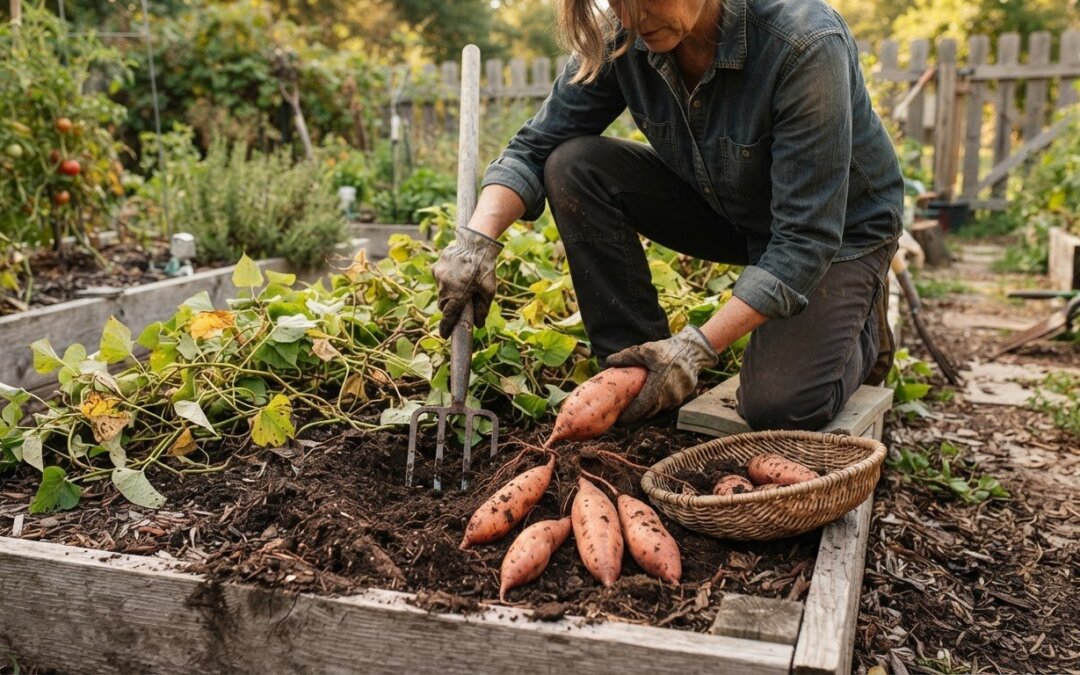
Growing sweet potatoes in raised beds starts with fertile, loamy soil prepared 8 to 10 inches deep. Transplant slips outdoors 3 to 4 weeks after the last spring frost, or when the soil reaches at least 65°F, then give the vines room to spread as the roots develop.
Growing sweet potatoes in raised beds takes more than choosing a bed: soil texture, planting conditions, and steady care all shape the harvest. This guide covers preparing the soil, choosing and planting slips, and caring for the vines through the growing season.
You’ll learn how to recognize harvest readiness, lift the roots carefully, and cure sweet potatoes for storage. From the first soil adjustments to harvest, each step can make the season easier to plan and manage.
Key Takeaways
- Learn how to tell when roots are ready to lift, and why careful handling and curing matter for storage.
- See how soil preparation, planting conditions, and early watering help slips settle into a raised bed.
- Compare sprawling and bush-type varieties to choose plants that better fit your bed and growing season.
- Recognize common pest and disease warning signs, and explore practical prevention habits for a healthier bed.
Harvesting sweet potatoes from raised beds
Harvest timing, careful digging, and curing all affect how well sweet potatoes store. Watch the vines and keep planting dates and frost risk in mind, then handle each root gently from soil to storage.
Harvest and storage
Yellowing leaves and vine tips signal harvest time; another guide is about 100 days after planting, within the usual 90 to 120 days to maturity. Lift roots before frost damages them. One gardener schedules harvest for the first week of October, while another harvest took place at the end of August 2020. Store cured roots in a closet that stays between 55 and 60°F during winter.
Harvest size varies with bed area and growing conditions, so examples show what’s possible, not a promised yield. Give roots room to develop, and avoid cutting or bruising them as you dig.
Harvesting and curing
Loosen soil around each plant before lifting roots, since a fork or shovel can nick them. Cure undamaged sweet potatoes in a sheltered, hot, humid place. Recommendations range from 10-14 days to 2-4 weeks; the listed ideal conditions are 85-90°F and 85% humidity. Curing helps prepare roots for storage, so keep them protected while they rest.
| Option | Timing or cue | Conditions or purpose |
|---|---|---|
| Harvest by vine signs | Leaves and tips turn yellow | Indicates roots may be ready |
| Harvest by planting date | About 100 days after planting | Use as a second timing guide |
| Cure, then store | 10-14 days to 2-4 weeks | 85-90°F, 85% humidity; store at 55-60°F |
Combine changes in the vines with your planting date and frost risk to choose when to harvest.
After curing, sweet potatoes can last about 6 months in storage. Check roots as you put them away, and set aside damaged ones for earlier use. A gardener’s 16-foot row of Vardaman produced about 60 pounds, another reminder that variety and growing conditions shape the harvest.
Sweet potato soil, planting, and care
Prepare loose, warm soil before transplanting slips. Thoughtful spacing and early watering help plants establish while leaving room for vines to spread.
Soil and planting
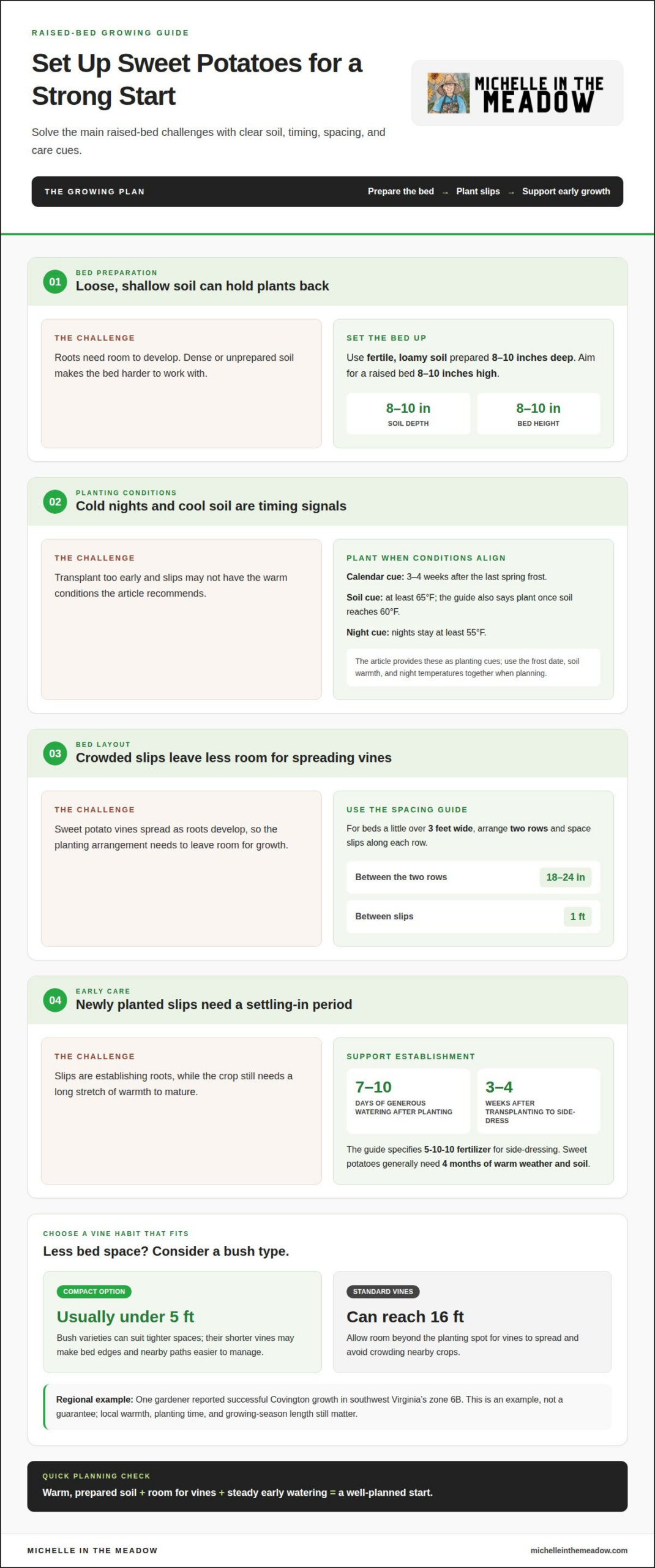
Prepare fertile, loamy soil 8 to 10 inches deep; raised beds should be 8 to 10 inches high. Transplant slips 3 to 4 weeks after the last spring frost, or when soil reaches at least 65°F. Plant only once nights stay at least 55°F and soil reaches 60°F. In beds a little over 3 feet wide, arrange two rows 18 to 24 inches apart, with slips one foot apart.
Water generously for 7 to 10 days after planting to help slips root. Side-dress with 5-10-10 fertilizer 3 to 4 weeks after transplanting. Sweet potatoes generally need 4 months of warm weather and soil, so planting time affects whether roots have a long enough season to mature.
Varieties for raised beds and short seasons
Bush varieties suit tighter spaces because their vines usually stay under 5 feet, unlike standard vines that can reach 16 feet. That shorter growth can make bed edges and nearby paths easier to manage. Covington is another option to consider: a gardener reported successful growth in southwest Virginia’s zone 6B. Match variety choice to available bed space and local warmth.
Pest prevention in raised beds
Make regular plant checks part of your routine. Look over leaves, stems, and the soil surface for chewing, discoloration, or damaged growth, then remove affected plant material. Keep weeds from crowding the bed so changes are easier to spot. Work carefully around the plants to avoid damaging vines, which can make plant health harder to assess.
Disease prevention in raised beds
As the vines spread, keep an eye on the foliage and soil. Water at soil level instead of wetting leaves, and avoid leaving the bed waterlogged. Clear debris around stems and clean tools after trimming damaged growth. These habits keep the growing area tidy and make unusual changes easier to notice.
Which sweet potato varieties are best for raised beds and short growing seasons?
Choose a variety by matching its growth habit to your bed space, then consider whether it has grown successfully in a similar climate. These criteria help narrow your options without assuming every cultivar performs alike.
Bush-type sweet potatoes are a practical choice when a raised bed has limited room. Their vines usually stay under 5 feet, while standard vines can stretch much farther and spread beyond the bed. That difference affects how much open ground the plants need and how easily you can reach nearby crops. In a compact bed, shorter vines can make the layout easier to manage.
Covington offers a named option for gardeners weighing regional growing experience. One gardener reported growing it successfully in southwest Virginia’s zone 6B. Treat that as a useful example, not a guarantee for every garden: local warmth, planting timing, and the length of the growing season still shape results.
- For limited bed space: Compare bush types with standard vining plants, and choose based on how much room the vines can occupy.
- For a short season: Give priority to a variety with relevant local growing experience, such as the Covington example from zone 6B.
- For mixed priorities: Consider both vine spread and the warm period available before choosing.
Before planting, sketch the bed and mark where the vines can spread. A bush type may suit a contained layout, while a vigorous vine needs room beyond its planting spot. Compare varieties with your local season, too: a raised bed organizes the planting area, but the variety still needs to suit the warmth and growing time your garden provides.
The information here doesn’t support ranking multiple named cultivars by maturity or harvest size. Instead, compare growth habits: a bush type has a more compact footprint, while a documented regional example such as Covington may help when local experience matters. For raised-bed gardening, choose a variety whose growth habit and regional fit suit your bed and season.
What pests and diseases affect sweet potatoes, and how can you prevent them in raised beds?
Start by observing rather than guessing at the cause. Holes, chewed edges, spots, yellowing, and wilting are clues to note, but a single symptom doesn’t identify a pest or disease. Check the whole plant and surrounding soil, then watch for changes over time. Careful inspection helps you see whether damage is spreading or isolated.
Use a simple inspection routine as the vines fill the bed:
- Look at the upper and lower leaf surfaces for holes, spots, or unusual discoloration.
- Check stems and leaf joints for visible insects, eggs, or damaged growth.
- Notice whether wilting affects one plant or several nearby plants.
- Remove fallen leaves and plant debris so the soil surface stays visible.
Raised beds make it easier to reach plants and spot changes across the growing area. Arrange vines so you can inspect leaves and stems without pulling or tearing them. If you find damaged growth, note its location and appearance before removing it. Keeping a record can help you tell spreading problems from older, isolated damage during your next check.
Prevention starts with careful bed maintenance. Clear weeds and fallen plant material, avoid injuring stems during routine work, and direct water toward the soil rather than the foliage. These steps keep the growing space tidy, but they don’t identify or treat a specific pest or disease. Don’t apply a treatment based only on spots or holes; first work out what may be causing the change.
If one plant has yellow leaves, for example, compare it with its neighbors before taking action. If several plants develop similar symptoms, check the bed’s moisture and look for matching marks on leaves or stems. Record what you see and whether it changes with your usual care. A consistent inspection routine gives you a clearer picture and helps guide a more targeted response.
Michelle In The Meadow: Soil Calculator for Raised Beds
Michelle In The Meadow’s Soil Calculator for Raised Beds can help you estimate the soil volume needed before filling a bed for sweet potatoes. Enter your bed measurements to make soil planning more manageable. If you’re still working through planting or care decisions, the site’s gardening educational content offers another practical way to build your knowledge.
Use the calculator when setting up a new bed or adjusting its dimensions, then apply this article’s soil and planting guidance to shape your growing plan. For more raised-bed gardening guidance, visit michelleinthemeadow.com.
Make Your Next Bed a Thoughtful Experiment
Your next season of growing sweet potatoes in raised beds can start with a simple plan: decide what you want to learn. Compare how different parts of the bed perform, note when the vines begin to change, or keep a brief record of your care routine. These observations give you something useful to build on next season.
Let the garden teach you, too. How the soil settles, how the vines use the available space, and what you notice during regular checks can all inform your next decisions. You don’t have to perfect everything at once. Choose one adjustment, give it your attention, and keep notes to make the next planting easier to plan.
If you’d like a hand thinking through your next gardening step, contact Michelle In The Meadow. Bring your questions and keep growing with curiosity, one bed at a time.
Frequently Asked Questions
What conditions do sweet potatoes need to grow in raised beds?
Sweet potatoes need warm soil, a long stretch of warm weather, and room for vines to spread. A sunny, open position helps the bed warm up, while loose soil lets roots expand without meeting compacted layers. Keep the bed evenly moist as plants establish, then watch how quickly its surface dries. Crowded vines can extend beyond the bed, so plan their direction before planting.
How deep and wide should a raised bed be for sweet potatoes?
A raised bed should be 8 to 10 inches high, with fertile soil prepared to the same depth. There isn’t one required bed width; it depends on the planting layout and space available for vines. For example, a bed a little over 3 feet wide can accommodate two rows spaced 18 to 24 inches apart. Leave room around it for spreading growth.
When should you plant sweet potato slips in different U.S. growing zones?
Use local frost timing and soil warmth rather than a single calendar date for every U.S. zone. Transplant when the soil reaches at least 65°F, nights are at least 55°F, and the last spring frost is 3 to 4 weeks past. Cooler zones usually reach those conditions later than warmer zones. The key is giving plants a sufficiently warm season after transplanting.
How far apart should sweet potato slips be in a raised bed?
Space slips one foot apart within each row, and leave 18 to 24 inches between rows when fitting two rows into a bed a little over 3 feet wide. This layout gives plants room to develop without placing every slip at the bed edge. If using a different bed shape, preserve room between plants and direct vines toward open space rather than neighboring crops.
What soil mix and pH are best for growing sweet potatoes in raised beds?
Use fertile, loamy soil that stays loose and drains well, rather than a heavy, compacted mix. Blend the bed ingredients thoroughly so roots encounter consistent soil as they grow. Soil pH affects nutrient availability, so use a soil test to guide any adjustment instead of adding amendments by guesswork. Keep the finished growing layer prepared 8 to 10 inches deep for root development.
How often should you water and fertilize sweet potatoes in raised beds?
Water generously for 7 to 10 days after transplanting while slips establish roots. Afterward, adjust watering to the bed’s moisture: raised soil dries faster in hot, windy weather than during cool, cloudy stretches. Side-dress with 5-10-10 fertilizer 3 to 4 weeks after transplanting. Apply it beside the plants, not against their stems, and water the bed afterward to carry moisture through the soil.
